We use essential cookies to make the site work. We would also like to set analytics cookies and advertising cookies, but only if you agree. You can choose each one separately. Read our cookie policy

Loading
Tunisian Recipes
From Kafteji to Tunisian Couscous, Usban to Tunisian Mloukhia. Everything Tunisian cooks, as it is cooked at home.
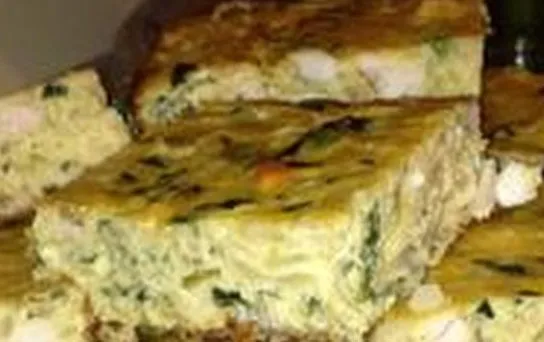
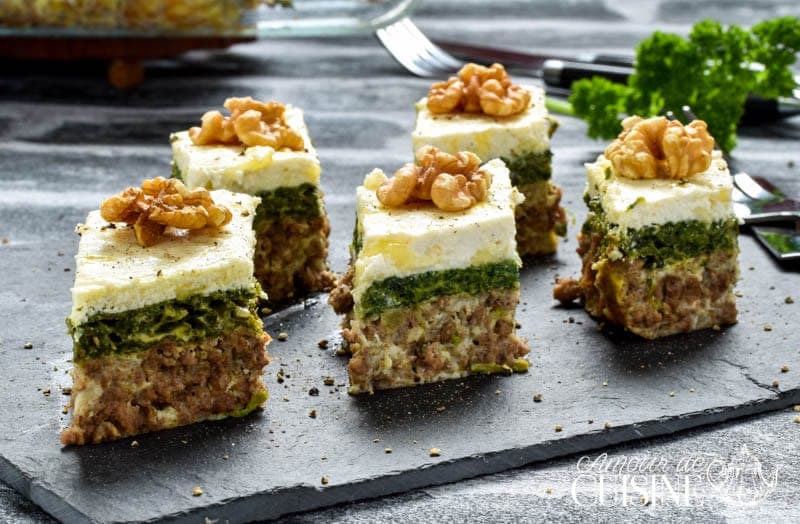
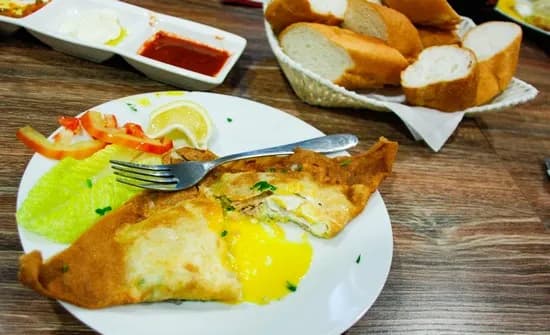
A Tunisian tajine is not a Moroccan tagine, and this dish is the clearest illustration of the difference. Moroccan tagine means a stew cooked slowly in a clay pot under a conical lid. Tunisian tajin, or tajin sibnekh, means a baked egg dish, set firm and cut into squares, much closer to an Italian frittata or a Spanish tortilla.
The confusion is entirely reasonable and entirely common. The same word travelled to two North African countries and attached itself to two different things. In Tunisia the dish is built from eggs beaten with whatever else is going: potatoes, chicken, spinach, peas, cheese, and the North African spices that mark it as Tunisian rather than European.
Harissa and ras el hanout do that marking. Harissa is Tunisia's chilli paste and its most exported product; ras el hanout is the layered spice blend used across the Maghreb. Together they give an egg bake a warmth and heat that a frittata does not have. It is usually served as a starter, though it is substantial enough to be a meal, and it is as good cold the next day as it is hot, which makes it packed lunch and picnic food across the country.
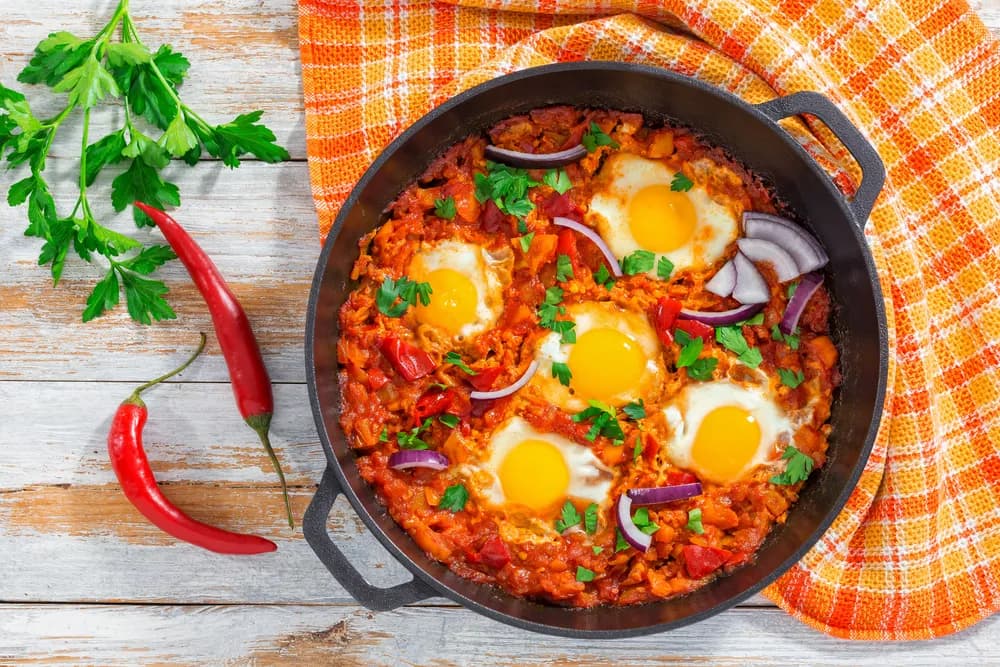
Ojja is a Tunisian dish of eggs cooked in a spiced tomato and pepper sauce, and it is one of the country's most eaten meals. The name comes from Tunisian Arabic slang meaning mixture, which describes it accurately: tomato, pepper, onion, garlic and spice, with eggs finished in the sauce.
Whether ojja and shakshuka are the same thing is genuinely disputed, and the disagreement is worth stating rather than resolving. Some Tunisians hold that ojja is made with garlic and no onion while shakshuka uses both. One published account draws the line differently, arguing that in ojja the eggs are stirred through the sauce while in shakshuka they are poached whole on the surface, which would make ojja a close relative of Turkish menemen. Others say the two words name one dish. The recipe here allows both egg treatments and notes that both are used in Tunisia.
Its origin is generally placed in Tunisia or Yemen, and it is eaten across North Africa. It has also become a fixture of Israeli cooking over the past few decades, where it is eaten at any meal. Merguez, the North African lamb sausage, and harissa are what mark this version as Tunisian rather than anything else, and toasted whole coriander, caraway and cumin ground fresh give it a depth that pre-ground spice does not.
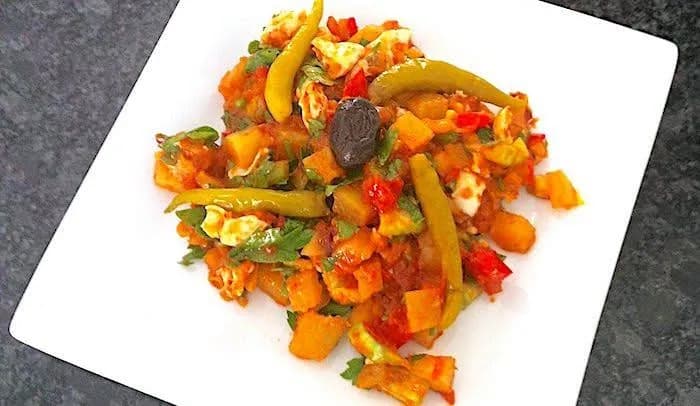
Kafteji is Tunisian street food built on a single idea: fry a range of vegetables separately so each one is properly cooked, then chop them together and serve the result with bread. Potato, courgette, pepper, tomato and aubergine are the usual cast, and the chopping at the end is what makes it kafteji rather than a plate of fried vegetables.
It is sold from small counters and casse-croûte shops across Tunisia and eaten at any hour, most often stuffed into bread as a sandwich. It is inexpensive, which is part of its identity: kafteji is what you eat when you want something substantial and hot without a restaurant. Fried egg is a common addition, and in many Tunisian versions it is the only protein.
The version here includes ground beef or lamb, which puts it at one end of a range. Kafteji is frequently made entirely without meat, and the vegetable only preparation is at least as common in Tunisia as the meat version. Harissa, olives and a squeeze of lemon are the usual finishing touches, and the dish is eaten from a shared plate with bread as the utensil.
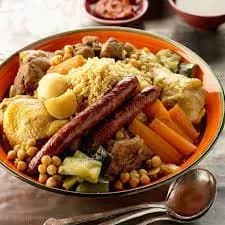
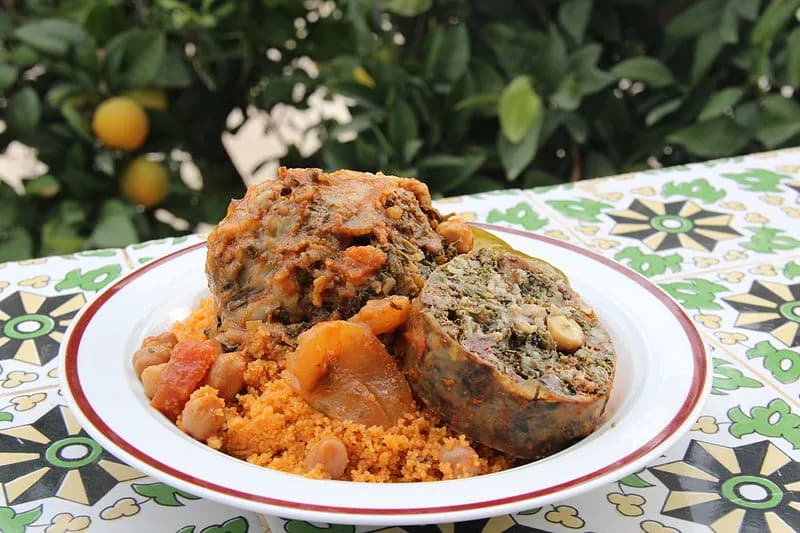
Couscous is the national dish of Tunisia, and it is also the national dish of Algeria, Morocco, Mauritania and Libya, which tells you something about how the Maghreb understands itself. The same steamed semolina appears across all five countries under names that shift with the language: kousksi in Tunisia, taam or kesksu in Algeria, seksu in Morocco, and cuscusu in Sicily, where it crossed the water.
The Tunisian version is distinguished by its heat and its colour. Harissa goes into the broth rather than being offered alongside it, and the finished couscous runs orange to deep red depending on how much broth and harissa it has taken up. Caraway is the other Tunisian signature, appearing in a quantity that Moroccan and Algerian couscous would not use.
What goes with it depends on the coast. In Sfax and the other coastal cities, couscous is made with fish. Inland it more often carries lamb, sometimes with dried fruit. Turnip, carrot, courgette, potato, pumpkin and chickpeas are the usual vegetables, cooked in the broth and removed as each becomes ready. The word itself is traced either to the Arabic kaskasa, to pound small, or the Amazigh seksu, meaning rounded or well rolled, and both derivations describe the grain rather than the dish.