We use essential cookies to make the site work. We would also like to set analytics cookies and advertising cookies, but only if you agree. You can choose each one separately. Read our cookie policy
Loading
Recipes
Browse the archive by country, course and cooking time.
Ripe plantains mashed to a paste, combined with rice flour and turmeric-infused oil, then baked in a loaf tin and sliced. The source places it in Ivory Coast, where plantain in every form is close to universal.
It is worth being clear about what this is, because the title is misleading in two directions. It is not sliced plantain roasted in an oven, which is what most people mean by baked plantain. And the recipe uses rice flour as a binder and turmeric for colour, which makes it a plantain loaf or cake, closer in construction to a steamed pudding than to a side dish. The slug says load rather than loaf, which appears to be a typo in the original; the URL has been kept exactly as it is.
One ingredient does not fit the stated origin. Chilli sambal is Indonesian and Malay, and it is not part of Ivorian cooking. It may be a substitution the contributor made for a local pepper paste, but the source does not say so, and rather than invent an explanation it has been flagged.
The source's nutritional comparisons with potato have not been carried across. What matters for cooking is that ripe plantain is sweet and starchy, and that is what makes the loaf hold together.
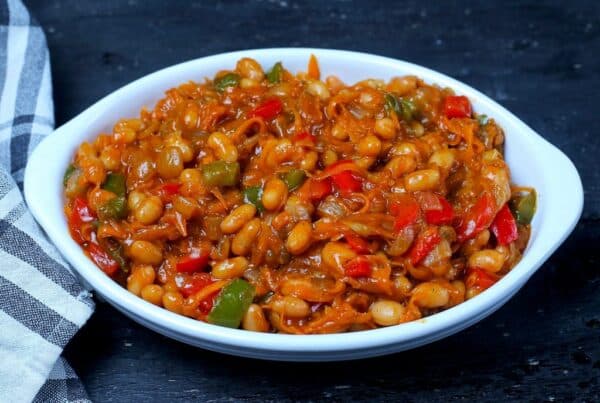
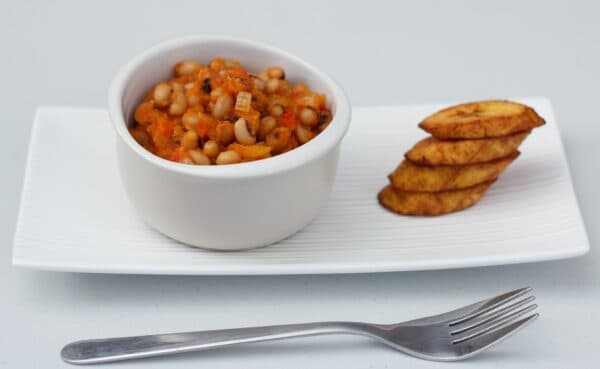
Red red is a Ghanaian black-eyed pea stew, and the name is a plain description of what it looks like. The beans are cooked in red palm oil, zomi, with tomato, and both give the dish the deep rust colour it is named for.
It is usually vegetarian, which is worth noting because it is unusual among West African stews in being so by default rather than by adaptation. The beans carry it, and the palm oil provides the richness that meat would otherwise supply. Some households add fish or meat, but the standard version does not need it.
Zomi is not interchangeable with ordinary red palm oil. It is palm oil that has been heated and infused, and it carries a deeper, slightly smoky flavour that is much of what makes red red taste Ghanaian rather than generically bean-stewed.
The classic accompaniment is fried plantain, and the pairing is close to inseparable, the sweetness of ripe plantain against the savoury, oily beans is the whole balance of the meal. Gari is often served alongside too.
It is cheap, filling and slow-cooked, and it is street food as much as home food across Ghana. Black-eyed peas are the usual bean, but the dish tolerates others without complaint.
Dried white beans cooked until tender, then finished with red onion and sliced tomatoes into a thick, soupy stew. It is Malagasy, and it is served everywhere on the island.
It is laoka, which is the useful word here. In Malagasy eating, rice is the meal and laoka is whatever accompanies it, the thing that goes on top of, or beside, a large plate of rice. Tsaramaso is one of the most popular laoka in the country, and it is eaten as a matter of course rather than as an occasion dish.
It is very often not vegetarian. Zebu meat, the humped cattle that are central to Malagasy life, makes it hen'omby sy tsaramaso, and pork makes it tsaramaso sy henakisoa. The shank is the cut the source recommends. This version is the plain one, which is also widely eaten.
The technique in the recipe is worth noting: the beans are cooked separately in water, seasoned only at the end, and a cup of their cooking liquid is kept back. That liquid is what the finished stew is loosened with, and it carries starch and flavour that plain water would not.
The source compares it to cassoulet, which is a reasonable shorthand, beans and meat cooked long and slow, though the seasoning is entirely different.
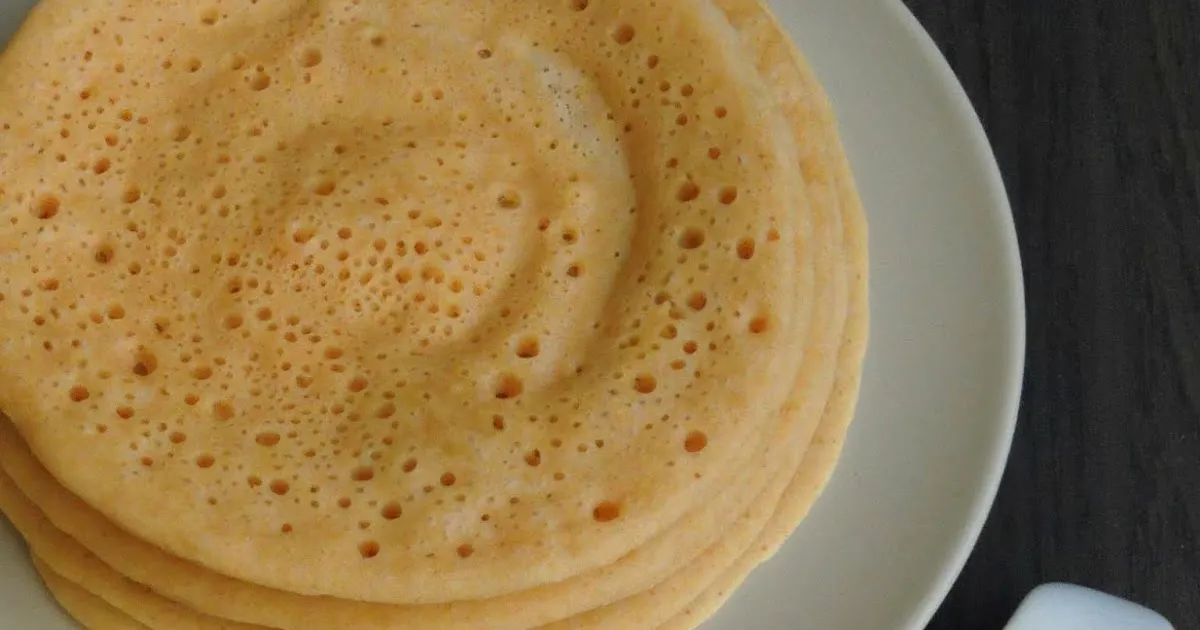
Gorraasa is a thick, spongy Sudanese flatbread cooked in a pan from a pourable batter rather than a kneaded dough. It is one of Sudan's two national breads, alongside kisra, and it is used as a tool as much as a food.
Its purpose shapes its texture. A round of gorraasa goes under stewed meat or a saucy dish, and pieces are torn off to pick food up, so it needs to be soft enough to tear cleanly and springy enough not to disintegrate under sauce. That is why it is thick and slightly elastic rather than crisp or brittle. It is often eaten with damaa, the Sudanese meat and tomato stew, in a combination known as gorraasa be dama.
Two things in the method are worth taking seriously. The batter must be thick, pancake-batter thick, because a thin one will not hold the bubbles that give the bread its sponginess. And it is cooked on one side only, over medium heat, until the top dries out completely. The heat needs watching: too high and the base burns before the top sets.
The source is emphatic about salting the batter properly, and it is right. Gorraasa made without enough salt is bland in a way that no accompaniment fixes, because there is nothing else in it.
Dietary tags are provided by contributors as a guide, not verified by AFN, and they depend on the products you buy. If you have a serious allergy, check every ingredient yourself. Cooking, allergies and your own judgement