We use essential cookies to make the site work. We would also like to set analytics cookies and advertising cookies, but only if you agree. You can choose each one separately. Read our cookie policy
Loading
Recipes
Browse the archive by country, course and cooking time.
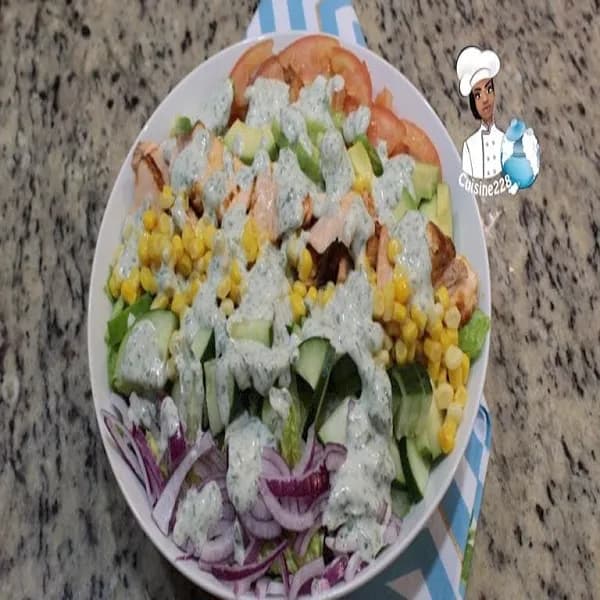
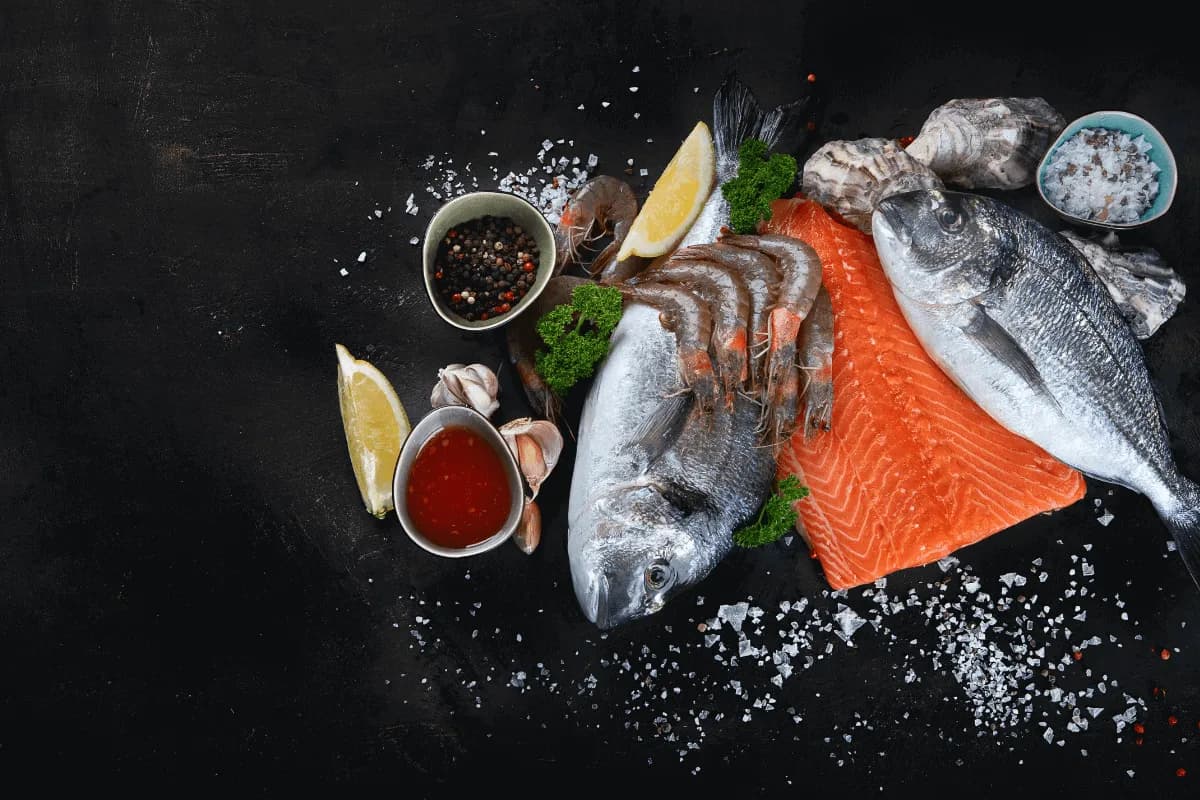
Pan-seared salmon over romaine, cucumber, tomato, red onion and avocado, dressed with an olive oil, mayonnaise and vinegar dressing. The source names no country and the combination is a broadly Western one, so it sits in Worldwide Recipes with its URL unchanged.
Salmon is the reason. It is a cold-water fish of the North Atlantic and North Pacific and is not native to African waters, so while it is imported and eaten in African cities, it belongs to no African tradition. The dishes Africa builds on its own fish are quite different: Senegalese thieboudienne with thiof, Ghanaian grilled tilapia with banku, Libyan haraimi, Egyptian sayadeya.
The technique worth taking from it is the sear. The salmon goes into a warm pan skin side up and is left alone for about four minutes until one side is golden, then turned for another three. Moving it early is what tears the flesh and stops it colouring. The avocado goes in raw at the end and should be added just before serving, since it browns quickly once cut. The dressing is blended separately and drizzled over rather than tossed through, which keeps the leaves crisp.
Oyster mushrooms grilled and tossed in suya spice. It is a plant-based version of the Nigerian street food, and it works better than most meat substitutions do.
**The traditional suya spice contains ground peanuts, and this recipe includes them.** The source flags it and offers to leave them out, which is honest, but it is worth stating clearly, because a peanut allergy and a suya spice blend are a genuinely dangerous combination and the name gives no warning.
Suya proper is skewered beef, ram or chicken rubbed in yaji, the spice blend of ground roasted peanuts, ginger, cayenne, garlic, onion powder and paprika, and grilled over open coals. It is Hausa in origin, from northern Nigeria, and it is sold across Nigeria, Cameroon, Niger, Ghana and parts of Sudan. Kyinkyinga is the Ghanaian name, agashe the Sudanese.
Oyster mushrooms are the right substitution and not an arbitrary one. Shredded, they have a fibrous, layered structure that genuinely resembles pulled meat, they take on the dry rub readily, and they char well. Most vegetables do neither.
The source's method is very compressed, one step reads "put in a preheated medium", with the word oven missing, and has been filled out below.
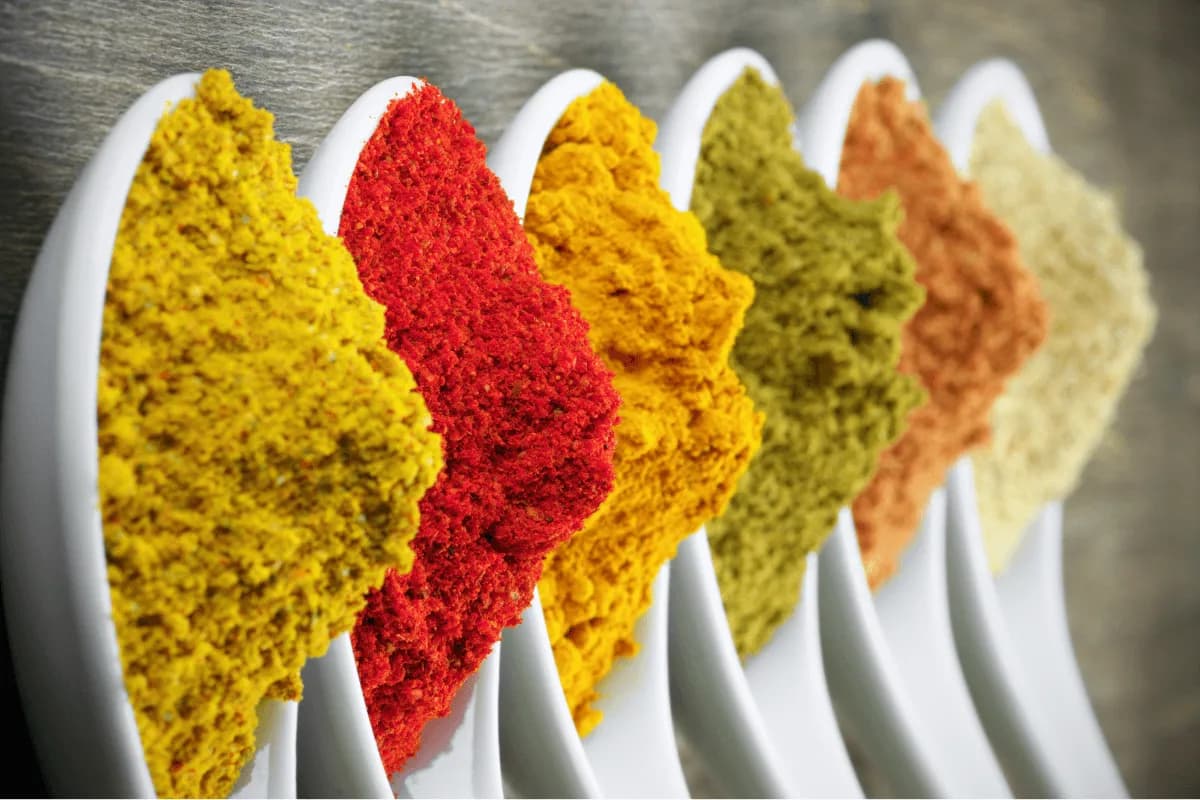
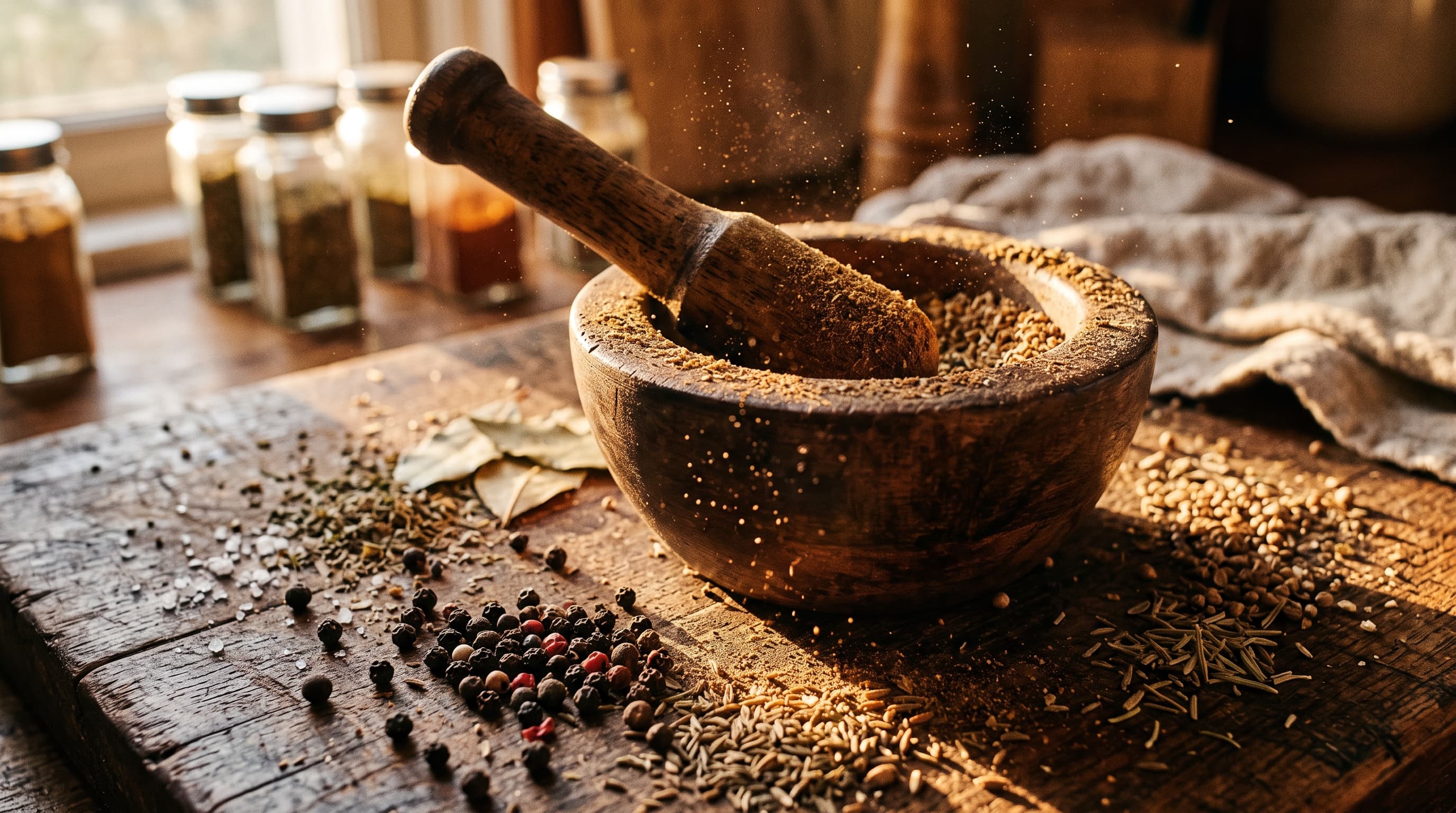
A dry rub for chicken: thyme, cayenne, cumin, paprika, garlic powder, black pepper, oregano, onion powder and salt. It carries no country and it is a broadly Western blend, the direct counterpart to the fish seasoning already in this collection.
That is worth saying plainly on a platform documenting African food, because Africa has a great many chicken seasonings that this is not. Nigerian suya spice, yaji, is built on ground peanuts with paprika, cayenne and ginger. Ethiopian berbere combines chilli with cardamom, fenugreek and rue. Moroccan ras el hanout can run to a dozen or more spices. Peri peri from Mozambique and Angola leads with African bird's eye chilli and lemon. Any of those would be the regional answer.
What is here is a competent all-purpose rub, useful for roasting, grilling or frying, and it keeps for months in a sealed jar. It is filed under Worldwide Recipes rather than presented as African. One practical note the source makes and is right about: the salt is adjustable and can be left out entirely, which is worth doing if you are also using a seasoning cube or a brine, since both already carry a great deal.
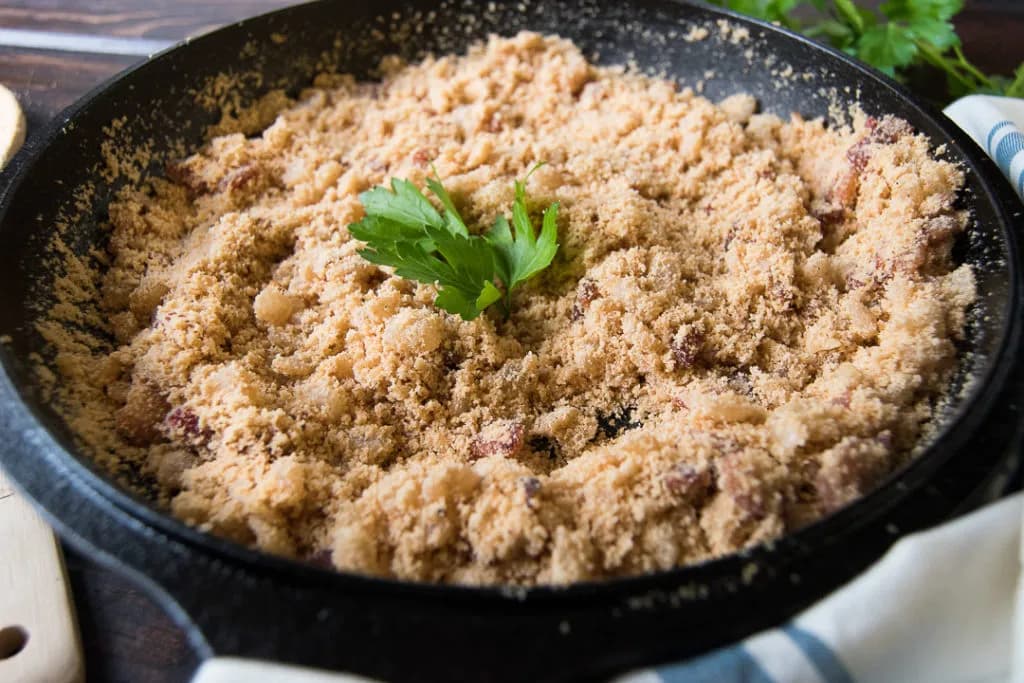
Farofa is cassava flour toasted in fat with onion, garlic and usually bacon, until it turns golden and sandy. It is Brazilian, and it appears on the table at almost every Brazilian meal that involves a stew or grilled meat.
Its job is texture. Brazilian cooking produces a great deal of rich, soupy food, feijoada above all, and farofa is scattered over it to absorb the liquid and give a dry, crunchy contrast. Eaten on its own it makes little sense; eaten over a wet dish it makes complete sense, and that is how it is used.
The African connection is direct and worth stating. Cassava is South American in origin, but the technique of toasting cassava meal into a dry accompaniment moved across the Atlantic in both directions with the transatlantic slave trade, and farofa's closest relatives are West African. Garri, the fermented and toasted cassava granules eaten across Nigeria, Ghana and Benin, is made by essentially the same process. Brazilian cooking, and Bahian cooking in particular, carries an enormous amount of West African influence, and farofa sits squarely in that history, which is precisely why it belongs in a Worldwide collection on an African food site rather than being simply foreign.
The method is short and the one instruction that matters is to keep it moving. Cassava flour burns quickly and unevenly.
Dietary tags are provided by contributors as a guide, not verified by AFN, and they depend on the products you buy. If you have a serious allergy, check every ingredient yourself. Cooking, allergies and your own judgement