

We use essential cookies to make the site work. We would also like to set analytics cookies and advertising cookies, but only if you agree. You can choose each one separately. Read our cookie policy

Loading
Recipes
Browse the archive by country, course and cooking time.
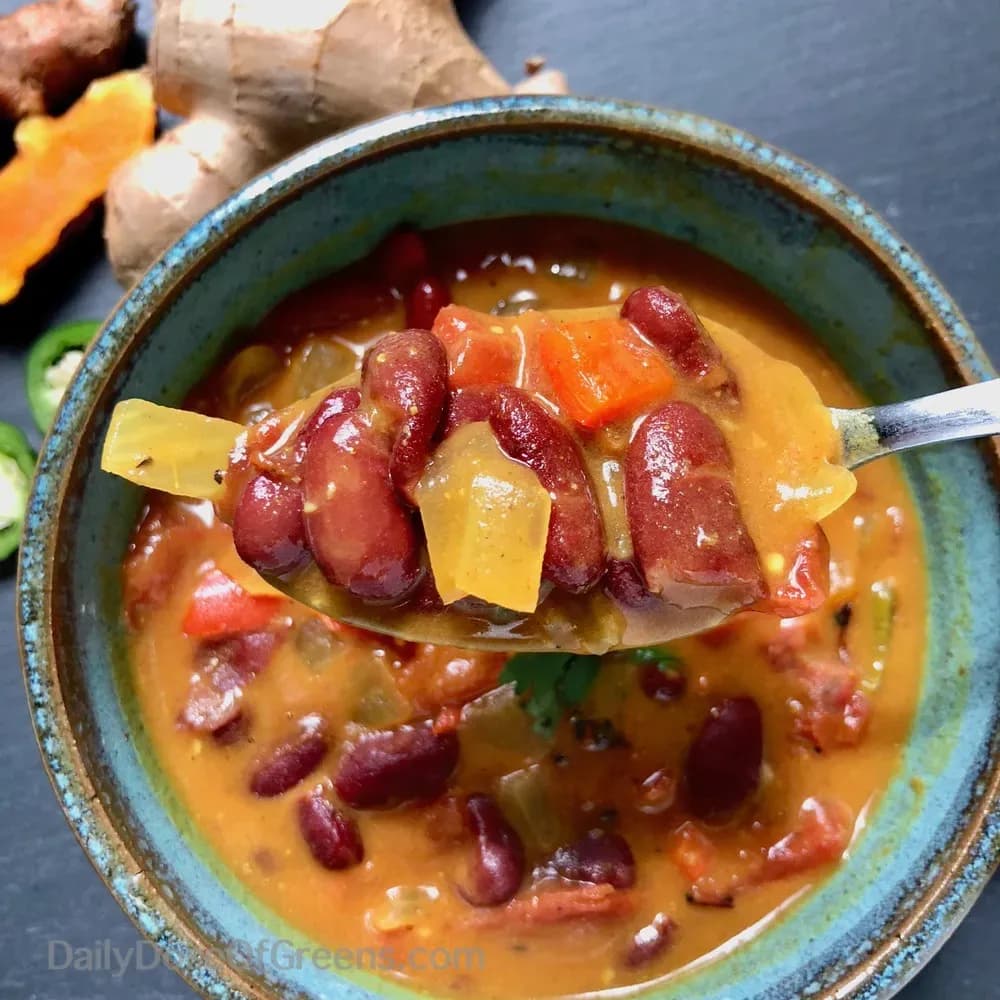
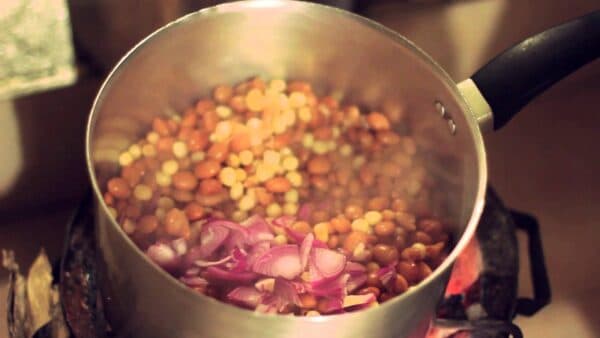
Dried white beans cooked until tender, then finished with red onion and sliced tomatoes into a thick, soupy stew. It is Malagasy, and it is served everywhere on the island.
It is laoka, which is the useful word here. In Malagasy eating, rice is the meal and laoka is whatever accompanies it, the thing that goes on top of, or beside, a large plate of rice. Tsaramaso is one of the most popular laoka in the country, and it is eaten as a matter of course rather than as an occasion dish.
It is very often not vegetarian. Zebu meat, the humped cattle that are central to Malagasy life, makes it hen'omby sy tsaramaso, and pork makes it tsaramaso sy henakisoa. The shank is the cut the source recommends. This version is the plain one, which is also widely eaten.
The technique in the recipe is worth noting: the beans are cooked separately in water, seasoned only at the end, and a cup of their cooking liquid is kept back. That liquid is what the finished stew is loosened with, and it carries starch and flavour that plain water would not.
The source compares it to cassoulet, which is a reasonable shorthand, beans and meat cooked long and slow, though the seasoning is entirely different.
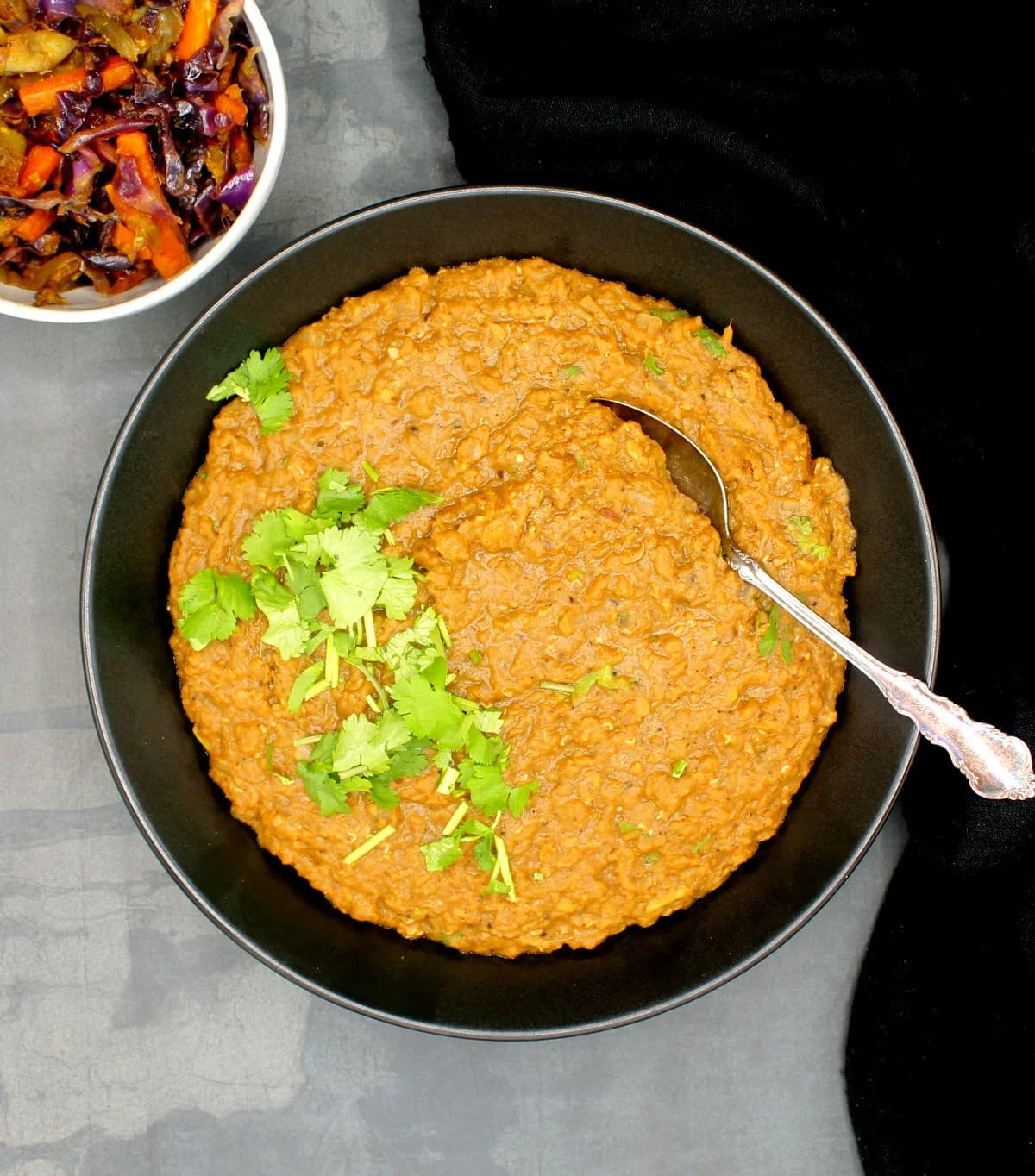
Misir Wot is one of Ethiopia's most widely eaten and internationally celebrated dishes, a deeply spiced red lentil stew made with berbere spice blend and niter kibbeh (Ethiopian spiced butter) that develops extraordinary depth and complexity from such simple ingredients. The lentils break down completely during cooking, creating a thick, creamy stew that carries the bold spice profile throughout. The dish is a staple of the Ethiopian Orthodox Christian fasting diet, during which meat and dairy are avoided for significant portions of the year. It is one of the dishes that has made Ethiopian vegetarian and vegan cooking celebrated globally, proof that plant-based food can be intensely flavourful and deeply satisfying.
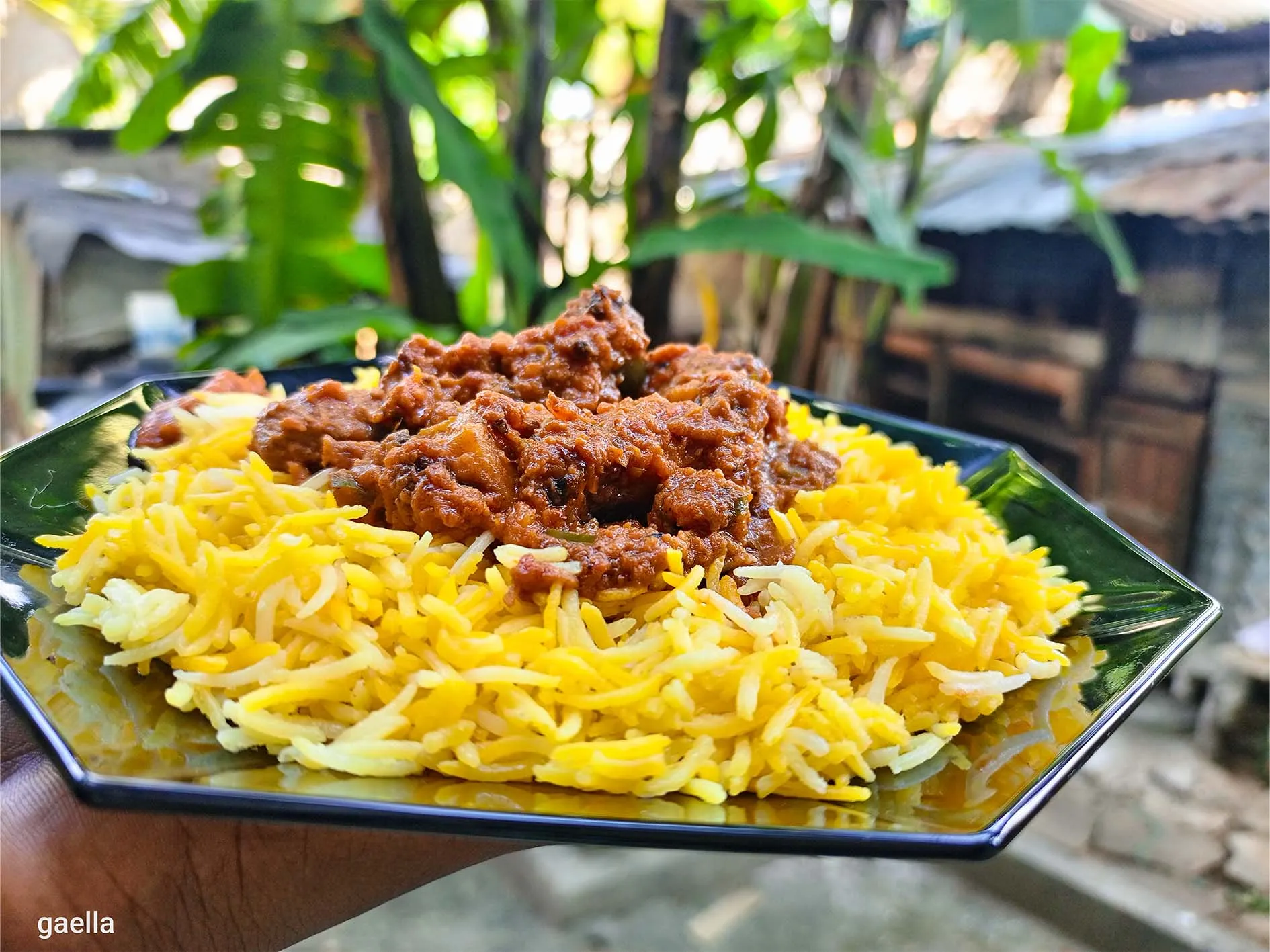
Kenyan biryani is a Swahili coast dish, and the coast is where the Indian Ocean has been depositing influences on East Africa for more than a thousand years. Arab, Persian and Indian traders working the monsoon routes brought rice, spices and techniques to Mombasa, Lamu and Zanzibar, and what developed there is neither Indian nor Arab but Swahili.
The biryani method itself is unmistakably South Asian: meat cooked in a spiced yoghurt gravy, rice parboiled separately with whole spices, the two layered and steamed together so the rice finishes in the gravy's steam. The Kenyan version keeps that structure. What it does differently is in the details, with fried onions used in quantity, tomato leaning heavier than in most Indian versions, and fried potatoes worked through the meat rather than served alongside.
It is occasion food. Biryani appears at Kenyan weddings, at Eid, and at the large family meals where the effort is justified by the number of people eating. The orange food colouring streaked through part of the rice, which purists elsewhere would query, is standard in Kenya and is part of what a Kenyan expects a biryani to look like. Served with kachumbari, the raw tomato and onion salad, it is one of the clearest expressions of what the coast is.
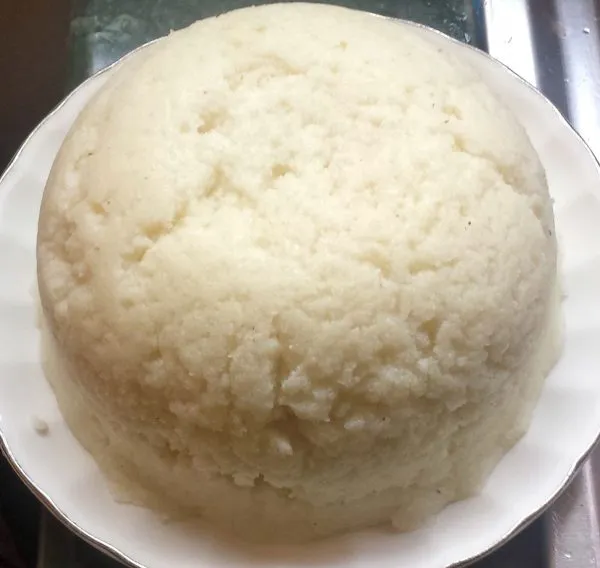
Ugali is white maize meal cooked with water into a firm, smooth mass, and it is the staple of Kenya, Tanzania and much of East and Southern Africa. It is not a flavoured dish and does not try to be. Its role is to anchor and complete a plate, and everything else is arranged in relation to it.
Making it is a physical skill rather than a recipe. The cook works flour into boiling water over heat, stirring continuously against real resistance, until the mass pulls away from the sides of the pot and holds its shape. The ability to make good ugali is a basic domestic competence in Kenyan households, and a poorly made one is noticed and remarked on.
It is eaten by hand. A portion is broken off, pressed between the fingers into a scoop, and used to lift stew, greens or fish. Ugali alone is not a meal; it is the constant against which the rest of the plate is judged. The same preparation runs across the region under other names: nsima and nshima in Malawi and Zambia, sadza in Zimbabwe, posho in Uganda, pap in South Africa. Sorghum, millet and cassava flour are all used in place of maize in different areas, and in Kenya nyama choma with kachumbari is the pairing most associated with it.
Dietary tags are provided by contributors as a guide, not verified by AFN, and they depend on the products you buy. If you have a serious allergy, check every ingredient yourself. Cooking, allergies and your own judgement