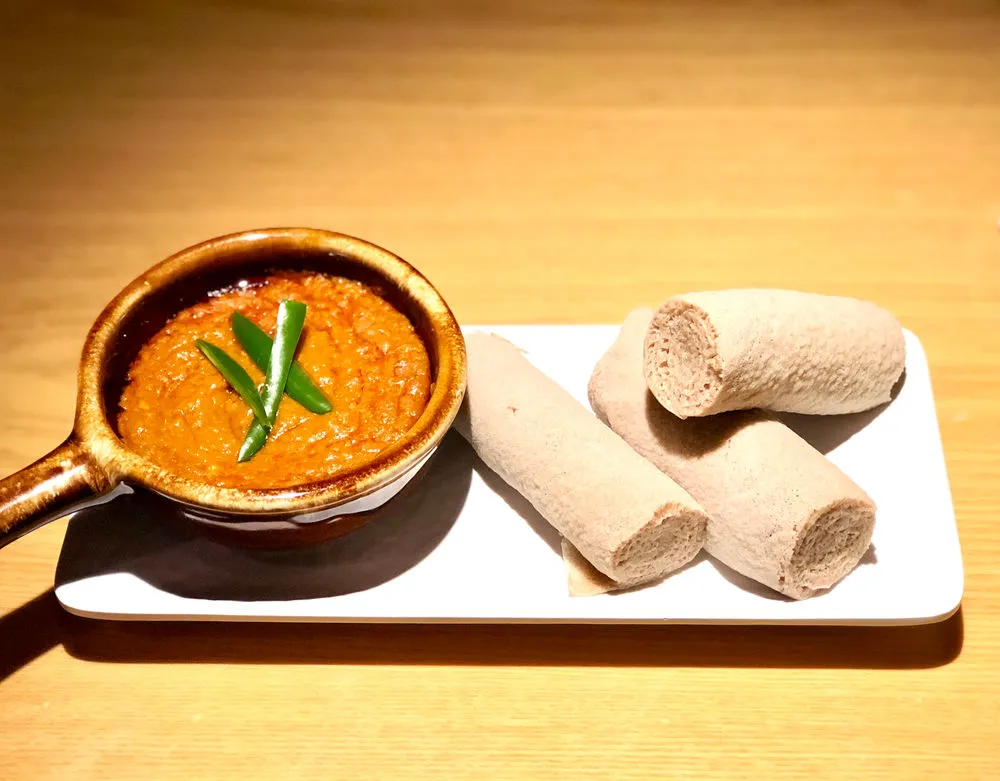
Shiro Wat (Ethiopian Chickpea Stew)
4.74.67 out of 5, 3 ratings35 min


Cookies on African Food Network
We use essential cookies to make the site work. We would also like to set analytics cookies and advertising cookies, but only if you agree. You can choose each one separately. Read our cookie policy
Browse the archive by country, course and cooking time.
Shiro wat is ground chickpea stew, and it is among the most eaten dishes in Ethiopia and Eritrea. Onion, garlic, tomato and berbere are cooked down in oil, chickpea flour is whisked in, and the result thickens to something between a thick gravy and a puree, smooth enough to spread and eaten with injera. Its position has a great deal to do with the religious calendar. Ethiopian Orthodox practice includes a very large number of fasting days, on which no meat, eggs or dairy are eaten, and shiro contains none of them. It is standard on Wednesdays and Fridays, through the eight weeks of Tsom, the Great Lent, and it is eaten during Ramadan by Ethiopian and Eritrean Muslims too. That is a dish serving two religions in one country without modification. It is also cheap and quick, which explains the rest of its reach. Shiro powder, sold ready mixed with the spices already in it, is available across Ethiopia and increasingly abroad, in two kinds: mitten shiro, which is red and carries berbere, and netch shiro, which is white and mild. The dish takes different forms by consistency and name: shiro fessess is runny and served over injera with chillies, shiro tegamino is thick and cooked in an earthenware pot until it bubbles and caramelises at the base, and shiro fit fit shreds injera through it for breakfast.
Highest Rated
35 minEasyEthiopia
Recipe by Blessing · Africook
Nothing here yet
Clear all
Dietary tags are provided by contributors as a guide, not verified by AFN, and they depend on the products you buy. If you have a serious allergy, check every ingredient yourself. Cooking, allergies and your own judgement