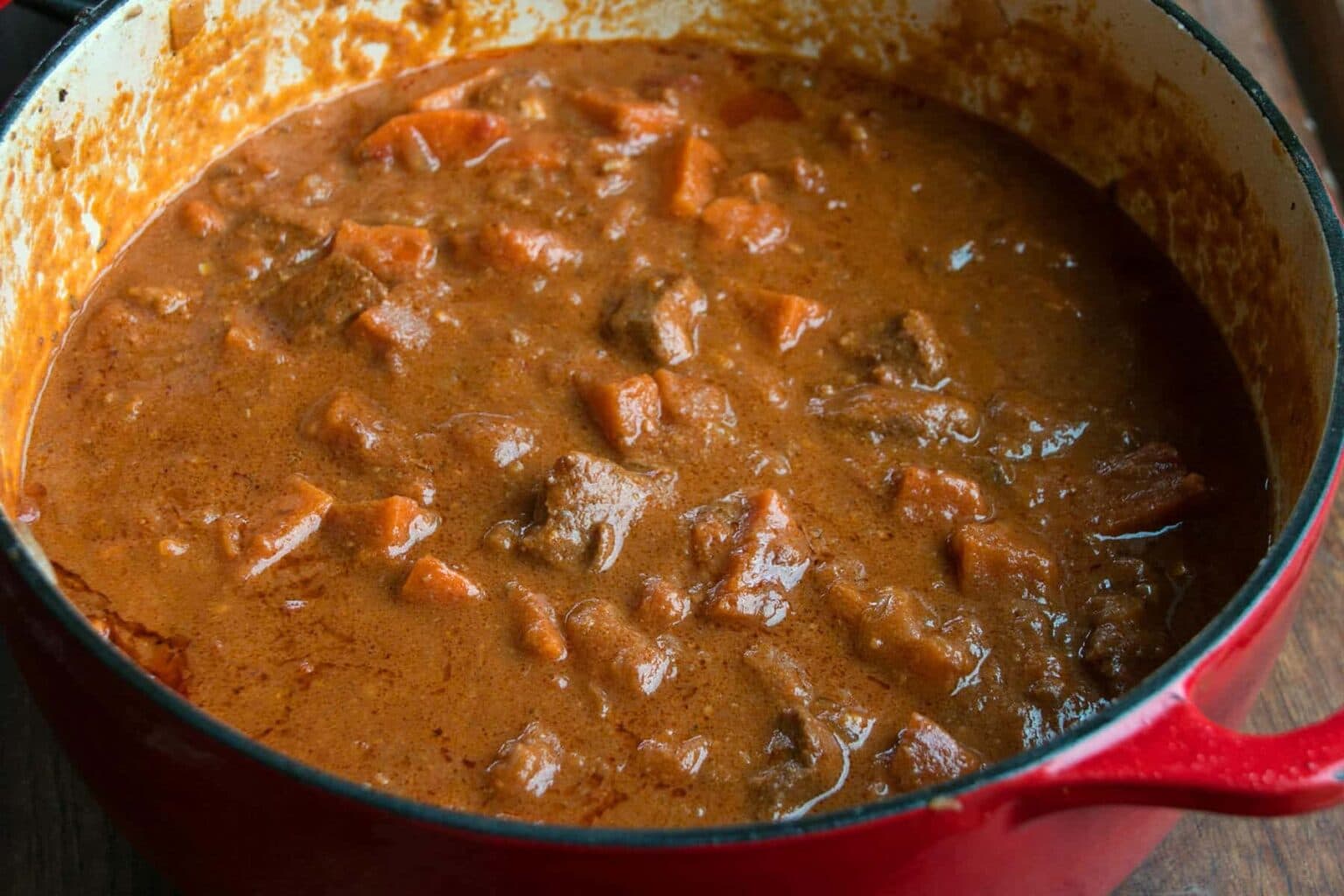
Domada (Gambian Peanut Stew)
4.74.67 out of 5, 3 ratings


Cookies on African Food Network
We use essential cookies to make the site work. We would also like to set analytics cookies and advertising cookies, but only if you agree. You can choose each one separately. Read our cookie policy

Browse the archive by country, course and cooking time.
Domada, also written Domoda, is Gambia's national dish and one of West Africa's most comforting stews, a rich, thick groundnut (peanut) based stew cooked with chicken or beef, tomatoes, sweet potato, and cabbage. The peanut paste dissolves into the broth as it cooks, creating a silky, deeply flavoured sauce that coats every piece of protein and vegetable in the pot. The dish belongs to the family of West African groundnut soups found across Senegal, Ghana, Nigeria, and Cameroon, but Domada has its own character, sweeter from the potato, more mellow than the spicier Ghanaian versions, and always generous in the quantity of groundnut used. In Gambia it is eaten at celebrations, family gatherings, and as everyday home cooking.
Highest Rated
EasyPan-African · Gambia
Recipe by Nympha · Africook
Nothing here yet
