We use essential cookies to make the site work. We would also like to set analytics cookies and advertising cookies, but only if you agree. You can choose each one separately. Read our cookie policy
Loading
Recipes
Browse the archive by country, course and cooking time.
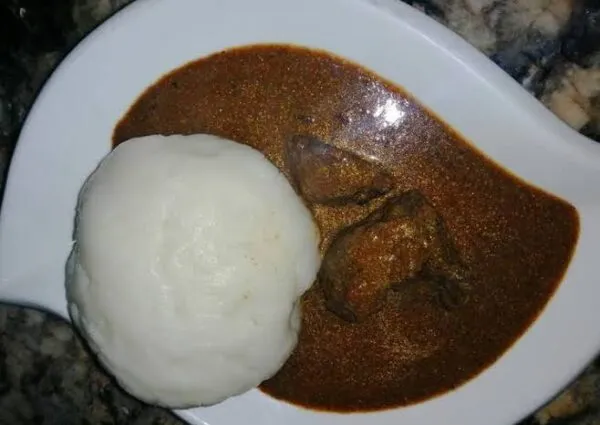
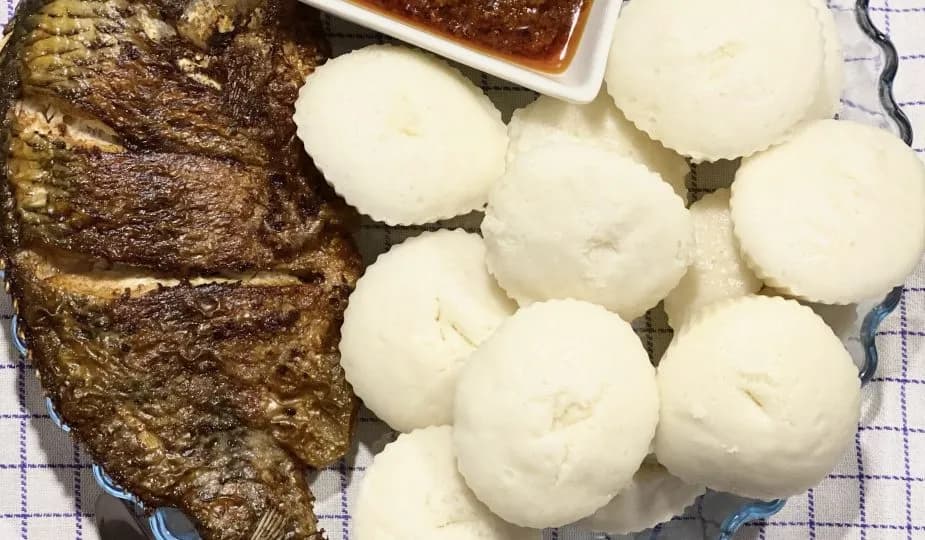
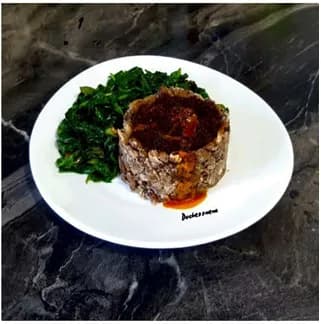
Tuwon dawa is guinea corn swallow, and its pairing with miyan kuka is one of the fixed combinations of Northern Nigerian eating. The tuwo is stiff, plain and pale; the soup is dark green, drawing and sharply flavoured. Neither is eaten without something like the other.
Guinea corn is sorghum, and sorghum is the older grain of the Sahel. It was the staple of Northern Nigeria long before maize arrived from across the Atlantic, and it holds ground in the north that maize has taken elsewhere on the continent because it tolerates the heat and the short rains better. Tuwon dawa is what that grain becomes on a plate: milled, stirred into boiling water and worked to a smooth firm mass.
The word tuwo covers a family rather than a single dish. Tuwon dawa is the guinea corn version, tuwon masara the maize one, tuwon shinkafa the rice one, and Hausa households distinguish between them by texture and by which soup they suit. Miyan kuka, made from ground baobab leaf, is the partner most associated with the guinea corn version, and the two together are among the most recognisable plates in the north.
Tuwon masara is maize swallow, and the name is Hausa and literal: tuwo for the cooked mass, masara for maize. It is one of the everyday staples of Northern Nigeria and among the plainest things the region cooks, which is entirely by design.
It is the same family as tuwon dawa, made from guinea corn, and tuwon shinkafa, made from rice, and Hausa households treat the three as distinct rather than interchangeable. Masara gives a paler, milder, slightly sweeter tuwo than dawa, and it is the version most commonly compared to polenta by people trying to explain it. The comparison is fair on ingredient and misleading on treatment: polenta is seasoned and enriched, while tuwon masara is cooked in plain water with nothing added, because its job is to carry the soup rather than to compete with it.
That is what the northern soups are for. Miyan wake made from beans, miyan taushe with pumpkin and groundnut, miyan zogale from moringa, miyan kuka from baobab leaf, miyan ridi from sesame. Tuwon masara goes with any of them, and with any Nigerian soup from further south. The corn is dried, ground to a medium consistency and sieved fine, and the resulting flour is stirred into boiling water and worked smooth.
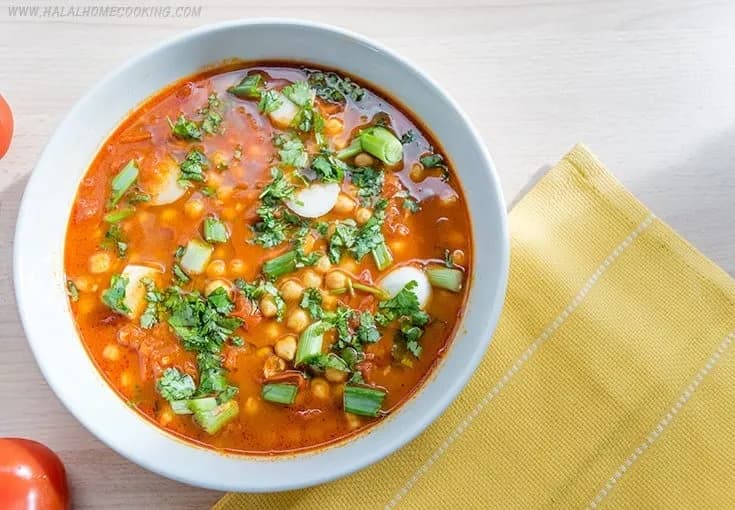
Dried white beans cooked until tender, then finished with red onion and sliced tomatoes into a thick, soupy stew. It is Malagasy, and it is served everywhere on the island.
It is laoka, which is the useful word here. In Malagasy eating, rice is the meal and laoka is whatever accompanies it, the thing that goes on top of, or beside, a large plate of rice. Tsaramaso is one of the most popular laoka in the country, and it is eaten as a matter of course rather than as an occasion dish.
It is very often not vegetarian. Zebu meat, the humped cattle that are central to Malagasy life, makes it hen'omby sy tsaramaso, and pork makes it tsaramaso sy henakisoa. The shank is the cut the source recommends. This version is the plain one, which is also widely eaten.
The technique in the recipe is worth noting: the beans are cooked separately in water, seasoned only at the end, and a cup of their cooking liquid is kept back. That liquid is what the finished stew is loosened with, and it carries starch and flavour that plain water would not.
The source compares it to cassoulet, which is a reasonable shorthand, beans and meat cooked long and slow, though the seasoning is entirely different.
Koshari is Egypt's national dish and its most famous street food, rice, lentils and macaroni layered together, topped with a spiced tomato sauce, crisp fried onions and a sharp garlic-vinegar dressing.
It is a dish of components, and none of them is complicated. What makes koshari work is that all of them are made separately and assembled at the end, so each keeps its own texture: the rice and lentils soft, the pasta firm, the onions properly crisp, the sauce sharp with vinegar and cumin.
It is cheap, filling and entirely plant-based as standard, which is why it feeds an enormous number of people every day. Koshari shops exist across Egypt doing nothing else, and it is eaten as often at home. Its ubiquity is genuine, the comparison to macaroni cheese in the source is about how ordinary it is rather than what it tastes like.
The daqqa, the garlic and vinegar dressing, is what stops the whole thing being stodgy, and it is the element most often underdone by people making it for the first time. Be generous with it.
Chickpeas are usually added on top.
Dietary tags are provided by contributors as a guide, not verified by AFN, and they depend on the products you buy. If you have a serious allergy, check every ingredient yourself. Cooking, allergies and your own judgement