We use essential cookies to make the site work. We would also like to set analytics cookies and advertising cookies, but only if you agree. You can choose each one separately. Read our cookie policy
Loading
Recipes
Browse the archive by country, course and cooking time.
Fried yam is called dundun in Yoruba, and it is one of the most eaten street foods in Nigeria. Yam is peeled, cut into thick chips, salted and fried until the outside crisps and the inside stays soft and floury. It is sold from roadside stands with a pepper sauce, and it is eaten at breakfast, at lunch and late at night.
Yam is the crop that Nigeria produces more of than anywhere else in the world, and dundun is the most direct thing to do with it. It costs almost nothing, needs three ingredients, and the frying takes minutes. That combination is what makes it street food: a vendor with a pot of oil and a sack of yam is in business.
Its usual partner is akara, the fried bean cake, and the pairing of dundun and akara with a ground pepper sauce is a standard Nigerian breakfast. It is also eaten with egg sauce, with fried fish, with stew, or on its own. The word dundun covers the fried treatment specifically, as distinct from the plain, pounded and porridge treatments of the same tuber, each of which occupies its own place on the Nigerian table.
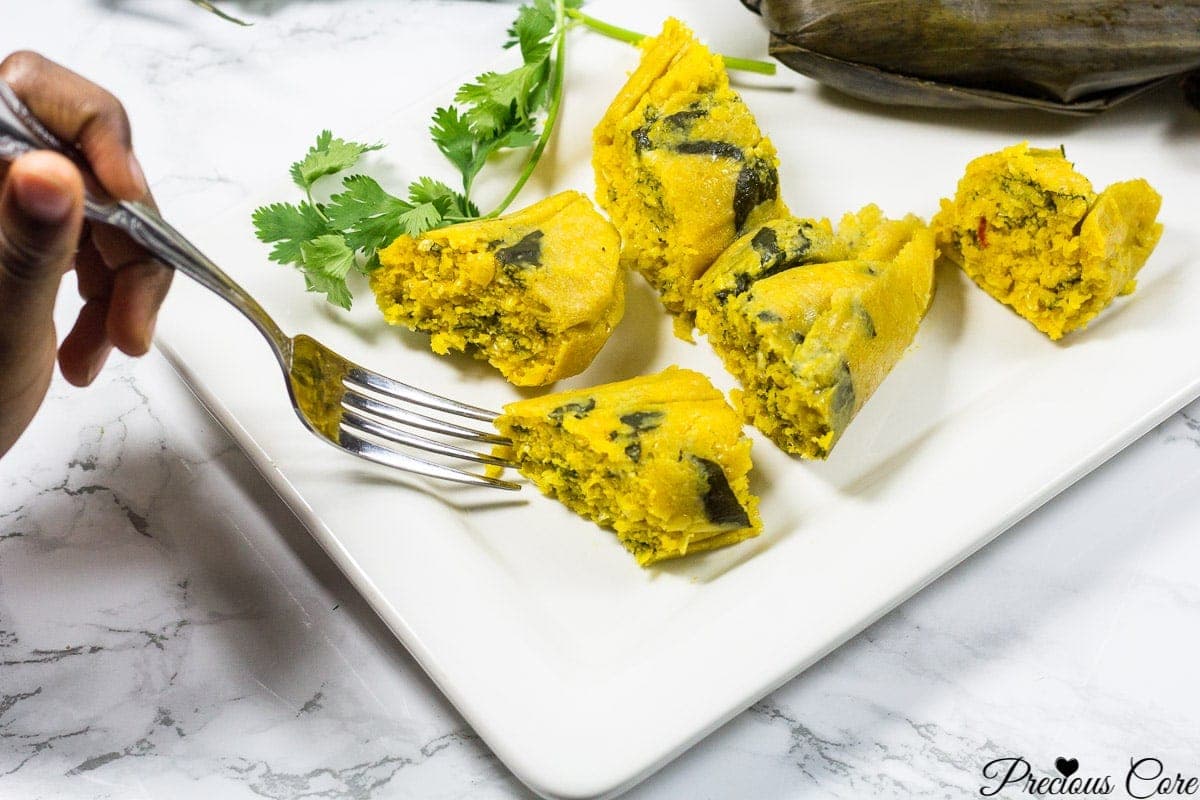
Koki corn is a Cameroonian steamed pudding made from ground fresh corn mixed with palm oil and greens, wrapped in banana leaves and steamed until it sets firm.
It is the corn version of a dish more commonly made with black-eyed peas. Koki beans, ground soaked beans treated the same way, is the better-known form, and the two are close relatives using the same technique on different staples. Both belong to a wider West and Central African family of leaf-wrapped steamed puddings that includes moi moi and abala.
The wrapping is not decorative. Banana leaves are warmed over a flame first, which makes them pliable enough to fold without splitting, and they hold the loose mixture in shape while it steams. They also contribute a faint grassy aroma that the pudding takes on.
Palm oil is heated before it goes in, which changes how it behaves in the mixture and gives the finished koki its deep orange colour.
Njama njama, huckleberry leaves, a Cameroonian staple green, or spinach is folded through.
It sets firm enough to slice and is eaten hot, on its own or with plantain.
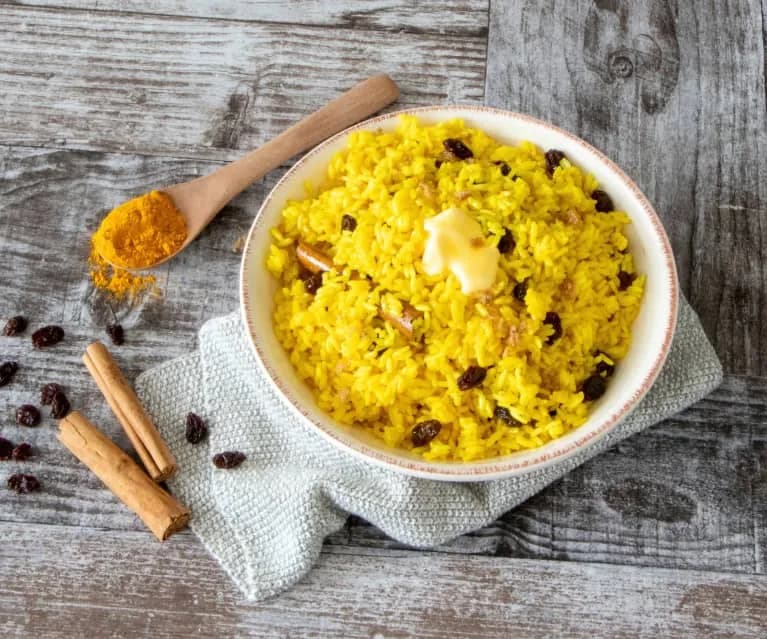
Rice cooked with turmeric, cinnamon, raisins and sugar into a sweet golden side dish. It is South African, from the Cape Malay tradition, and it is served alongside savoury curries and meat.
Sweet rice as a savoury accompaniment is the thing to understand. Cape Malay yellow rice contains sugar, raisins and cinnamon, and it goes with curry, bobotie and roast meat, the sweetness is deliberately set against savoury and spiced food rather than served as a dessert. That contrast runs right through Cape Malay cooking and it is the same instinct behind bobotie's fruit chutney and the apricot jam in pickled fish.
The community it comes from was formed by people brought to the Cape from Southeast Asia as slaves and political exiles by the Dutch from the seventeenth century onwards, and the dish is one of many that carries that history directly. Related yellow rices exist across the world, nasi kuning in Indonesia, kaha buth in Sri Lanka, and the family resemblance is not coincidental.
Turmeric is what colours it. Saffron is used in more expensive versions and annatto elsewhere.
**A significant problem with this page.** Its ingredient list merges two separate recipes, a yellow rice and a marinated roast chicken, into one list, and its method covers both. Only the rice belongs here.
Dried white beans cooked until tender, then finished with red onion and sliced tomatoes into a thick, soupy stew. It is Malagasy, and it is served everywhere on the island.
It is laoka, which is the useful word here. In Malagasy eating, rice is the meal and laoka is whatever accompanies it, the thing that goes on top of, or beside, a large plate of rice. Tsaramaso is one of the most popular laoka in the country, and it is eaten as a matter of course rather than as an occasion dish.
It is very often not vegetarian. Zebu meat, the humped cattle that are central to Malagasy life, makes it hen'omby sy tsaramaso, and pork makes it tsaramaso sy henakisoa. The shank is the cut the source recommends. This version is the plain one, which is also widely eaten.
The technique in the recipe is worth noting: the beans are cooked separately in water, seasoned only at the end, and a cup of their cooking liquid is kept back. That liquid is what the finished stew is loosened with, and it carries starch and flavour that plain water would not.
The source compares it to cassoulet, which is a reasonable shorthand, beans and meat cooked long and slow, though the seasoning is entirely different.
Dietary tags are provided by contributors as a guide, not verified by AFN, and they depend on the products you buy. If you have a serious allergy, check every ingredient yourself. Cooking, allergies and your own judgement