We use essential cookies to make the site work. We would also like to set analytics cookies and advertising cookies, but only if you agree. You can choose each one separately. Read our cookie policy
Loading
Recipes
Browse the archive by country, course and cooking time.
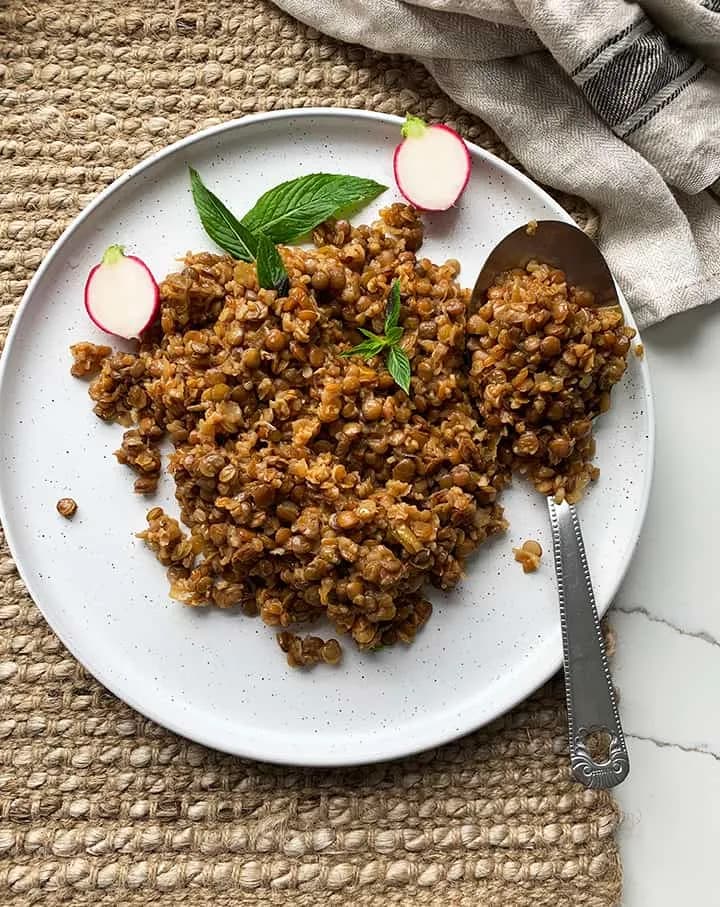
Mujadara is lentils and rice cooked together and topped with deeply caramelised onions, and the source names it a signature Middle Eastern dish. It belongs to the Levant rather than to Africa, and it sits in Worldwide Recipes for that reason.
The name is unflattering and accurate. In Arabic mujaddara means riddled with small holes, or pockmarked, and it describes the appearance of the lentils scattered through the rice. It is nicknamed the dish of the poor everywhere it is eaten, because it contains no meat and nothing expensive, and the source makes a fair comparison: mujadara is to the Middle East what couscous is to the Maghreb.
Its age is what makes attribution impossible. The first recorded recipe goes back centuries, and as the source observes, the older and simpler a dish is, the more cultures claim its paternity. What matters technically is the onions: they need to be fried until the edges genuinely curl and darken, and the flavoured oil they leave behind is poured into the pot without them, so the onions stay crisp on top rather than softening into the rice.
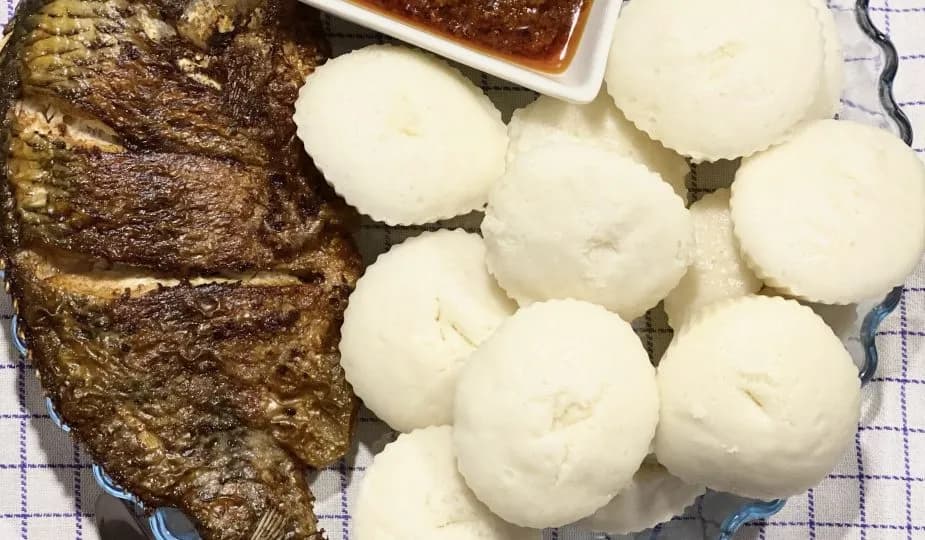
Alkubus is a Hausa steamed wheat bread from Northern Nigeria, plain by design and made to be eaten with something else. It is soft, faintly sour from the yeast, and it holds its shape well enough to be cut into rounds or wedges.
Its role on the plate is the role bread plays across the north: the thing that carries the soup. Alkubus is eaten most often with miyan taushe, the pumpkin and groundnut soup, and it also goes with agushi soup, vegetable soup, cabbage stew or a plain tomato sauce. That pairing with miyan taushe is the one Northern Nigerians name first.
There are two ways to make it and they produce different things. Baked in a greased pan and topped with carrot and onion, it is a loaf to be cut and eaten in slices. Portioned into wrappers and steamed over boiling water, it comes out softer and denser, closer to a dumpling, and that is the method the recipe here follows. Steaming rather than baking runs through a great deal of Hausa cooking, from dambu to danwake to masa, and alkubus belongs to that family more than it does to any oven tradition.
Dried white beans cooked until tender, then finished with red onion and sliced tomatoes into a thick, soupy stew. It is Malagasy, and it is served everywhere on the island.
It is laoka, which is the useful word here. In Malagasy eating, rice is the meal and laoka is whatever accompanies it, the thing that goes on top of, or beside, a large plate of rice. Tsaramaso is one of the most popular laoka in the country, and it is eaten as a matter of course rather than as an occasion dish.
It is very often not vegetarian. Zebu meat, the humped cattle that are central to Malagasy life, makes it hen'omby sy tsaramaso, and pork makes it tsaramaso sy henakisoa. The shank is the cut the source recommends. This version is the plain one, which is also widely eaten.
The technique in the recipe is worth noting: the beans are cooked separately in water, seasoned only at the end, and a cup of their cooking liquid is kept back. That liquid is what the finished stew is loosened with, and it carries starch and flavour that plain water would not.
The source compares it to cassoulet, which is a reasonable shorthand, beans and meat cooked long and slow, though the seasoning is entirely different.
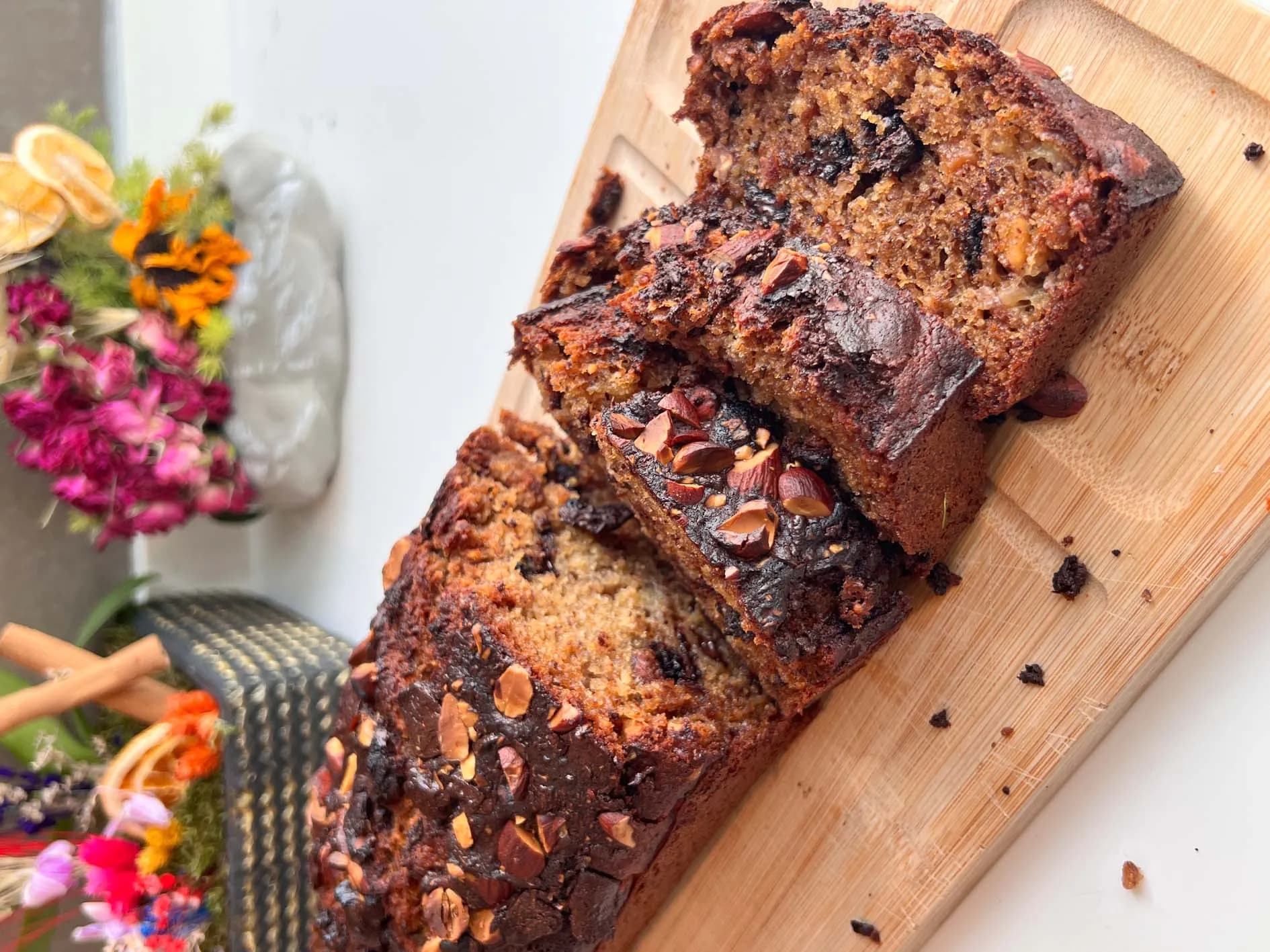
Banana bread with dark chocolate, crushed almonds, Greek yoghurt and warm spices. No country is claimed; banana bread is American in origin.
**It contains almonds, which the title only hints at.**
The Greek yoghurt is the interesting addition and it is doing two things. Its acidity reacts with the bicarbonate of soda, giving lift, which matters because there is no other acid in the batter. And it brings moisture without more fat, which is why this loaf stays soft for several days without being heavy. Sour cream and buttermilk do the same job in other recipes.
Chopping the chocolate and nuts by hand, which the method specifies, is better than buying chips. Chopped chocolate gives uneven pieces, some melting into the crumb, some staying as distinct pockets, where uniform chips stay uniform.
**A contradiction to watch.** The method opens with one oven setting and then, eleven steps later, gives a hotter one for the bake itself. Those cannot both be right. The higher figure is standard for a loaf of this size and is what has been used here; the lower one would take considerably longer than the stated baking time.
A separate banana bread recipe exists on this site and the two compete for some of the same searches.
Dietary tags are provided by contributors as a guide, not verified by AFN, and they depend on the products you buy. If you have a serious allergy, check every ingredient yourself. Cooking, allergies and your own judgement