We use essential cookies to make the site work. We would also like to set analytics cookies and advertising cookies, but only if you agree. You can choose each one separately. Read our cookie policy
Loading
Recipes
Browse the archive by country, course and cooking time.
Peri peri, also written piri piri, is a sauce built on the African bird's eye chilli, and both the chilli and the sauce belong to the Portuguese-speaking parts of southern Africa. Piri piri is Swahili for pepper, and the chilli itself grows wild across Mozambique, Angola and the surrounding region.
Its history runs both ways across the Atlantic. Chillies are South American and were carried to Africa by Portuguese traders in the sixteenth century, where the small bird's eye variety naturalised and became a defining ingredient of Mozambican cooking. Portuguese settlers then took the sauce back to Portugal, and from there it spread internationally, which is why most people outside Africa first meet it as a restaurant chain flavour rather than as a Mozambican one.
The sauce is not only heat. Bird's eye chilli brings a genuine fierceness, but the finished sauce carries tangy citrus from lemon, a little sweetness from sugar, and an earthy smokiness from paprika and garlic, and the result is thick, almost paste-like. The technique worth noting is emulsifying the oil into the blended sauce at the end, at reduced speed, which gives the body it needs to cling to chicken. The source is emphatic on one point: do not use extra virgin olive oil, which turns bitter when blended.
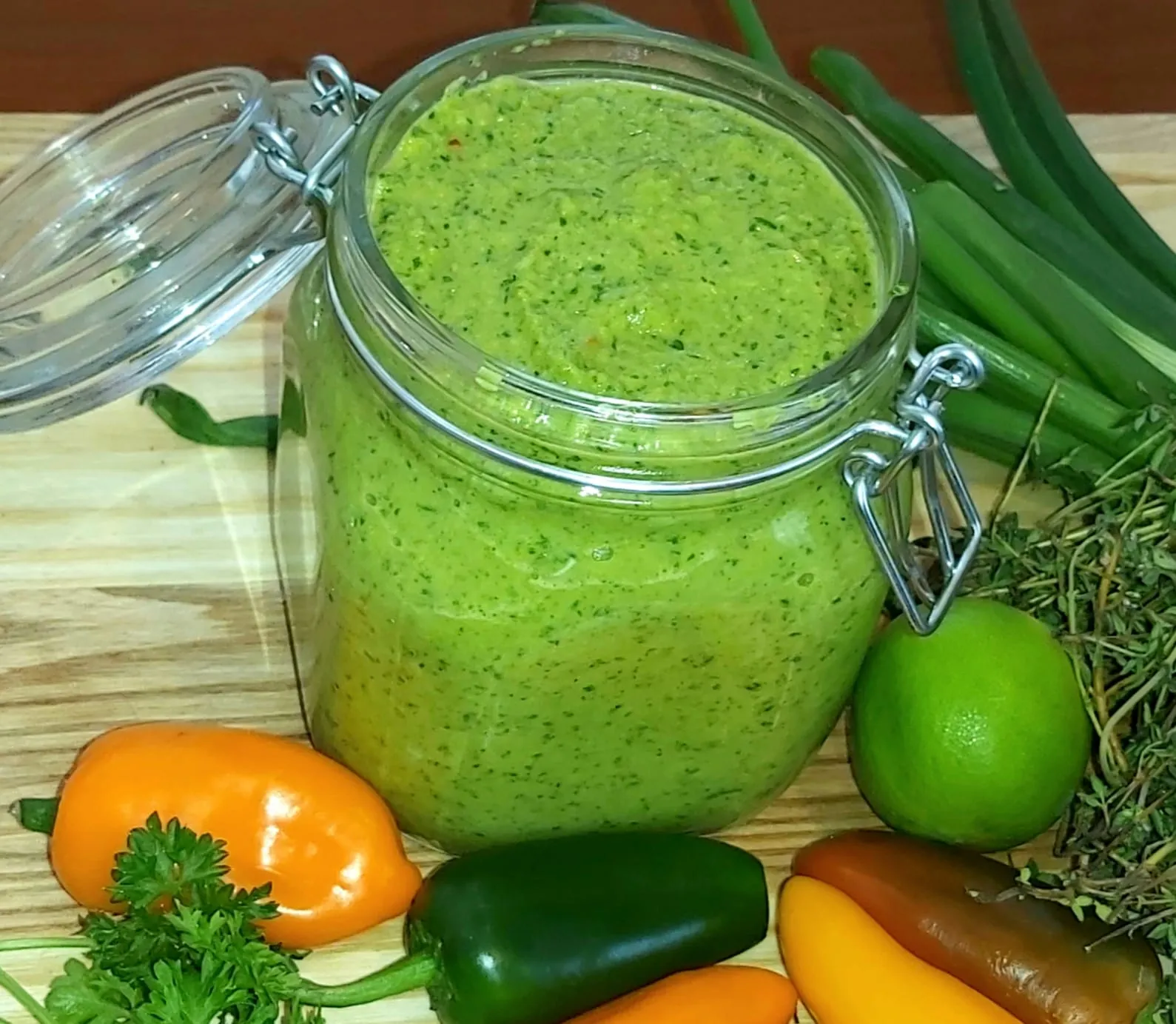
Green seasoning is a blended paste of fresh herbs, aromatics and chilli, used across the Caribbean as an all-purpose marinade and flavour base. Trinidad and Tobago is where it is most identified, and Guyana, Jamaica and the wider region all have versions.
The source describes it as known to the Caribbean and some parts of Africa, which is a fair way of putting it. Its home is the Caribbean. What it resembles in Africa is a family of green pastes that do similar work: Senegalese nokoss, Moroccan chermoula, and the blended pepper bases used across West Africa. Those are related in function rather than in origin, and green seasoning as it is made here is Caribbean.
It goes on everything: meat, seafood, grains, stews. Composition varies enormously by household and island, and the version here is a modest one built on parsley, coriander, celery, onion, garlic, scotch bonnet and thyme. Bigger versions include chive, culantro, pimento peppers and ginger. It keeps about a week refrigerated, and freezing it in ice cube trays is the standard way to hold a large batch, which is how most Caribbean kitchens handle it.
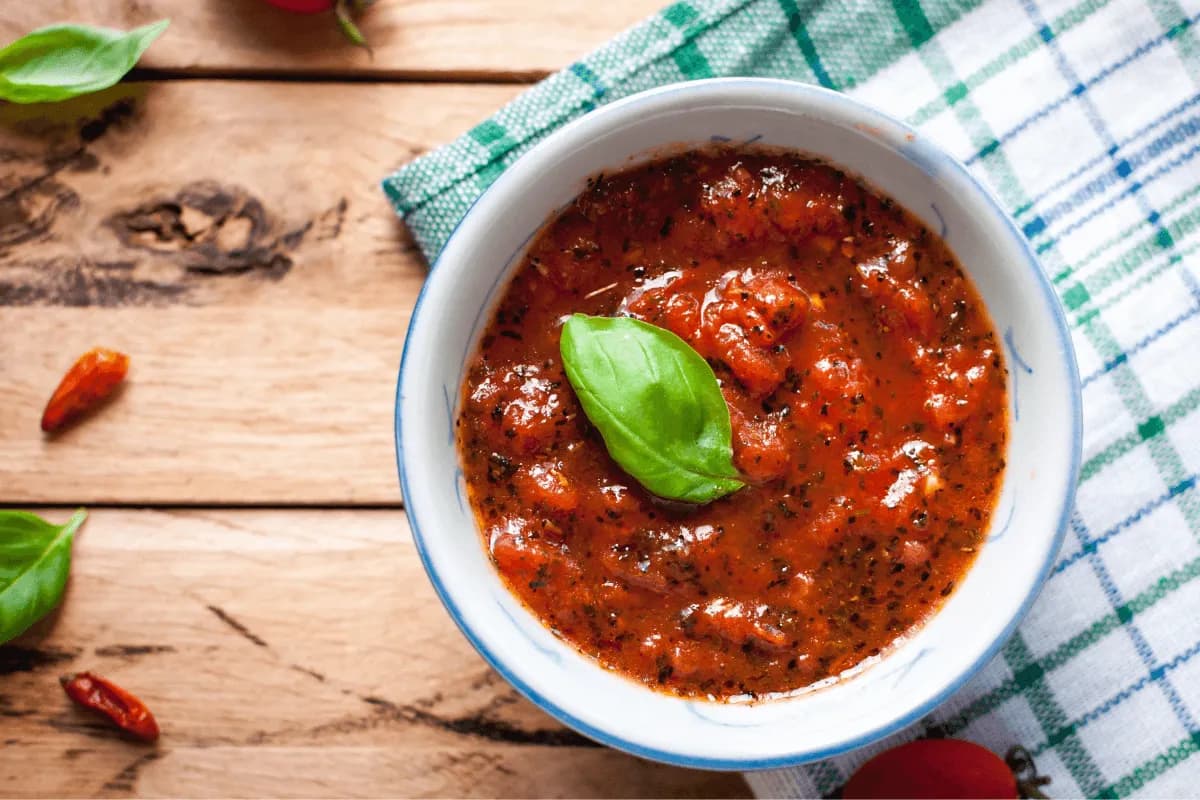
Tinned tomato sauce sweetened with honey and cooked down briefly. No country is claimed; it is a shortcut sauce for homemade pizza.
This is the shortest recipe in the entire archive, two ingredients, and it is worth being honest about what that means. The source's own article promises olive oil and garlic; neither appears in the ingredient list or the method. What is actually written is tinned tomato sauce with honey stirred in and simmered for seven minutes. That will make a perfectly serviceable pizza sauce, and it will taste of tinned tomato and honey.
The honey is doing a real job, though, and it is worth understanding rather than dismissing. Tinned tomatoes are noticeably acidic, and a small amount of sugar counteracts that acidity rather than making the sauce sweet, the same reason Italian cooks put a pinch of sugar into a long-cooked tomato sauce. Two tablespoons in a tin is more than a pinch, so taste as you go.
The seven-minute cook is the other half of it. Tinned tomato sauce is thin, and reducing it slightly gives you something that sits on the dough rather than soaking into it.
Olive oil, garlic, oregano and salt would improve it considerably and are all in the source's own description.
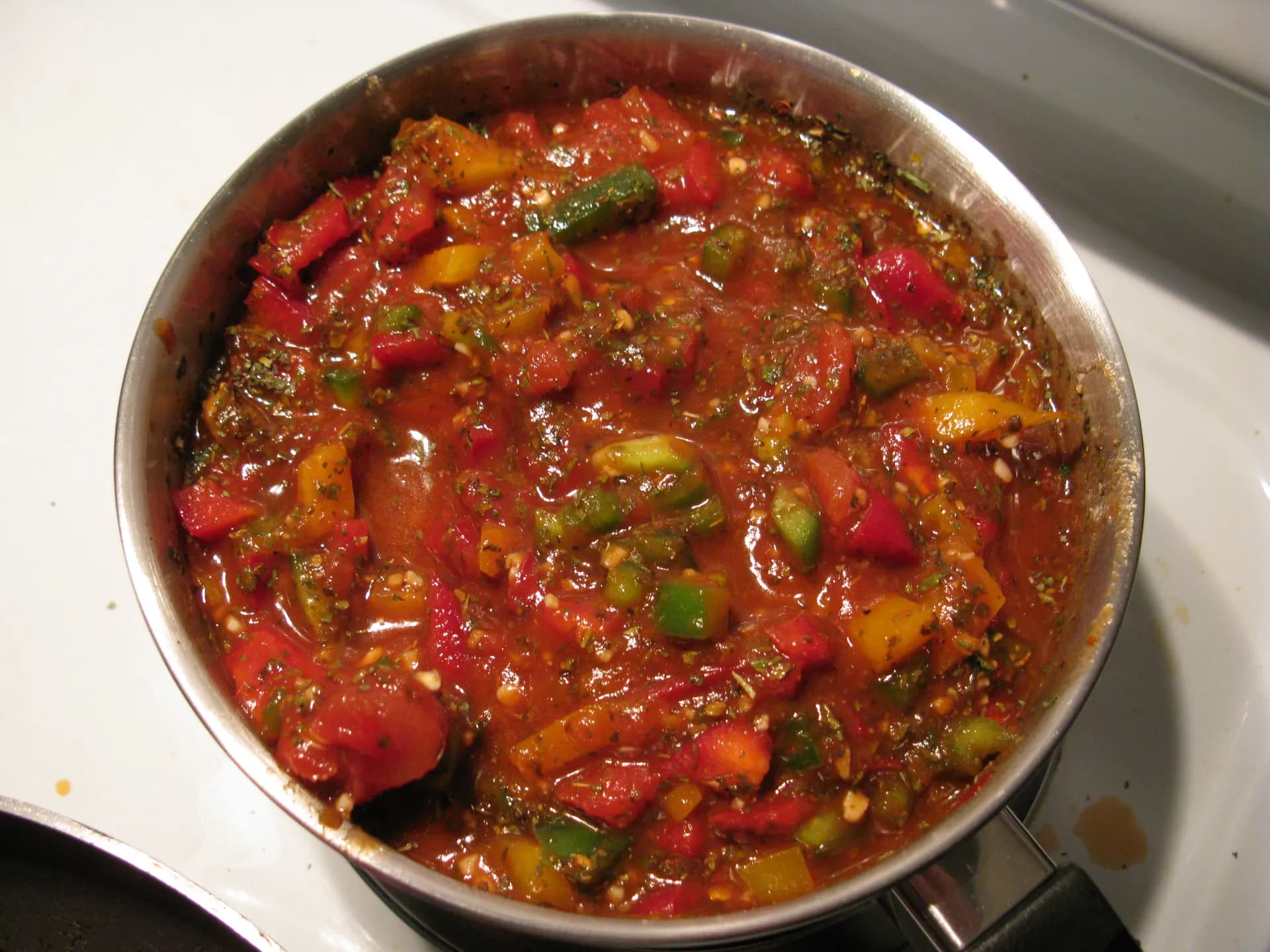
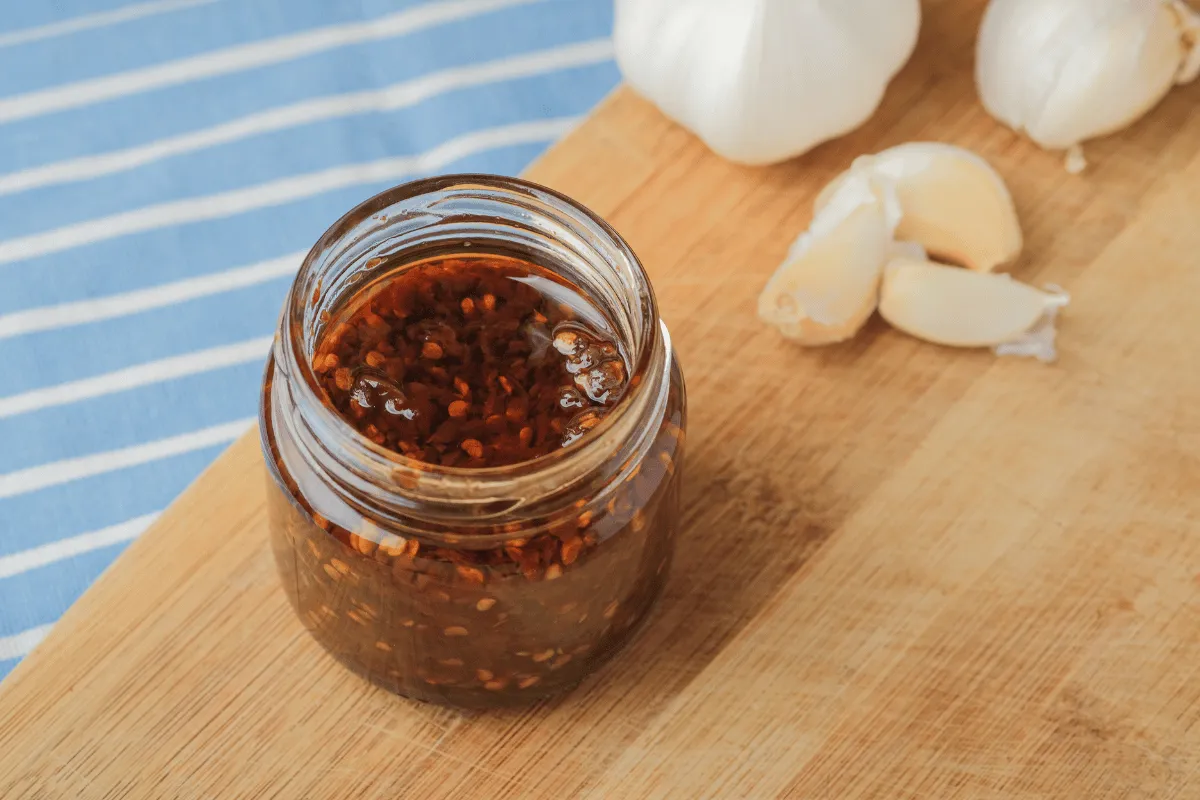
Bird's eye chillies blended with red pepper, garlic, oregano, bay, lemon and vinegar into a hot sauce. No single country is claimed, and there is a good reason for that.
**The source's origin claim is wrong and needs correcting.** It says piri piri originated in the Caribbean. It did not. Chillies as a genus came from the Americas and were carried worldwide by Portuguese and Spanish traders after 1492, but the piri piri chilli itself is what those chillies became after they were planted in Portuguese southern Africa, chiefly Mozambique and Angola, where the small, fiercely hot bird's eye variety developed. The name is Swahili: *pili pili* simply means pepper, doubled for emphasis.
That history is why the sauce belongs on this site rather than in a European section. It is a genuinely African product that travelled back to Portugal, not a European one imported into Africa. Its association with Portuguese and South African restaurant chains has obscured that.
The source also says the English call it piri piri while the Portuguese call it peri peri. Both spellings are used in both languages; the variation is transliteration, not nationality.
The method mentions onion, which appears nowhere in the ingredients.
Dietary tags are provided by contributors as a guide, not verified by AFN, and they depend on the products you buy. If you have a serious allergy, check every ingredient yourself. Cooking, allergies and your own judgement