We use essential cookies to make the site work. We would also like to set analytics cookies and advertising cookies, but only if you agree. You can choose each one separately. Read our cookie policy

Loading
Recipes
Browse the archive by country, course and cooking time.
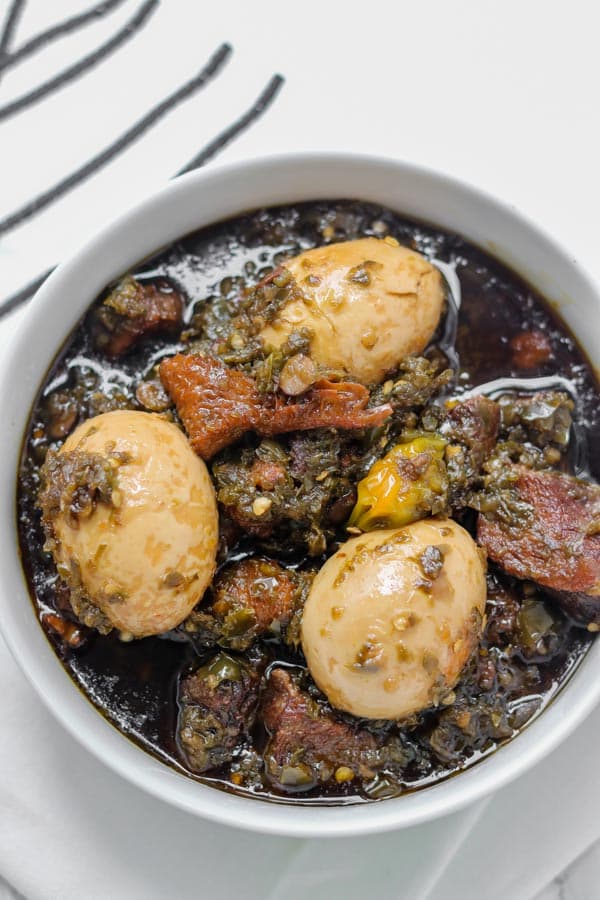
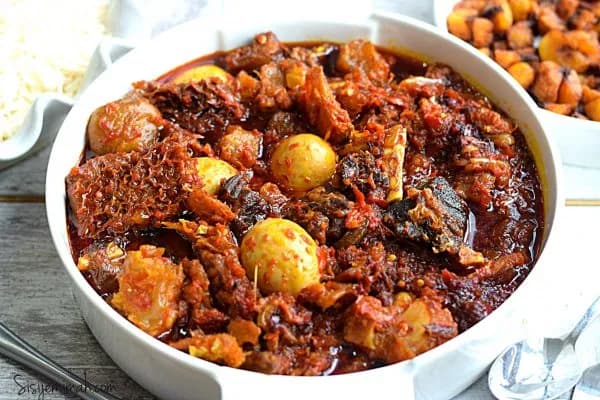
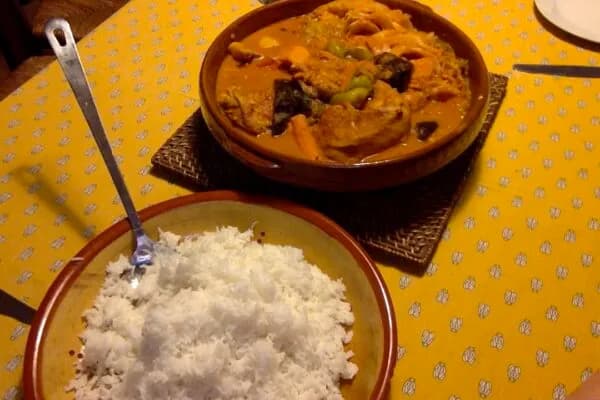
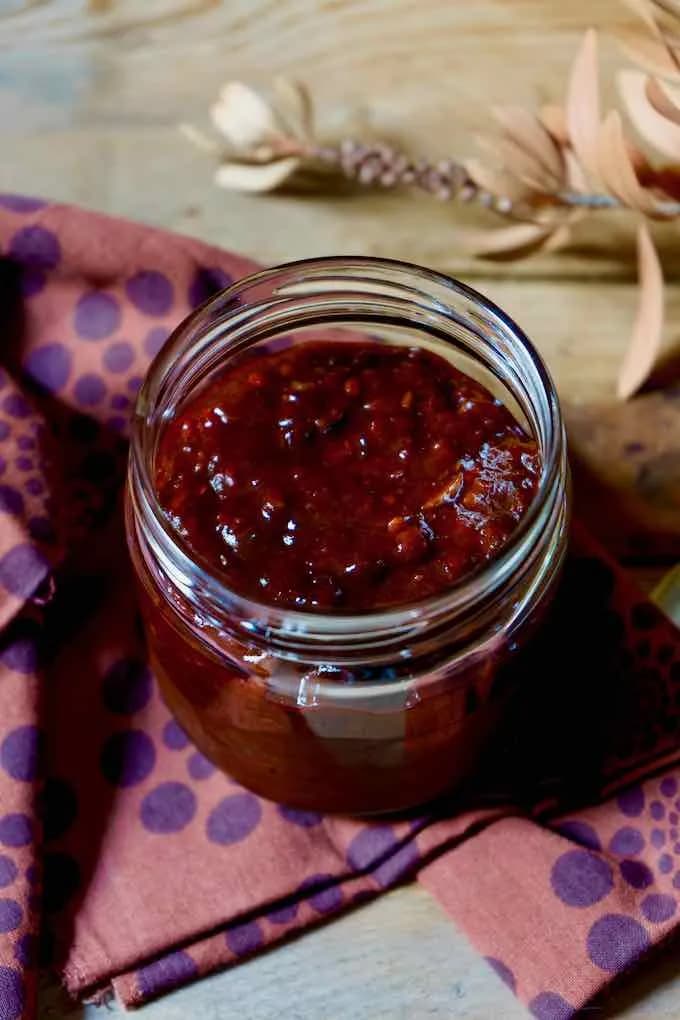
Ayamase is the green pepper stew of southwestern Nigeria, known almost as widely by two other names, ofada sauce, after the rice it is served with, and designer stew, which is what Lagos took to calling it.
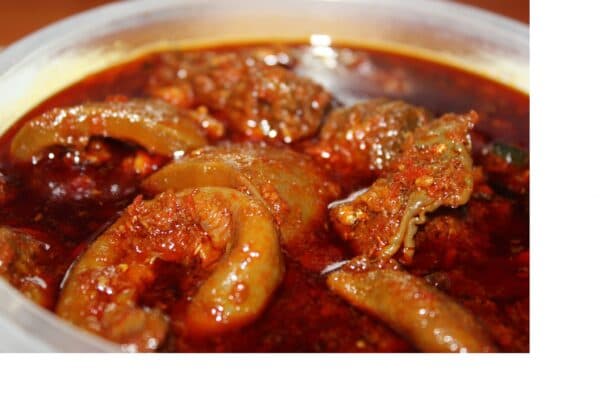
It is defined by two things that would be faults in almost any other stew. The peppers are green rather than red, which gives the sauce its unusual dark olive colour. And the palm oil is deliberately bleached, heated until it stops smoking and loses its red pigment, which strips out the characteristic palm flavour and leaves something nuttier and smokier behind. That bleaching step is the whole signature of the dish, and a version made with unbleached oil is a different sauce.
Around that sit iru, the fermented locust bean that carries the deep savoury note, assorted meats including offal, and boiled eggs, which are close to obligatory.
The name points to a person. Ayamase is traced to Ikenne-Remo in Ogun State and to a woman remembered as Mrs Felicia, Iya Mase, the wife of Mase, who is credited with the dish. It travelled from there into Lagos party food, where its reputation as something special was made.
It is served with ofada rice, the short, unpolished local rice whose earthy flavour is the intended partner.
Ofada stew is the Yoruba stew served with ofada rice, and it is regularly confused with ayamase, including, as the source cheerfully admits, by people who have been eating both for years.
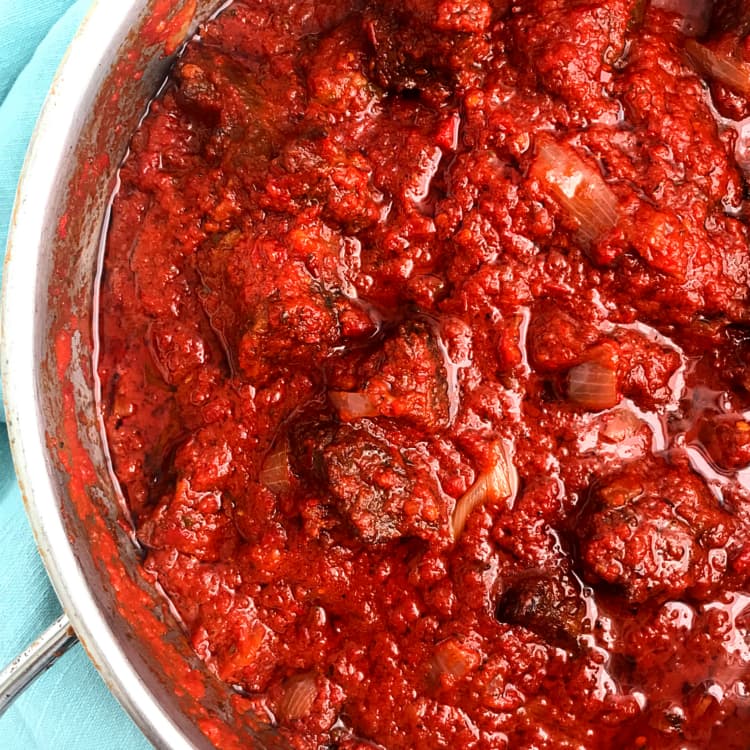
The distinction is real and it is about the pepper. Ayamase, the green bell pepper stew also called designer stew, is built on green peppers and comes out dark olive. Ofada stew proper uses red peppers and tomatoes and is red. Both use bleached palm oil, both carry assorted meat and iru, and both are served with the same rice, which is exactly why the confusion is so widespread.
Buka stew is a third relative in the same family, which does not help matters.
The rice is the fixed point. Ofada is a local unpolished short-grain rice with an earthy, slightly fermented aroma that people either love or find odd. Its strong flavour is what these stews are built to stand up against, a delicate sauce would disappear next to it.
Assorted meats are the other constant: beef, shaki, ponmo, offal, and locust bean for depth.
It is traditionally served wrapped in leaves.
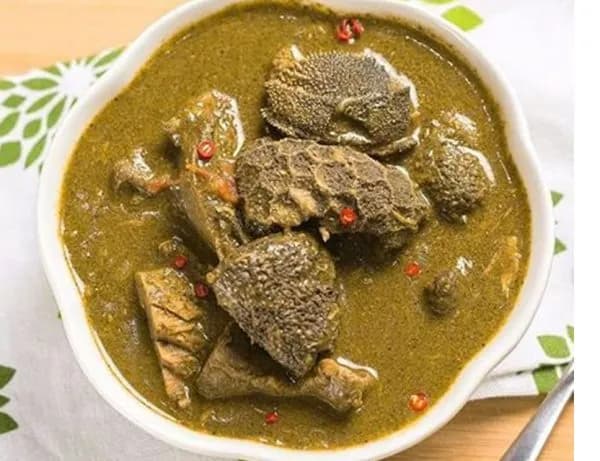
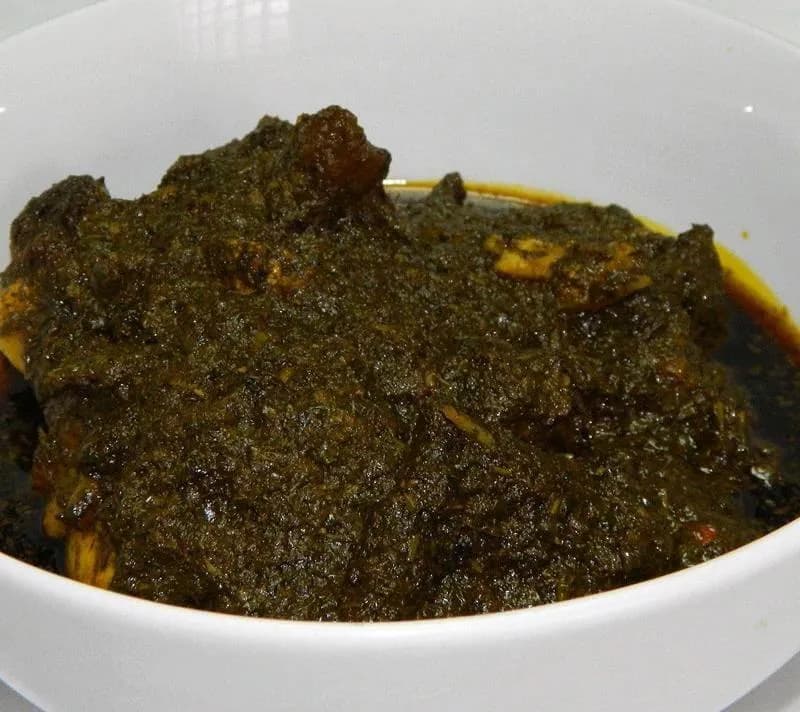
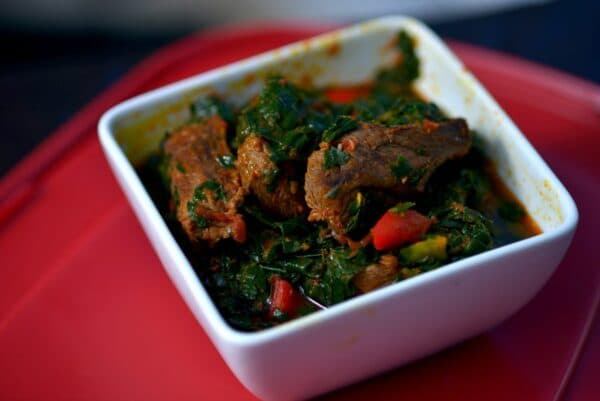
Cassava leaf soup is eaten across West and Central Africa, and its names map the geography: saka saka and pondu in the Congo basin, and simply cassava leaf in Liberia, Sierra Leone and Guinea. Wherever cassava is grown for its root, the leaves are eaten too, and a great many countries have arrived at some version of this independently.
The West African version this recipe follows is built on groundnut. Peanut butter goes in with the leaves and palm oil, which gives a thicker, richer, nuttier result than the Central African versions that lean on palm oil alone. Smoked turkey, fish or chicken supplies the savoury depth, and scotch bonnet supplies the heat.
The leaves themselves carry very little flavour, which is precisely why the dish works: they absorb whatever they are cooked with, so the palm oil, the groundnut and the smoked protein are doing all the talking. That also means the quality of those three decides the pot. It is served over rice, and the one non negotiable is cooking: cassava leaves must be thoroughly cooked, since they are not safe raw. Frozen leaves sold commercially have generally been blanched already, which is why this version cooks relatively briefly.
Catfish is everywhere in Nigeria now, and the reason is farming rather than fishing. Catfish aquaculture expanded enormously across the country from the 1990s onward, at both household and commercial scale, and a fish that was once a river catch became one of the most available proteins in the market. Dishes built around it have multiplied accordingly.
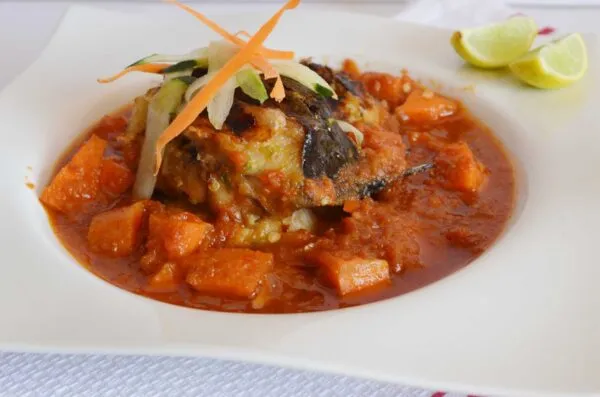
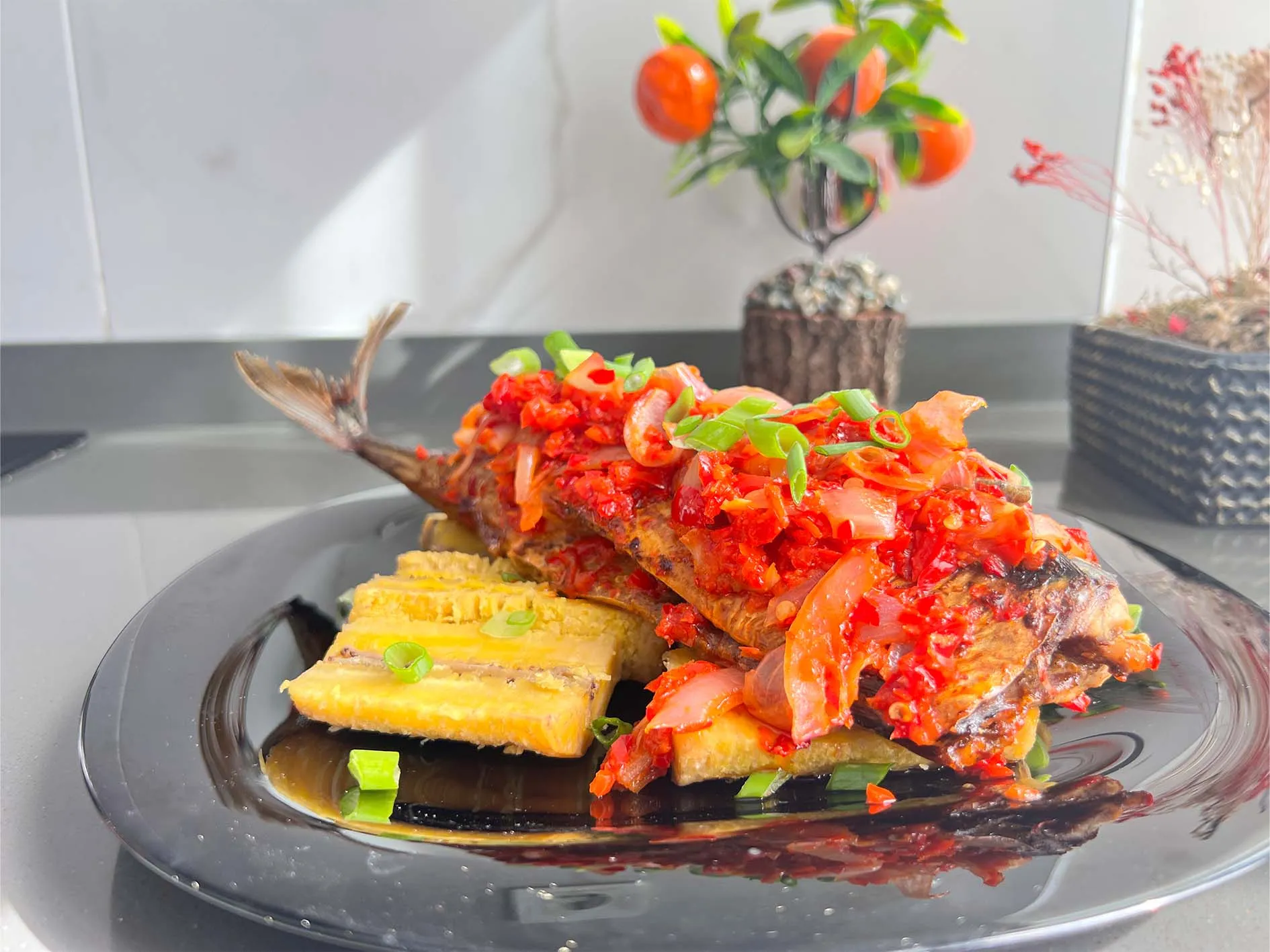
This one is a contemporary Nigerian preparation rather than an inherited dish. Carrot and tomato are blended into a sauce in a three to one ratio, so the carrot rather than the tomato carries it, giving a sweeter and thicker base than a standard Nigerian stew. The fish is marinated, grilled or baked separately, and set into the sauce at the end rather than cooked in it.
Cleaning is the part that determines whether it works. Catfish is naturally slimy and has to be scrubbed with salt, alum, potash or maize chaff, and soaking it briefly in hot water both removes the remaining slime and firms the flesh so it holds together instead of breaking apart. Grilling rather than frying keeps that firmness. It is served with rice, potato or yam.