We use essential cookies to make the site work. We would also like to set analytics cookies and advertising cookies, but only if you agree. You can choose each one separately. Read our cookie policy

Loading
Recipes
Browse the archive by country, course and cooking time.
Suya is skewered meat coated in yaji, a dry peanut based spice blend, and it is the best known street food in Nigeria. It comes from the Hausa people of the north, where it is also called tsire, and it spread from there across West Africa. Sudan has a close relative in agashe.
Yaji is what makes it suya rather than grilled meat. The blend is built on ground peanut, usually in the form of kuli kuli crushed to a powder, with ginger, chilli, onion powder and other seasonings, and the peanut is what gives suya its particular nuttiness and the slightly gritty coating that clings to the meat. Meat without yaji is not suya, whatever else is done to it.
Beef and ram are the traditional cuts, along with kidney, liver and tripe, and chicken is the newer arrival that has become common. It is sold at night from roadside grills, cut on a board and handed over in newspaper with sliced raw onion, tomato and cabbage, and the raw onion alongside the hot spice is not a garnish but part of how it is eaten. The one thing worth knowing before making it is that yaji contains peanut, which matters to anyone with an allergy.
Whole tilapia scored, marinated in an oil-based spice mixture, oven-grilled, then coated in a fresh green pepper base and returned to the heat. The two-stage seasoning is what makes it, and it is a West African approach rather than a simple marinade.
The first stage is a dry-spice oil: vegetable oil with fish seasoning, white and black pepper, ginger, garlic, onion powder and lemon juice, worked into the cuts. The second is a green pepper base built in a food processor from green and red scotch bonnets, bell peppers, spinach, dill, coriander, ginger, garlic and onion, fried briefly in oil and then smeared over the part-cooked fish.
That green base is the interesting part. Blending leafy greens and fresh herbs into a pepper sauce is characteristic of Ghanaian and wider West African fish cookery, and it gives colour and a fresh, sharp finish that a marinade applied only at the start cannot. The scoring is not decorative either: two or three cuts on each side let both stages of seasoning reach the flesh rather than sitting on the skin. Tilapia is native to African fresh waters and is the fish most associated with Ghanaian grilling, usually eaten with banku.
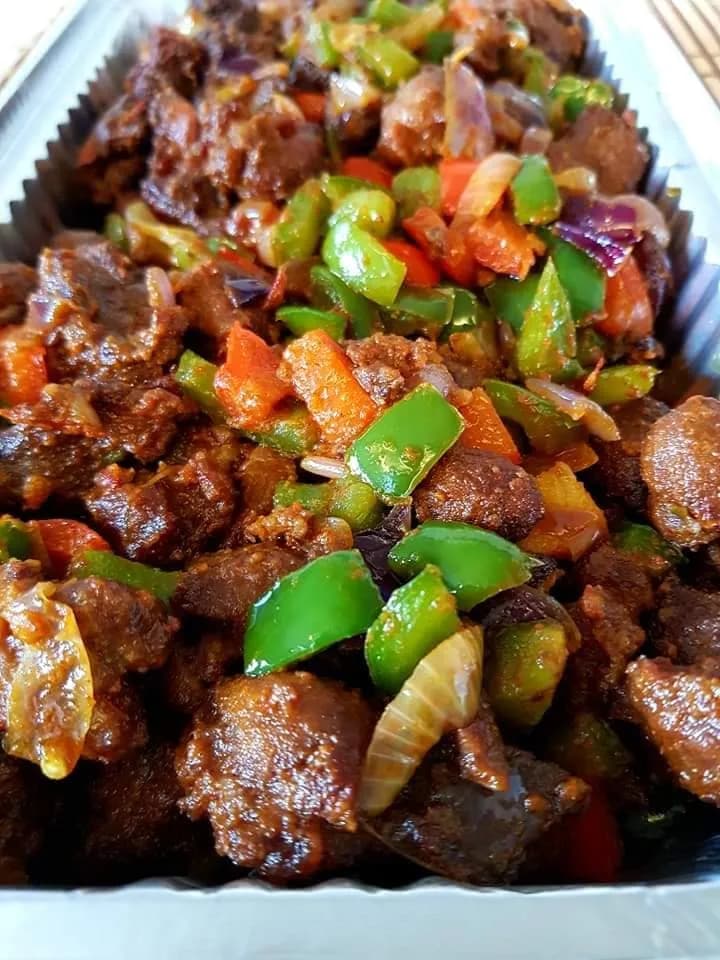
Asun is smoked or roasted goat meat tossed through a fierce pepper and onion mix, and it is one of the fixtures of the Nigerian owambe, the large Yoruba party that runs on food and music. It arrives as part of the small chops circuit, alongside puff puff and peppered snails, and it disappears fast.
Goat is the whole point. Yoruba speakers call it ogunfe, and it carries a stronger, more mineral flavour than beef that stands up to the quantity of scotch bonnet involved. The meat is simmered until tender before it ever meets fire, then roasted or grilled to dry the surface and pick up smoke, and only then does it go into the pepper mix. Skipping the first stage is the most common way it goes wrong, since goat that has not been softened stays tough no matter how long it spends in the pan.
Sliced onions and bell peppers go in for sweetness against the heat rather than for bulk. Whether asun is a starter or something else is a matter people disagree about: the source archive files it under both appetizer and dessert, and Nigerians treat it as a small chop, a side to jollof rice, or a main course with plantain, depending entirely on the occasion.
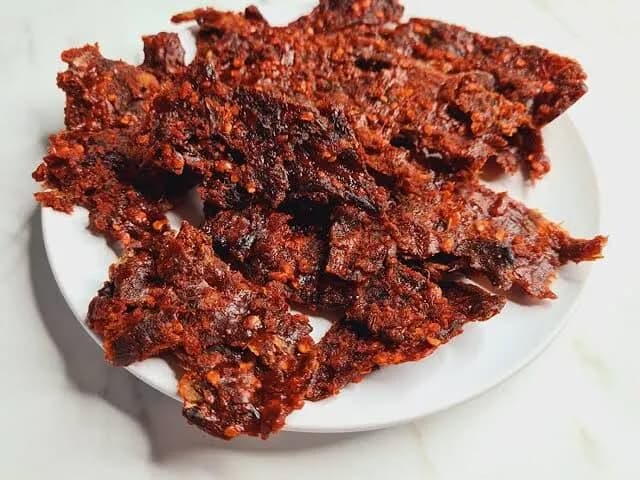
Kilishi is Northern Nigerian dried meat, and it is a considerably more deliberate thing than the jerky it is usually compared to. Beef is sliced thin enough to be translucent, dried, coated in a paste built on ground groundnuts and spices, dried again, and briefly finished over heat. The groundnut coating is what separates kilishi from every other dried meat in the world.
It is a preservation technology first. In the Sahel, where refrigeration was not available and the dry season is long, thin slicing and sun drying kept meat edible for months, and the spice paste added flavour while doing further preservation work. That the result is now sold as a delicacy rather than as survival food does not change what it was built for.
Kilishi is Hausa, sold in markets across the north and increasingly across the whole of Nigeria and among the diaspora, where it travels well precisely because it was designed to. It is eaten as a snack rather than as part of a meal, torn into pieces, often with a cold drink. The heat level varies by maker, and the yaji spice logic that runs through northern Nigerian cooking, the same groundnut and pepper base used on suya, is visible in it.