We use essential cookies to make the site work. We would also like to set analytics cookies and advertising cookies, but only if you agree. You can choose each one separately. Read our cookie policy

Loading
Egyptian Recipes
Browse the archive by country, course and cooking time.
Dukkah is a dry Egyptian blend of toasted nuts, seeds and spices, pounded to a coarse crumb and eaten by dipping bread into olive oil and then into the dukkah. It is sold in cones of paper in Cairo's spice markets and made at home to family recipes.
**It contains hazelnuts, which is not obvious from the name.**
The name explains the texture. Duqqa comes from the Arabic for to pound, and the defining characteristic is that the mixture is crushed to a state that is neither a powder nor a paste, coarse enough to have texture in the mouth, fine enough to stick to oiled bread. Grind it too far and the nut oils release and it turns into a paste, which is the one thing it must not be.
There is no fixed formula. Sesame, coriander, cumin, salt and pepper are near-universal; beyond that it varies by household and by vendor. A nineteenth-century account mentions marjoram, mint, za'atar and chickpeas; a 1978 report names nigella, millet flour and dried cheese; pine nuts, pumpkin seeds and sunflower seeds are more recent. The simplest market version is nothing but crushed mint, salt and pepper.
Dry-toasting each element separately, as the method does, is not fussiness, nuts, sesame and whole spices all reach their best at different rates.
Zalabya are small round balls of yeasted batter, deep-fried until crisp and dipped briefly in cold sugar syrup. They are Egyptian street food, sold from kiosks all over the country for very little, and they are eaten most of all during Ramadan.
The source's description is the best one: think of them as the round part that is missing from a doughnut. They are crunchy outside and light and airy inside, and the syrup is absorbed only into the outer layer, so biting into one gives a burst of sweetness against a plain interior rather than sweetness all the way through.
The names travel. Loukoumades in Greece, lokma in Turkey, zalabya or zalabia in Egypt, and loqmet al-qadi, the judge's bite, across the Arabic-speaking world. Versions are eaten all around the Mediterranean and into South Asia, where jalebi is a related but differently shaped relative.
The batter is very wet, closer to a thick pouring batter than a dough, and that is what makes them light. It is dropped by the spoonful straight into the oil rather than shaped.
The syrup should be cool when the hot balls go in, for the same reason as koeksisters: the temperature difference draws it in.
The source's ingredient list has run its headings into the list and one water quantity is malformed.
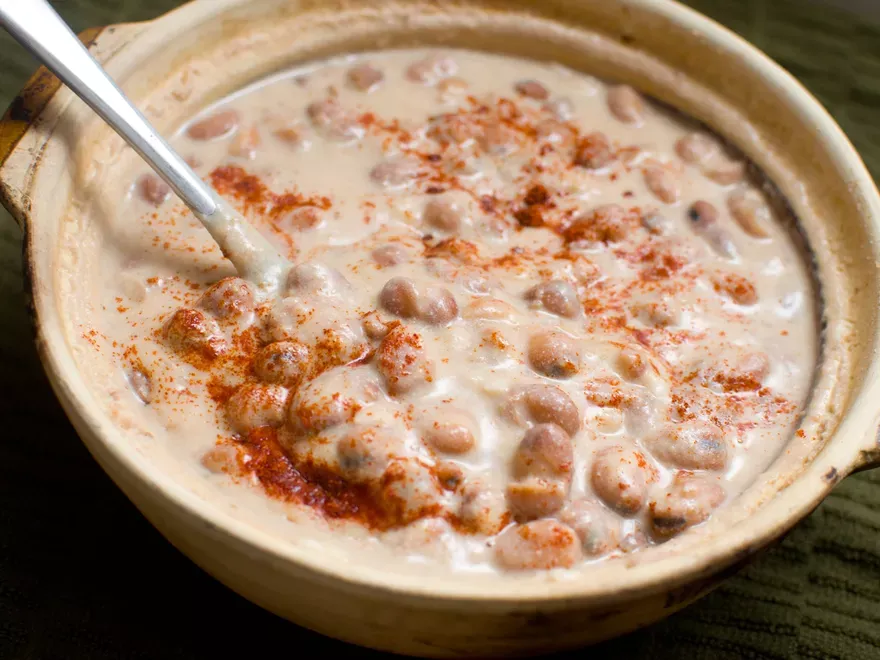
Ful medames is stewed fava beans dressed with olive oil, cumin, garlic and lemon, and it is Egypt's national dish. It is eaten at any hour, though breakfast is when it belongs most, and it is sold from carts across Cairo and Giza in the mornings.
Traditionally it is cooked and served in a large metal jug, the qedra, over a very long slow heat, often overnight, which is why street ful has a depth that a quick home version does not. What the beans are dressed with varies endlessly: parsley, onion, chilli, tomato, hard eggs, tahini.
Its versions across the region are worth knowing. In Somalia, fuul is a breakfast staple served with eggs and laxoox or canjeero flatbread, spiced with xawaash, the blend of cumin, coriander, cardamom, cloves, turmeric and more that makes it noticeably hotter than the Egyptian version. In Morocco it is bissara, made from fava beans and split green peas cooked with garlic, eaten especially in the north during cold weather. This particular recipe includes tahini, which is a Levantine addition rather than a classic Egyptian one, and it uses tinned beans rather than the overnight cook.
Ta'ameya is Egyptian falafel, and the difference from every other falafel is the bean. Egypt makes it from dried split fava beans; Lebanon, Israel and most of the Levant use chickpeas, or a mixture. The fava gives a paler, softer, greener interior and a distinctly different flavour, and Egyptians will tell you theirs came first.
It is breakfast food above all. Ful wa ta'ameya, fava bean stew with falafel, is the standard Egyptian morning meal, and the phrase names the pair together. The ful is cooked overnight in a large round pot called a qedra, and the ta'ameya is fried fresh in the early hours, so the smell of hot oil on the way to school or work is a shared memory rather than an individual one.
Herbs are the other distinction. Parsley, coriander and dill go into the paste in quantity, which is what gives the interior its green colour, and the whole mixture is traditionally pounded in a large stone mortar. Sesame seeds are pressed onto the outside before frying in many versions, giving a crust that chickpea falafel does not have. It is eaten with tahini and baladi bread, and it is one of the cheapest complete meals in the country.
Dietary tags are provided by contributors as a guide, not verified by AFN, and they depend on the products you buy. If you have a serious allergy, check every ingredient yourself. Cooking, allergies and your own judgement