We use essential cookies to make the site work. We would also like to set analytics cookies and advertising cookies, but only if you agree. You can choose each one separately. Read our cookie policy

Loading
Recipes
Browse the archive by country, course and cooking time.
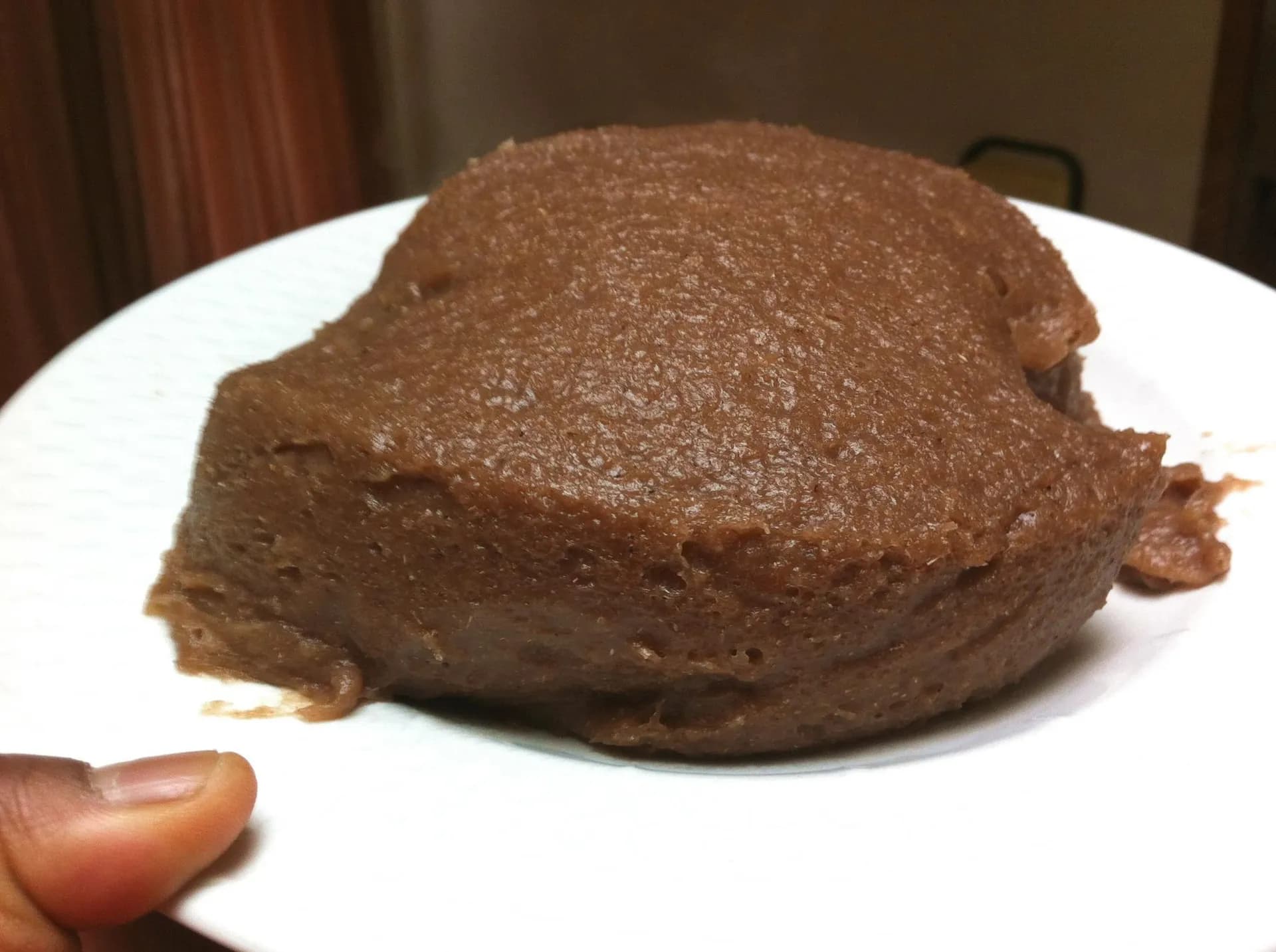
Amala is the swallow of the Yoruba southwest, and it is the darkest thing on a Nigerian table. Yam is peeled, cut, dried and milled into a flour called elubo, and the drying turns the white tuber brown. In boiling water that brown becomes near black, which is the colour amala is known by and which surprises people who expect a starch to be pale.
Its home is Oyo State, and Ibadan in particular. The pairing of amala with ewedu, the jute leaf soup, is treated in Ibadan as something close to a civic institution, and the same seriousness attaches to it in Lagos, where you will not find a buka without it on the menu. Yoruba speakers make the comparison directly: amala and ewedu stand to an Ibadan person as akpu and ofe onugbu stand to an Igbo one.
Three flours make three amala. Elubo isu, from yam, is the standard and gives the dark version. Lafun, from cassava, gives a white amala and is a different dish in practice. Elubo ogede, from unripe plantain, is lighter in colour and lower in starch. The technique is unforgiving in one specific way: the flour must go into water that has been taken off the heat, or it lumps, and lumps in amala are the fastest way to ruin it.
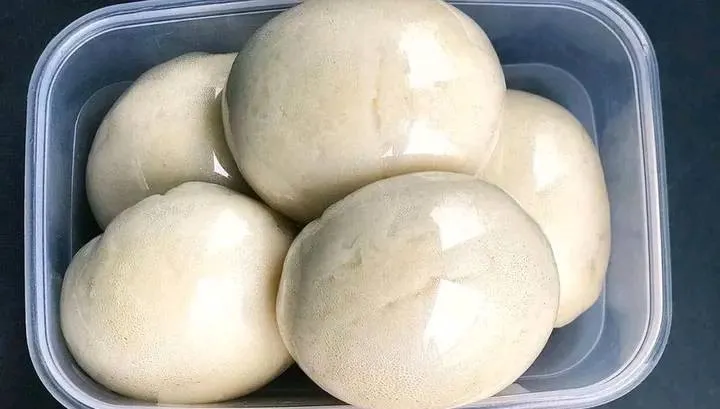
Pounded yam is white yam softened and then beaten until it becomes smooth, sticky and elastic, and it sits at the top of the Nigerian swallow hierarchy. Nigerians will argue about most things in their food and generally will not argue about this: iyan is what you serve when the occasion matters.
The pounding is the dish. The yam is softened, transferred hot to a mortar and worked with a pestle until the structure breaks down completely and the mass turns stretchy, and there is a technique to it that varies between ethnic groups and is learned rather than described. It is hard physical work, traditionally done by women though not exclusively, and the sound of it carries.
It is called iyan by the Yoruba, and the same or a closely related preparation is foutou in Côte d'Ivoire, fufu in Togo and Benin, and yam fufu in Ghana, which makes it one of the most widely made yam products in West Africa. Its texture is what distinguishes it from the rest of the swallow family: smoother than eba, more elastic than amala, and considerably more work than either. Food processors, blenders and hand mixers have made it accessible on a weeknight, and pounded yam flour has made it possible with no yam at all, which purists note without much affecting what happens in most kitchens.
A fool is one of the oldest English desserts still made: fruit purée folded through cream and chilled until it sets. Gooseberry is the classic; mango is the tropical version, and this one is loosened with orange liqueur. Nothing is cooked at any point.
The form dates to sixteenth-century England, and the name most likely comes from the French fouler, to crush or press, describing what happens to the fruit. Mango fool is now made widely across South Asia, East Africa and the Caribbean wherever mangoes are abundant, usually with cream or yoghurt and often without any alcohol at all.
Two corrections to the source are worth stating. It is filed on this site under drinks, and it is not one, a fool is a set dessert eaten with a spoon. And its prose describes taking the dish off the heat and serving it hot, which does not match its own recipe: there is no heat involved anywhere. The source's nutritional claims have not been carried across either.
The Cointreau matters for a practical reason: as written this contains alcohol, which rules it out for children and for anyone avoiding it. Leaving it out costs the dish very little, since the mango and cream are doing the work.
Oyster mushrooms grilled and tossed in suya spice. It is a plant-based version of the Nigerian street food, and it works better than most meat substitutions do.
**The traditional suya spice contains ground peanuts, and this recipe includes them.** The source flags it and offers to leave them out, which is honest, but it is worth stating clearly, because a peanut allergy and a suya spice blend are a genuinely dangerous combination and the name gives no warning.
Suya proper is skewered beef, ram or chicken rubbed in yaji, the spice blend of ground roasted peanuts, ginger, cayenne, garlic, onion powder and paprika, and grilled over open coals. It is Hausa in origin, from northern Nigeria, and it is sold across Nigeria, Cameroon, Niger, Ghana and parts of Sudan. Kyinkyinga is the Ghanaian name, agashe the Sudanese.
Oyster mushrooms are the right substitution and not an arbitrary one. Shredded, they have a fibrous, layered structure that genuinely resembles pulled meat, they take on the dry rub readily, and they char well. Most vegetables do neither.
The source's method is very compressed, one step reads "put in a preheated medium", with the word oven missing, and has been filled out below.
Dietary tags are provided by contributors as a guide, not verified by AFN, and they depend on the products you buy. If you have a serious allergy, check every ingredient yourself. Cooking, allergies and your own judgement