We use essential cookies to make the site work. We would also like to set analytics cookies and advertising cookies, but only if you agree. You can choose each one separately. Read our cookie policy

Loading
Recipes
Browse the archive by country, course and cooking time.
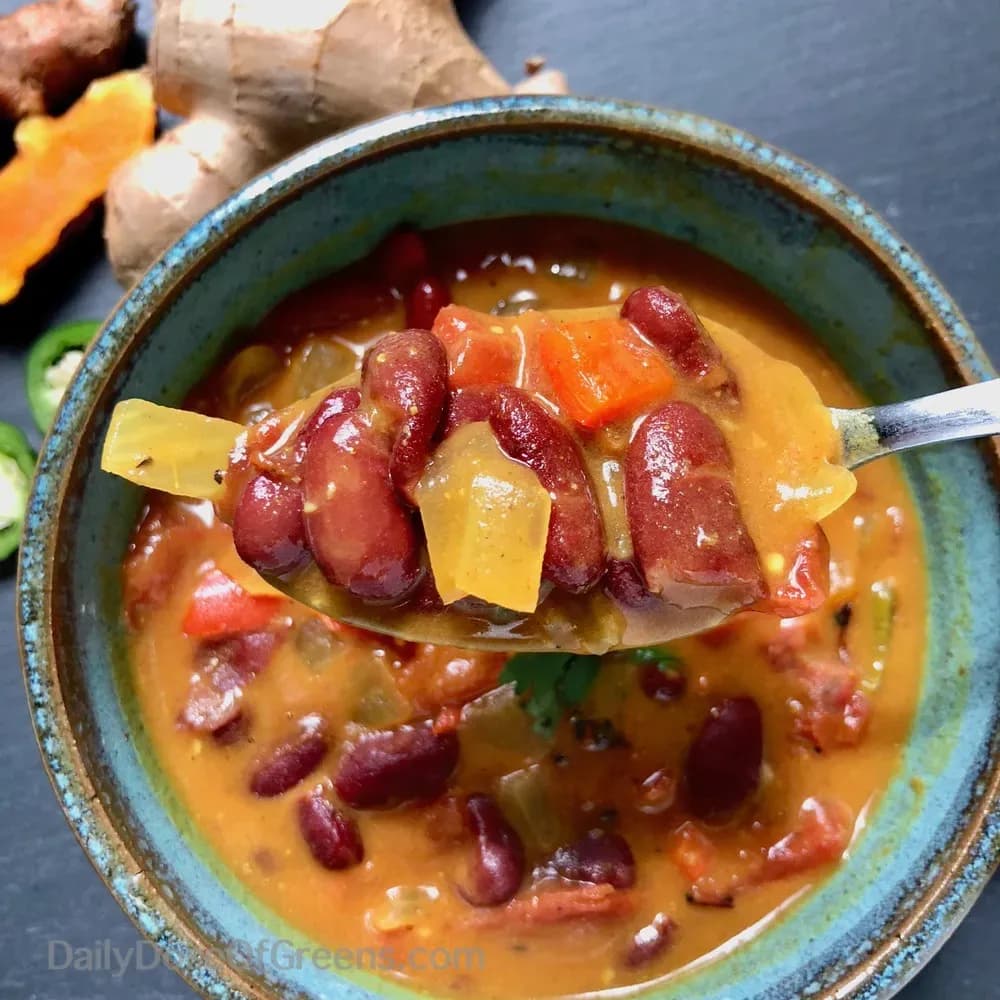
Maharagwe is simply the Swahili word for beans, and the dish is red beans simmered with onion, tomato and spices in coconut milk. It is eaten across Kenya and is most often served with ugali, though rice and flatbreads are equally common.
The coconut milk places it on the Swahili coast. Coastal Kenyan cooking uses coconut in a way inland cooking does not, and it arrived through the same Indian Ocean trade that brought cardamom, cumin, turmeric and coriander into the region's food. Those spices are all here, and the presence of mild curry powder alongside them reflects the long South Asian presence in East Africa.
It reads as though it should be fiery and is not. The spice list is long and includes chilli, but the coconut milk rounds all of it off, so the finished dish is warm and aromatic rather than hot. It is also quick: with cooked or tinned beans it is on the table in under thirty minutes. The sauce should come up to just cover the beans and will thicken further as it cools, so it is worth stopping while it still looks slightly loose.
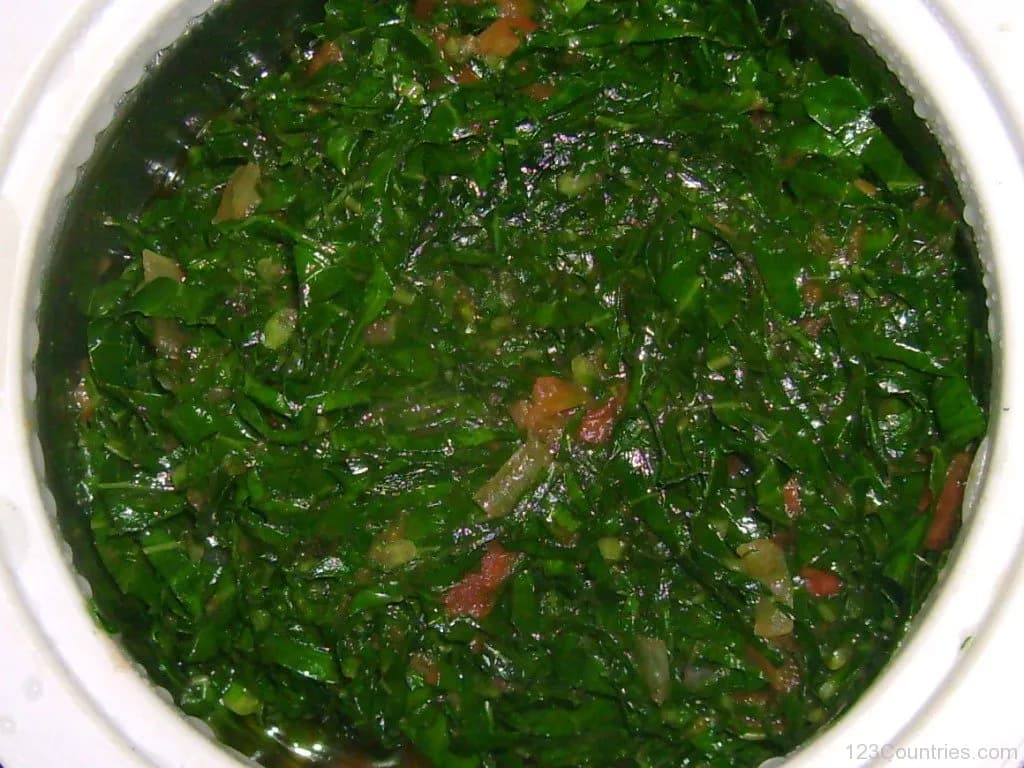
Sukuma wiki is braised collard greens, and the name tells you what it is for. In Swahili it means to push or stretch the week, and it describes a cheap, filling vegetable dish that makes the household's resources last. Served with ugali and perhaps a little roasted meat or fish, it is a typical Kenyan or Tanzanian meal.
Sukuma is the Swahili name for collard greens, called colewort in older English and often confused with kale. It is grown across Kenya, Tanzania and Uganda, it is inexpensive, and it is available all year round, which is exactly why it occupies the place it does. The greens are the most in demand vegetable in Kenya on both nutritional and economic grounds.
The method is simple and the order matters. Onion is softened first, the greens go in by the handful so each addition wilts before the next, and tomatoes and liquid follow. Twenty to thirty minutes of gentle cooking takes it from tough to tender. It is naturally vegan as written, which is unusual for a staple side dish, and it is often eaten that way rather than by choice. A chopped chilli is the most common addition.
Kuindiong is semolina cooked with water, yoghurt, milk and sugar into a thick sweet porridge, served under miok, butter and yoghurt cooked together until they separate. It is a Dinka dish, made in South Sudan and southern Sudan, and it is served to welcome guests.
The miok is the part worth paying attention to, because it is a technique rather than a topping. Butter and yoghurt cooked together and stirred constantly eventually break: the fat separates from the milk solids, and those solids brown into pale golden granules. What you pour over the semolina is browned butter with toasted dairy solids suspended in it, which is why it tastes nutty rather than simply of butter. Twenty minutes of constant stirring is what it takes, and taking it off the heat at the right moment, as soon as the granules turn a pale nutty colour, is the whole skill.
The Dinka are a cattle-keeping people, and the quantity of dairy in this dish reflects that directly. Over a kilo of yoghurt and half a kilo of butter between the two components is a lot by most standards and entirely unremarkable in that context.
The source appears to come from an Australian publication, its notes reference Australian cup measures, which is worth recording.
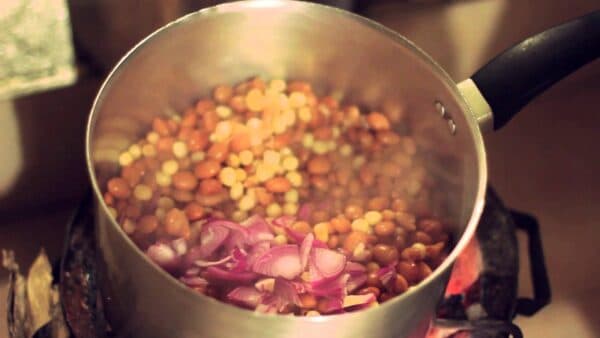
Dried white beans cooked until tender, then finished with red onion and sliced tomatoes into a thick, soupy stew. It is Malagasy, and it is served everywhere on the island.
It is laoka, which is the useful word here. In Malagasy eating, rice is the meal and laoka is whatever accompanies it, the thing that goes on top of, or beside, a large plate of rice. Tsaramaso is one of the most popular laoka in the country, and it is eaten as a matter of course rather than as an occasion dish.
It is very often not vegetarian. Zebu meat, the humped cattle that are central to Malagasy life, makes it hen'omby sy tsaramaso, and pork makes it tsaramaso sy henakisoa. The shank is the cut the source recommends. This version is the plain one, which is also widely eaten.
The technique in the recipe is worth noting: the beans are cooked separately in water, seasoned only at the end, and a cup of their cooking liquid is kept back. That liquid is what the finished stew is loosened with, and it carries starch and flavour that plain water would not.
The source compares it to cassoulet, which is a reasonable shorthand, beans and meat cooked long and slow, though the seasoning is entirely different.
Dietary tags are provided by contributors as a guide, not verified by AFN, and they depend on the products you buy. If you have a serious allergy, check every ingredient yourself. Cooking, allergies and your own judgement