We use essential cookies to make the site work. We would also like to set analytics cookies and advertising cookies, but only if you agree. You can choose each one separately. Read our cookie policy

Loading
Recipes
Browse the archive by country, course and cooking time.
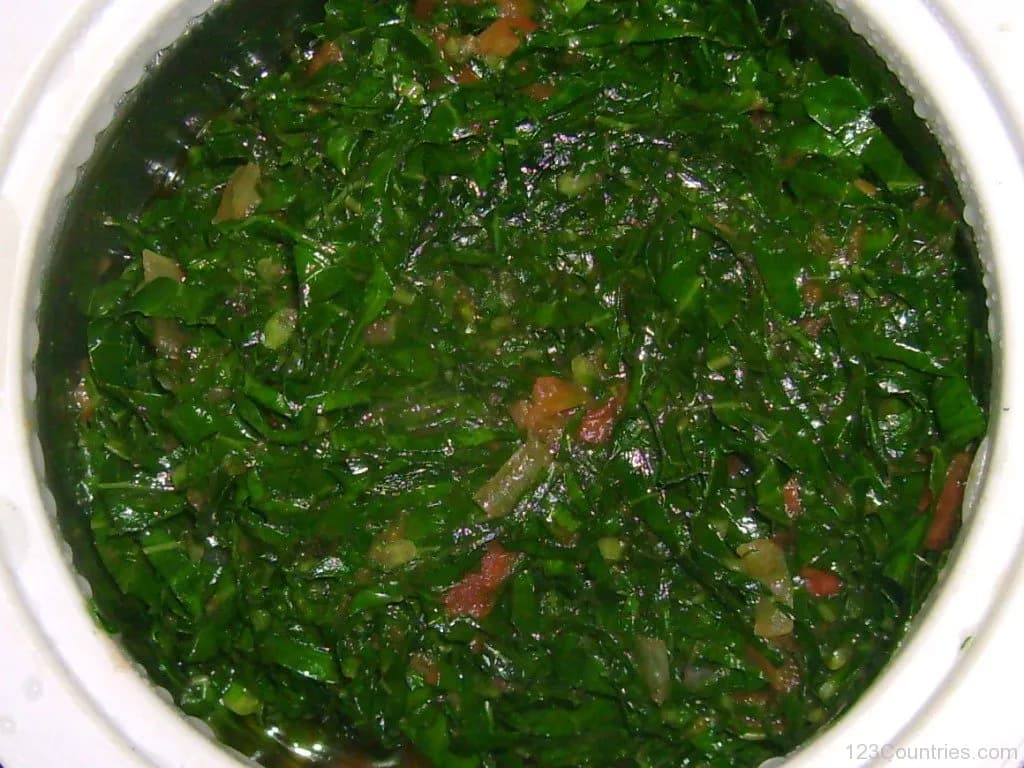
Sukuma wiki is braised collard greens, and the name tells you what it is for. In Swahili it means to push or stretch the week, and it describes a cheap, filling vegetable dish that makes the household's resources last. Served with ugali and perhaps a little roasted meat or fish, it is a typical Kenyan or Tanzanian meal.
Sukuma is the Swahili name for collard greens, called colewort in older English and often confused with kale. It is grown across Kenya, Tanzania and Uganda, it is inexpensive, and it is available all year round, which is exactly why it occupies the place it does. The greens are the most in demand vegetable in Kenya on both nutritional and economic grounds.
The method is simple and the order matters. Onion is softened first, the greens go in by the handful so each addition wilts before the next, and tomatoes and liquid follow. Twenty to thirty minutes of gentle cooking takes it from tough to tender. It is naturally vegan as written, which is unusual for a staple side dish, and it is often eaten that way rather than by choice. A chopped chilli is the most common addition.
Dried white beans cooked until tender, then finished with red onion and sliced tomatoes into a thick, soupy stew. It is Malagasy, and it is served everywhere on the island.
It is laoka, which is the useful word here. In Malagasy eating, rice is the meal and laoka is whatever accompanies it, the thing that goes on top of, or beside, a large plate of rice. Tsaramaso is one of the most popular laoka in the country, and it is eaten as a matter of course rather than as an occasion dish.
It is very often not vegetarian. Zebu meat, the humped cattle that are central to Malagasy life, makes it hen'omby sy tsaramaso, and pork makes it tsaramaso sy henakisoa. The shank is the cut the source recommends. This version is the plain one, which is also widely eaten.
The technique in the recipe is worth noting: the beans are cooked separately in water, seasoned only at the end, and a cup of their cooking liquid is kept back. That liquid is what the finished stew is loosened with, and it carries starch and flavour that plain water would not.
The source compares it to cassoulet, which is a reasonable shorthand, beans and meat cooked long and slow, though the seasoning is entirely different.
Githeri is boiled maize and beans, and it is the staple dish of the Kikuyu people of central Kenya, also eaten by the Meru, Mbeere, Embu and Kamba communities of the central and eastern provinces, and now widely across the country.
Its importance is nutritional as much as cultural, and the reason is worth stating precisely. Maize and beans eaten together form a complete protein: maize is short on lysine, beans are short on methionine, and each supplies what the other lacks. Neither alone would do it. In a diet where meat is occasional rather than daily, that combination has done an enormous amount of work, and it is the reason githeri has stayed central rather than being displaced.
Both crops are grown locally on smallholdings across the region, which is the other half of the explanation. Githeri is made from what the farm produces, and it is cheap in a way imported staples are not.
Fresh maize and beans are preferred where available, and most cooks say the taste is better; dried is used the rest of the year and needs longer cooking.
The basic dish is plain, boiled together, salted. From there it is often fried up with onion, tomato and greens into something richer, and potatoes are a common addition.
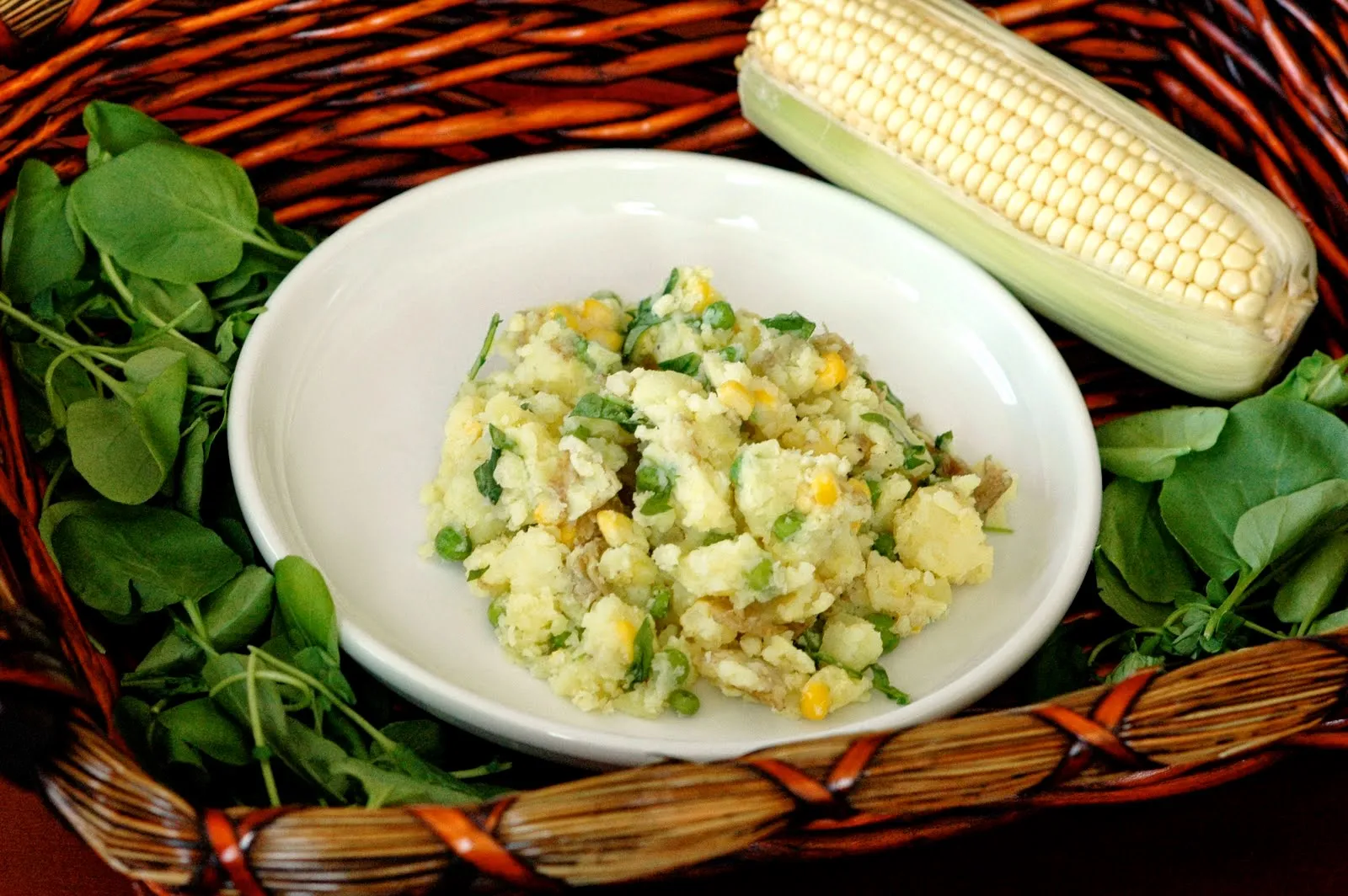
Irio is potatoes, peas and corn mashed together into a thick, pale green purée, and it originated with the Kikuyu of central Kenya before spreading across the country and into East Africa more widely. The name means, plainly, food, in Kikuyu.
It is chunkier than mashed potato and deliberately so. The peas are cooked with the potatoes and mashed in, which gives the colour, and the corn is stirred through whole at the end so it keeps its texture. The result is a thick mass rather than a smooth purée, and that texture is what distinguishes it.
Its most common serving is nyama na irio, with grilled steak, and it belongs to the same domestic register as sukuma wiki: cheap, filling, made from a short list of ingredients in one pot. Dried green peas are often used in Kenya and need soaking and separate cooking. A knob of butter in the purée, lima beans, or sautéed greens are all common additions. **Note that the source titles this dish mashed sweet potatoes, and there are no sweet potatoes in it**, the recipe uses ordinary potatoes throughout.
Dietary tags are provided by contributors as a guide, not verified by AFN, and they depend on the products you buy. If you have a serious allergy, check every ingredient yourself. Cooking, allergies and your own judgement