

We use essential cookies to make the site work. We would also like to set analytics cookies and advertising cookies, but only if you agree. You can choose each one separately. Read our cookie policy

Loading
Recipes
Browse the archive by country, course and cooking time.
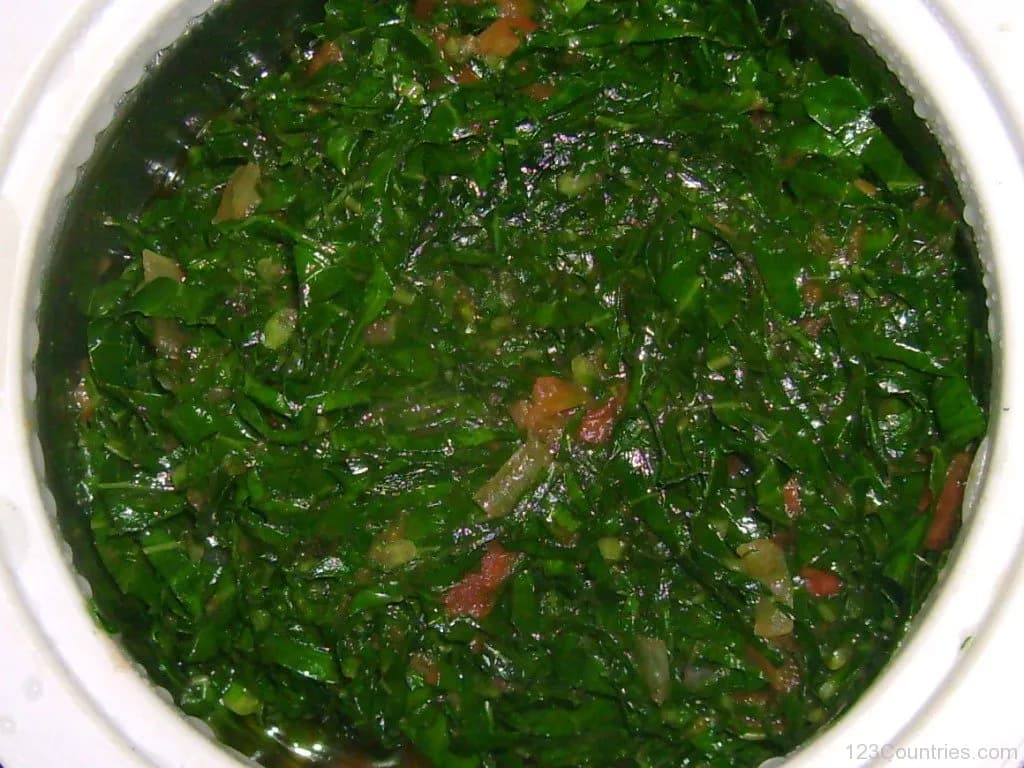
Sukuma wiki is braised collard greens, and the name tells you what it is for. In Swahili it means to push or stretch the week, and it describes a cheap, filling vegetable dish that makes the household's resources last. Served with ugali and perhaps a little roasted meat or fish, it is a typical Kenyan or Tanzanian meal.
Sukuma is the Swahili name for collard greens, called colewort in older English and often confused with kale. It is grown across Kenya, Tanzania and Uganda, it is inexpensive, and it is available all year round, which is exactly why it occupies the place it does. The greens are the most in demand vegetable in Kenya on both nutritional and economic grounds.
The method is simple and the order matters. Onion is softened first, the greens go in by the handful so each addition wilts before the next, and tomatoes and liquid follow. Twenty to thirty minutes of gentle cooking takes it from tough to tender. It is naturally vegan as written, which is unusual for a staple side dish, and it is often eaten that way rather than by choice. A chopped chilli is the most common addition.
Dried white beans cooked until tender, then finished with red onion and sliced tomatoes into a thick, soupy stew. It is Malagasy, and it is served everywhere on the island.
It is laoka, which is the useful word here. In Malagasy eating, rice is the meal and laoka is whatever accompanies it, the thing that goes on top of, or beside, a large plate of rice. Tsaramaso is one of the most popular laoka in the country, and it is eaten as a matter of course rather than as an occasion dish.
It is very often not vegetarian. Zebu meat, the humped cattle that are central to Malagasy life, makes it hen'omby sy tsaramaso, and pork makes it tsaramaso sy henakisoa. The shank is the cut the source recommends. This version is the plain one, which is also widely eaten.
The technique in the recipe is worth noting: the beans are cooked separately in water, seasoned only at the end, and a cup of their cooking liquid is kept back. That liquid is what the finished stew is loosened with, and it carries starch and flavour that plain water would not.
The source compares it to cassoulet, which is a reasonable shorthand, beans and meat cooked long and slow, though the seasoning is entirely different.
Moukhbaza is mashed ripe banana with dried hot chilli, and the combination is the entire point. Sweet and hot together is a pairing Sudanese cooking returns to repeatedly, and moukhbaza is its most concentrated expression: nothing but banana, lemon juice and toasted chilli, with no attempt to soften the contrast between them.
The source places it in eastern Sudan. It is worth being straightforward that closely related dishes under the same name are documented in Yemen, on the other side of the Red Sea, where mukhbaza is a well established banana and chilli preparation. Eastern Sudan faces Yemen directly across that water, and the Red Sea has carried food, people and language in both directions for a very long time. Which side of it the dish began on is not something the available record settles.
Dried chilli is used across Sudanese cooking for range rather than simply for heat, and here it is toasted first, which deepens it and takes the raw edge off. Moukhbaza is served as a side or a relish rather than as a course, spread and eaten with bread, and a presentation version stuffs the mashed banana back into a halved and baked banana pepper.
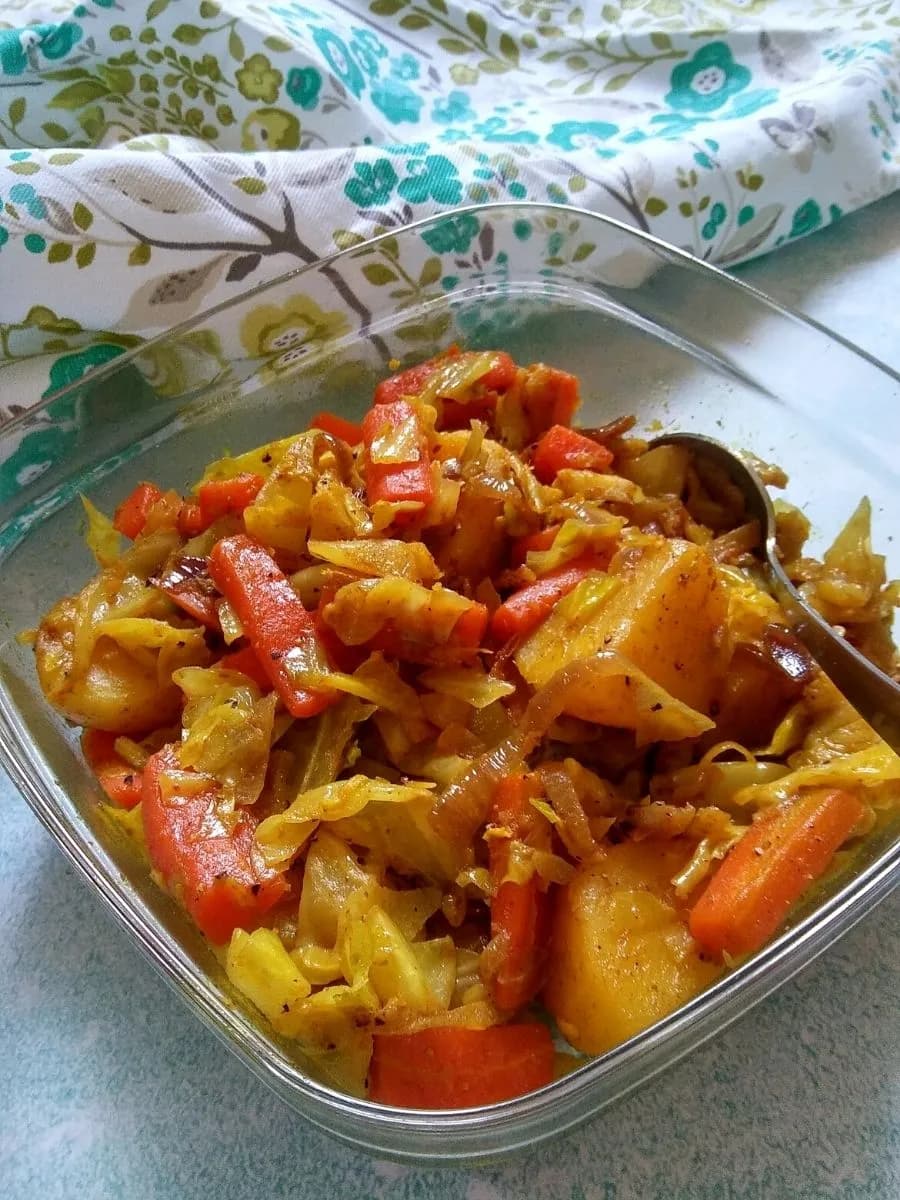
Atakilt wat is the vegetable stew of the Ethiopian table: cabbage, carrot and potato cooked down with onion, garlic and spice until they are tender without collapsing. The name is Amharic, atakilt for vegetable and wat for stew, which describes it exactly.
Its place is on the shared injera platter rather than on a plate of its own. An Ethiopian meal is served as several dishes arranged together on a single round of injera, and atakilt wat is almost always among them, providing a mild, sweet counterweight to the sharper and hotter wat alongside it. It is the dish that gives the platter its balance.
That role also makes it central to fasting. The Ethiopian Orthodox calendar includes many days on which no animal products are eaten, and the country's vegan cooking is consequently deep and long practised rather than recent. Atakilt wat contains nothing animal at any point, which is why it appears as reliably during fasting periods as outside them. Berbere, the chilli and spice blend built on chilli, garlic, ginger, fenugreek and a long list of aromatics, is what carries it, though this version keeps the quantity modest so the vegetables stay forward.
Dietary tags are provided by contributors as a guide, not verified by AFN, and they depend on the products you buy. If you have a serious allergy, check every ingredient yourself. Cooking, allergies and your own judgement