We use essential cookies to make the site work. We would also like to set analytics cookies and advertising cookies, but only if you agree. You can choose each one separately. Read our cookie policy
Loading
Recipes
Browse the archive by country, course and cooking time.
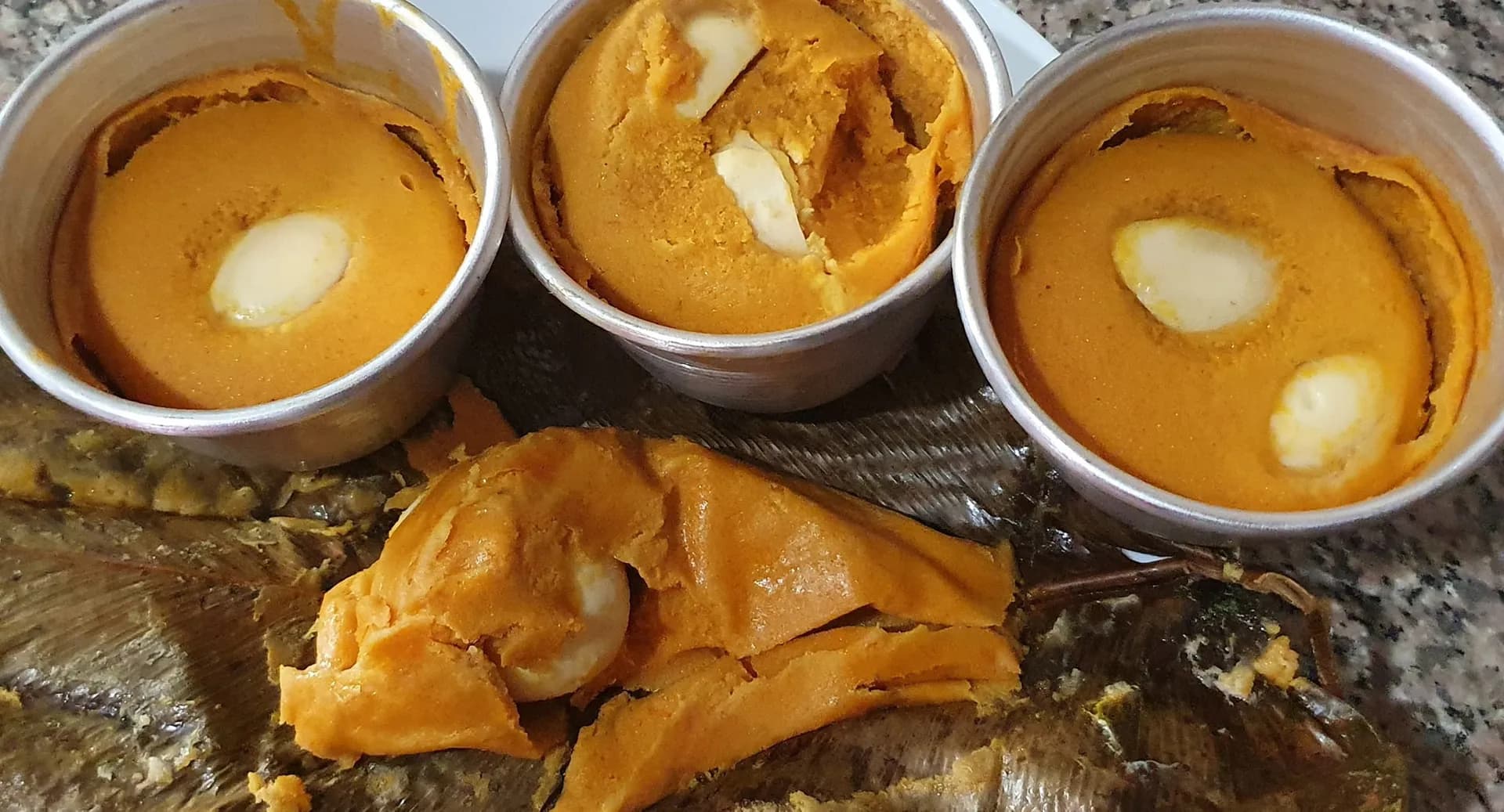
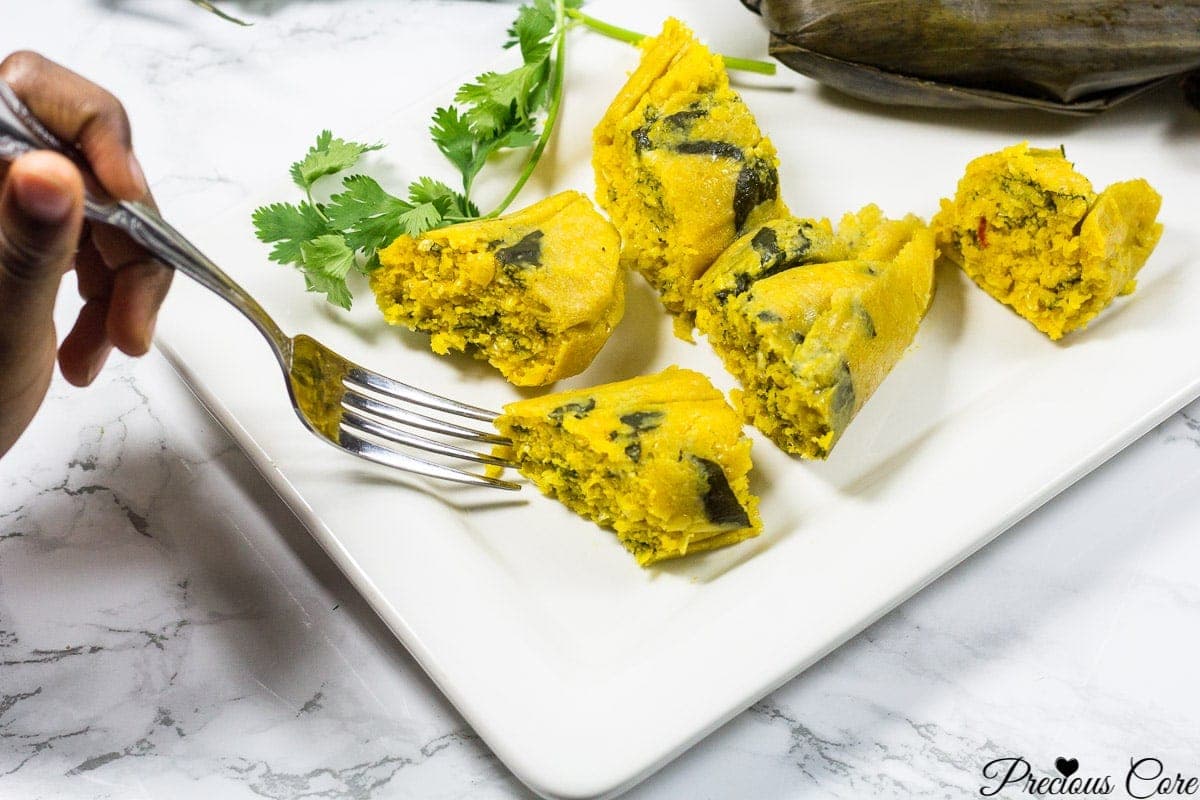
Moi moi is steamed bean pudding, and it is among the small group of Nigerian dishes that turn up everywhere: at breakfast, at parties, at weddings, in lunchboxes, beside jollof rice, and on its own. Black eyed peas or brown beans are soaked, peeled, blended with pepper and onion, seasoned, and steamed until they set.
The peeling is what most people underestimate. The bean skins have to come off before blending, because they are what stands between a smooth moi moi and a gritty one, and the quality of the blend decides the texture of the finished dish more than any other single factor. Nigerian markets have heavy duty commercial mills for exactly this reason, and home blenders often cannot manage it.
What it is steamed in changes the result and the name. Uma leaves, from Thaumatococcus daniellii, give the best flavour and cook fastest; banana leaves are the common alternative; aluminium foil and heatproof containers are the modern route. Nutmeg is the ingredient people leave out and then wonder why their moi moi does not taste like the one at the party. Egg, corned beef or bone marrow goes into the middle, and moi moi appears as a side to jollof and fried rice, as breakfast with pap or bread, and as a meal in itself.
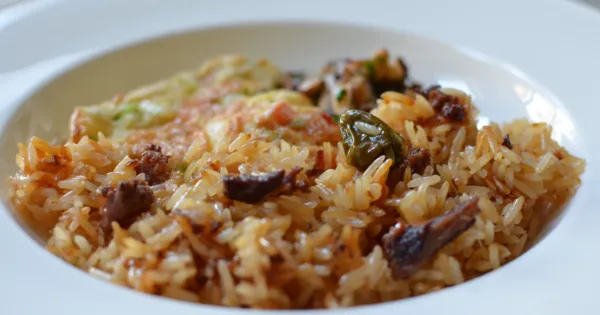
Angwa moo is oiled rice, and the Akan name says it plainly. Onions are browned in oil, rice goes in and is fried briefly, then water is added and the whole thing cooks together. The result is golden, faintly sweet from the caramelised onion, and unlike fried rice in one important respect: the rice is raw when it enters the oil rather than cooked and cooled.
Ghanaians treat it as the emergency dish, and they are cheerful about saying so. It is what a child cooks when a parent is not home, what a young man living alone makes because it needs almost nothing, and what gets made when there is no time and no plan. That does not make it lesser. The browning of the onion is doing real work, and a well made angwa moo has a depth that its ingredient list does not predict.
The traditional accompaniment is ground pepper made in an earthenware asanka, with tinned sardines or fried eggs alongside, and that combination is the version most Ghanaians picture. The salted beef known as tolobeef, cured at home over two days, is the more considered addition. The crisp scorched layer at the bottom of the pot is prized and fought over, which is the case for rice dishes across the continent, and the way to get it is to let the rice finish in its own steam without stirring.
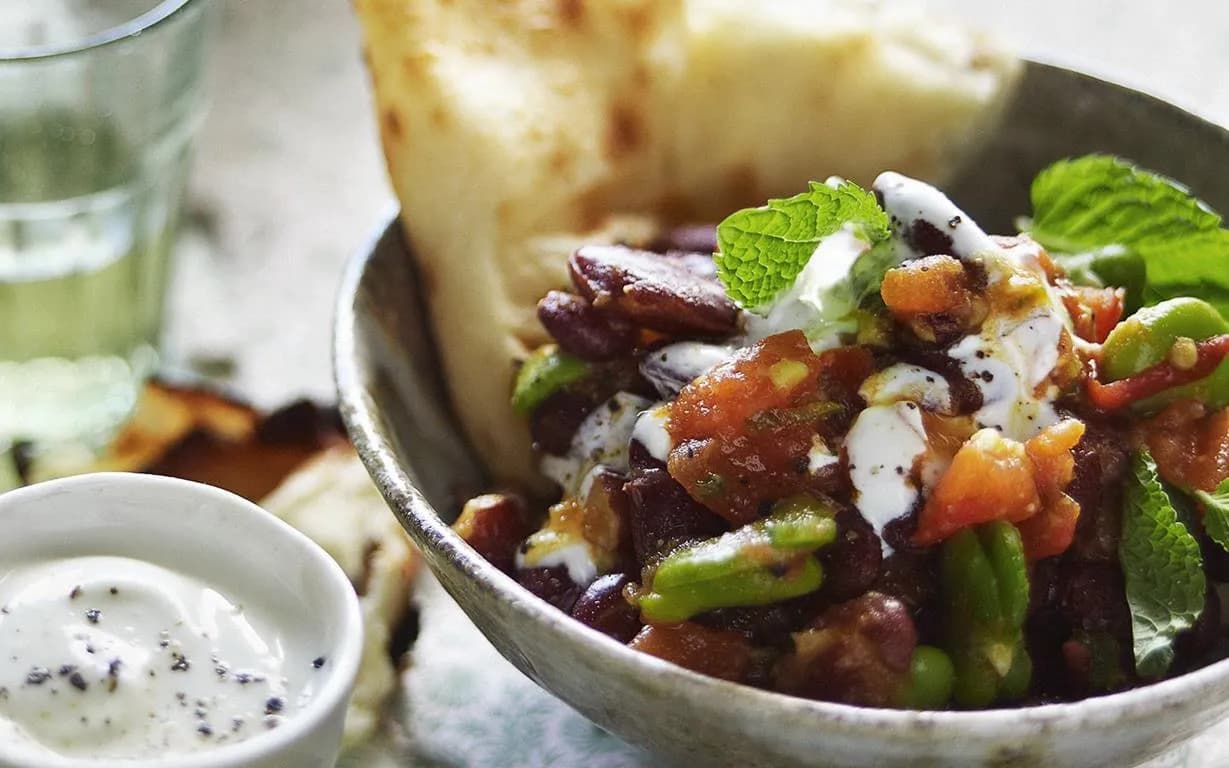
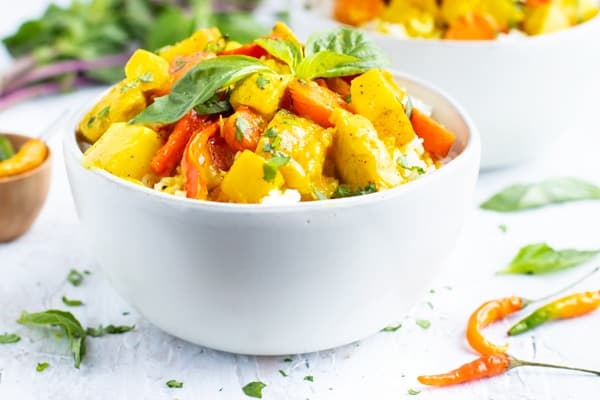
Coconut chicken curry is a one-pan dish of chicken simmered in coconut milk with a curry spice blend and whatever vegetables are to hand, broccoli, cabbage, peppers, potato, carrot.
The word curry is worth being precise about. It is not a single spice or a single dish. It comes from English usage during colonial rule in India, applied broadly to spiced saucy dishes, and it now covers an enormous range of unrelated cooking across South Asia, Southeast Asia, the Caribbean and East Africa. A curry powder sold in a jar is a blend, and the blends differ substantially between manufacturers and regions.
Coconut milk versions belong mainly to the coastal and tropical end of that range, southern India, Thailand, Malaysia, the Caribbean, and the Swahili coast of East Africa, where coconut is grown and used heavily.
This particular recipe is a general one rather than a regional tradition, which is its strength: it tolerates substitution well and is designed to be varied.
**Filed as Worldwide**, the recipe as written makes no specific national claim, so attributing it to any one cuisine would be inventing detail.
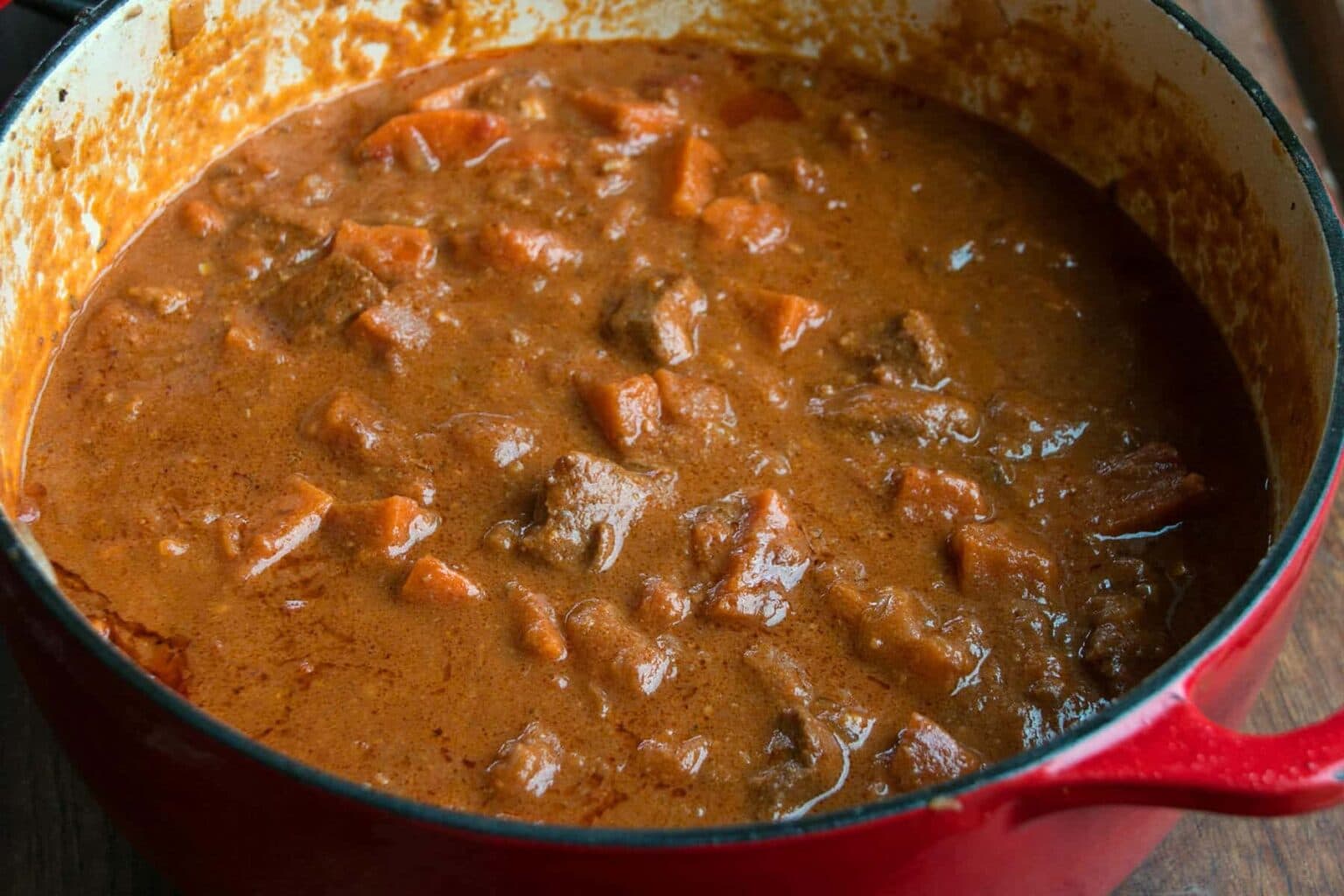
Domada, also written Domoda, is Gambia's national dish and one of West Africa's most comforting stews, a rich, thick groundnut (peanut) based stew cooked with chicken or beef, tomatoes, sweet potato, and cabbage. The peanut paste dissolves into the broth as it cooks, creating a silky, deeply flavoured sauce that coats every piece of protein and vegetable in the pot. The dish belongs to the family of West African groundnut soups found across Senegal, Ghana, Nigeria, and Cameroon, but Domada has its own character, sweeter from the potato, more mellow than the spicier Ghanaian versions, and always generous in the quantity of groundnut used. In Gambia it is eaten at celebrations, family gatherings, and as everyday home cooking.
Dietary tags are provided by contributors as a guide, not verified by AFN, and they depend on the products you buy. If you have a serious allergy, check every ingredient yourself. Cooking, allergies and your own judgement