We use essential cookies to make the site work. We would also like to set analytics cookies and advertising cookies, but only if you agree. You can choose each one separately. Read our cookie policy

Loading
Recipes
Browse the archive by country, course and cooking time.
Kebab is a Middle Eastern preparation, and the source says so directly. Cut or ground meat cooked on a skewer over open flame is one of the oldest cooking methods there is, and the word and the technique both come from that region before spreading almost everywhere.
Mutton and lamb are the traditional meats. Regional versions use beef, goat, chicken or fish, and pork rarely, given religious constraints across much of the region where kebab originates. Not every kebab involves a skewer either: tas kebab is baked in a skillet or served as a stew, which shows how loosely the word travels.
Africa has a great deal of skewered grilled meat of its own, and this recipe is not it. Nigerian suya is coated in yaji, a peanut based spice blend. Sudanese agashe works the same way. Moroccan brochettes are marinated in cumin and paprika. Egyptian kofta is ground and shaped rather than cubed. This version is marinated in soy sauce, olive oil, oregano, garlic and lemon, which is a Mediterranean and Levantine profile, so it sits in the Worldwide Recipes collection rather than being presented as African.
This is a dry spice rub for fish, and it belongs to no particular cuisine. Paprika, thyme, oregano, garlic powder, onion powder, salt, black pepper and cayenne is a broadly Western seasoning profile, and the source claims no country for it.
That is worth stating plainly on a platform documenting African food, because Africa has a great many specific fish seasonings that this is not. Nigerian fish is seasoned with blended pepper, ginger and stock cubes. Senegalese fish carries rof, a stuffing of parsley, garlic and chilli pushed into slashes in the flesh. Moroccan fish is marinated in chermoula, built on coriander, cumin, paprika and preserved lemon. Any of those would be the regional answer to the question this recipe is asking.
What is here is a competent all purpose blend, useful for grilling, baking or pan frying, and it keeps for months in a sealed jar. It is filed under Worldwide Recipes rather than presented as African, since inventing a heritage for a paprika and oregano rub would be exactly the kind of claim this archive should not make.
Oyster mushrooms grilled and tossed in suya spice. It is a plant-based version of the Nigerian street food, and it works better than most meat substitutions do.
**The traditional suya spice contains ground peanuts, and this recipe includes them.** The source flags it and offers to leave them out, which is honest, but it is worth stating clearly, because a peanut allergy and a suya spice blend are a genuinely dangerous combination and the name gives no warning.
Suya proper is skewered beef, ram or chicken rubbed in yaji, the spice blend of ground roasted peanuts, ginger, cayenne, garlic, onion powder and paprika, and grilled over open coals. It is Hausa in origin, from northern Nigeria, and it is sold across Nigeria, Cameroon, Niger, Ghana and parts of Sudan. Kyinkyinga is the Ghanaian name, agashe the Sudanese.
Oyster mushrooms are the right substitution and not an arbitrary one. Shredded, they have a fibrous, layered structure that genuinely resembles pulled meat, they take on the dry rub readily, and they char well. Most vegetables do neither.
The source's method is very compressed, one step reads "put in a preheated medium", with the word oven missing, and has been filled out below.
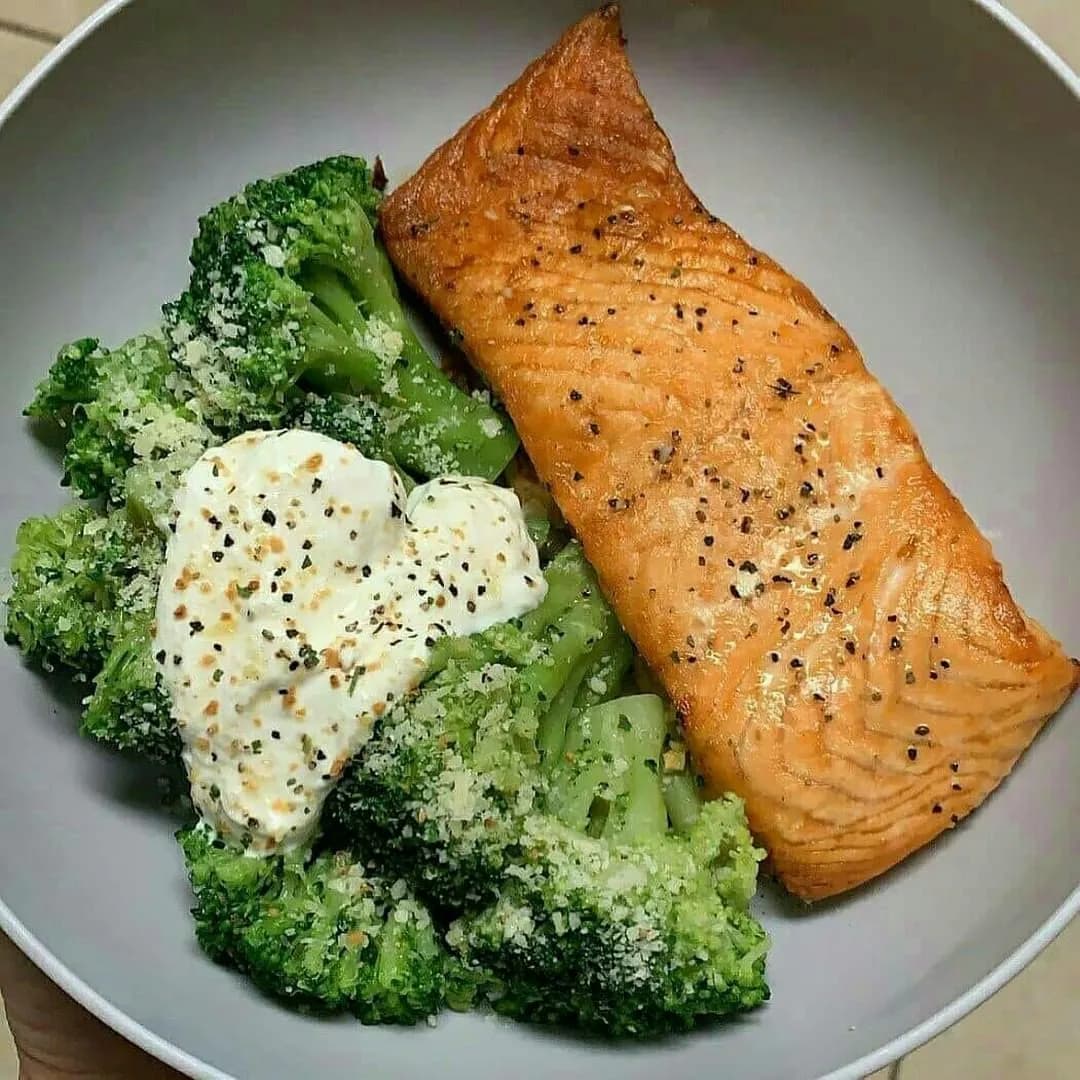
Frozen salmon fillets seasoned and cooked in an air fryer, without thawing. No country is claimed and none applies, it is a technique for a piece of fish, and salmon is a cold-water North Atlantic and Pacific species with no African tradition behind it.
The reason it works is worth understanding rather than taking on faith. An air fryer is a small convection oven: a fan drives hot air fast around a compact chamber, which transfers heat to the surface far more aggressively than a conventional oven of the same temperature. That is enough to cook through a frozen fillet in roughly the time a thawed one would take in a normal oven, and it means the outside dries and colours while the inside is still coming up to temperature.
The practical benefit is real. Thawing fish properly takes hours in a refrigerator, and the shortcuts people take instead, warm water, worktop, microwave, are the ones that cause problems. Cooking from frozen sidesteps the question entirely.
One correction to the source: it says flipping is unnecessary. In a single-basket air fryer the underside sits against the basket and does not colour, so turning the fillet halfway is worth the two seconds it costs.
Dietary tags are provided by contributors as a guide, not verified by AFN, and they depend on the products you buy. If you have a serious allergy, check every ingredient yourself. Cooking, allergies and your own judgement