We use essential cookies to make the site work. We would also like to set analytics cookies and advertising cookies, but only if you agree. You can choose each one separately. Read our cookie policy
Loading
Recipes
Browse the archive by country, course and cooking time.
Foufou powder is the dried flour used to make fufu without pounding, and it is a manufactured product rather than a dish. Traditional fufu is made by pounding cooked cassava, yam or plantain in a mortar, which is slow and produces a wet paste that spoils quickly. The powder is the industrial answer to both problems.
It is made from fermented cassava paste, dried and milled, and it carries the nutty, faintly sour flavour that fermentation gives. Plantain, cocoyam and yam are processed the same way, so foufou powder is a category rather than a single product. Most Nigerians in the south rank fufu second only to garri among indigenous staples.
Foufou, fufu and foutou are the same word in different spellings, and the dish is eaten across western and central Africa and in the Caribbean, where it travelled with African migration. Its origin is generally given as Ghana. The powder is used for more than fufu: it thickens gravies, soups and stews, and it can be used to coat meat and fish for frying. This entry covers the powder and how to make fufu from it, along with the sauce the source pairs it with.
Ayamase is the green pepper stew of southwestern Nigeria, known almost as widely by two other names, ofada sauce, after the rice it is served with, and designer stew, which is what Lagos took to calling it.
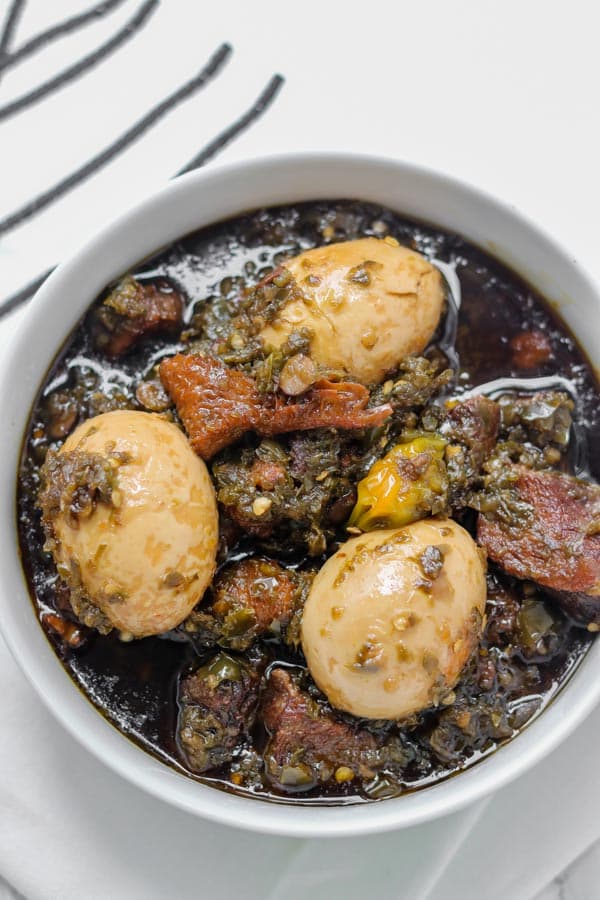
It is defined by two things that would be faults in almost any other stew. The peppers are green rather than red, which gives the sauce its unusual dark olive colour. And the palm oil is deliberately bleached, heated until it stops smoking and loses its red pigment, which strips out the characteristic palm flavour and leaves something nuttier and smokier behind. That bleaching step is the whole signature of the dish, and a version made with unbleached oil is a different sauce.
Around that sit iru, the fermented locust bean that carries the deep savoury note, assorted meats including offal, and boiled eggs, which are close to obligatory.
The name points to a person. Ayamase is traced to Ikenne-Remo in Ogun State and to a woman remembered as Mrs Felicia, Iya Mase, the wife of Mase, who is credited with the dish. It travelled from there into Lagos party food, where its reputation as something special was made.
It is served with ofada rice, the short, unpolished local rice whose earthy flavour is the intended partner.
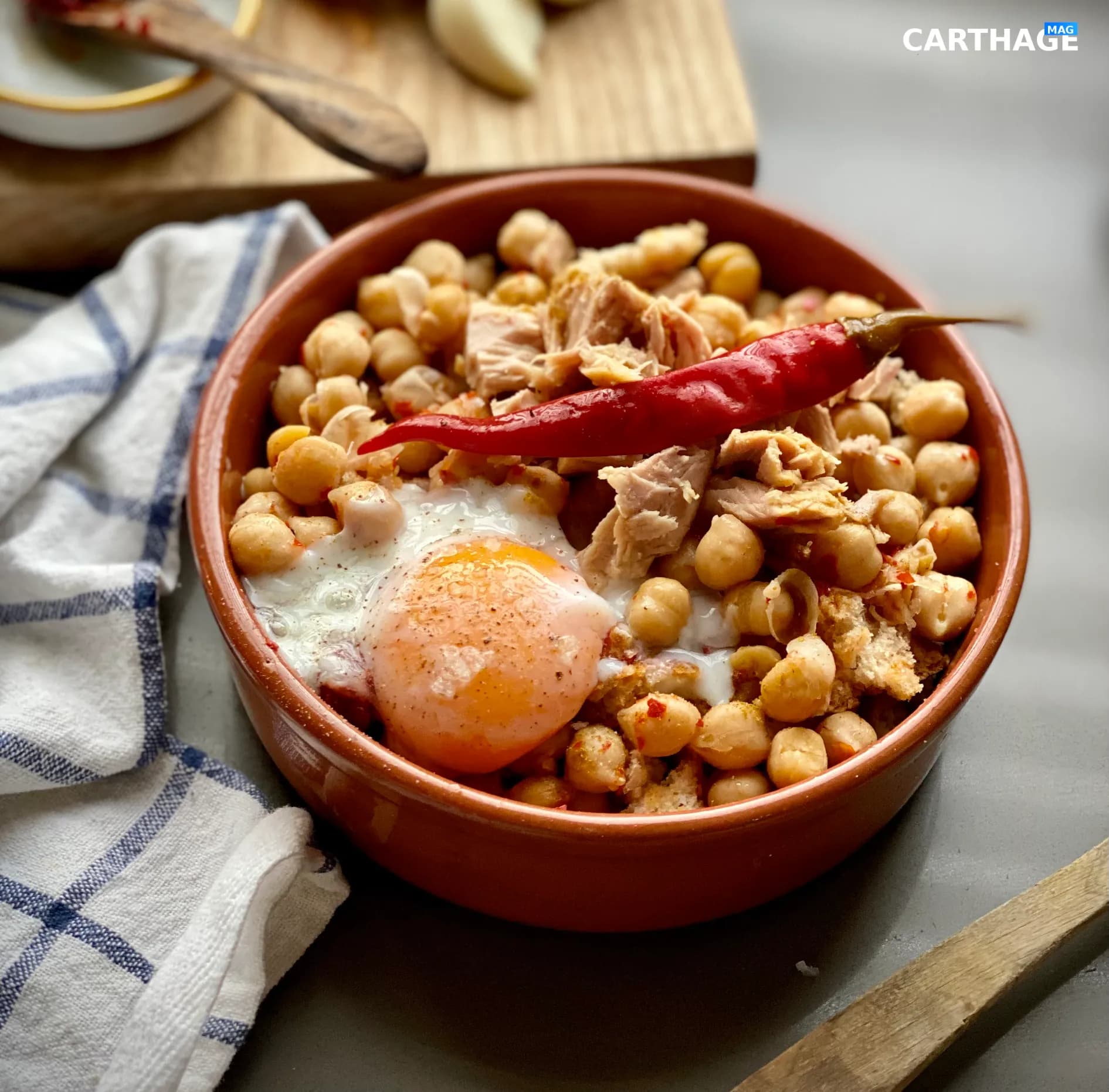
Lablabi is Tunisia's chickpea breakfast: a thin, heavily spiced chickpea broth ladled over torn stale bread, finished with a soft egg, tuna, olives, harissa, cumin, lemon and olive oil. It is served in casual counter-service places across the country and eaten with two spoons, mashing the bread down into the broth as you go.
It is frugal food by design. Stale bread and dried chickpeas are the base, and everything else is a topping. The broth is not thickened or enriched, the flavour comes from cooking the chickpeas slowly in their own water with cumin, caraway and harissa, and that cooking liquid is the dish. This is the reason the source insists on dried chickpeas rather than tinned: the broth is a by-product you cannot buy. If you do use tinned chickpeas, stock in place of water is the compensation.
The name travels. There is an Assyrian chickpea dish also called lablabi, an Iraqi version finished with lemon juice, and the Turkish nohut çorbası, which is made with lamb. The Tunisian one is distinguished by harissa and by the bread at the bottom of the bowl.
Traditionally it is breakfast, eaten to start a cold morning. It is now eaten at any hour, and the modern habit of piling on colourful toppings has made it considerably more photogenic than it used to be.
Ayamase is the green pepper stew of southwestern Nigeria, known widely as designer stew, and it is the sibling of ofada stew rather than a version of it. The difference is the pepper: ofada uses red bell peppers and tomatoes and comes out red; ayamase uses green bell peppers and unripe scotch bonnets and comes out dark green.
Bleached palm oil is what defines the technique. The oil is heated until it stops being red and turns clear, which changes its flavour entirely, removing the sweetness and leaving something deeper and more savoury. It is a step that fills a kitchen with smoke and it cannot be skipped without producing a different sauce.
The rest is southwestern Nigerian cooking at full strength: locust beans for fermented depth, ground crayfish, assorted meat including tripe and cow skin, and whole hard eggs that sit in the sauce and take on its flavour. The sign that it is finished is the oil floating to the surface. It is served with ofada rice, the local short-grain rice, or with white rice or rice and beans, and it appears at parties and in restaurants as much as at home.