We use essential cookies to make the site work. We would also like to set analytics cookies and advertising cookies, but only if you agree. You can choose each one separately. Read our cookie policy
Loading
Recipes
Browse the archive by country, course and cooking time.
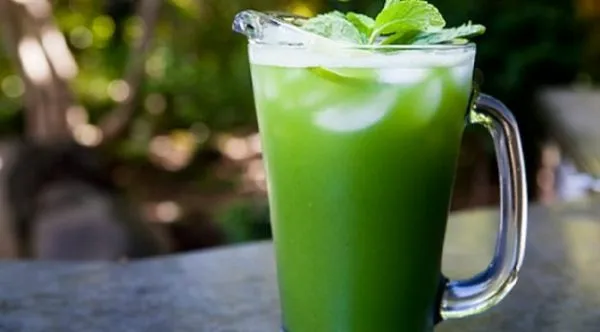
Agua fresca is a chilled non-alcoholic drink popular in Mexico and Central America, made by blending fruit, soaked grains or steeped blossoms with water and a little sweetener. The name translates as fresh water or cool water, and this is the cucumber and mint version.
It is Latin American rather than African. The source notes that similar drinks are available across many African countries, which is true in the sense that blended fruit coolers are made everywhere hot, but agua fresca is a specific Mexican and Central American tradition with a Spanish name. It sits in Worldwide Recipes for that reason, with its URL unchanged.
Africa has its own cold blended drinks that this is not: zobo and bissap from hibiscus across West Africa, kunun zaki from fermented millet in northern Nigeria, bouye from baobab in Senegal, and tigernut milk. Each has its own name and tradition. One practical point about this recipe: gin appears in its ingredient list, which the prose presents as an optional way to turn the drink into an aperitif. That makes it alcoholic as written rather than the non-alcoholic drink agua fresca normally is, and it should be left out for the classic version.
Lemon juice, sugar syrup and water, with raisins left in overnight to start a light fermentation and give the drink a natural fizz. No country is claimed.
The raisins are the interesting part, and the source rather buries them. Dried fruit carries wild yeasts on its skin; left in a sweet liquid at room temperature, those yeasts begin converting sugar into carbon dioxide, which is what produces the fizz. This is the same principle behind ginger beer plants and a great many traditional home-fermented drinks, and it is why the method says to leave it overnight rather than serving immediately.
Two consequences follow, and neither is in the source. Fermentation produces a small amount of alcohol alongside the carbon dioxide, usually well under one per cent for an overnight ferment, but not zero. And a fermenting drink in a sealed container builds pressure, so it should be left loosely covered rather than tightly capped.
The source's history is muddled. It dates lemonade to Paris around 1630, which refers specifically to the French *limonade* sold by the Compagnie des Limonadiers; sweetened lemon drinks are considerably older and are documented in medieval Egypt.
No quantities are given at all; those below are working proportions.
Palm wine is the sap of palm trees, collected and left to ferment, and it is drunk across West and Central Africa. It is called nsafufuo in Ghana and emu in Nigeria, where ogogoro refers to the distilled spirit made from it rather than the wine itself.
Tapping is a specialised job. Tappers climb to the upper part of the tree, where the sap is drawn from the crown, or a felled trunk is opened and the sap collected in jars. What comes out is white, sweet and barely alcoholic, and it begins fermenting the moment it is exposed to the wild yeasts in the air. Within about two hours it has developed roughly the alcohol content of a beer, and it keeps getting stronger and more sour from there.
That speed explains everything about how it is sold. Traditional producers sell immediately after extraction because the drink changes hour by hour: sweet and mild in the morning, sharp and considerably stronger by evening. There is no way to hold it at a chosen point without modern processing. This recipe is the simplest possible serving, palm wine over ice with citrus and berries, and its purpose is to show what to do with a bottle rather than to teach a technique.
Umqombothi is Xhosa beer, brewed from maize meal, maize malt and sorghum malt. It is thick, cloudy, sour smelling and low in alcohol, usually under three per cent, and it is not made to be compared with lager. It is a different category of drink with a different purpose.
Its purpose is ceremonial before it is social. In Xhosa practice umqombothi is brewed for the return of the abakwetha, the young men coming back from ulwaluko, the initiation and circumcision rite. It is central when families communicate with the amadlozi, the ancestors, and it appears at traditional weddings, funerals and imbizo, the community meetings where matters are decided. A gathering of consequence has umqombothi at it, and its absence would be noticed as a statement.
The drink is not confined to South Africa. Sorghum beer is brewed across the continent under many names: dolo in Burkina Faso, pito in Nigeria, ingwebu among the Ndebele of Zimbabwe, which is their word for froth. Brewing is done outdoors over an open fire, cooled at ambient temperature, and the recipes are held within families and passed down rather than written.
Dietary tags are provided by contributors as a guide, not verified by AFN, and they depend on the products you buy. If you have a serious allergy, check every ingredient yourself. Cooking, allergies and your own judgement