We use essential cookies to make the site work. We would also like to set analytics cookies and advertising cookies, but only if you agree. You can choose each one separately. Read our cookie policy
Loading
Recipes
Browse the archive by country, course and cooking time.
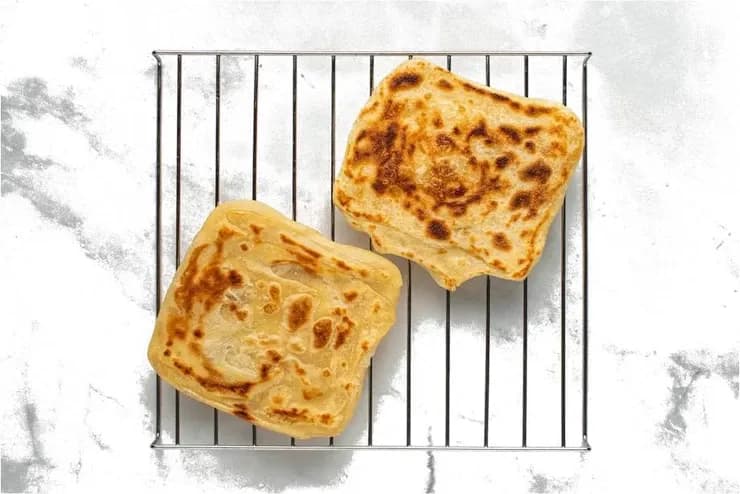
The thick, risen pancake is a North American and British form rather than an African one, and the source for this recipe says so directly: it describes itself as a basic UK recipe. It is included here as a plain reference version, not as a dish with a claim on the continent.
That distinction matters because Africa has its own pancakes and they are not this. The Nigerian pancake, known colloquially as diet, is thin, dense and deliberately savoury, carrying onion and ground pepper in the batter alongside the sugar. Hausa masa is a fermented rice cake, spongy and slightly sour, cooked in a pan of round wells. Ethiopian injera is a fermented teff flatbread that functions as a plate. Each of those is a distinct thing with its own technique and its own place at a table.
What this recipe offers is the baking powder raised, egg and milk enriched, butter cooked pancake that most of the world now recognises from breakfast menus. It is genuinely good and genuinely simple, and there is no reason not to make it. There is also no reason to describe it as African cooking, and the honest position is to present it as what it is.
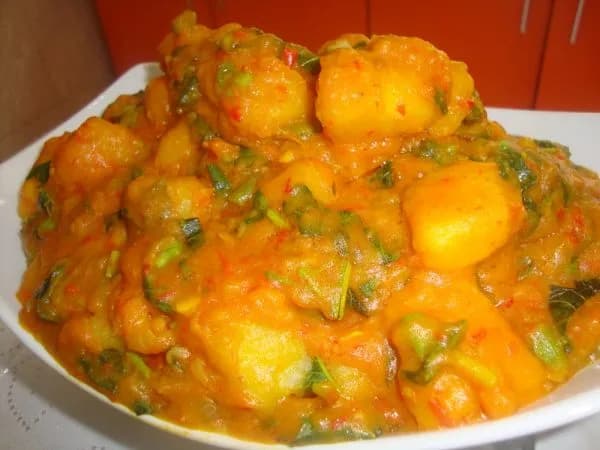
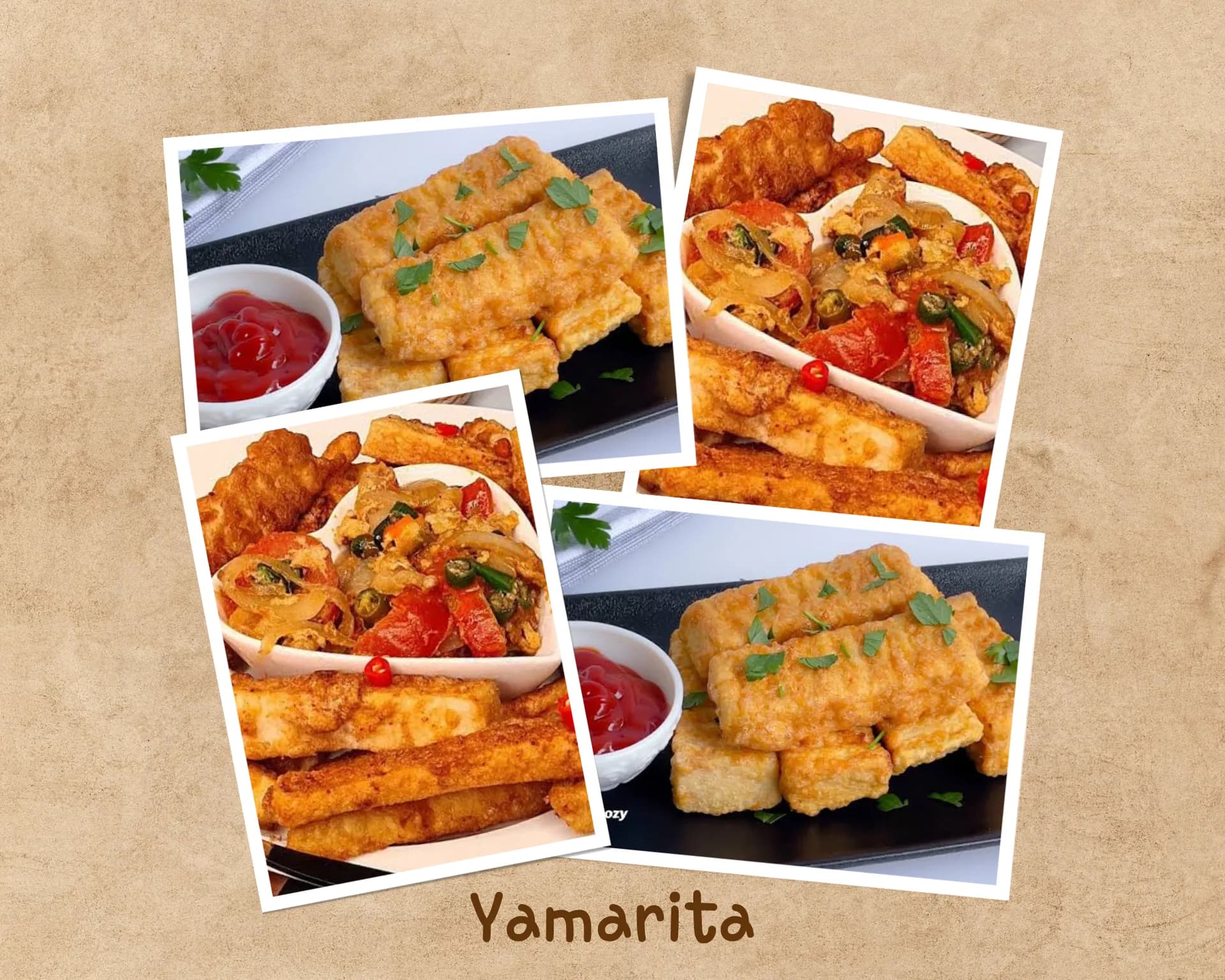
Yamarita is yam in an egg and flour coating, fried until the crust is crisp and the inside stays soft. It is a Nigerian treatment of the country's most important tuber, and it is straightforwardly a modern dish rather than an inherited one.
The name gives away its logic. Yamarita is yam plus the ending of dundun ata or, by the more commonly repeated account, a play on the Yoruba way of naming a fried thing. Whatever the derivation, it belongs to the same family of inventions as yam chips and yam balls: ways of turning a starch that is usually eaten soft into something you can pick up with your fingers at a party.
It sits alongside the older Nigerian yam preparations rather than replacing them. Pounded yam is ceremonial, yam porridge is domestic, yam with egg sauce is breakfast, and yamarita is what appears on a small chops platter next to puff puff and spring rolls. That is a real position in Nigerian eating even if it is a recent one, and the dish has spread well beyond the households that first made it.
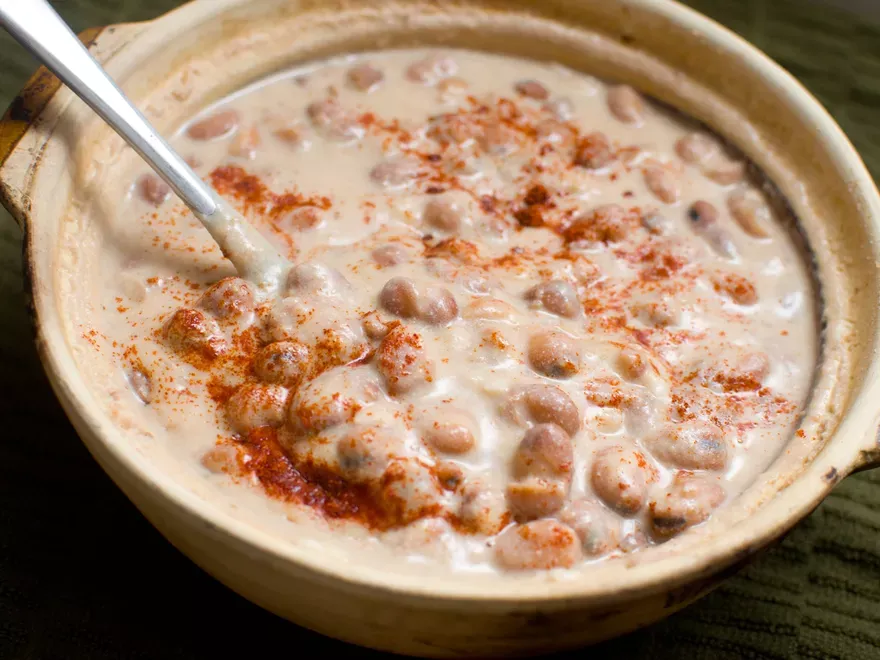
Shahan ful is fava beans cooked down with onion, garlic and berbere until thick, topped with yoghurt, tomato and chilli, and eaten with bread. It is a breakfast across Somalia, Ethiopia, Eritrea, Sudan and South Sudan, and no single country is claimed.
It is the same dish family as Egyptian ful medames, and the source is right to say so, the difference is the seasoning. Egyptian ful leans on cumin, lemon and olive oil; shahan ful is built on berbere, the Ethiopian chilli and spice blend, and finished with ghee. That single substitution changes the whole character while the technique stays identical.
The origin is generally traced to Sudan, and fava beans themselves are among the oldest cultivated crops in the region, they have been eaten around the Nile for thousands of years.
It is eaten by hand with bread, no cutlery, and the toppings are stirred in by whoever is eating rather than mixed by the cook. That is why the method leaves the yoghurt, tomato and chilli in distinct piles on top: each person combines their own.
Ramadan and the Ethiopian and Eritrean Lenten fasts are both when it is eaten most, being filling, cheap and, without the ghee and yoghurt, entirely plant-based.
Eggs poached in a spiced tomato and pepper sauce, cooked and served in the same pan. It is North African, most strongly associated with Tunisia, and no single country is claimed.
The origin is genuinely contested rather than merely unclear. Tunisia has the strongest claim and the name is Tunisian Arabic, shakshuka means something like a mixture or a jumble. Some food historians argue for Yemen instead. What is not in dispute is the route it took afterwards: North African Jewish immigrants, particularly Tunisians, brought it to Israel in the mid-twentieth century, where it became a national breakfast staple and from where it spread internationally. Most people outside the region encountered it through Israeli restaurants rather than Tunisian ones.
The technique that matters is making wells for the eggs. Cracking eggs onto the surface of a sauce gives you eggs sitting on top; digging a shallow well with a spoon and easing each egg into it means the whites are supported by the sauce on all sides and set evenly while the yolk stays soft.
Two related pages exist here. Ojja is the Tunisian version built on harissa and caraway; taktouka and matbucha are the eggless cooked pepper salads that shakshuka resembles.
Cook the eggs through if you are avoiding runny yolks.
Dietary tags are provided by contributors as a guide, not verified by AFN, and they depend on the products you buy. If you have a serious allergy, check every ingredient yourself. Cooking, allergies and your own judgement