We use essential cookies to make the site work. We would also like to set analytics cookies and advertising cookies, but only if you agree. You can choose each one separately. Read our cookie policy

Loading
Recipes
Browse the archive by country, course and cooking time.
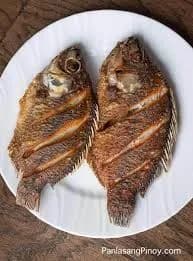
Frying a tilapia whole is one of the most common ways it is eaten across West Africa, and it is a different proposition from cooking fillets. The skin crisps, the flesh stays moist against the bone, and the head and tail crisp up alongside, which many people consider the best part.
Tilapia is a freshwater fish of shallow streams, ponds, rivers and lakes, native to Africa and now farmed on an enormous scale worldwide. That scale is why it is cheap and widely available, and it has become one of the most consumed fish in the world. It is bony, which puts some people off, and worth the small amount of care that eating it requires.
The technique here is scoring and shallow frying rather than deep frying. Diagonal cuts across both sides let the spice paste reach the flesh rather than sitting on the skin, and they help the fish cook evenly through the thickest part. Turmeric, garlic, black pepper and habanero form the rub. Tilting the pan so the head and tail are submitted to the oil in turn is a small detail that matters: those parts sit above the oil line otherwise and stay soft while the middle crisps.
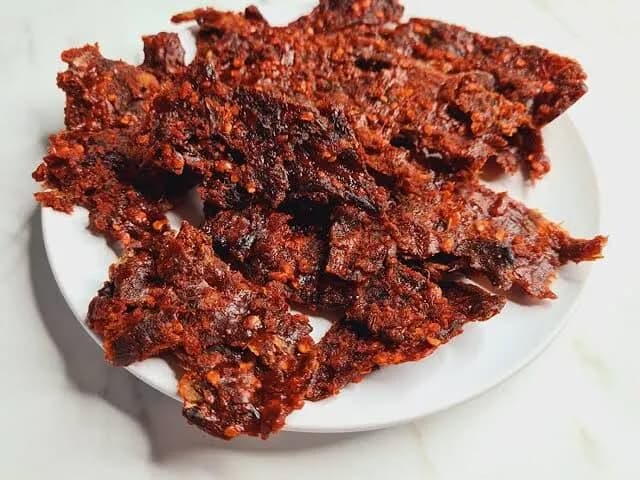
Suya is skewered meat coated in yaji, a dry peanut based spice blend, and it is the best known street food in Nigeria. It comes from the Hausa people of the north, where it is also called tsire, and it spread from there across West Africa. Sudan has a close relative in agashe.
Yaji is what makes it suya rather than grilled meat. The blend is built on ground peanut, usually in the form of kuli kuli crushed to a powder, with ginger, chilli, onion powder and other seasonings, and the peanut is what gives suya its particular nuttiness and the slightly gritty coating that clings to the meat. Meat without yaji is not suya, whatever else is done to it.
Beef and ram are the traditional cuts, along with kidney, liver and tripe, and chicken is the newer arrival that has become common. It is sold at night from roadside grills, cut on a board and handed over in newspaper with sliced raw onion, tomato and cabbage, and the raw onion alongside the hot spice is not a garnish but part of how it is eaten. The one thing worth knowing before making it is that yaji contains peanut, which matters to anyone with an allergy.
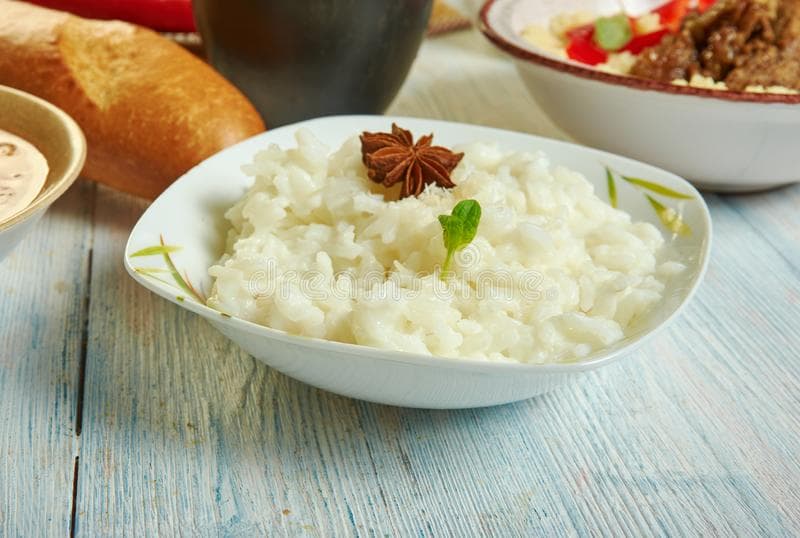
Sombi is Senegalese rice pudding made with coconut milk rather than dairy, rice simmered slowly with coconut milk, sugar and a little salt until it thickens.
Its simplicity is the reason it is so widely made. Four ingredients, one pot, and no technique beyond stirring and patience. It is a household dessert rather than a restaurant one, and it appears at family meals, at celebrations and during Ramadan.
Being made with coconut milk rather than cow's milk matters practically as well as culturally. It keeps better in a hot climate without refrigeration, and it is suitable for the many adults who do not digest lactose well.
The salt is not incidental. A small amount sharpens the sweetness and stops the pudding tasting flat, and leaving it out is the most common reason a home-made sombi disappoints.
It is served warm most often, though it is also eaten chilled in very hot weather, and it is usually garnished with toasted coconut chips.
Sombi belongs to a broad family of coconut rice puddings found wherever rice and coconut are both grown, from West Africa through South and Southeast Asia and the Caribbean.
Whole tilapia scored, marinated in an oil-based spice mixture, oven-grilled, then coated in a fresh green pepper base and returned to the heat. The two-stage seasoning is what makes it, and it is a West African approach rather than a simple marinade.
The first stage is a dry-spice oil: vegetable oil with fish seasoning, white and black pepper, ginger, garlic, onion powder and lemon juice, worked into the cuts. The second is a green pepper base built in a food processor from green and red scotch bonnets, bell peppers, spinach, dill, coriander, ginger, garlic and onion, fried briefly in oil and then smeared over the part-cooked fish.
That green base is the interesting part. Blending leafy greens and fresh herbs into a pepper sauce is characteristic of Ghanaian and wider West African fish cookery, and it gives colour and a fresh, sharp finish that a marinade applied only at the start cannot. The scoring is not decorative either: two or three cuts on each side let both stages of seasoning reach the flesh rather than sitting on the skin. Tilapia is native to African fresh waters and is the fish most associated with Ghanaian grilling, usually eaten with banku.
Dietary tags are provided by contributors as a guide, not verified by AFN, and they depend on the products you buy. If you have a serious allergy, check every ingredient yourself. Cooking, allergies and your own judgement