We use essential cookies to make the site work. We would also like to set analytics cookies and advertising cookies, but only if you agree. You can choose each one separately. Read our cookie policy

Loading
Recipes
Browse the archive by country, course and cooking time.
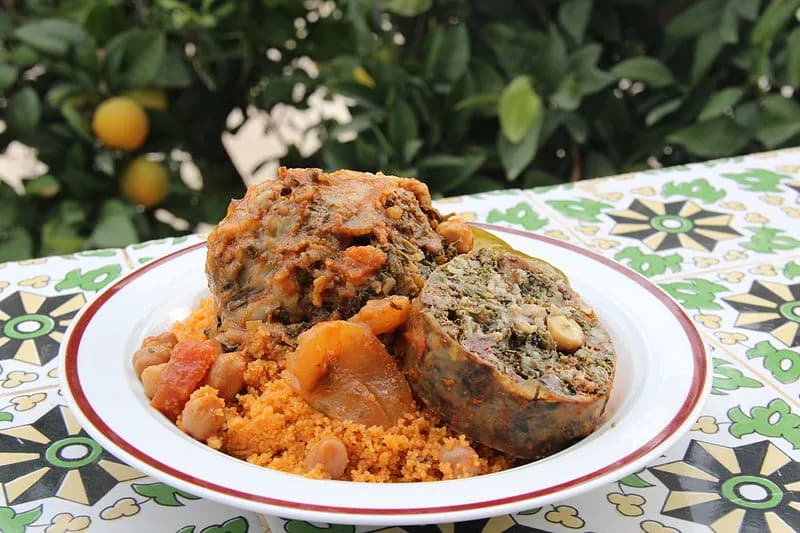
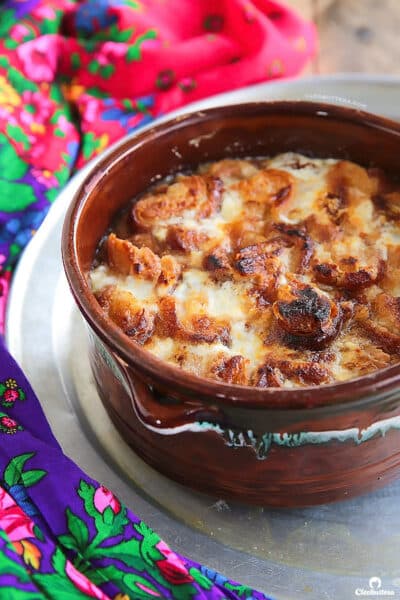
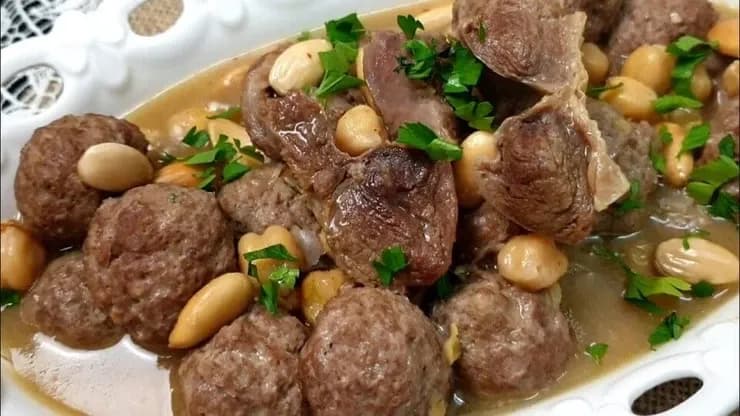
Usban is a North African sausage made from the parts of a sheep that a whole animal butchery yields and nothing else does: the stomach, the liver, the lungs and the heart, chopped and mixed with rice, herbs and spices, sewn into pouches and cooked in a sauce. It is eaten in Tunisia, Algeria and Libya, and it is written both usban and osban.
Its occasion is Eid al-Adha, and the connection is structural rather than customary. The festival involves the sacrifice of an animal and the use of all of it, and usban is what the offal becomes. It cannot be made casually because it requires a quantity of organ meat that only arrives when a whole sheep is broken down at home. Tunisian households make it on the day of Eid despite the considerable labour, and the effort is part of what the dish means.
The work is real. The stomach must be scrubbed, blanched, scraped of its lining until it turns white, cut and sewn into pouches by hand with a needle and butcher's twine, then filled and sewn shut. Usban is documented in Tunisian references as far back as the 13th century, and it is held up as a demonstration of skill: proof that a cook can use every part of the sacrifice properly. It is served alongside rice or couscous.
Couscous is the national dish of Tunisia, and it is also the national dish of Algeria, Morocco, Mauritania and Libya, which tells you something about how the Maghreb understands itself. The same steamed semolina appears across all five countries under names that shift with the language: kousksi in Tunisia, taam or kesksu in Algeria, seksu in Morocco, and cuscusu in Sicily, where it crossed the water.
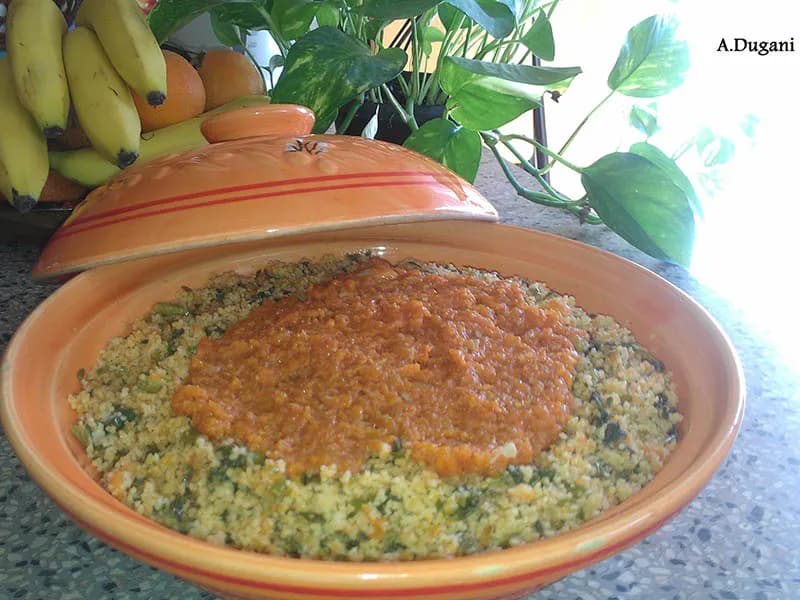
The Tunisian version is distinguished by its heat and its colour. Harissa goes into the broth rather than being offered alongside it, and the finished couscous runs orange to deep red depending on how much broth and harissa it has taken up. Caraway is the other Tunisian signature, appearing in a quantity that Moroccan and Algerian couscous would not use.
What goes with it depends on the coast. In Sfax and the other coastal cities, couscous is made with fish. Inland it more often carries lamb, sometimes with dried fruit. Turnip, carrot, courgette, potato, pumpkin and chickpeas are the usual vegetables, cooked in the broth and removed as each becomes ready. The word itself is traced either to the Arabic kaskasa, to pound small, or the Amazigh seksu, meaning rounded or well rolled, and both derivations describe the grain rather than the dish.
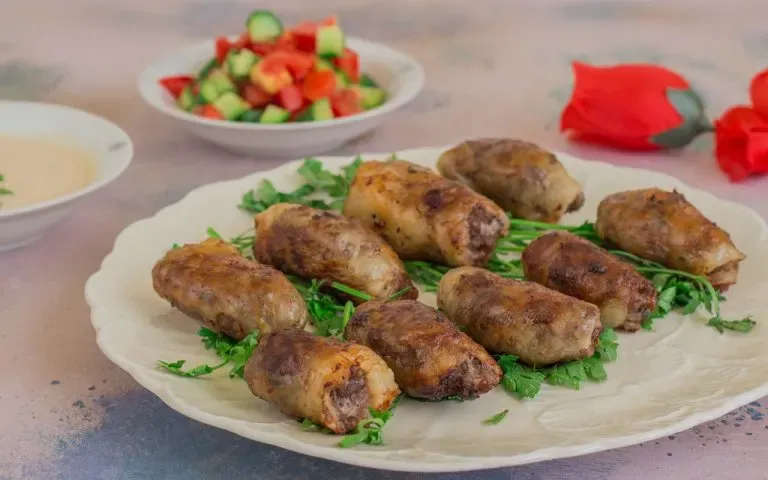
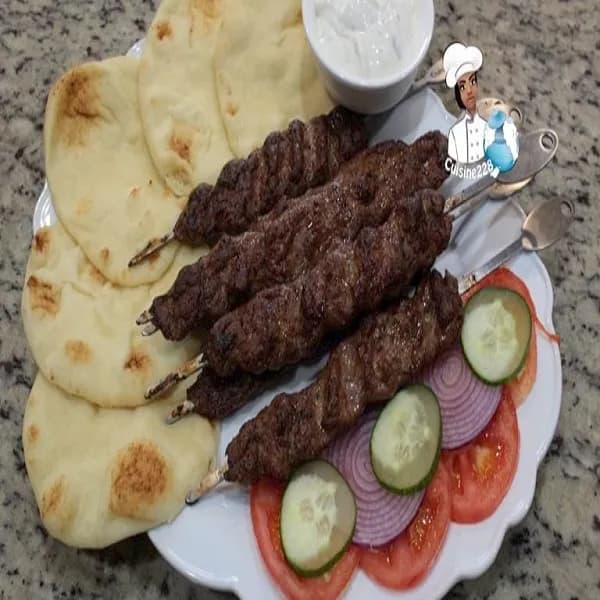
Tarb is kofta wrapped in caul fat and grilled, and the caul is what the dish is named for. Tarb is the Egyptian word for the lacy membrane of fat that surrounds a lamb's stomach, and wrapping seasoned minced lamb in it produces something that ordinary kofta cannot: the fat renders during cooking, bastes the meat from the outside in, and crisps to a golden shell.
Its occasion is Eid al-Adha, the festival of sacrifice, and the connection is direct rather than customary. Eid al-Adha involves the slaughter of an animal and the distribution of its meat, and caul fat is one of the parts that becomes available when a whole lamb is broken down at home. A dish built on caul is a dish that belongs to the moment when a whole animal is being used, which is why tarb appears then and rarely otherwise.
Kofta itself runs across Egypt and the whole Middle East, minced meat with onion, parsley and spices, formed and grilled. Tarb is the version that takes it somewhere richer, and Egyptians treat it as a heavy dish for a family celebration rather than everyday food. It is found in the grilled meat restaurants that specialise in kofta, kebab and grilled chicken across Egypt, served with rice or pasta.
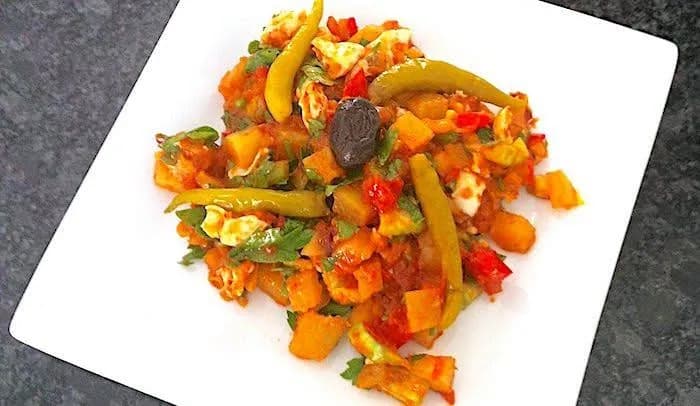
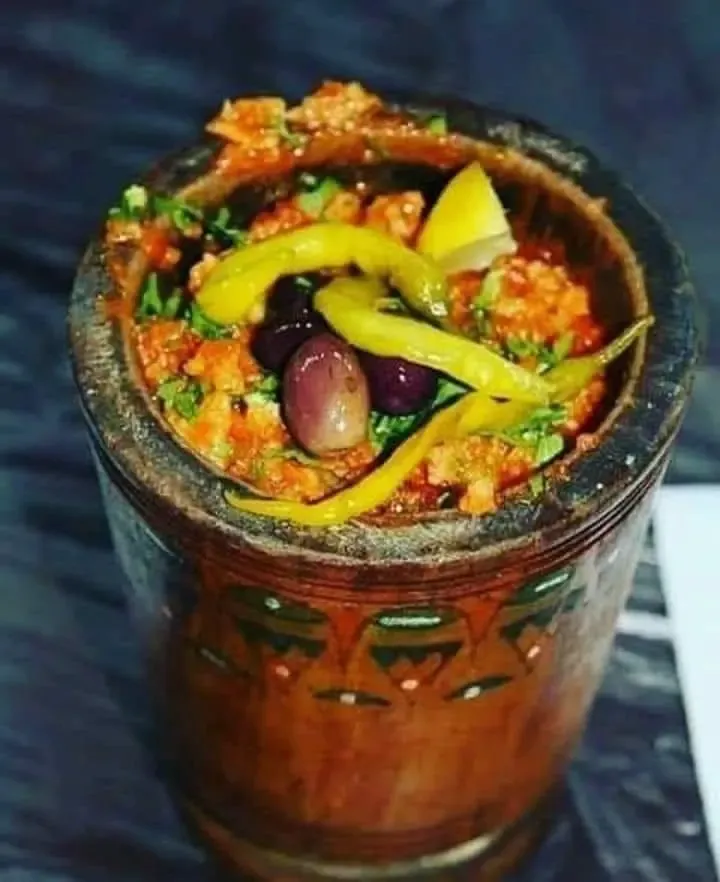
Kafteji is Tunisian street food built on a single idea: fry a range of vegetables separately so each one is properly cooked, then chop them together and serve the result with bread. Potato, courgette, pepper, tomato and aubergine are the usual cast, and the chopping at the end is what makes it kafteji rather than a plate of fried vegetables.
It is sold from small counters and casse-croûte shops across Tunisia and eaten at any hour, most often stuffed into bread as a sandwich. It is inexpensive, which is part of its identity: kafteji is what you eat when you want something substantial and hot without a restaurant. Fried egg is a common addition, and in many Tunisian versions it is the only protein.
The version here includes ground beef or lamb, which puts it at one end of a range. Kafteji is frequently made entirely without meat, and the vegetable only preparation is at least as common in Tunisia as the meat version. Harissa, olives and a squeeze of lemon are the usual finishing touches, and the dish is eaten from a shared plate with bread as the utensil.