

We use essential cookies to make the site work. We would also like to set analytics cookies and advertising cookies, but only if you agree. You can choose each one separately. Read our cookie policy

Loading
Recipes
Browse the archive by country, course and cooking time.
Tunisian sabayon is a frozen custard of whipped egg, sugar and oil, scented with orange blossom water and served very cold under crushed pistachios or almonds. It resembles its Italian namesake in ingredients and method, with one substitution that changes it entirely: oil replaces the alcohol.
Sabayon comes from the Italian zabaione, and the word appears in French as sabaillon in 1803, apparently brought back by soldiers from the Italian and Swiss expedition of 1799 to 1800. Older origins are claimed, an introduction to the French court in 1533, or an invention in Turin, but these are unverified and some are frankly legendary. The Tunisian version is much more recent than any of them, arriving through Italian influence in Tunisia.
There is one thing to be clear about. Italian zabaione is cooked, whisked over a bain-marie until the eggs thicken. **This version is not cooked at any point.** The eggs are whipped raw, folded together and frozen. That makes it a raw egg dessert, which matters for anyone pregnant, elderly, very young or immunocompromised, and pasteurised eggs are the sensible answer if you are serving it to any of them. It needs at least eight hours in the freezer, so it has to be made the day before.
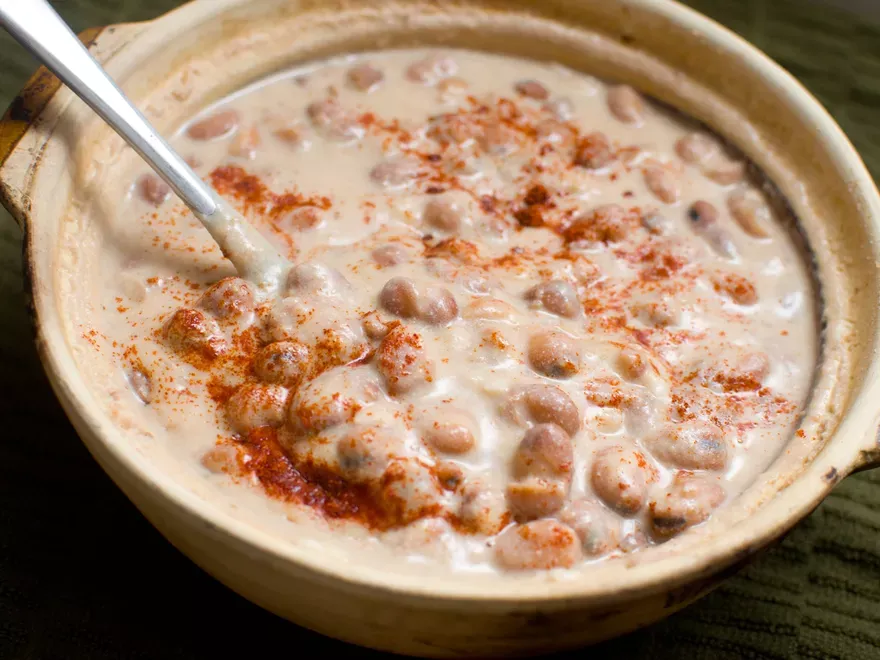
Ful medames is stewed fava beans dressed with olive oil, cumin, garlic and lemon, and it is Egypt's national dish. It is eaten at any hour, though breakfast is when it belongs most, and it is sold from carts across Cairo and Giza in the mornings.
Traditionally it is cooked and served in a large metal jug, the qedra, over a very long slow heat, often overnight, which is why street ful has a depth that a quick home version does not. What the beans are dressed with varies endlessly: parsley, onion, chilli, tomato, hard eggs, tahini.
Its versions across the region are worth knowing. In Somalia, fuul is a breakfast staple served with eggs and laxoox or canjeero flatbread, spiced with xawaash, the blend of cumin, coriander, cardamom, cloves, turmeric and more that makes it noticeably hotter than the Egyptian version. In Morocco it is bissara, made from fava beans and split green peas cooked with garlic, eaten especially in the north during cold weather. This particular recipe includes tahini, which is a Levantine addition rather than a classic Egyptian one, and it uses tinned beans rather than the overnight cook.
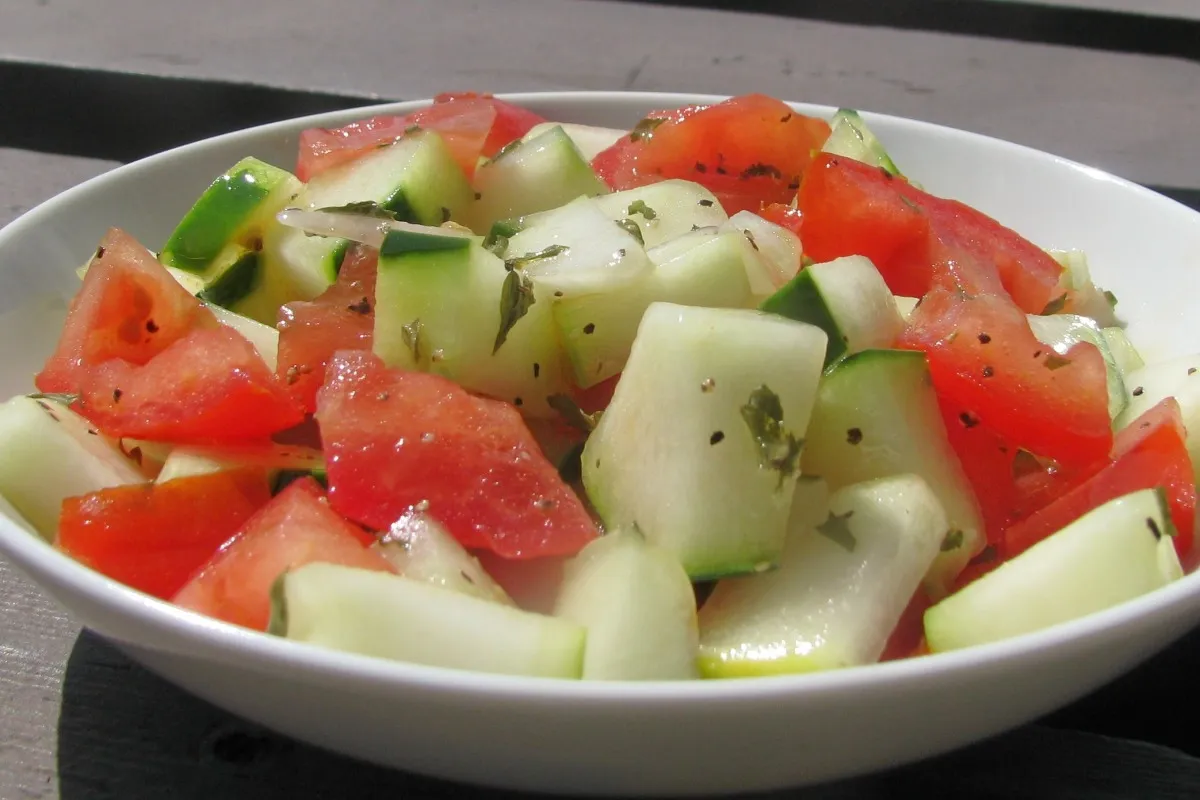
Shlada is the Moroccan tomato and cucumber salad, dressed with lemon and olive oil and seasoned with cumin. It goes by shlada 'arobiya, meaning country salad, and shlada Nationale, the national salad, which tells you how ordinary and how ubiquitous it is.
Everything depends on the knife work. The tomatoes, cucumber and onion are chopped very small, so that a single spoonful carries all three rather than one at a time. The contributor is emphatic that this is the secret of the salad, and it is a fair claim: the same ingredients in rough chunks make a quite different and much less interesting dish.
It also needs to sit. Ten minutes before serving lets the flavours combine, and up to an hour improves it further, which is unusual for a salad. Preserved lemon peel is the optional addition that makes it unmistakably Moroccan, and only the peel is used, never the pulp. It is eaten as a side, as a light lunch, and as a dip scooped up with khobz, the Moroccan bread. Parsley substitutes for mint, vinegar for lemon juice, and vegetable oil for olive oil, all of which are made.
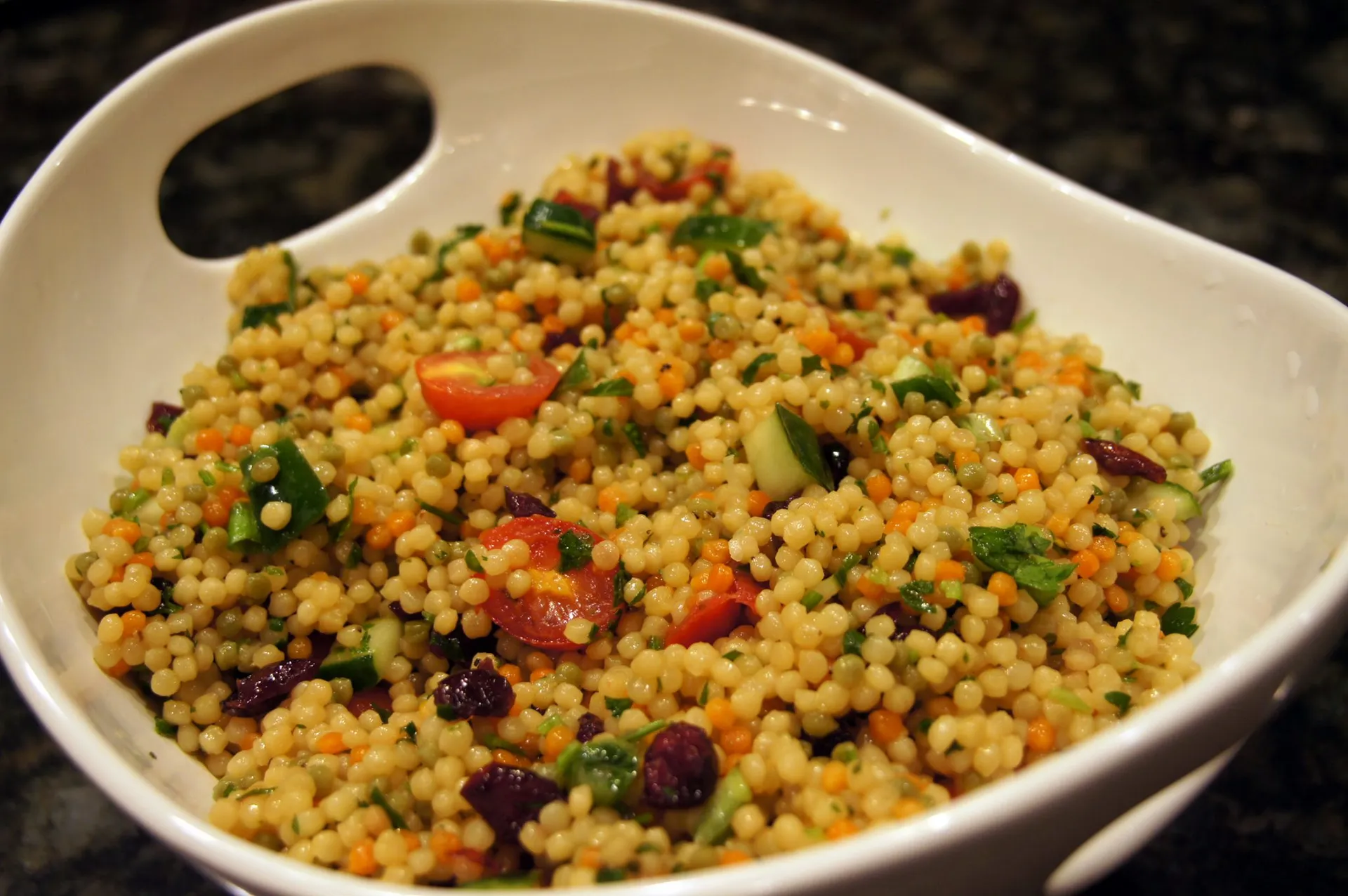
How to prepare instant couscous: boiling water or stock poured over, covered, left to steam, then fluffed. This is a technique page for a staple ingredient rather than a recipe for a dish, and it is filed as such.
Couscous is North African, specifically Berber in origin, and it is a staple across Morocco, Algeria, Tunisia and Libya. Its status was recognised by UNESCO in 2020, when the knowledge and practices around couscous were inscribed on the Representative List of the Intangible Cultural Heritage of Humanity in a joint submission by Algeria, Mauritania, Morocco and Tunisia.
It is not a grain, despite looking like one. Couscous is pasta, durum wheat semolina moistened, rolled into tiny granules and dried. Three sizes are common: Moroccan, the smallest; Israeli or pearl couscous, about the size of peppercorns; and Lebanese, the largest.
The traditional method has nothing to do with pouring boiling water on. Couscous is steamed, usually more than once, in the upper chamber of a couscoussier over a stew whose vapours flavour it as it cooks. That is how it is made for a proper meal in North Africa and the results are much lighter.
Almost all couscous sold in supermarkets is pre-steamed and dried, which is why the rehydration method here works.
Dietary tags are provided by contributors as a guide, not verified by AFN, and they depend on the products you buy. If you have a serious allergy, check every ingredient yourself. Cooking, allergies and your own judgement