We use essential cookies to make the site work. We would also like to set analytics cookies and advertising cookies, but only if you agree. You can choose each one separately. Read our cookie policy

Loading
Recipes
Browse the archive by country, course and cooking time.

Green coffee beans roasted, ground with spices and brewed in a clay pot, then poured through a filter of palm fibre. It is Sudanese, and it is a preparation rather than simply a drink.
**This page had no recipe card in the source.** The ingredients and method below are reconstructed from its article, and that is flagged.
The context is worth stating. Coffee is East African in origin, Ethiopia is where *Coffea arabica* comes from, and Sudan and Kenya are among the places where it was first used. That makes Sudanese coffee culture not an import but part of the plant's home ground, and the source is right to be proud of it.
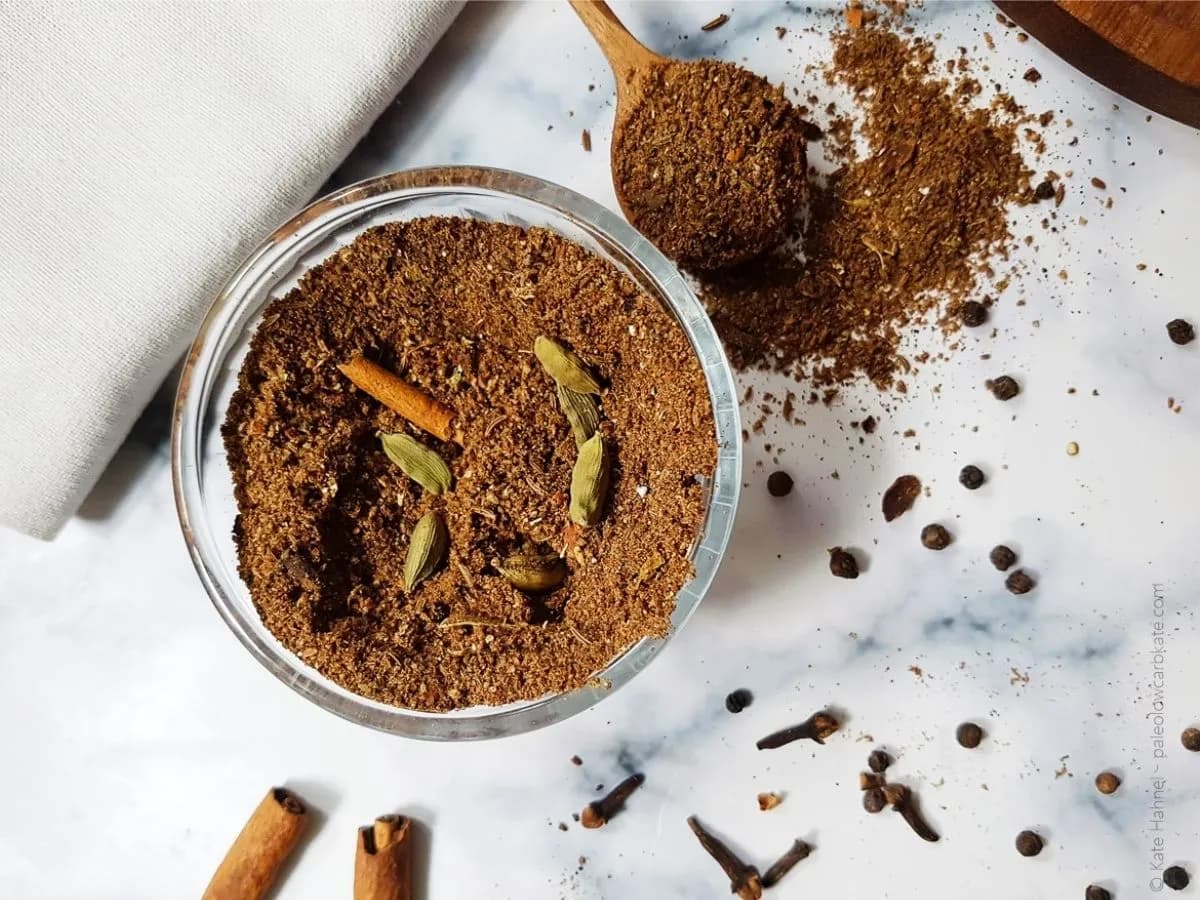
What distinguishes jebena is that the whole process happens at the point of serving. Beans are roasted fresh in a pan, ground by hand, traditionally in a mortar, with ginger, cardamom and sometimes cloves or cinnamon, and brewed in the clay jebena pot the drink is named after. It is then poured through a filter of palm fibre stuffed in the spout.
The source contradicts itself in a single sentence, saying the coffee is brewed very sweet and then that it is served black with no sugar. Both practices exist; the sentence as written cannot be true.
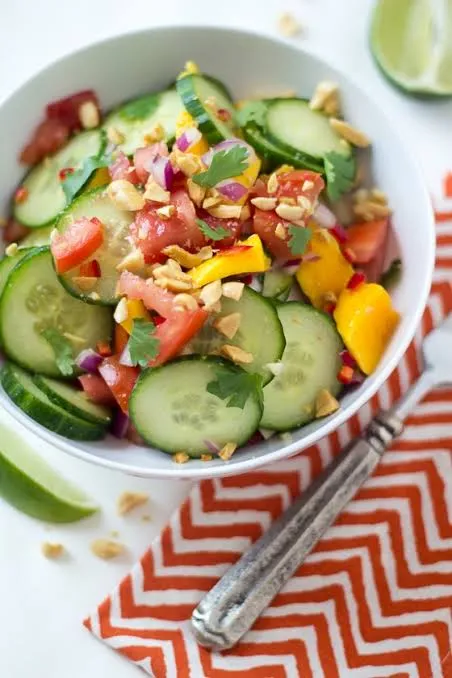
This is an East African salad of mango, cucumber and tomato with chilli, cumin and a little cinnamon, dressed with lime and finished with roasted peanuts. It is served on its own or alongside grilled meat, and its appeal is the contrast: crunchy against soft, sweet against tart.
Mangoes are not indigenous to Africa. They reached the East African coast through Persian traders around the tenth century, part of the same Indian Ocean exchange that brought rice, spices and coconut into Swahili cooking, and they have been grown and eaten there ever since. Kenya and Tanzania are now substantial producers.
The seasoning is what places it. Cumin with a dash of cinnamon in a fruit salad is a Swahili coast combination rather than a Western one, reflecting the same trade history, and the peanuts and lime give it the texture and acidity that hold the whole thing together. Salting the cucumber and onion first and letting them drain for twenty minutes is the technique that matters most: cucumber holds a great deal of water, and skipping it leaves a salad sitting in liquid within minutes of being dressed.
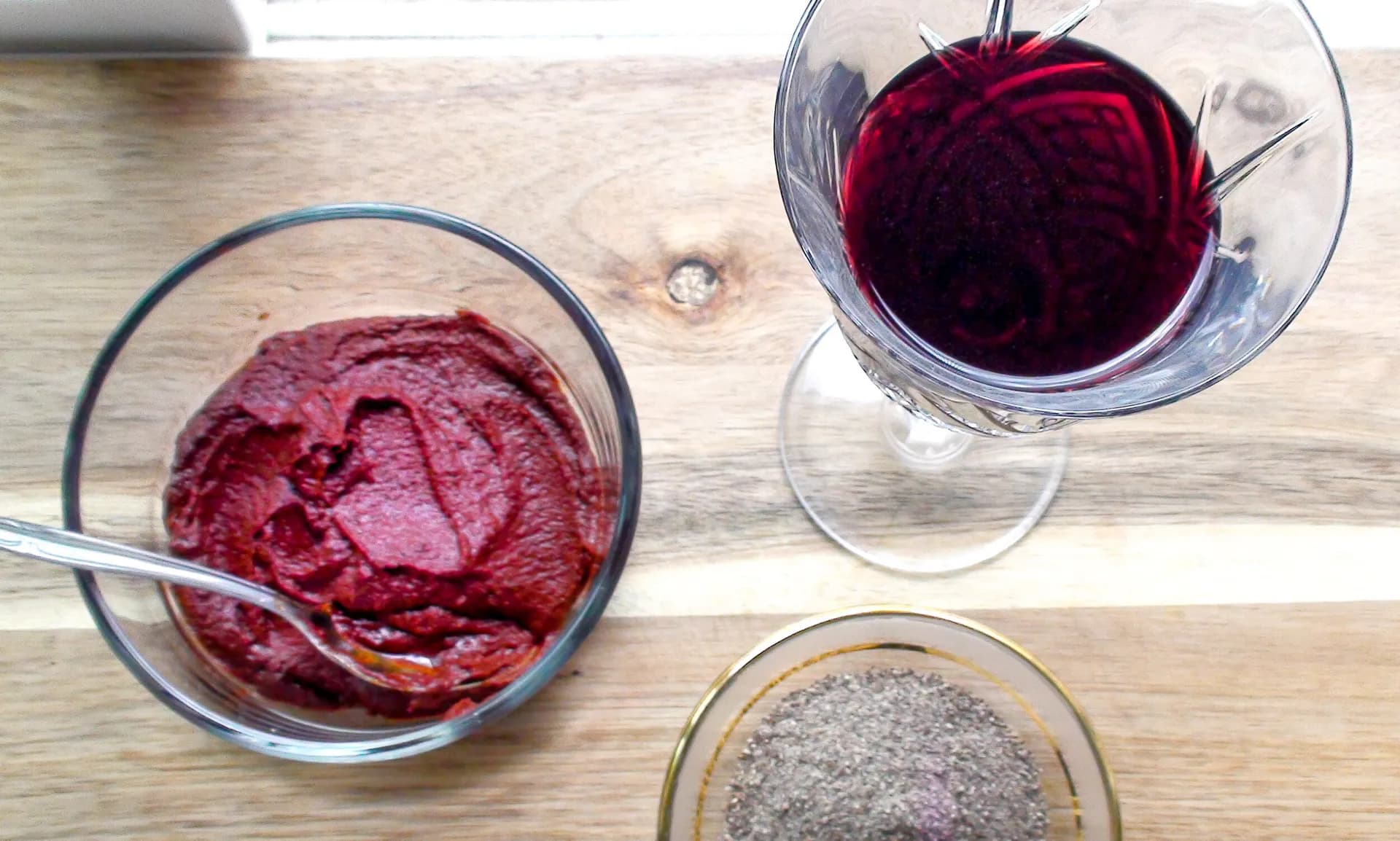
Awaze is the Ethiopian red chilli paste, built on berbere and loosened with an alcoholic liquid into a thick dip. It is extremely hot, it takes five minutes to make, and it goes with almost everything on an Ethiopian table.
Berbere is what it is built on, and berbere is itself a blend: dried chillies, garlic, ginger, onion, rue seeds, cardamom, cloves and cinnamon. Awaze takes that and turns it into something spoonable. The liquid matters more than it sounds. Traditionally it is tej, the Ethiopian honey wine made with gesho, the shiny-leaf buckthorn, or areki, a strong spirit. This recipe uses red wine, which the contributor prefers and which is far easier to find.
Its traditional place is at celebrations. Awaze is made for weddings and special occasions and served with raw meat, and gored gored, cubed raw beef with dipping sauce, is considered by many an unofficial national dish that no Ethiopian celebration is complete without. That is worth knowing about what the dip is for. Because of the wine, this is not alcohol-free, and mitmita, the other Ethiopian chilli blend with pili-pili peppers and cardamom, is a related but different thing.
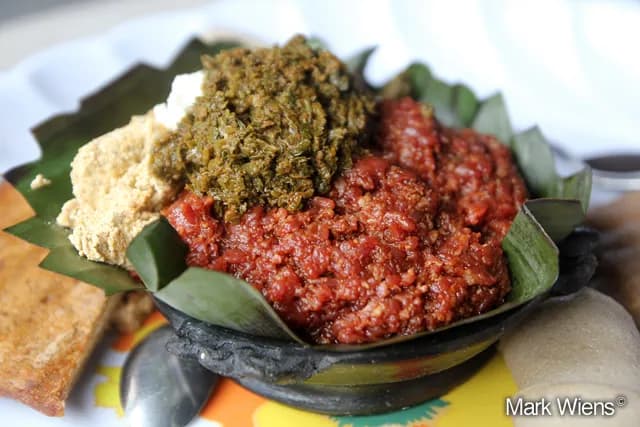
Kitfo is very finely minced raw beef, warmed through with spiced clarified butter and chilli. The name says what it is: kitfo comes from the Amharic for chopping finely. It is Ethiopian and Eritrean, and it is celebration food, a dish for major holidays, weddings and family occasions rather than an ordinary weeknight.
Two things define it. The first is niter kibbeh, the clarified butter infused with garlic, ginger, cardamom, fenugreek and other spices, which is what carries flavour into meat that is never exposed to direct heat. The second is mitmita, the fierce Ethiopian chilli blend built on pili-pili peppers with cardamom, cloves and salt. Both are what separate kitfo from any other steak tartare.
Doneness has its own vocabulary, and the names matter because they are what you order by. Tere kitfo is fully raw. Leb leb is warmed just enough to melt the butter through it. Yebesele is taken further still. Gored gored, which is on this site as its own recipe, is the closely related dish where the beef is cut into cubes rather than minced, same tradition, different knife work, noticeably different in the mouth.
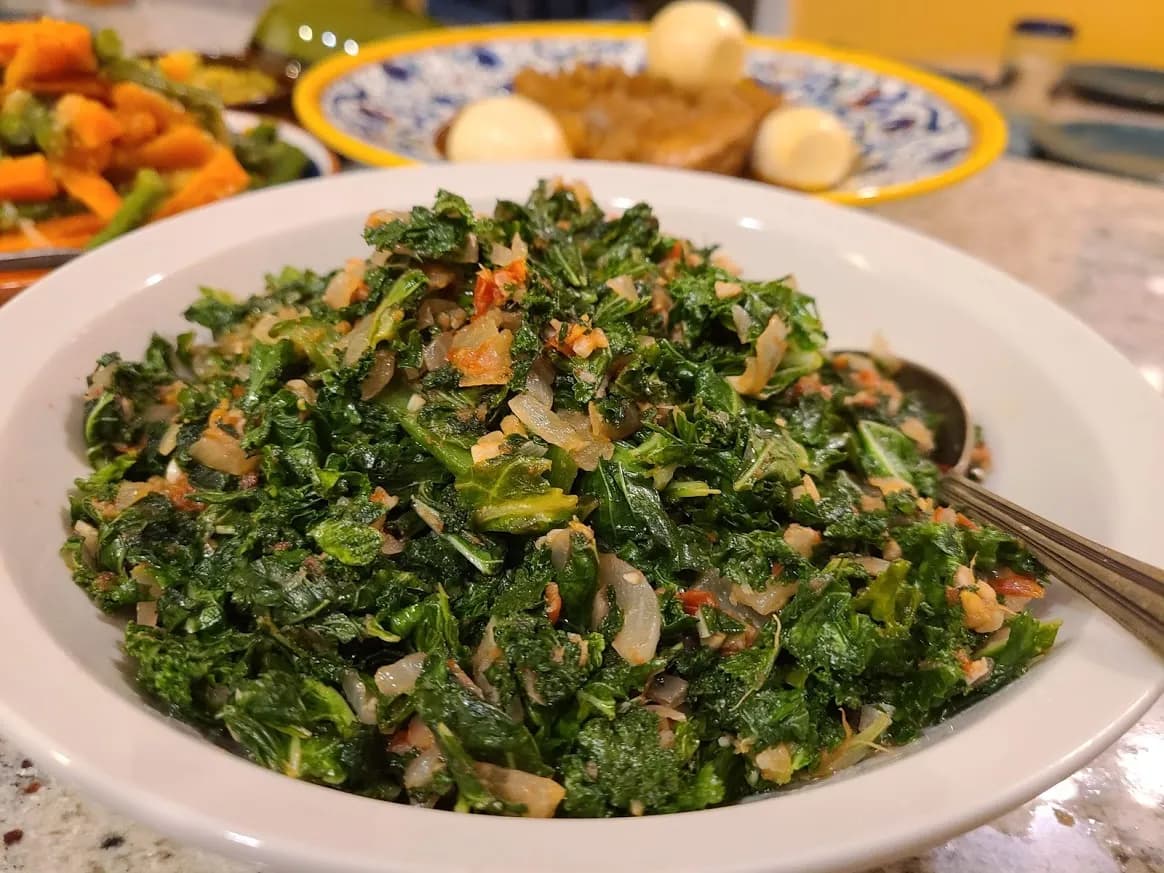
It is served with injera, and usually alongside gomen, the collard greens, and ayib, the fresh Ethiopian cheese, whose mildness is there to answer the heat.