Nous utilisons des cookies essentiels au fonctionnement du site. Nous aimerions aussi déposer des cookies de mesure d’audience et des cookies publicitaires, uniquement avec votre accord. Vous pouvez choisir séparément pour chacun. Lire notre politique relative aux cookies
Loading
Recettes
Parcourez les archives par pays, par plat et par temps de cuisson.
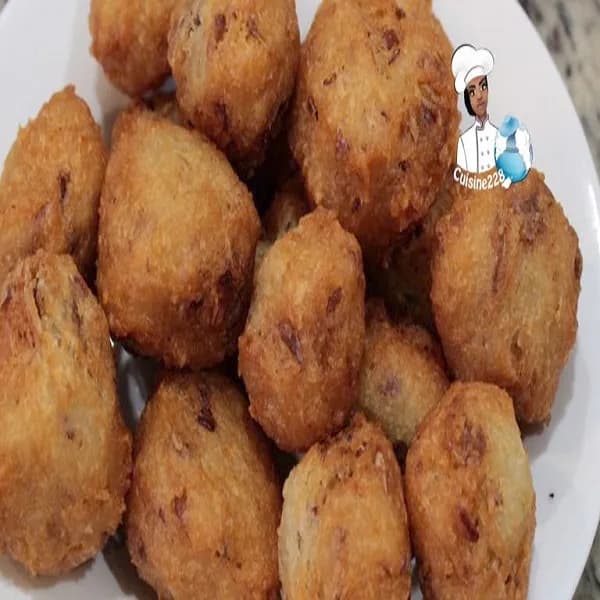
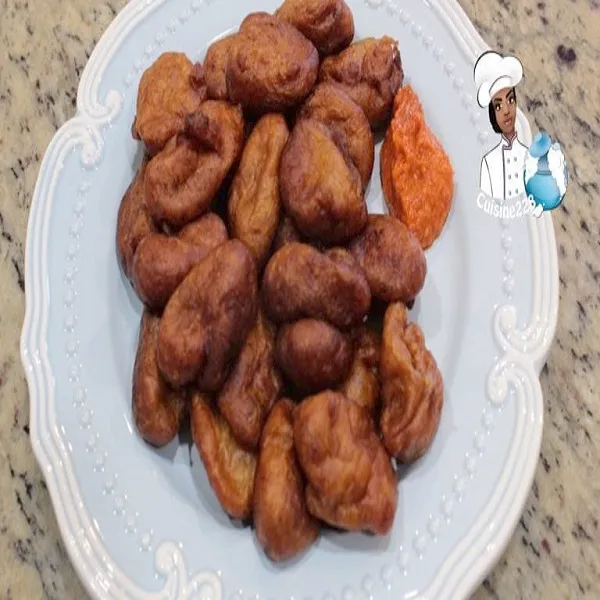
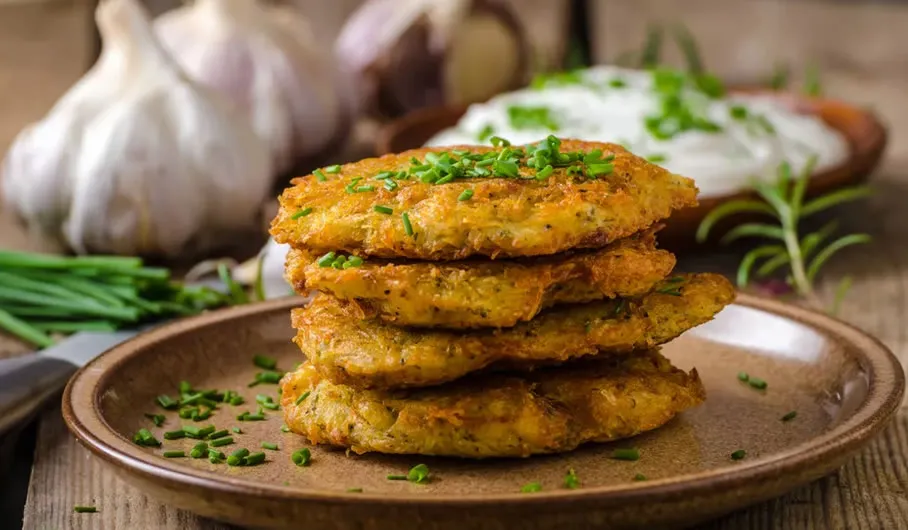
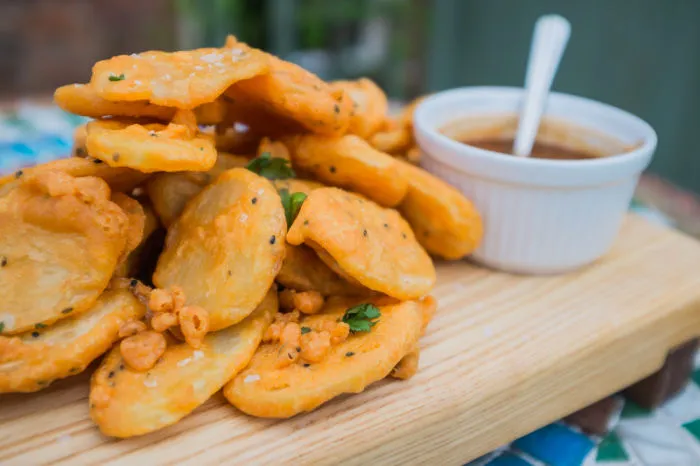
Ojojo is a fritter made from grated water yam, and it belongs to the Yoruba people of southwestern Nigeria. It is finger food and street food, sold from roadside stands and made at home on weekend mornings, and it follows more or less the same procedure as akara without the beans.
Water yam, isu ewura, is what makes it work. It is wetter and more mucilaginous than the white yam used for pounding or frying, and grated it holds together in the oil without any flour or binder at all. That is the whole trick of the dish: no egg, no batter, nothing but yam, onion, pepper and crayfish, held together by the yam's own starch.
The texture people are after is crisp on the outside and soft, almost fluffy, inside, and that balance is what separates a good ojojo from a dense one. Grating by hand is the traditional method and gives the most reliable result; a blender works but has to be used sparingly, since water yam breaks down very quickly and too much added water leaves a mixture that will not hold its shape in the pan. It shares its main ingredient with ikokore, the Ijebu water yam pottage, which is a different dish entirely.
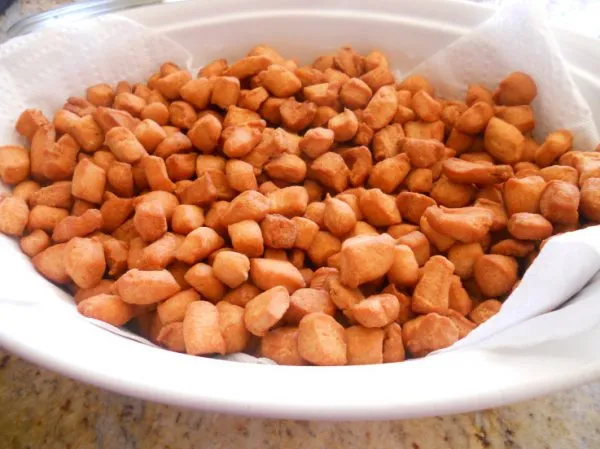
Chin chin is fried dough cut into small pieces, and it is the most widely eaten snack in Nigeria. The texture sits between a cracker and a dry cake, and how hard it should be is the thing people have opinions about, with preferences running from soft and cakey to properly tooth breaking.
It began as occasion food, made for birthdays and for Christmas, and the making of it was a household event that children were put to work on. That has changed: it is now sold at every street corner, in every grocery store and supermarket, and it is as ordinary as a packet of biscuits. It is also made across West Africa, and Ghanaians call it achomo.
Flour, sugar, milk and butter are the base, with eggs, nutmeg and baking powder optional depending on the texture wanted. Nutmeg is the flavouring most associated with the Nigerian version, and the variations run to cinnamon, vanilla, cocoa and ground pepper. The three levers are simple enough to state: more butter and baking powder makes it soft, leaving out the egg and the baking powder makes it hard, and everything else is a matter of where between those you want to land.
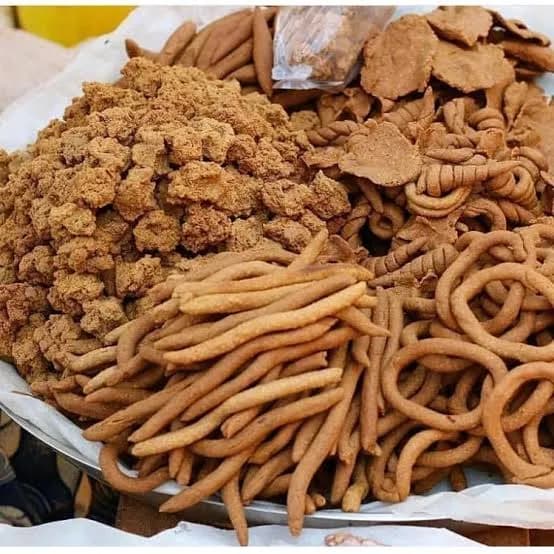
Kuli kuli is a peanut snack eaten across Nigeria, Benin, northern Cameroon and Ghana, and it is one of the most widely recognised street foods in West Africa. It is made from peanuts alone, and the technique is what makes it: the oil is deliberately pressed out of the ground paste before the remaining solids are shaped and fried.
That extraction is the point. Removing the oil leaves a dense, dry paste that fries into something genuinely crunchy rather than soft, and it also produces the frying oil as a by-product, so nothing is wasted. It is a piece of processing knowledge that predates industrial oil pressing and is still done by hand in Hausa communities in northern Nigeria, where the snack has its strongest association.
It takes different shapes in different places: small sticks, rings, flat discs and irregular pieces are all standard, and the form varies by region and by seller. English names for it, groundnut cake and peanut snack among them, are approximations rather than translations. Kuli kuli is eaten on its own, mixed into garri with sugar and water, crumbled over salad, or served alongside fura and koko. Crushed to a powder it becomes the peanut component of suya spice, which is where most people outside the region encounter it without knowing.
Benne is the Wolof and Bambara word for sesame, and it is the word that carries this dish's history. Sesame was cultivated across West Africa long before the Atlantic slave trade, and enslaved West Africans carried the seed and the word with them to the Americas, where both survived.
Benne cakes as they exist today are most strongly associated with the Gullah Geechee communities of the South Carolina and Georgia Lowcountry, where the seed was planted, the name was kept, and the thin crisp sesame wafer became a regional speciality that Charleston still sells. That makes them a diaspora food rather than a West African one: African in origin, African in name, and developed into their current form on the other side of the ocean.
The association with good luck travelled too, and it is the reason benne cakes appear at Kwanzaa, the African American celebration established in 1966, where they are served as a snack before the meal. The source for this recipe places them in West Africa and gives Ghana, Nigeria and Togo as the cuisine, which is where the seed and the word come from rather than where this particular cookie was developed. Both halves of that story are true and neither is complete on its own.