Nous utilisons des cookies essentiels au fonctionnement du site. Nous aimerions aussi déposer des cookies de mesure d’audience et des cookies publicitaires, uniquement avec votre accord. Vous pouvez choisir séparément pour chacun. Lire notre politique relative aux cookies

Loading
Recettes
Parcourez les archives par pays, par plat et par temps de cuisson.
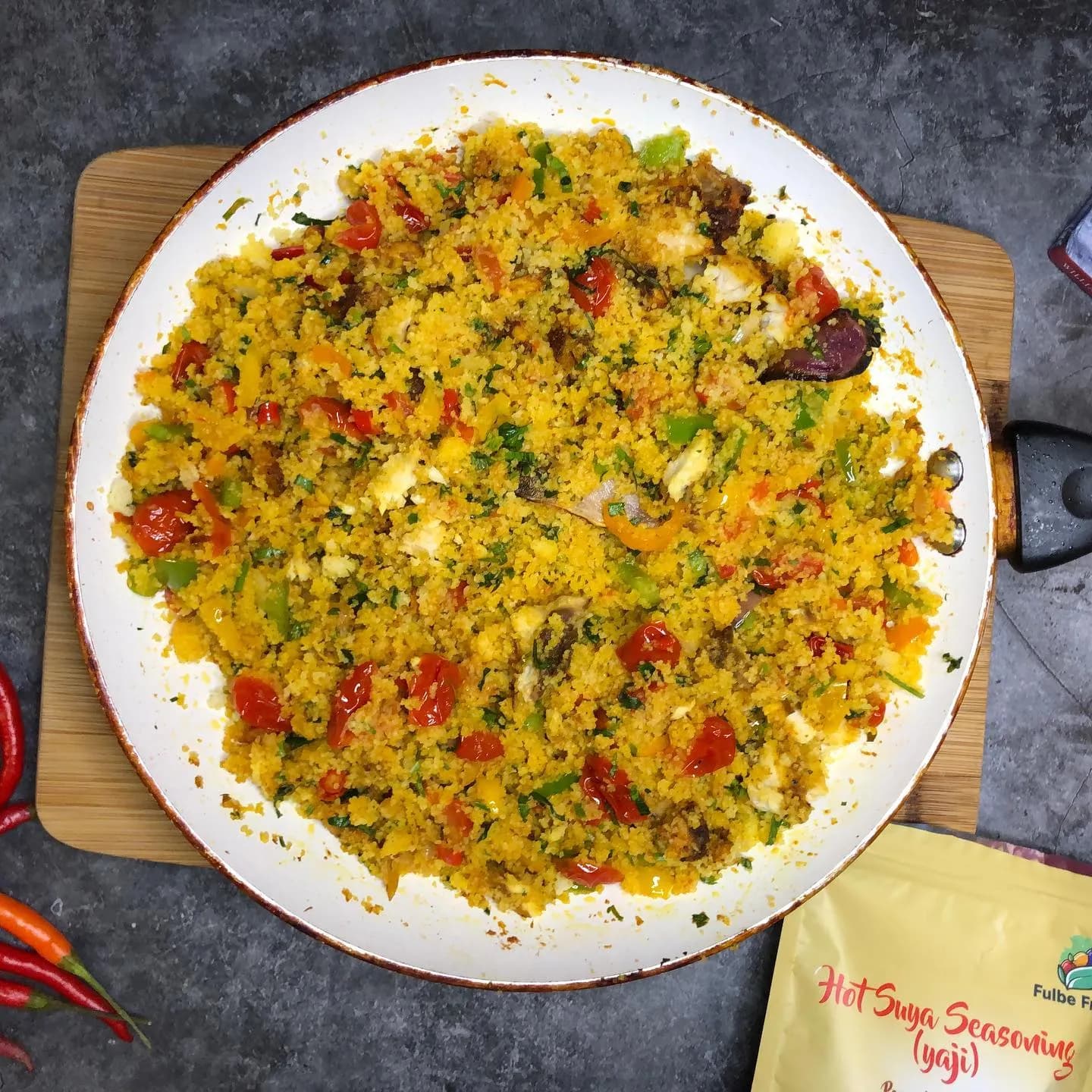
Oyster mushrooms grilled and tossed in suya spice. It is a plant-based version of the Nigerian street food, and it works better than most meat substitutions do.
**The traditional suya spice contains ground peanuts, and this recipe includes them.** The source flags it and offers to leave them out, which is honest, but it is worth stating clearly, because a peanut allergy and a suya spice blend are a genuinely dangerous combination and the name gives no warning.
Suya proper is skewered beef, ram or chicken rubbed in yaji, the spice blend of ground roasted peanuts, ginger, cayenne, garlic, onion powder and paprika, and grilled over open coals. It is Hausa in origin, from northern Nigeria, and it is sold across Nigeria, Cameroon, Niger, Ghana and parts of Sudan. Kyinkyinga is the Ghanaian name, agashe the Sudanese.
Oyster mushrooms are the right substitution and not an arbitrary one. Shredded, they have a fibrous, layered structure that genuinely resembles pulled meat, they take on the dry rub readily, and they char well. Most vegetables do neither.
The source's method is very compressed, one step reads "put in a preheated medium", with the word oven missing, and has been filled out below.
Alaskan king crab legs, steamed briefly and served with melted butter and lemon. There is no African connection here and none is claimed: king crab is a cold-water North Pacific species fished off Alaska and the Russian Far East, and this is the standard American way of serving it.
The single most useful thing to know is that king crab legs are sold already cooked. They are steamed aboard the boat or on the pier immediately after they are caught, then frozen, because crab meat spoils very quickly once the animal dies. What you are doing at home is reheating, not cooking, and that is why every instruction here is measured in a few minutes rather than tens of them. Treat them like a raw ingredient and you will get rubbery, stringy meat.
The source is right to steer away from submerging them in water, which waterlogs the meat and washes out the flavour that the initial cooking sealed in. Steaming and a foil-wrapped spell in the oven both work because they warm the meat through without soaking it.
Africa has a long coastline and a serious crab tradition of its own, Ghanaian akotonshi, stuffed crab served in the shell, is on this site, but it is built around warm-water species, and king crab is not one of them.
Thiakry is millet couscous stirred into sweetened yogurt and milk, served cold, and it is one of the most widely eaten sweet things in Senegal and the Gambia. It is also written thiakri, chakery, caakiri and degue, and the spelling shifts with the language and the writer while the dish stays the same.
Millet is the reason it exists. It is one of the principal grains of Senegal, grown across the drier interior where rice does not do well, and thiakry is among the most common things made from it. The grain is milled to a couscous and steamed, then cooled and folded into the dairy. In Dakar it is sold in every grocery store, which is a fair measure of how ordinary a food it is.
It is eaten at breakfast as readily as at the end of a meal, which puts it in the same category as yogurt everywhere: sweet, cold, and not confined to dessert. Raisins, mango, grated coconut and chopped almonds are all standard on top, and vanilla and nutmeg are the usual flavourings. Its close relation ngalakh, made with peanut paste and baobab, is the elaborated festival version of the same base. Thiakry is the everyday one.
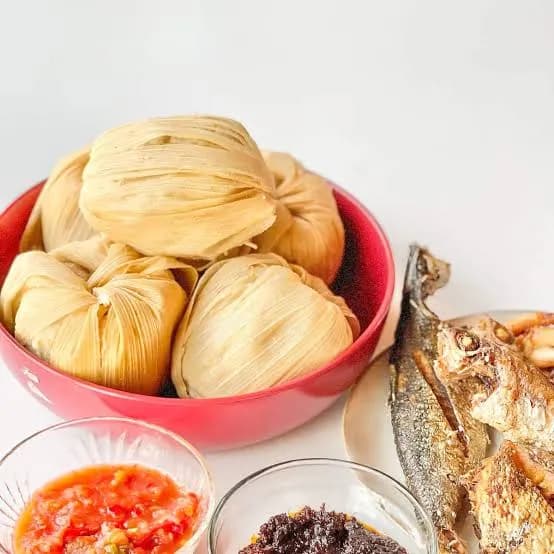
Kenkey is fermented maize dough, wrapped in banana leaf or corn husk and steamed into firm parcels. It is sour, and the sourness is the whole character of it. The fermentation runs one to three days before anything is cooked, and a kenkey that has been rushed is immediately identifiable to anyone who eats it regularly.
It comes from the Ga people of Accra and the surrounding coast, who have been making it for centuries, and it has spread across Ghana without losing that origin. Ga kenkey and Fante kenkey are recognised as distinct: the wrapping differs, and so does the ratio of fermented to fresh dough, which changes how sour the finished parcel is.
Kenkey is street food in the most functional sense. It is bought in its wrapping, which serves as the plate, and eaten with fried fish, shito and a raw pepper and tomato grind, standing up or sitting on a bench. The wrapping is not presentation; it is what the dough is steamed in and what keeps it for days without refrigeration. That combination of sour dough, hot pepper and fried fish is one of the most recognisable plates in West Africa.