Nous utilisons des cookies essentiels au fonctionnement du site. Nous aimerions aussi déposer des cookies de mesure d’audience et des cookies publicitaires, uniquement avec votre accord. Vous pouvez choisir séparément pour chacun. Lire notre politique relative aux cookies
Loading
Recettes
Parcourez les archives par pays, par plat et par temps de cuisson.
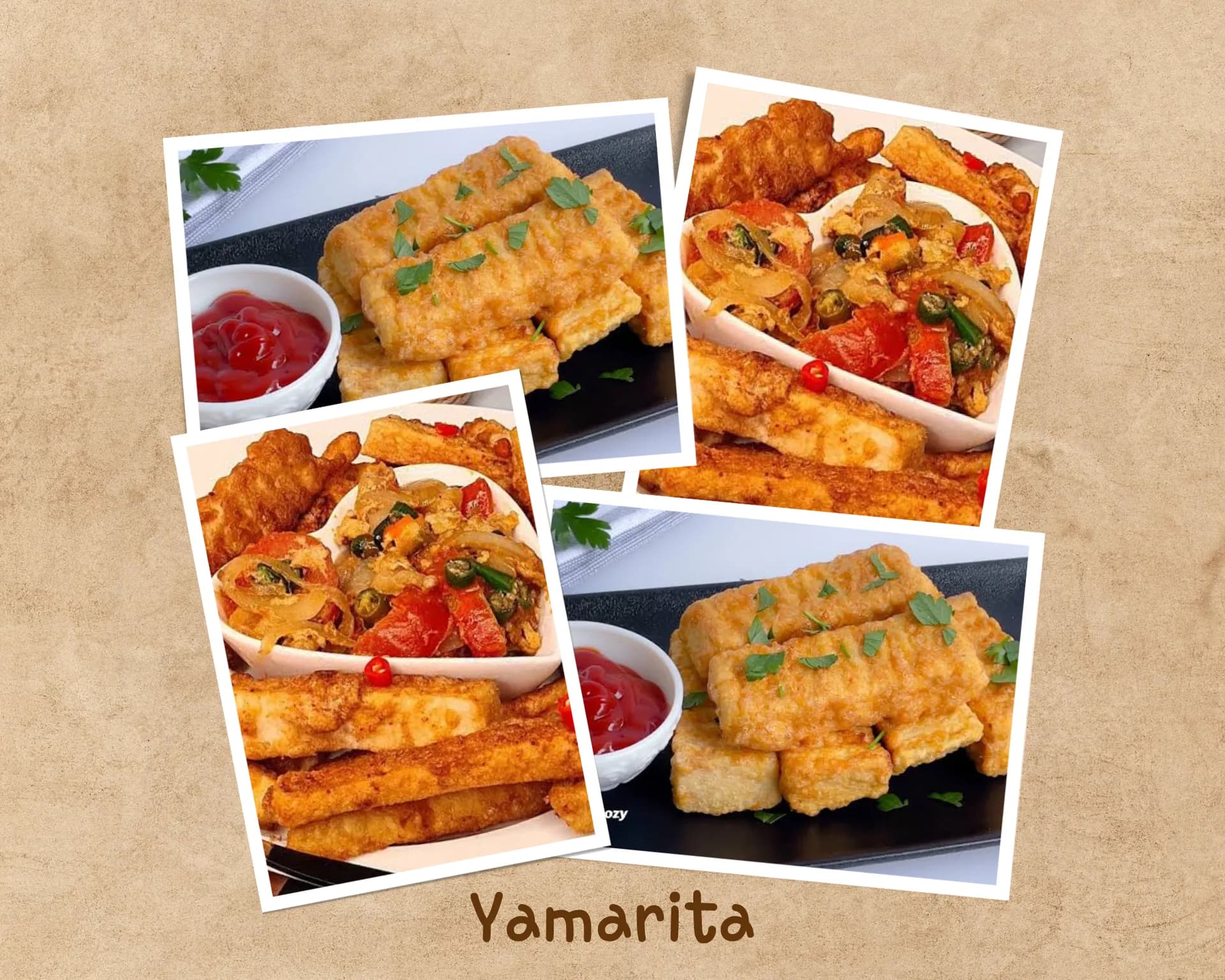
Awara is Northern Nigerian soy bean cake, and it is one of the clearest examples of an introduced crop becoming a genuinely local food. Soy beans are not indigenous to West Africa. Awara, as the Hausa make and eat it, is not found anywhere the crop came from.
What separates awara from tofu is the frying. The process to the curd stage is the same: beans are soaked, ground, strained to a milk, heated, and set with an acid or a mineral coagulant, then pressed. Where East Asian tofu is usually finished at the press, awara is cut, seasoned and fried until the outside is golden and firm. That frying step is the dish, and it produces something with a texture and a flavour of its own.
It is street food and snack food, sold ready made across the north because the process at home is long. Awara is served hot with ground pepper and oil, and increasingly with sliced fresh pepper, cabbage and cucumber alongside. It is eaten with pap or kunu at breakfast, and at any hour after that. It is also the north's most practical answer for anyone eating no meat, which is a role it has held far longer than the word vegetarian has been in common use in Nigeria.
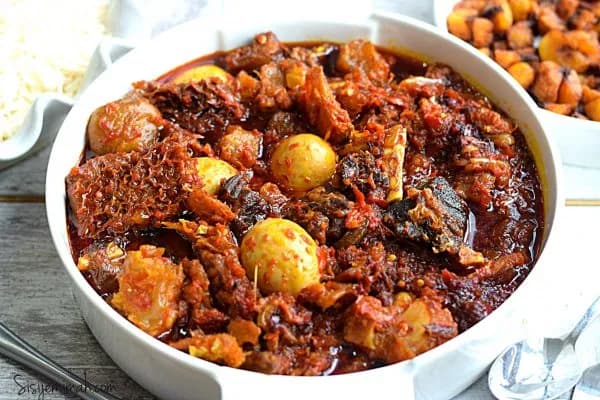
Buka stew is the pepper stew of western Nigeria, named for the places that made it famous. A buka is a small, cheap local eating house, and the buka is where working Lagos eats: fresh food, several dishes, no cooking at home, and no pretensions about any of it.
The stew belongs to those kitchens and carries their signature. It is a pepper stew rather than a tomato stew, and the distinction is the whole recipe: tatashe and rodo dominate and tomato is kept back, which is the reverse of the everyday Nigerian stew ratio. The palm oil is bleached first, heated until it changes character, and that step produces the specific aroma that makes a buka identifiable from the street. Seasoning is kept minimal on purpose, because the peppers and the oil are doing the work.
It is made with assorted meats, the cow parts that a household kitchen might skip and a buka never does, deep fried before they go into the pot. The women who run these kitchens are known collectively in Nigerian speech as Iya Basira, a name that stands in for all of them, and mama put is what the roadside version is called. Buka stew is eaten with white rice, beans, yam, fried plantain or agege bread.
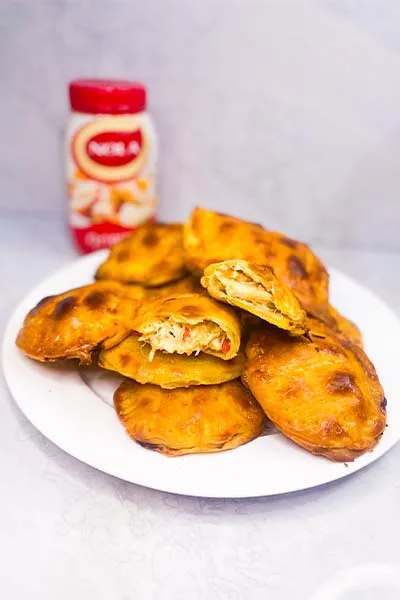
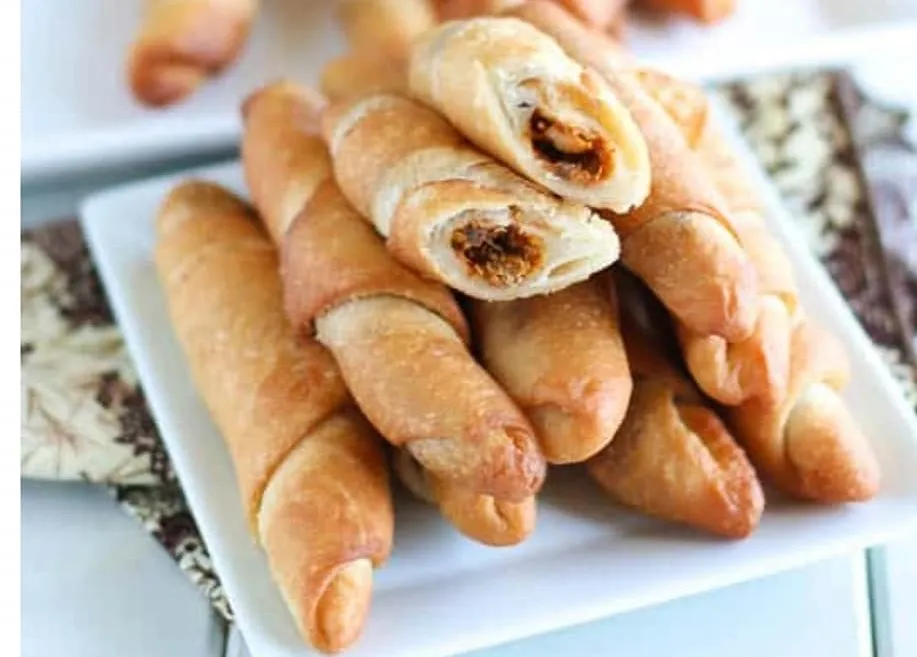
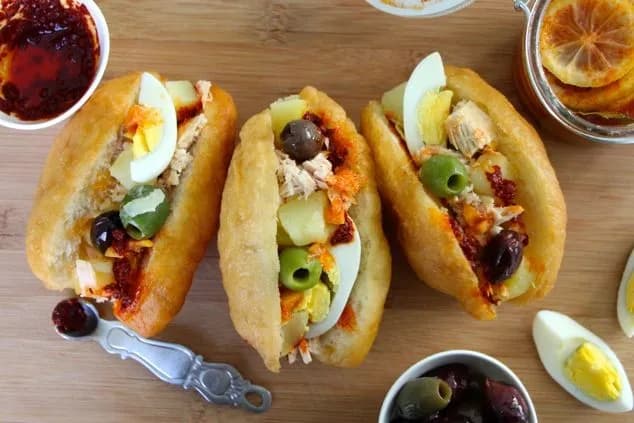
A fricassé is a small oval roll of enriched dough, deep-fried and then split and packed with tuna, potato, olives, egg and harissa. It is Tunisian street food, and it is one of the country's most recognisable things to eat.
The word does not mean what it means elsewhere. In French, a fricassée is a braise of meat in a white sauce; in Tunisia and its diaspora it means this sandwich and nothing else. That divergence is complete enough that searching the French term will not find you the Tunisian food.
The filling is the point and it is fixed by convention rather than by recipe: tuna in olive oil, cooked potato, black olives, egg and harissa, with slata méchouia, the grilled pepper and tomato salad, very often alongside. Capers and preserved lemon appear in some versions. What matters is that the bread is fried rather than baked, which gives a rich, slightly greasy roll that stands up to a wet filling.
**A significant gap in the source.** Its ingredient list contains only the dough, yeast, water, flour, egg, oil, salt. Not one of the filling ingredients it spends its article describing appears in it. The filling below has been reconstructed from that description and flagged.
**It contains eggs and fish.**
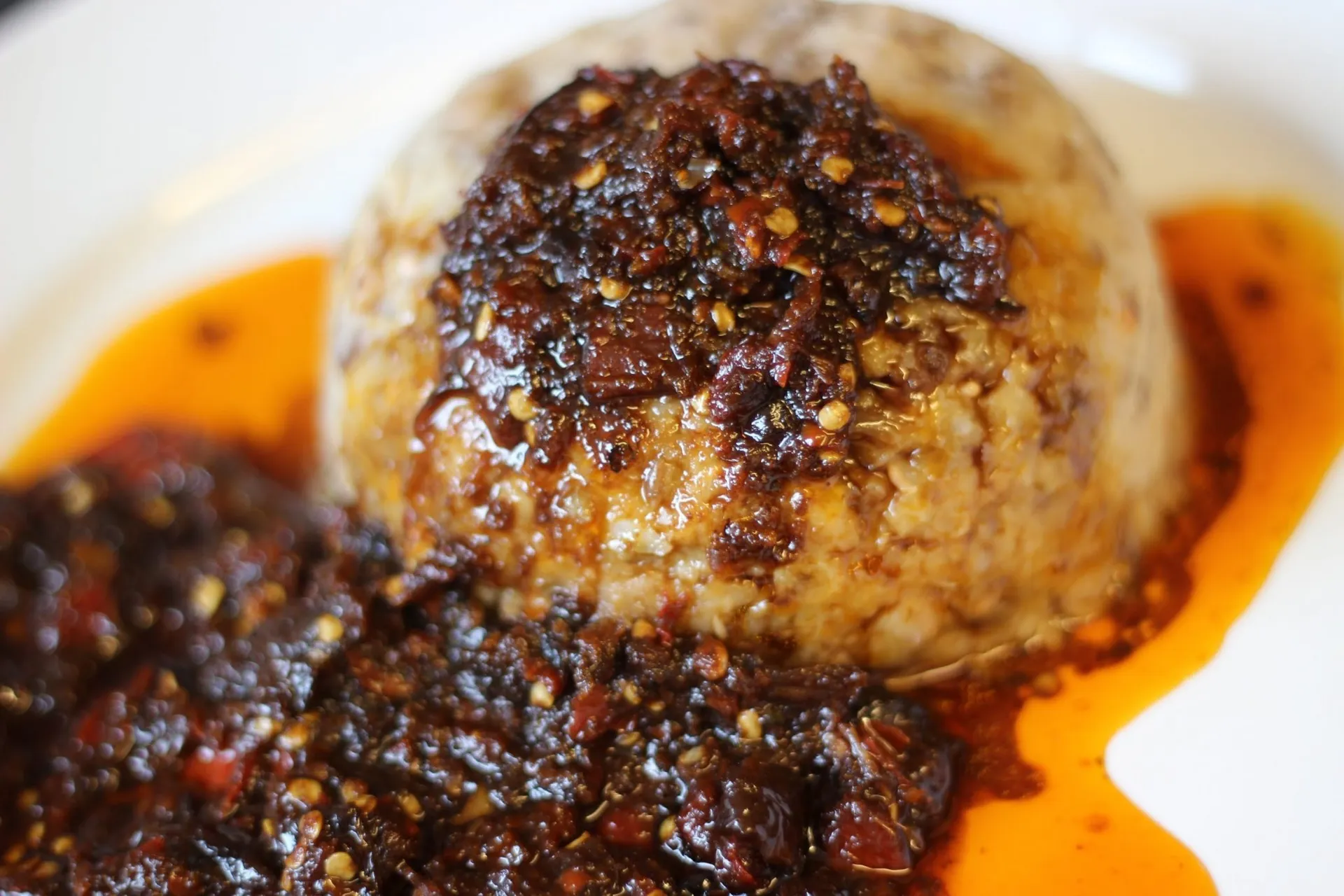
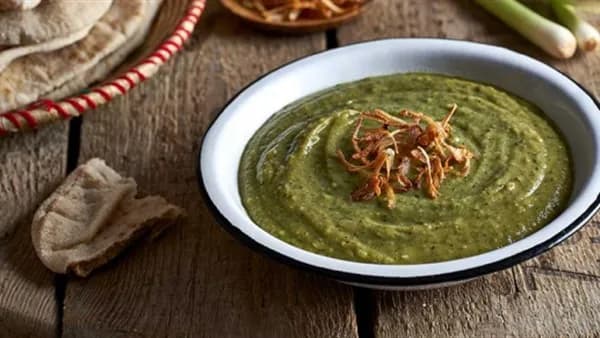
Bessara is dried split fava beans cooked soft with garlic and olive oil, then puréed and seasoned with cumin and paprika. It is street food across Morocco, most strongly associated with the north, and it is eaten for breakfast as often as for anything else.
Its consistency is not fixed, and that is a feature rather than a vagueness. Made thick, it is a dip eaten from a shared plate with Moroccan bread. Made looser, it is a soup served in individual bowls, which is how street vendors serve it on cold mornings. The same pot produces both, depending on how much of the cooking liquid goes back in.
Traditionally the beans were cooked for hours until they collapsed entirely and then passed through a food mill. A blender does the same job in seconds and gives a smoother result, which is what most cooks now use, and the source is right that nothing is lost by it.
The condiments are not optional garnish. Bessara is served with olive oil, cumin, salt and cayenne or harissa on the side, and each person seasons their own bowl. The purée itself is deliberately mild, which only makes sense once you know that.
Note that the same dish appears elsewhere spelt bissara; they are one thing. Some cooks make it with dried split peas in place of some or all of the fava beans, which gives a lighter texture and a greener colour but changes nothing about the method or the seasoning.