Nous utilisons des cookies essentiels au fonctionnement du site. Nous aimerions aussi déposer des cookies de mesure d’audience et des cookies publicitaires, uniquement avec votre accord. Vous pouvez choisir séparément pour chacun. Lire notre politique relative aux cookies
Loading
Recettes
Parcourez les archives par pays, par plat et par temps de cuisson.
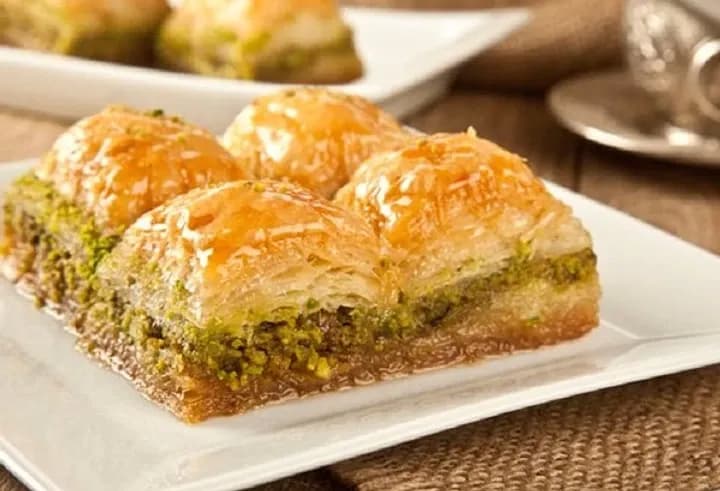
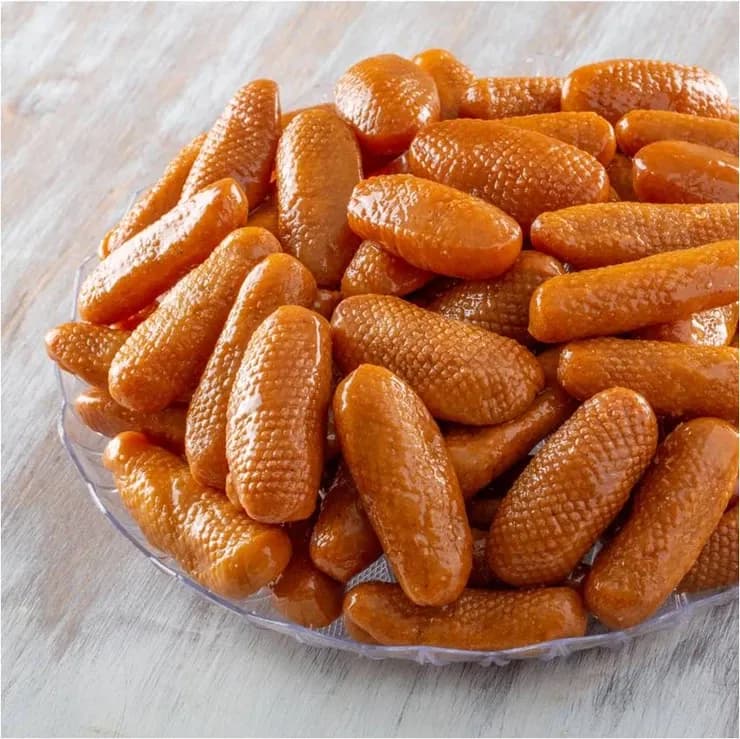
Baklawa is layered phyllo pastry filled with crushed nuts and soaked in honey syrup, and in Algeria it is festive food, made for occasions rather than everyday. It is an Ottoman inheritance, and versions of it are made from the Balkans to Egypt under closely related names.
The regional differences are real. Turkish fistikli baklava is made with pistachios and a simple sugar syrup. Middle Eastern versions scent the syrup with rosewater. Greek baklava uses walnuts with a generous quantity of cinnamon. The Algerian version leans on almonds and walnuts with honey, and this recipe follows the walnut and cinnamon line, which sits closer to the Greek than to the Turkish.
Three components make it, and thinking about it that way makes it manageable: the phyllo, the nut mixture, and the syrup. The rule that decides whether it works is temperature. Cooled syrup goes onto hot pastry, never hot onto hot, and you should hear it sizzle when it hits. Get that wrong and the layers go soggy instead of staying crisp. It then needs four to six hours, or overnight, for the syrup to work through, so it cannot be made and served the same afternoon.
Pilau is the spiced rice of the East African coast: rice cooked with cumin, cardamom, cloves, cinnamon and turmeric until every grain carries the spice. It is celebration food across Kenya, Tanzania, Uganda and Zanzibar, made for weddings, for Eid, and whenever a guest of consequence arrives.
It reached the Swahili coast through centuries of Indian Ocean trade, and the family it belongs to runs from Persian polow through Central Asian plov to South Asian pulao. The East African version is milder than the Indian one and does not use curry, which is the distinction the source draws and it is a fair one. The defining spice mix has its own name, pilau masala, and there is a recipe for it on this site.
An important note about this page. Its written description is of a full pilau: caramelised beef, potatoes, tomatoes and pilau masala simmered in meat stock. The recipe card attached to it is something else entirely, a plain spiced rice with no meat, no potatoes and no stock. The recipe below follows the card, since that is the actual recipe on the page, and the result is a good vegetarian side dish. It is not, however, the celebratory beef pilau the description promises.
Browning the onions properly is the step that matters most in either version.
Boeber is a Cape Malay sweet milk drink, thick with vermicelli and sago and scented with cardamom, cinnamon and rose water. It sits somewhere between a drink and a pudding, and Cape Town households do not find the ambiguity a problem.
Its place in the calendar is precise. Boeber is served on the fifteenth night of Ramadan, marking the midpoint of the fast for those who have completed the first fifteen days. That single fixed date gives it a weight that a dish eaten year round does not carry: it belongs to a moment, and its appearance signals that the moment has arrived.
The drink comes from the Cape Malay community, whose ancestors were brought to the Cape from Indonesia, India and East Africa, and boeber carries the marks of all three. It has close relatives across that map. Malaysians break the fast with bubur lambuk, a porridge; Trinidadian households serve sawine at Eid al-Fitr; kheer and payasam on the Indian subcontinent are its nearest kin, most likely carried to the Cape by enslaved and later indentured Indians. In South Africa itself, the Afrikaans melkkos is the comparable dish. Boeber is what all of those became in one place.
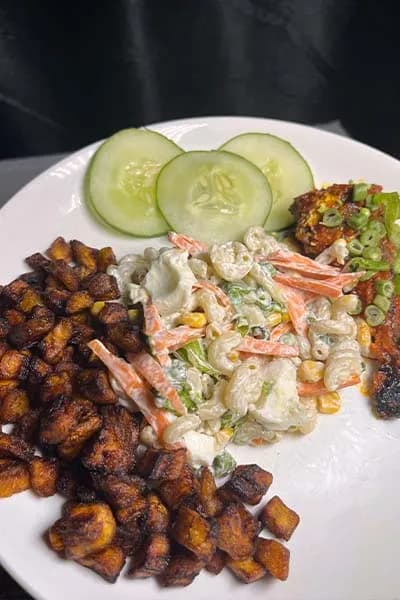
The mayonnaise dressed vegetable salad is a fixture of the Nigerian party table, and it is worth being precise about what that means, because it is not a salad in the European sense at all. There are no leaves at the centre of it. It is built on cooked vegetables, sweetcorn, egg and sometimes macaroni or baked beans, bound in mayonnaise and evaporated milk, and it is served cold in a large bowl alongside jollof rice and fried plantain.
It arrived through colonial and post independence British influence on Nigerian catering, and it has been thoroughly domesticated since. The evaporated milk in the dressing is the clearest marker of that: it is not a British addition, and it gives the dressing a sweetness and a thinner consistency than mayonnaise alone. Nigerians of a certain age associate it directly with owambe, the large celebration parties where the food is served in quantity.
This particular recipe is a contemporary quick version rather than a documented traditional dish. It uses macaroni, carrot, peas, sweetcorn, lettuce and egg with a mayonnaise and milk dressing, and it is presented by its author as an everyday meal rather than as party food. What can be said with confidence is that it belongs to that broader Nigerian salad practice; what cannot be established from the source is any particular lineage for the recipe itself.
Les mentions alimentaires sont fournies par les contributeurs à titre indicatif. Elles ne sont pas vérifiées par AFN et dépendent des produits que vous achetez. En cas d’allergie grave, vérifiez vous-même chaque ingrédient. Cuisine, allergies et votre propre jugement