Nous utilisons des cookies essentiels au fonctionnement du site. Nous aimerions aussi déposer des cookies de mesure d’audience et des cookies publicitaires, uniquement avec votre accord. Vous pouvez choisir séparément pour chacun. Lire notre politique relative aux cookies
Loading
Recettes
Parcourez les archives par pays, par plat et par temps de cuisson.
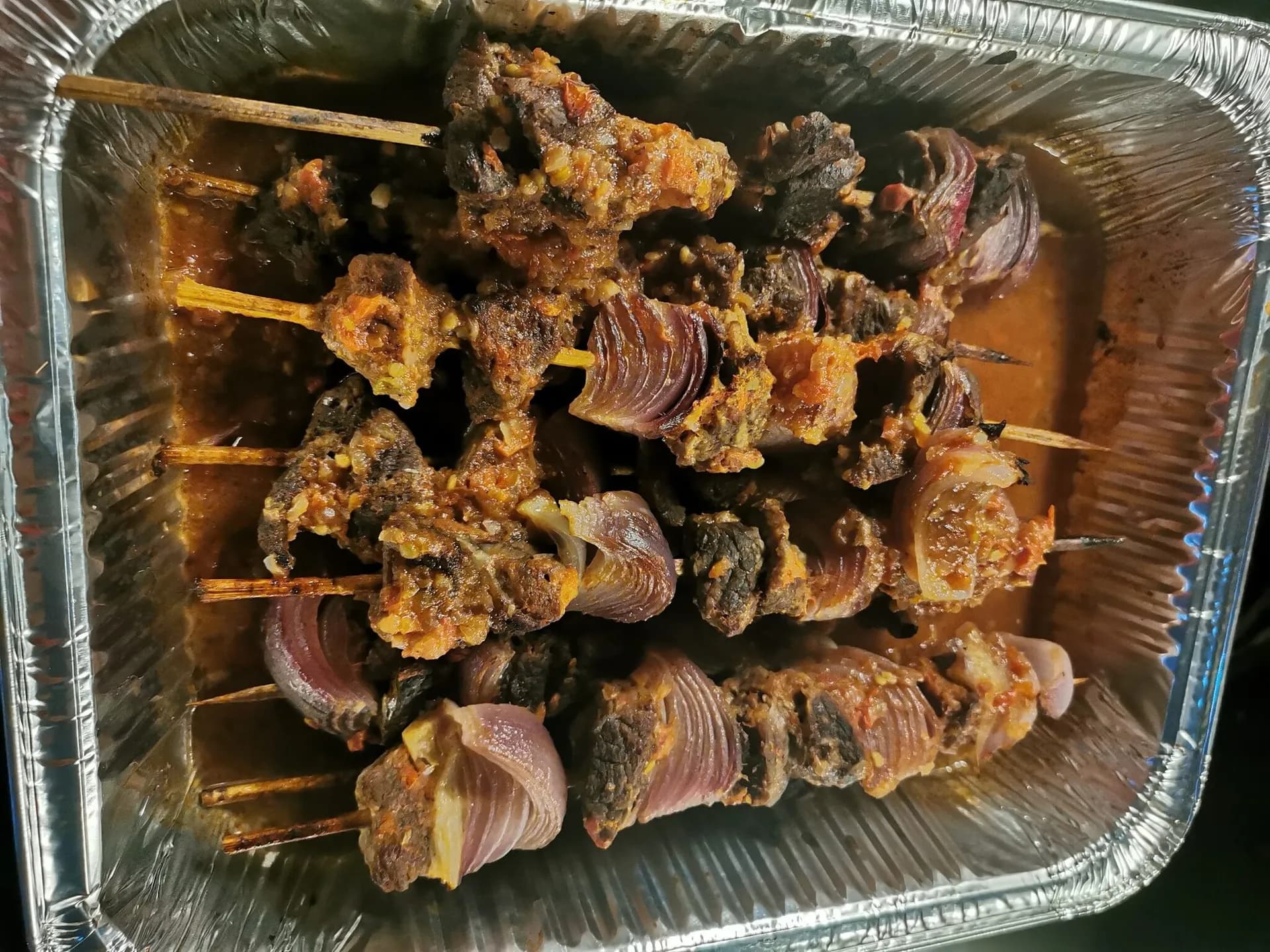
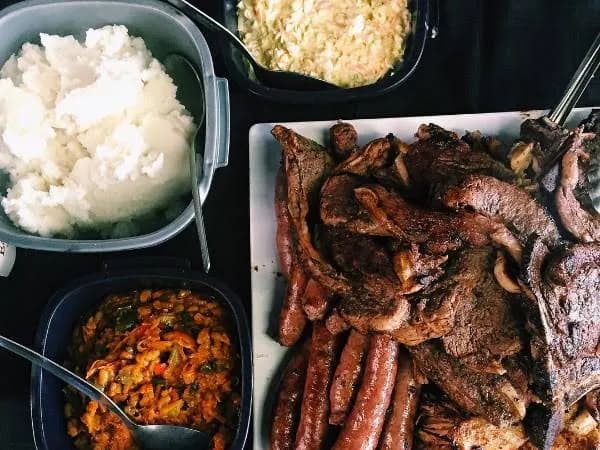
Brochettes are skewered grilled meat, and in Rwanda they are the food most reliably present wherever people gather in the evening. Goat is the usual choice, threaded onto skewers with onion, grilled over charcoal, and eaten standing at a bar, sitting in a restaurant, or bought from a street vendor on the way somewhere else.
The word is French, meaning skewer, and its presence in Rwandan usage is a plain marker of the colonial period. What the word describes is entirely Rwandan: a particular cut, a particular char, and a particular way of eating, with grilled or fried plantain, potatoes and a fresh salad alongside.
They are not heavily spiced, which distinguishes them sharply from the grilled meat traditions further west. Where Nigerian suya is built on a dry spice coating and West African peppered goat is aggressively hot, a Rwandan brochette is seasoned simply and relies on the meat and the fire. Heat, when it is wanted, arrives separately at the table as akabanga, the thin orange Rwandan chilli oil that is sold in small bottles and used a drop at a time. That separation of meat and heat is a matter of preference in Rwanda rather than an absence of one.
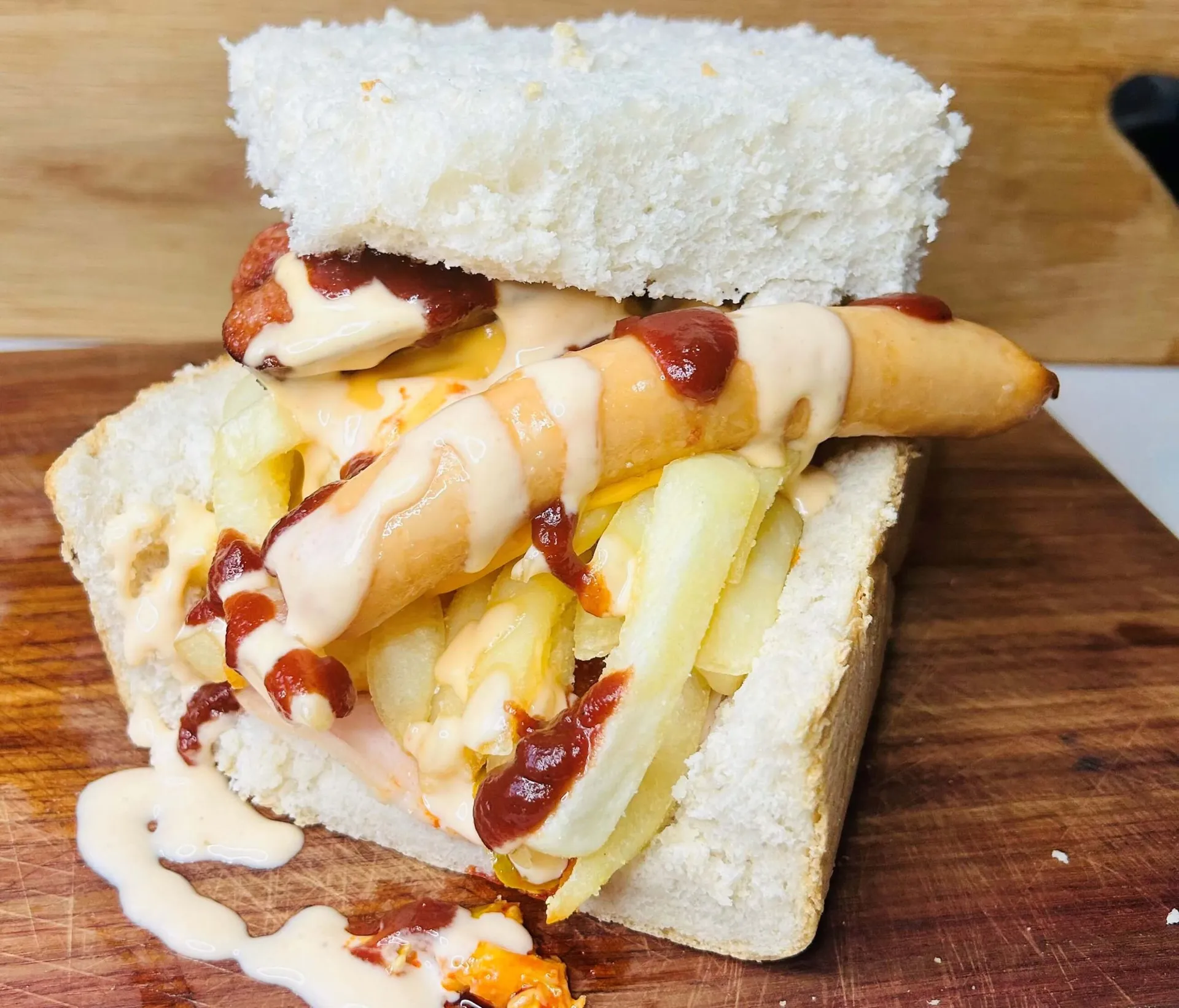
A kota is a quarter loaf of bread, hollowed out and packed with fried food. The word is township English for quarter, and that is the whole description: bread cut in four, the soft centre pulled out, and the cavity filled with chips, polony, russians, viennas, cheese, egg, atchar and sauce, then capped with the bread that was removed.
It belongs to the townships of Gauteng, where it is sold from small takeaway windows and eaten in the hand without a plate. Kota shops compete on what they will fit into a quarter loaf, and the size of the fill is a large part of the reputation. It is cheap, it is a complete meal, and it is built for people who need to eat between one thing and the next.
Atchar is what makes it South African rather than generically stuffed bread. The pickled green mango relish, oily and sour and hot, came to South Africa through Indian indenture and cuts the fried starch that dominates everything else in the cavity. Kota is often described as a version of bunny chow, and the two are related without being the same: bunny chow is Durban Indian, a hollowed loaf filled with curry, and kota is a Gauteng township form filled with fried items. They share an ancestor and are not interchangeable.
Green beans cooked slowly with potato and onion until everything is completely soft, then roughly mashed and finished with butter and nutmeg. It is South African, and it is old-fashioned in the best sense.
The dish exists for a specific reason and the source is refreshingly honest about it: this is what to do with green beans that have gone past their best. Beans that are too tough and stringy to steam and serve whole become excellent when cooked long and mashed, because the slow cooking breaks down exactly the fibres that made them unpleasant. It is a technique for rescuing produce rather than showcasing it, which is why it belongs to an older way of cooking.
The potato is structural. It breaks down completely and binds the mash, which is why the dish holds together rather than being beans in water.
Nutmeg with green beans is a Cape Dutch habit, and the same pairing turns up across South African vegetable cookery. It is not a garnish, it is what makes the dish taste South African rather than generically braised.
The source is also honest that quantities do not matter much, which is true of most old traditional recipes and rarely admitted.
Do not mash it to a purée. Texture is meant to survive.
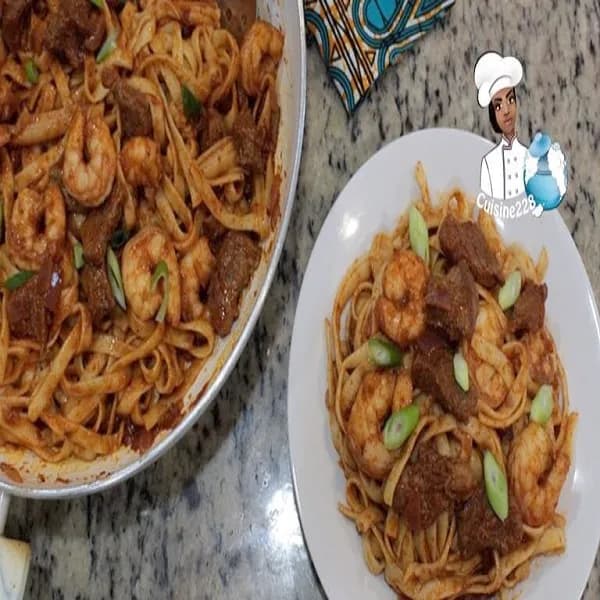
Pasta cooked into a spiced tomato and pepper stew in the same way jollof rice is made, with beef and shrimp. It is West African, and no single country is claimed.
The idea is a straightforward transposition and it works. Jollof rice is rice cooked in a reduced, heavily seasoned tomato and pepper base until the grains absorb it; jollof pasta does the same with pasta, and jollof couscous and jollof spaghetti are made the same way. The key is the same in all of them: fry the stew properly and reduce it to a thick paste before the starch goes in. The source is emphatic about this and right, under-fried stew gives a watery, sharp result that no amount of later cooking corrects.
The title needs a note. The page is called tagliatelle pasta and the article explains what tagliatelle is at some length, but the ingredient list specifies thin spaghetti. Neither is wrong for the dish, jollof pasta is made with whatever shape is to hand, but the mismatch is worth stating, and the title here names the dish rather than a pasta shape that may not be in your cupboard.
Allspice, curry powder and chicken bouillon alongside chilli is the Nigerian seasoning signature.
**It contains shrimp, which the title does not indicate.**