

Nous utilisons des cookies essentiels au fonctionnement du site. Nous aimerions aussi déposer des cookies de mesure d’audience et des cookies publicitaires, uniquement avec votre accord. Vous pouvez choisir séparément pour chacun. Lire notre politique relative aux cookies
Loading
Recettes
Parcourez les archives par pays, par plat et par temps de cuisson.
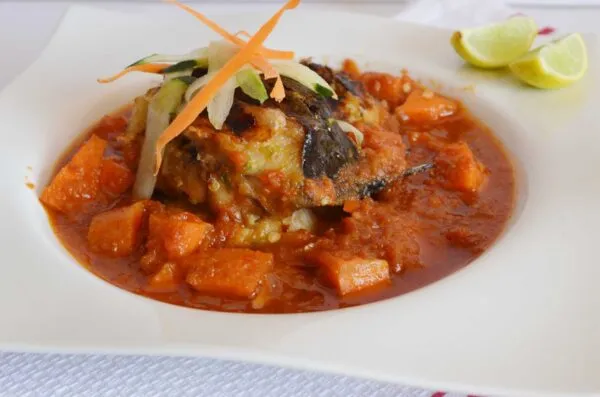
Catfish is everywhere in Nigeria now, and the reason is farming rather than fishing. Catfish aquaculture expanded enormously across the country from the 1990s onward, at both household and commercial scale, and a fish that was once a river catch became one of the most available proteins in the market. Dishes built around it have multiplied accordingly.
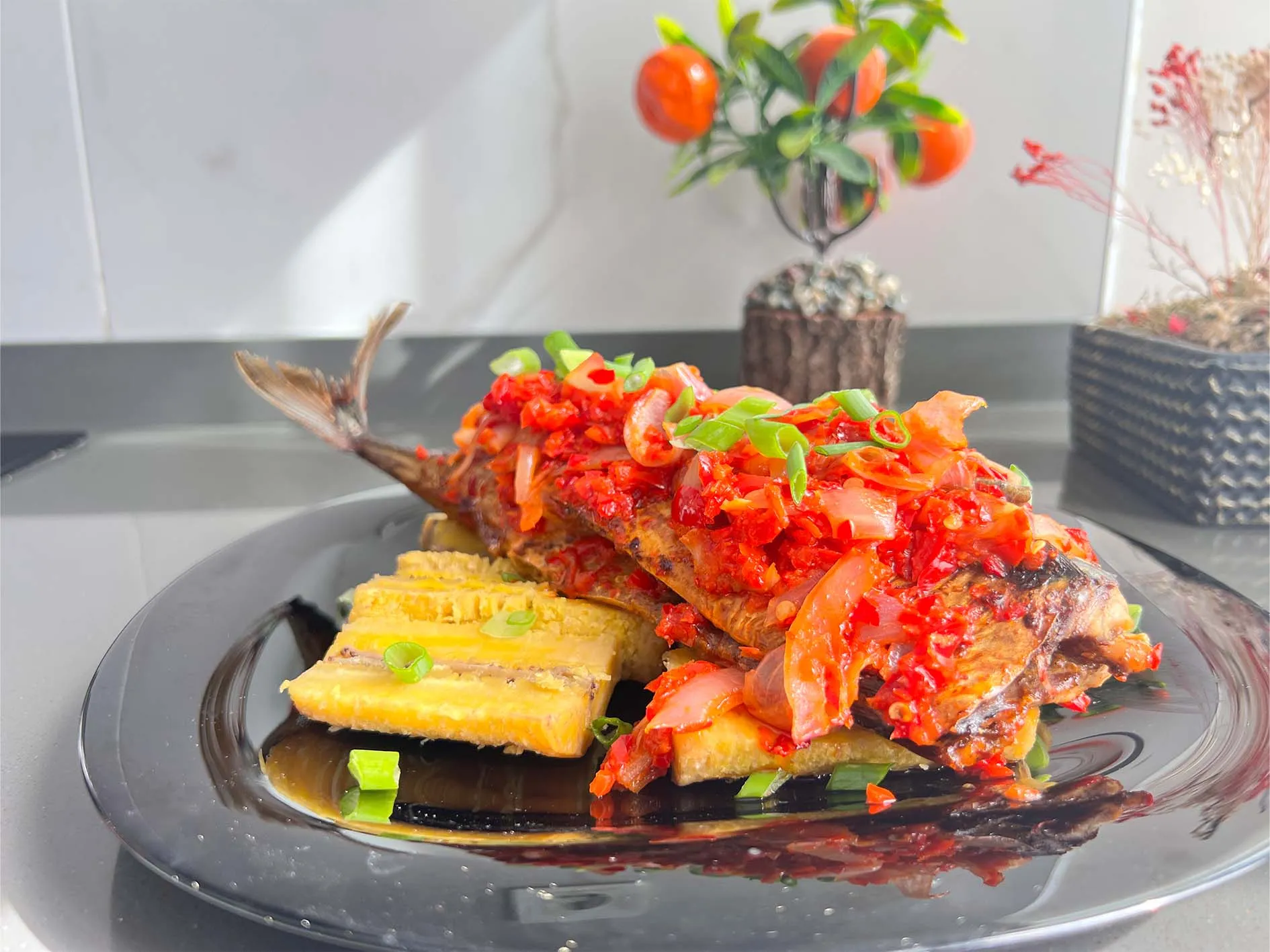
This one is a contemporary Nigerian preparation rather than an inherited dish. Carrot and tomato are blended into a sauce in a three to one ratio, so the carrot rather than the tomato carries it, giving a sweeter and thicker base than a standard Nigerian stew. The fish is marinated, grilled or baked separately, and set into the sauce at the end rather than cooked in it.
Cleaning is the part that determines whether it works. Catfish is naturally slimy and has to be scrubbed with salt, alum, potash or maize chaff, and soaking it briefly in hot water both removes the remaining slime and firms the flesh so it holds together instead of breaking apart. Grilling rather than frying keeps that firmness. It is served with rice, potato or yam.
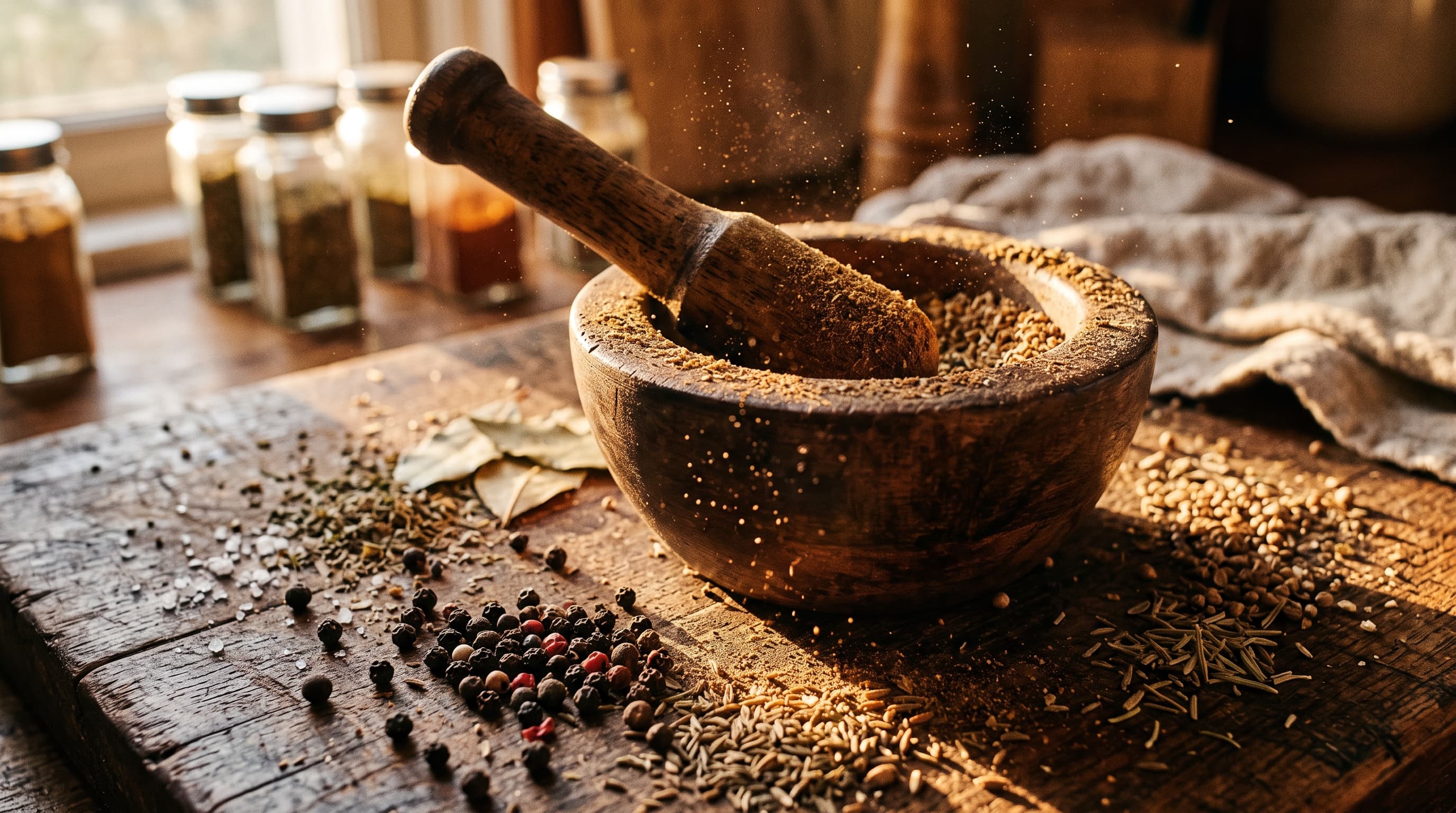
This is a dry spice rub for fish, and it belongs to no particular cuisine. Paprika, thyme, oregano, garlic powder, onion powder, salt, black pepper and cayenne is a broadly Western seasoning profile, and the source claims no country for it.
That is worth stating plainly on a platform documenting African food, because Africa has a great many specific fish seasonings that this is not. Nigerian fish is seasoned with blended pepper, ginger and stock cubes. Senegalese fish carries rof, a stuffing of parsley, garlic and chilli pushed into slashes in the flesh. Moroccan fish is marinated in chermoula, built on coriander, cumin, paprika and preserved lemon. Any of those would be the regional answer to the question this recipe is asking.
What is here is a competent all purpose blend, useful for grilling, baking or pan frying, and it keeps for months in a sealed jar. It is filed under Worldwide Recipes rather than presented as African, since inventing a heritage for a paprika and oregano rub would be exactly the kind of claim this archive should not make.
Njama njama is greens blanched, squeezed dry and then cooked through a tomato, onion and chilli base. It is one of the most eaten vegetable dishes in Cameroon, particularly in the North West Region, and it is usually served with corn fufu.
The plant it is named after is African nightshade, *Solanum scabrum*, also called huckleberry, a leafy green grown across Cameroon and to a lesser extent Nigeria and Kenya. It is not the same as the toxic nightshades the name might suggest; the cultivated leaf is a staple vegetable and has been for a very long time.
The source is honest about a substitution that most sources would hide, and it deserves credit for it: this recipe uses turnip greens rather than actual njama njama, because the real thing is hard to find outside Cameroon. Collard greens and watercress are named as alternatives. The result is a good dish but it is not, strictly, njama njama, and that has been flagged.
The technique is worth taking seriously. Blanching, then an ice bath, then squeezing out as much water as possible, is what keeps the greens green and stops them watering down the tomato base. Four bunches of raw greens reduce to about three cups cooked.
Khati khati, grilled chicken in tomato sauce, is the usual partner.
Fish marinated in chermoula, the North African herb, garlic and spice paste, then grilled or baked. Chermoula is used across Morocco, Algeria and Tunisia, so no single country has been assigned to this page.
Chermoula is essentially a marinade built around parsley and coriander in roughly equal measure, with garlic, cumin, paprika, lemon and olive oil. That green colour is the signature and it is also a warning: chermoula is at its best made fresh and used within a day or two, because the herbs darken and dull as they oxidise. Regional versions diverge from there, saffron in Morocco, more chilli in Tunisia, preserved lemon in some Moroccan households, but the parsley, coriander, garlic and cumin core holds everywhere.
Its main job is fish, and the pairing is not arbitrary. Cumin and paprika stand up to oily fish without overwhelming white fish, and the acidity of the lemon does the work that a squeeze of lemon at the table would do, only from the inside.
The one thing to watch is marinating time. Thirty minutes to an hour is what this recipe calls for and that is right; several hours in an acidic marinade begins to cure the fish rather than season it, which changes the texture in a way you probably do not want.
A related page on this site covers braised snapper with chimichurri, which is a South American parallel to the same idea.