Nous utilisons des cookies essentiels au fonctionnement du site. Nous aimerions aussi déposer des cookies de mesure d’audience et des cookies publicitaires, uniquement avec votre accord. Vous pouvez choisir séparément pour chacun. Lire notre politique relative aux cookies
Loading
Recettes
Parcourez les archives par pays, par plat et par temps de cuisson.
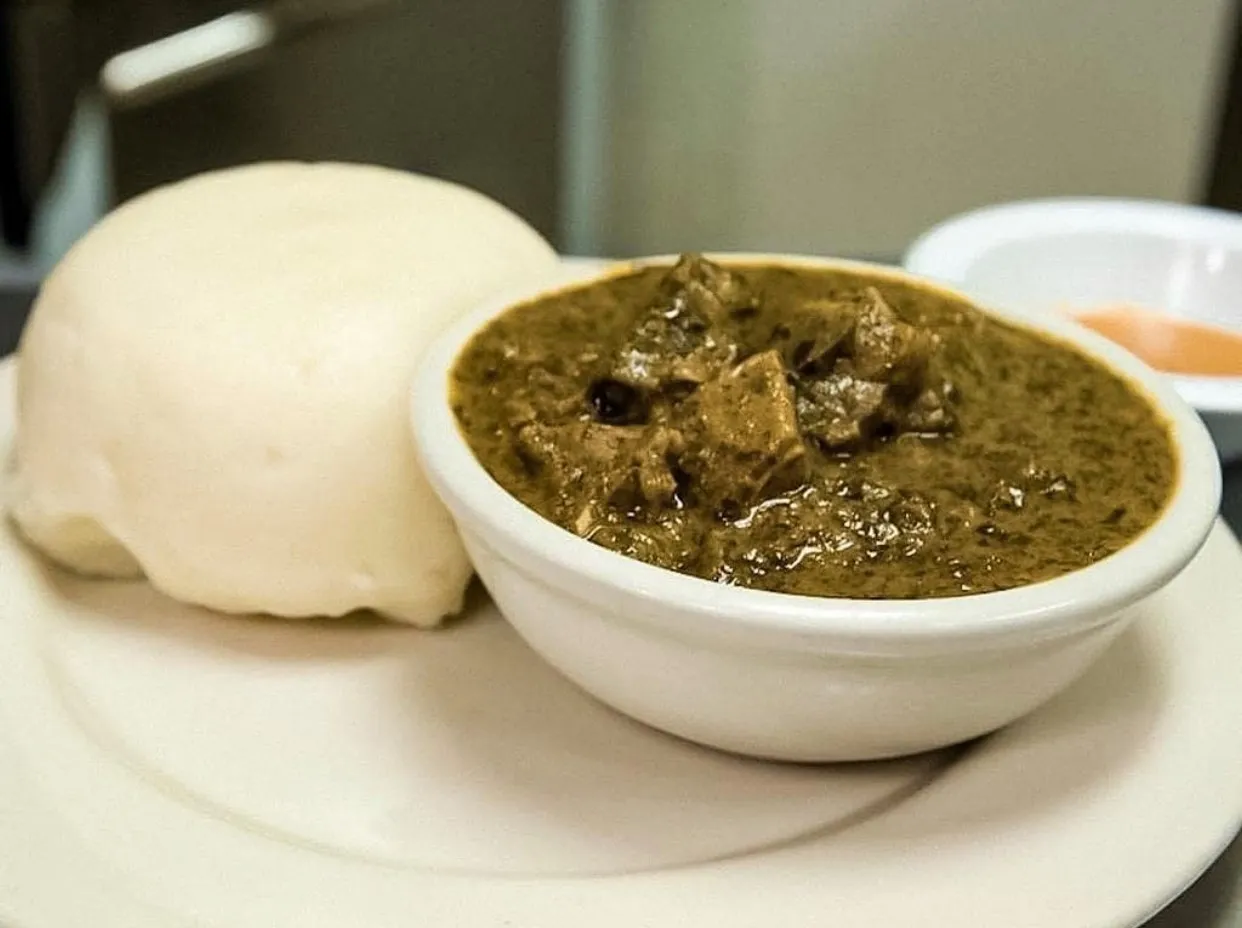
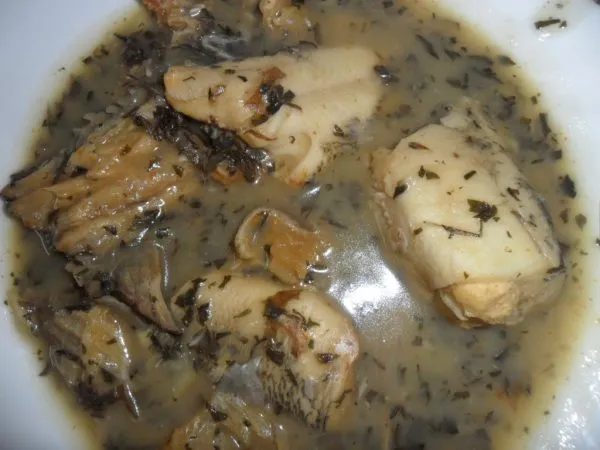
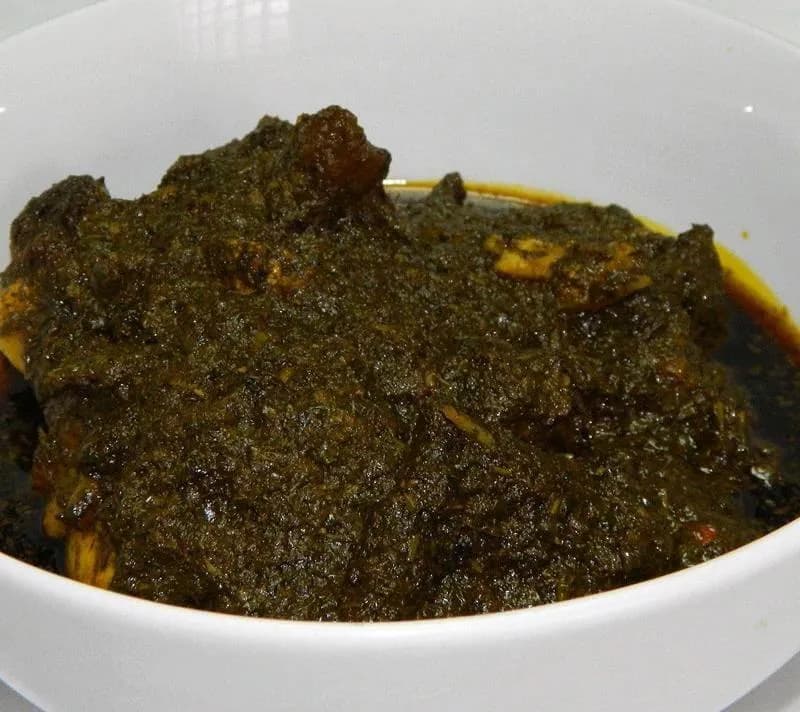
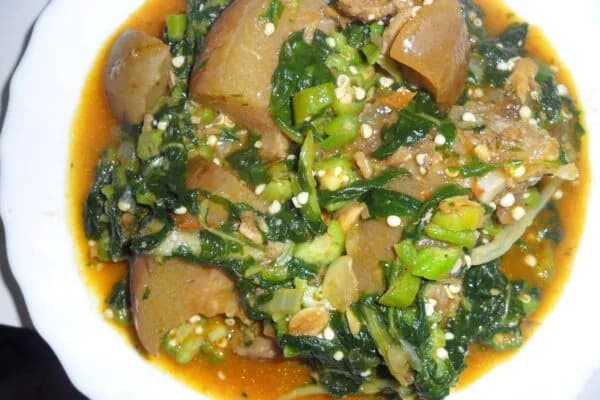
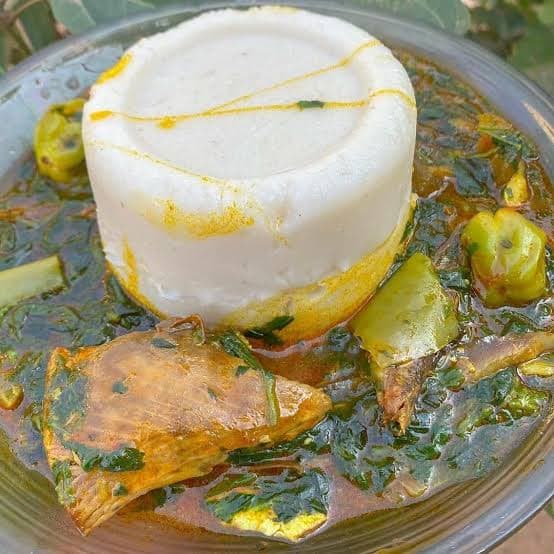
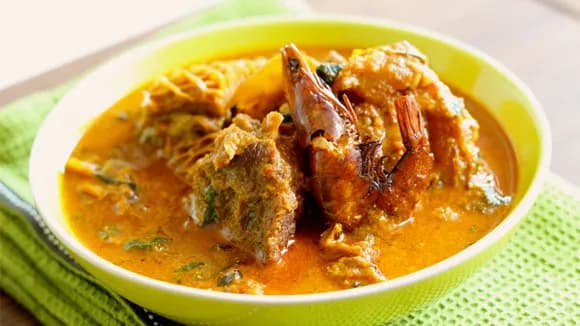
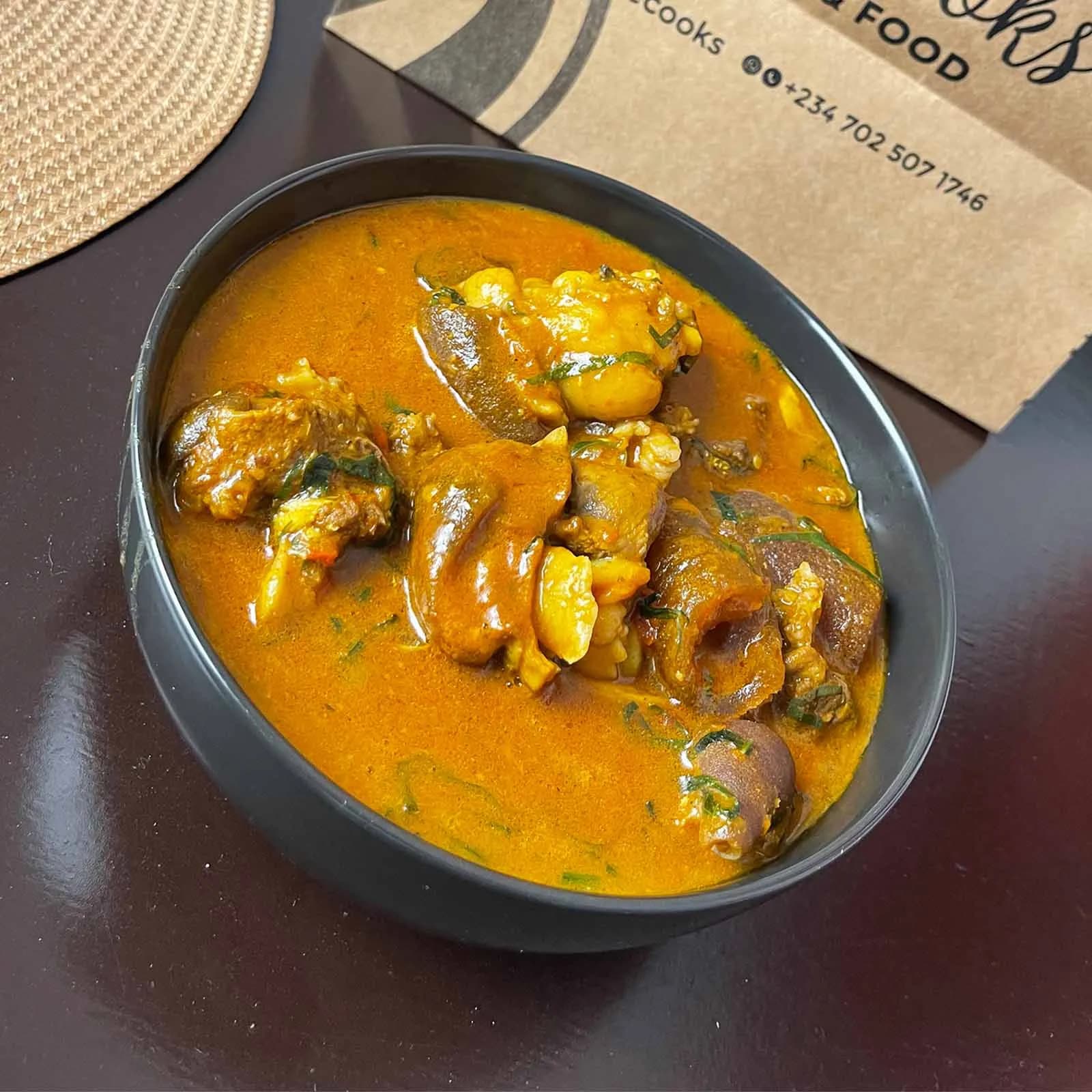
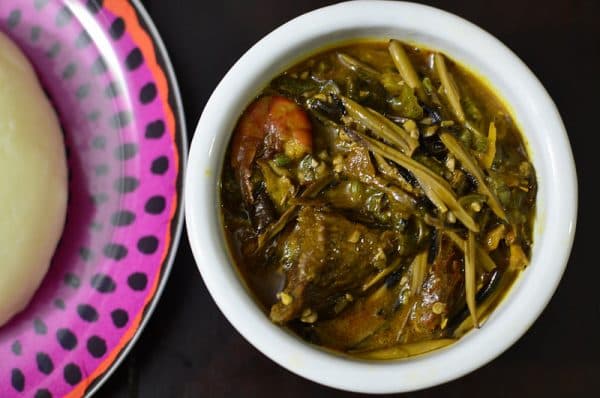
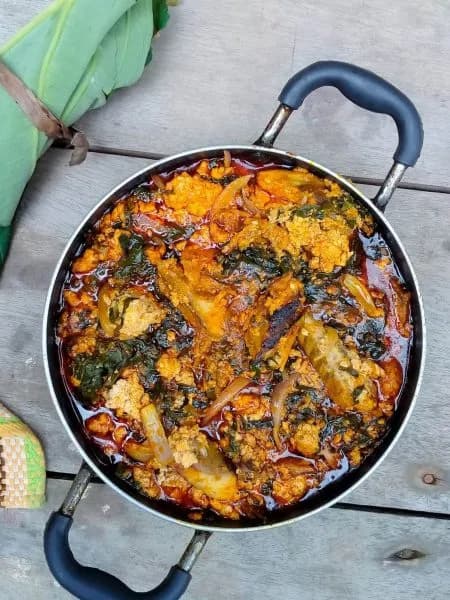
Otong soup is the Efik okra soup of Cross River State in south eastern Nigeria, and what separates it from every other okra soup in the country is the pairing of two vegetables rather than one. Okra provides the draw; ikong ubong, the pumpkin leaf known elsewhere as ugwu, provides the body and the green. Uziza leaf goes in for aroma.
Okra soup is made across Nigeria and the names shift with the language: ila asepo among the Yoruba, okwuru among the Igbo, miyan kubewa in Hausa, and otong among the Efik. Each has its own emphasis, and the two vegetable combination is what marks this one as Efik rather than anything else.
The technique is short and the timing is unforgiving. Okra goes in near the end, the pot is never covered after that point, and the soup comes off the heat while the okra is still green and resilient, because the retained heat keeps cooking it for another couple of minutes. Covered or overcooked, okra goes brown and loses its texture entirely. The Efik version is generous with seafood, taking in prawns, crab, mussels and smoked catfish alongside the assorted meat, which reflects a state built around water. It is eaten with ayan ekpang, the grated steamed cocoyam, or with any swallow.
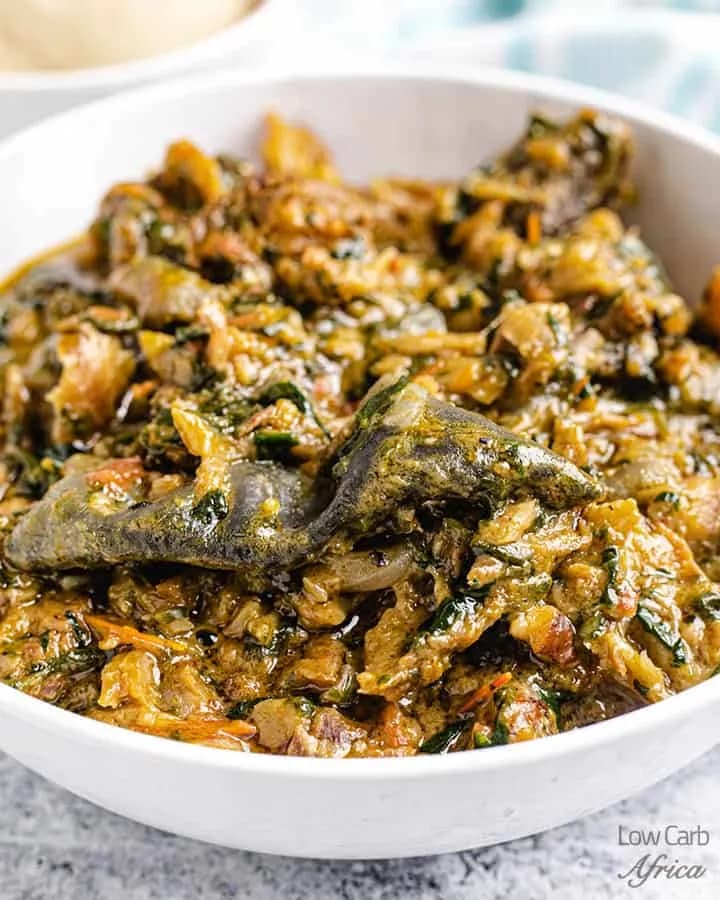
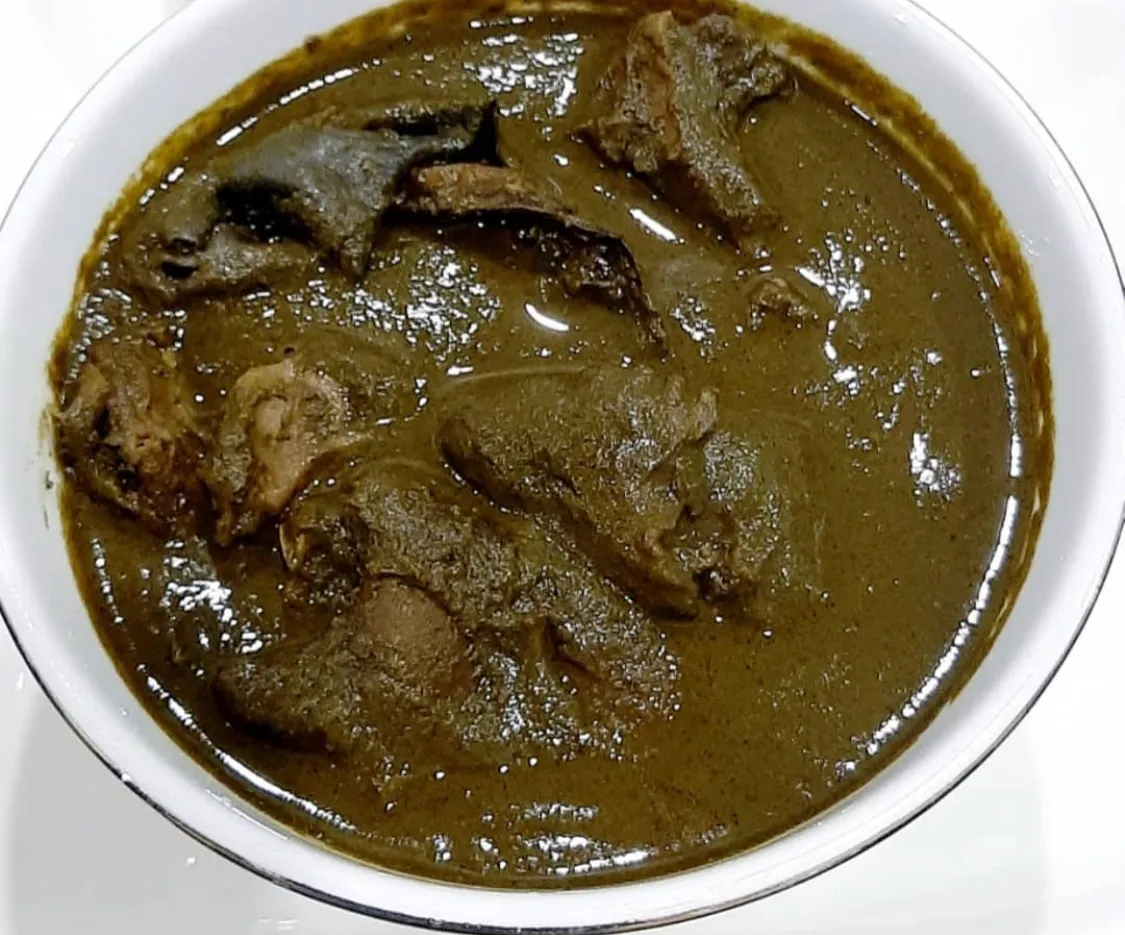
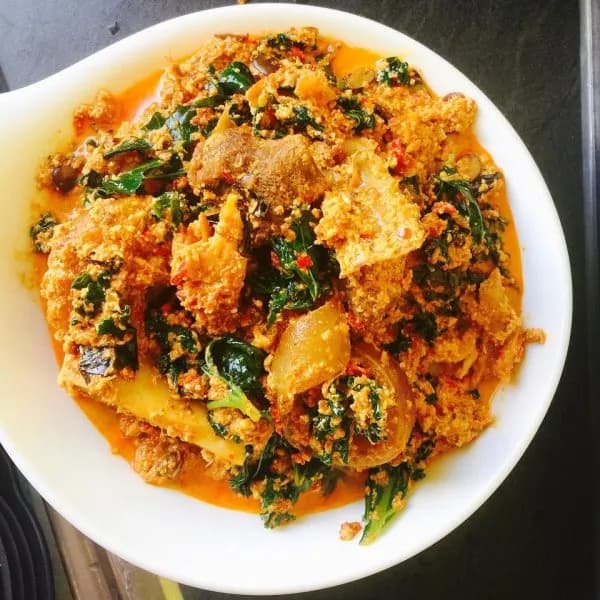
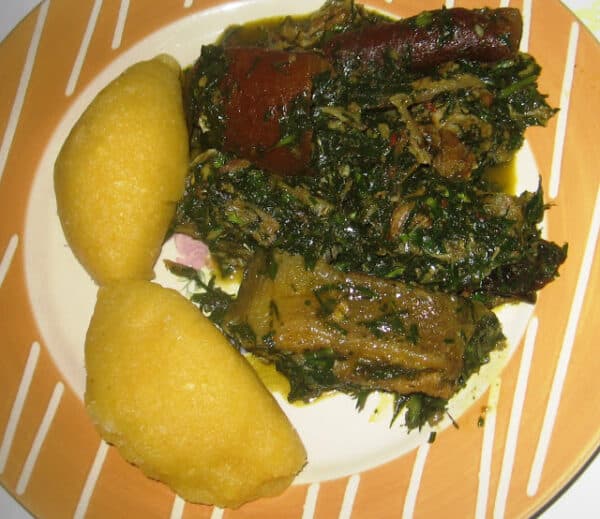
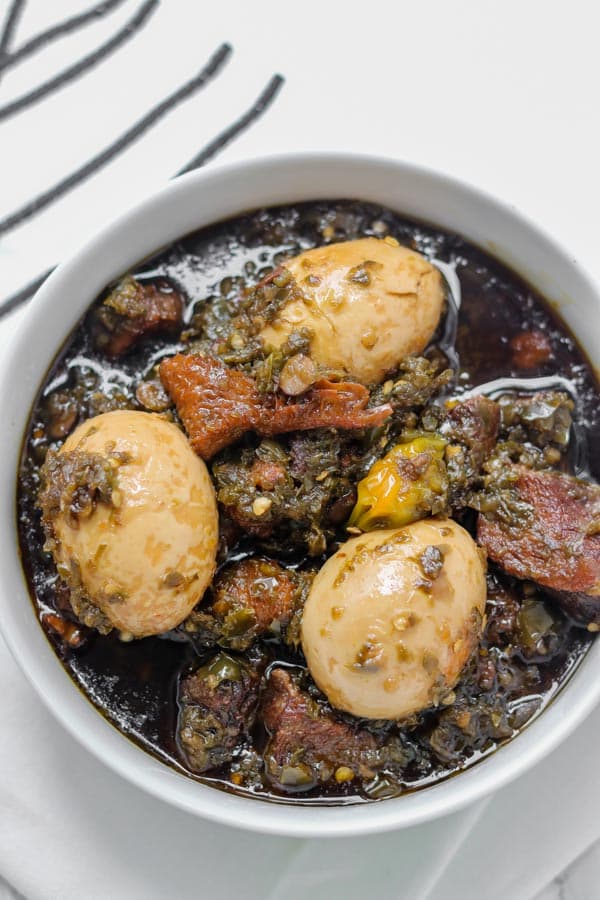
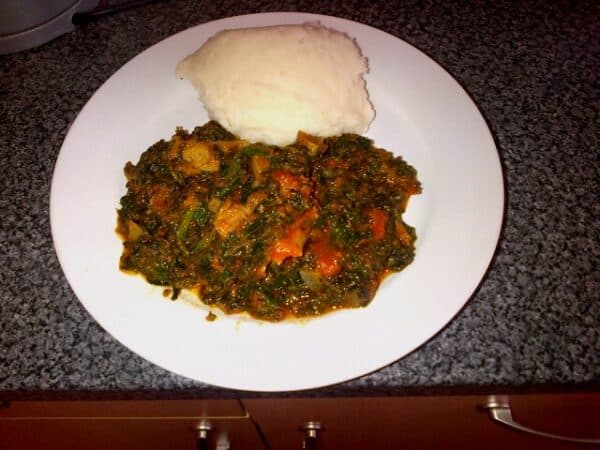
Abom, written abomu here, is the simpler of the two main Ghanaian cocoyam leaf preparations. Where the tomato based kontomire stew is thickened with ground melon seed and cooked in a pot, abom is steamed leaves ground in an asanka with onion, pepper and ginger, finished with hot palm oil poured over the top. It is closer to a relish than to a stew.
The asanka is the tool that defines it. The ridged earthenware bowl grinds rather than purees, and everything in an abom passes through it: the aromatics first, then the salted fish, then the greens, each stage mashed into the last. That produces a coarse, uneven texture that a blender cannot reproduce and that Ghanaians would notice immediately.
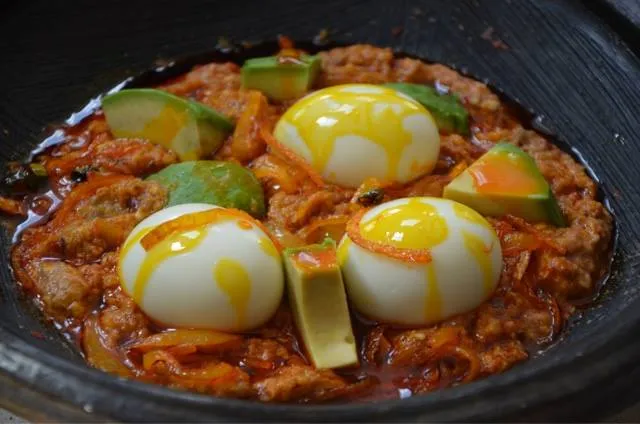
It is Asante food particularly, and it is assembled rather than cooked in the ordinary sense. Plantain, egg, avocado and several kinds of fish, koobi, kakro, smoked mackerel and smoked turkey, go onto the plate around the greens, and hot palm oil is ladled over at the end. Kontomire is the proper leaf. Ghanaians abroad substitute spinach, which the source acknowledges directly, and the result is milder and softer than the cocoyam leaf gives.
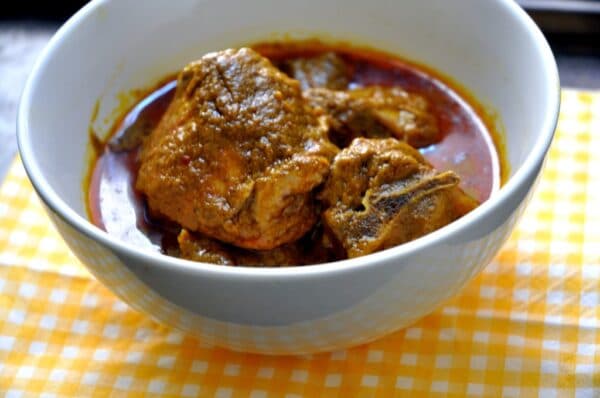
Cape Malay cooking is the food of a community formed by force. From the 17th century the Dutch East India Company brought enslaved people and political exiles to the Cape from Indonesia, Malaysia, Bengal, India and Madagascar, and what they built at the southern tip of Africa, working with local ingredients and their own inherited techniques, became one of South Africa's defining cuisines.
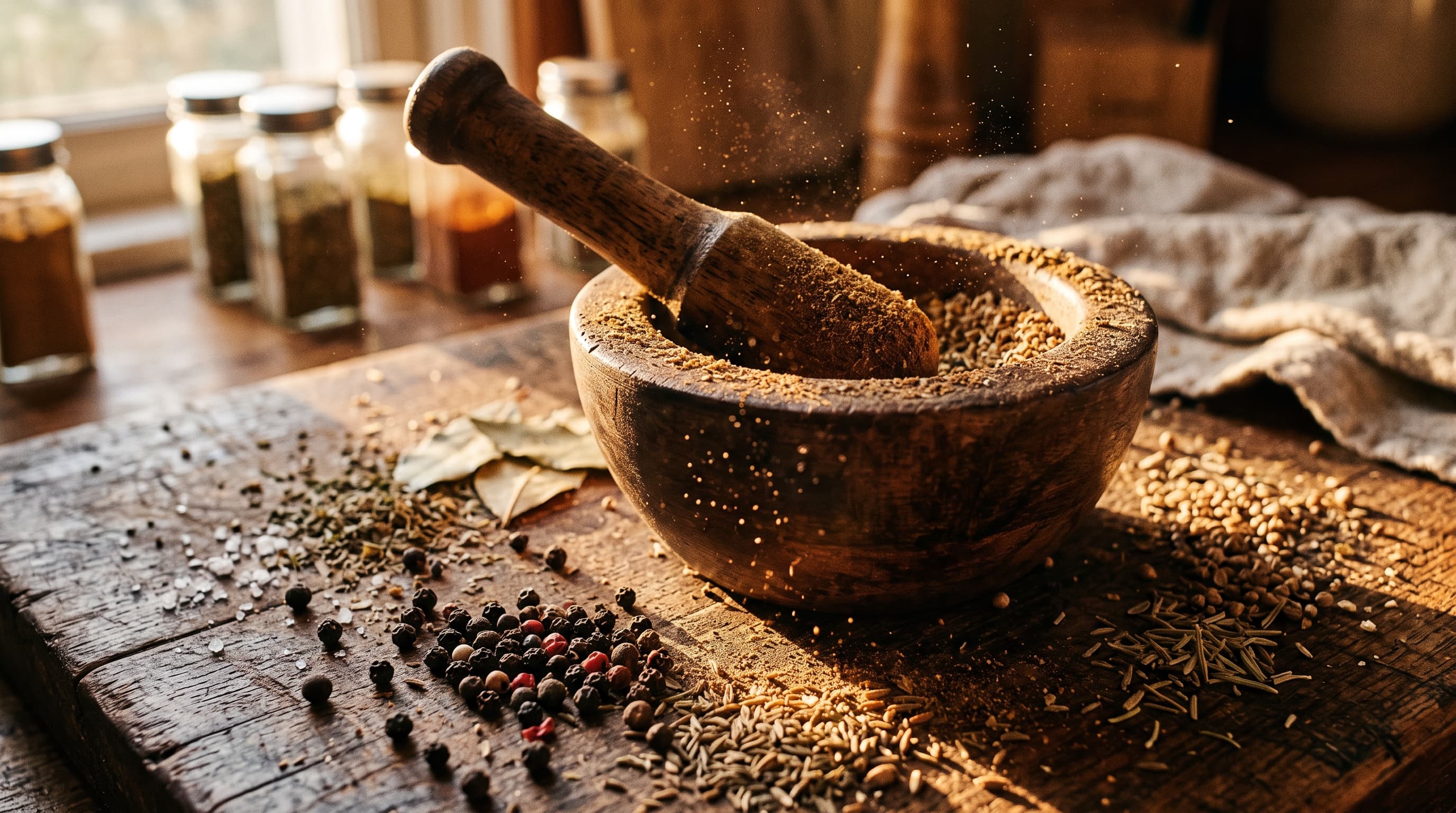
The chicken curry shows the method clearly. Cape Malay curries use whole spices dropped into the pot rather than the ground masalas of most Indian cooking, and those spices, cinnamon stick, cardamom, fennel and cumin seed, are often lifted out before serving. That produces a curry that is aromatic rather than thick and heavy, and it is one of the clearest technical differences between the two traditions.
Sweetness is the other Cape Malay signature. Mango chutney and a little sugar go in near the end, and that sweet note against the chilli and the spice is what people recognise. It is served with Cape Malay yellow rice, coloured with turmeric and studded with raisins, along with roti and a fresh sambal of tomato, onion and cucumber. The community's food is now eaten across every South African community, which is a legacy no one who was brought to the Cape in chains could have chosen or predicted.
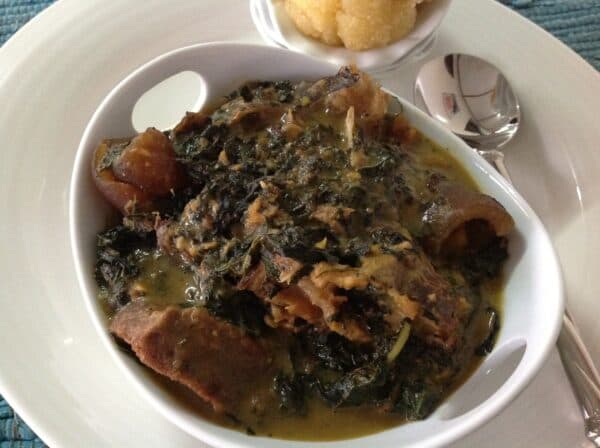
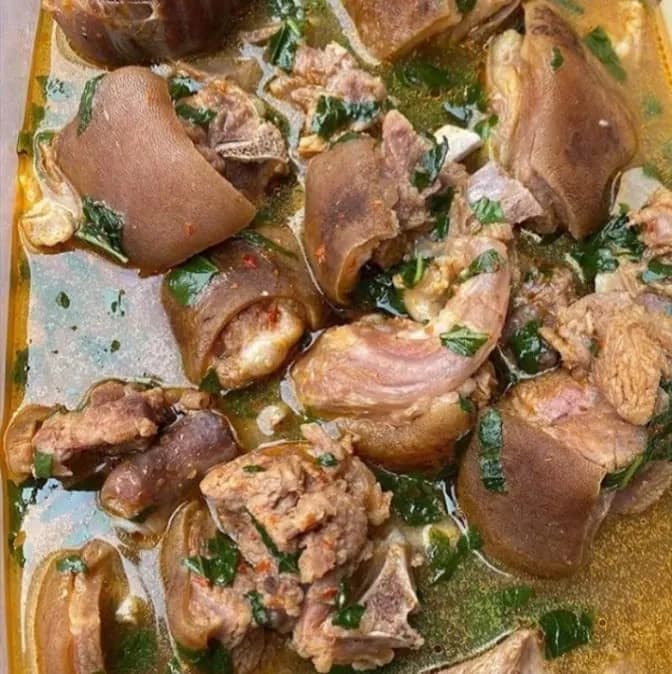
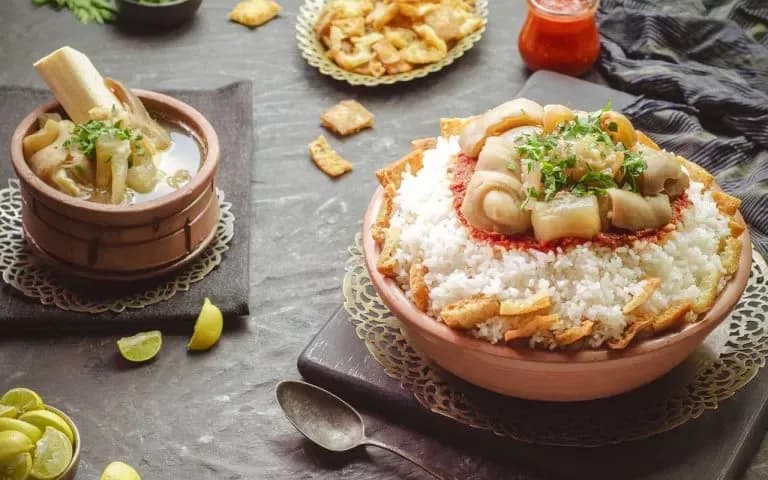
Kawaree is Egyptian calf's feet cooked with chickpeas until the meat falls from the bone and the broth turns thick with gelatin. It belongs to the older end of the Egyptian repertoire, and Egyptians are direct about the fact that it appeals more to their parents' generation than to their own.
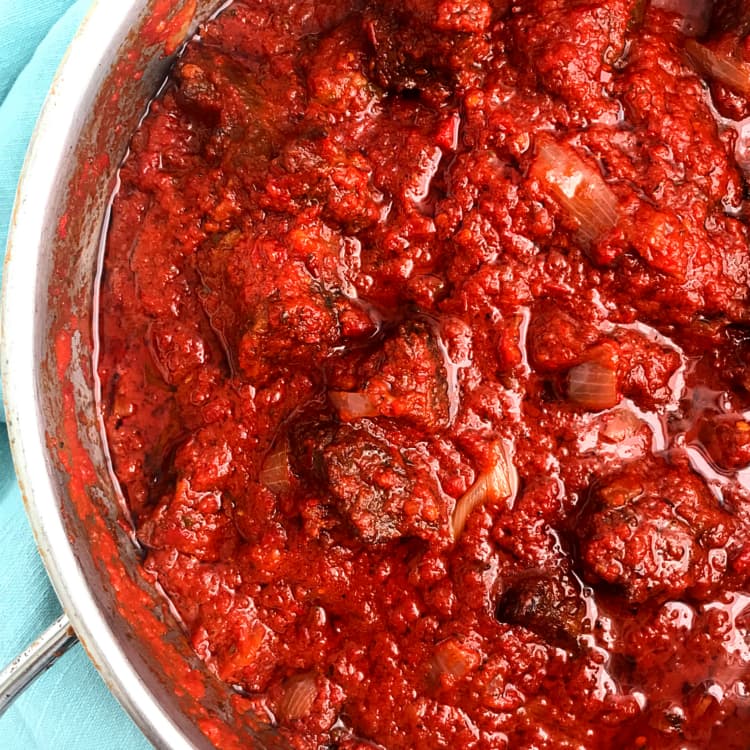
It is served in more than one way, and each has its own name. Kawaree fettah puts it over rice with tomato sauce, in the manner of the wider fattah tradition where bread or rice sits under a rich meat and broth. It is also eaten alongside stuffed vine leaves, and the intended technique there is specific: a piece of kawaree and one vine leaf in the same mouthful, so the gelatinous richness and the sharp stuffed leaf arrive together.
The dish belongs to a family that runs across the region. Sudanese kawari uses sheep or cattle hooves with cinnamon, cardamom and cloves. Moroccan hergma is spiced with ginger, paprika and chilli and finished with rice. Turkish fasulyeli paça uses white beans in place of chickpeas and no turmeric at all. All are the same principle handled by different kitchens, and all exist because a foot yields a great deal from almost nothing.