Nous utilisons des cookies essentiels au fonctionnement du site. Nous aimerions aussi déposer des cookies de mesure d’audience et des cookies publicitaires, uniquement avec votre accord. Vous pouvez choisir séparément pour chacun. Lire notre politique relative aux cookies

Loading
Recettes
Parcourez les archives par pays, par plat et par temps de cuisson.
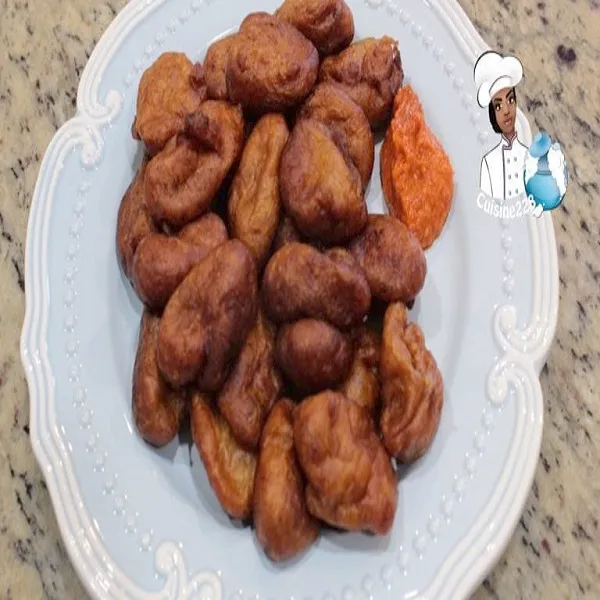
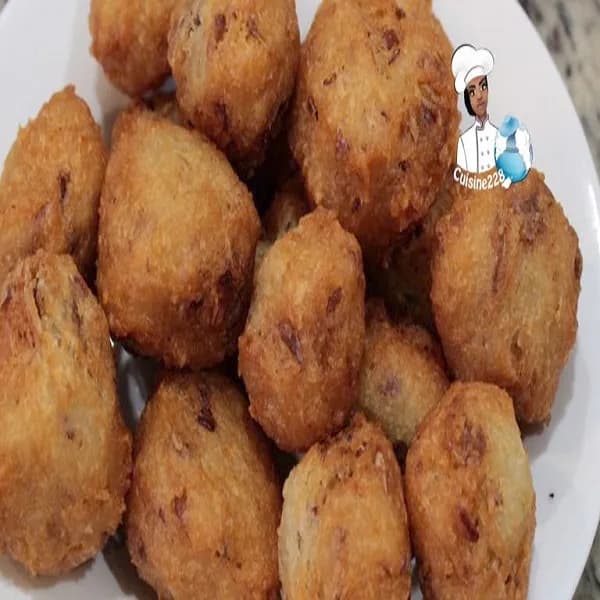
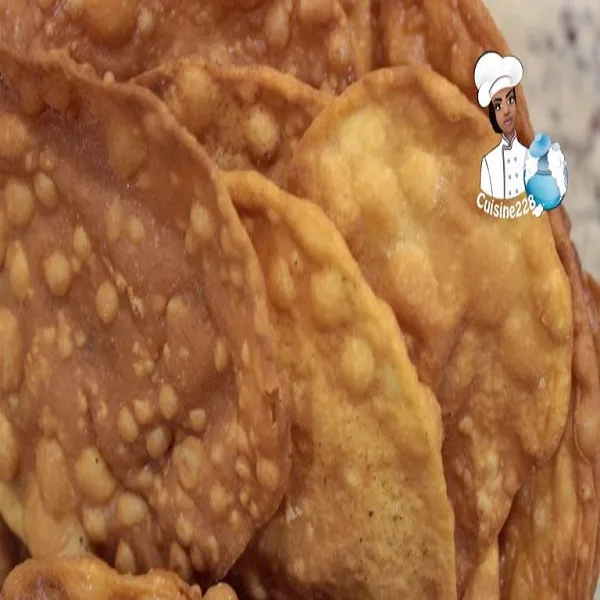
Gullisuwa is a Hausa fried pastry from Northern Nigeria, made from wheat flour worked with ground roasted peanuts and fried until crisp. The groundnuts are what distinguish it. They give the pastry a toasted, faintly sweet base that a plain flour dough does not have, and groundnuts are one of the defining crops of the northern Nigerian savannah.
It belongs to celebration rather than to the everyday. Gullisuwa appears at weddings, at festive occasions and as street food, made in quantity because it keeps well and travels well, and it is offered to guests as part of the spread rather than served as a course. That is the usual position of a fried snack in Hausa hospitality: present, plentiful and not the point of the meal.
Its exact origin is not documented. What can be said is that it belongs to the Hausa, that it has been made for generations, and that Northern Nigeria's long trade and cultural connection with the Sahara and the Arab world is visible in a good deal of its sweet and fried food. Beyond that, the specific lineage of gullisuwa is not recorded, and the honest position is to say so rather than to construct one.
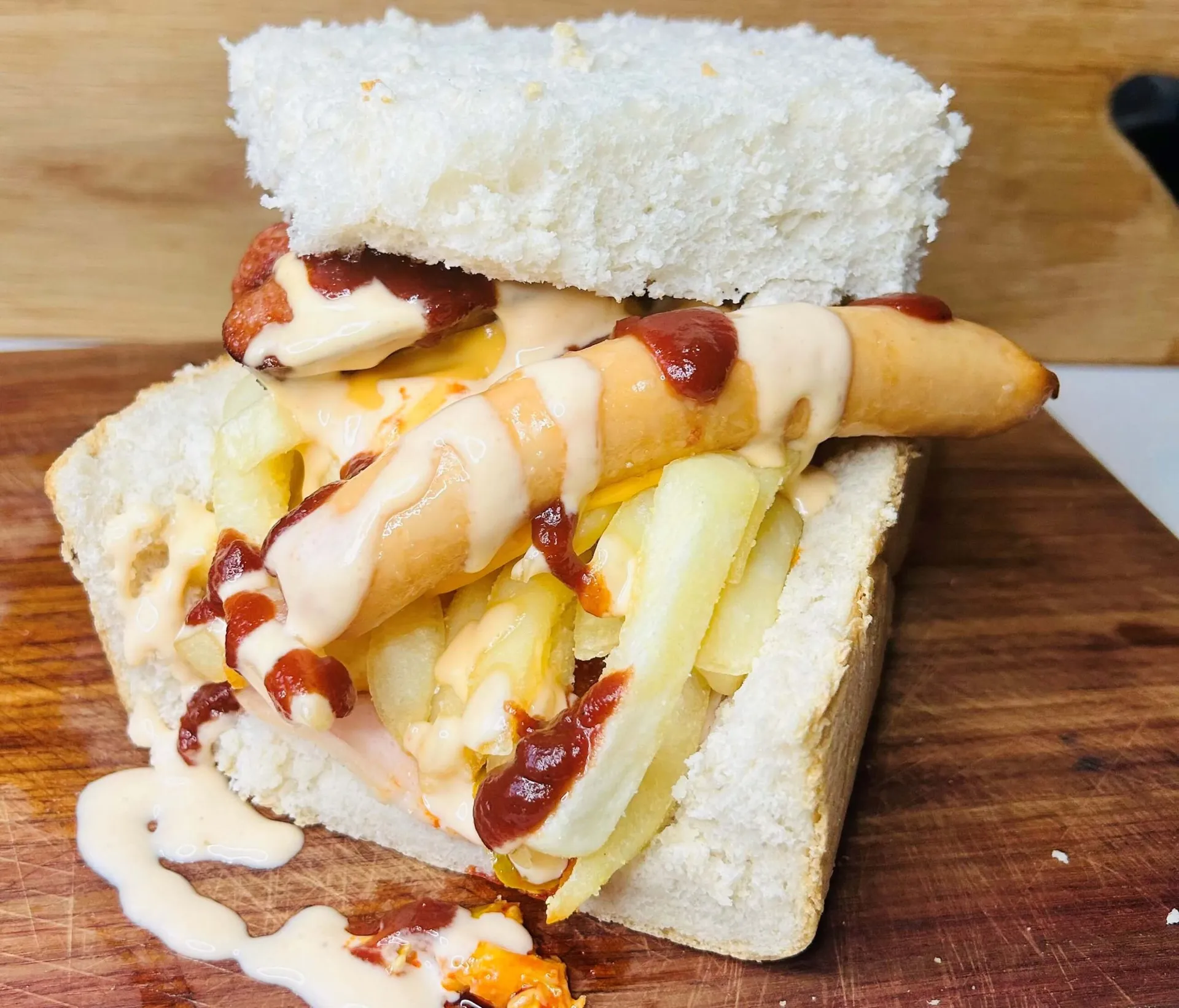
A kota is a quarter loaf of bread, hollowed out and packed with fried food. The word is township English for quarter, and that is the whole description: bread cut in four, the soft centre pulled out, and the cavity filled with chips, polony, russians, viennas, cheese, egg, atchar and sauce, then capped with the bread that was removed.
It belongs to the townships of Gauteng, where it is sold from small takeaway windows and eaten in the hand without a plate. Kota shops compete on what they will fit into a quarter loaf, and the size of the fill is a large part of the reputation. It is cheap, it is a complete meal, and it is built for people who need to eat between one thing and the next.
Atchar is what makes it South African rather than generically stuffed bread. The pickled green mango relish, oily and sour and hot, came to South Africa through Indian indenture and cuts the fried starch that dominates everything else in the cavity. Kota is often described as a version of bunny chow, and the two are related without being the same: bunny chow is Durban Indian, a hollowed loaf filled with curry, and kota is a Gauteng township form filled with fried items. They share an ancestor and are not interchangeable.
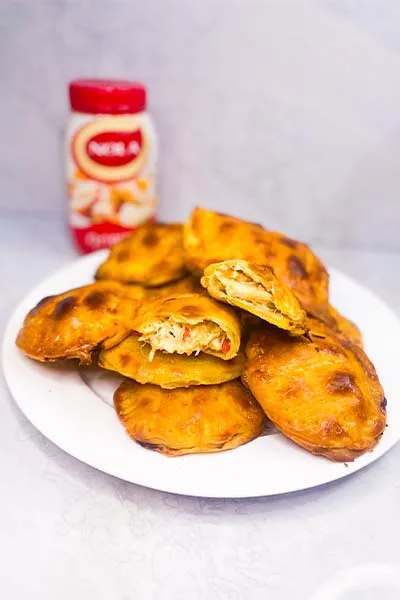
The chicken mayo pie is a hand pie: a short, buttery pastry case around a filling of shredded chicken bound with mayonnaise and softened onion and pepper, baked until the top browns. It is designed to be eaten standing up, out of a paper bag, without a plate or cutlery.
Handheld savoury pies occupy a particular position in Southern African food culture, where they are sold from bakeries, supermarket warmers and roadside outlets and eaten as a fast, complete portable meal. The chicken and mayonnaise filling is one of the most common versions in that category, alongside steak and kidney, chicken and mushroom, and mince.
The dish's lineage is European rather than African. The short crust hand pie came with British and Dutch settlement across Southern and East Africa and was absorbed into the local eating economy so thoroughly that its origins are no longer visible in how it is eaten. What is African about it is that absorption: a pie bought at a garage forecourt on the way to work is a normal part of the day across several countries on the continent, and the mayonnaise binding is a local preference rather than a British one.
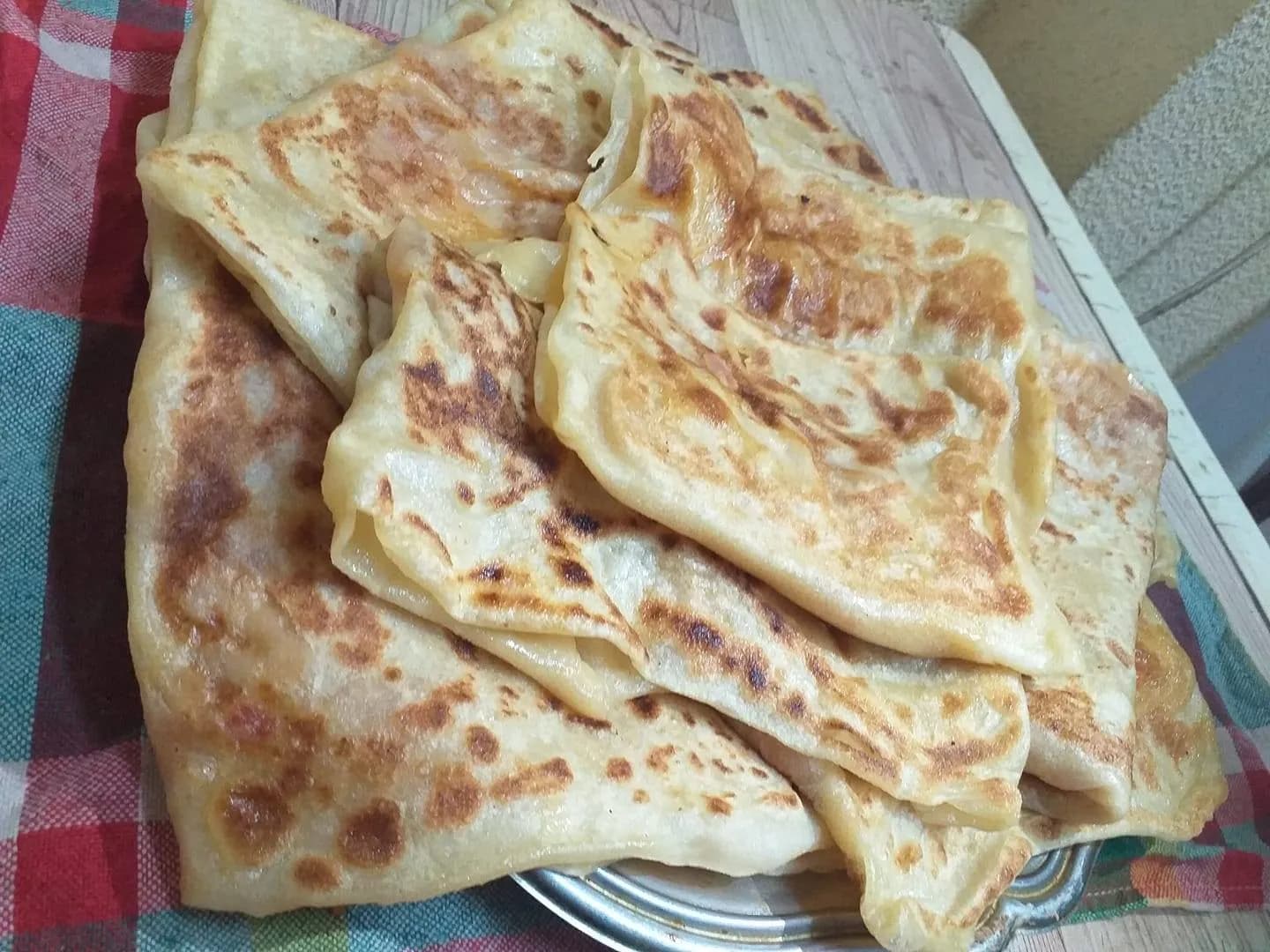
Mhajab is a stuffed North African flatbread, and the technique is what makes it. A soft dough is stretched out until it is thin enough to see through, folded in from the sides and then from the top and bottom into a square parcel around a filling, and cooked flat on a griddle. The folding creates the layers, and the layers are the dish.
It belongs to Algeria and Morocco and is closely related to the Moroccan msemen and rghaif, which use the same stretch and fold method without a filling. Mhajab is street food and it is household food for special occasions, which is a combination that usually indicates something that takes skill but not money.
The filling is conventionally a cooked mixture of onion, tomato and pepper, sometimes with meat, and the version here uses beef with potato and carrot. Vegetable fillings are as common as meat ones. It is eaten on its own, or served alongside couscous, harira and salads with mint tea. Cooked on a griddle it comes out crisp outside and soft within; baked it is softer throughout and takes longer, which is the trade the source lays out honestly.