Nous utilisons des cookies essentiels au fonctionnement du site. Nous aimerions aussi déposer des cookies de mesure d’audience et des cookies publicitaires, uniquement avec votre accord. Vous pouvez choisir séparément pour chacun. Lire notre politique relative aux cookies
Loading
Recettes
Parcourez les archives par pays, par plat et par temps de cuisson.
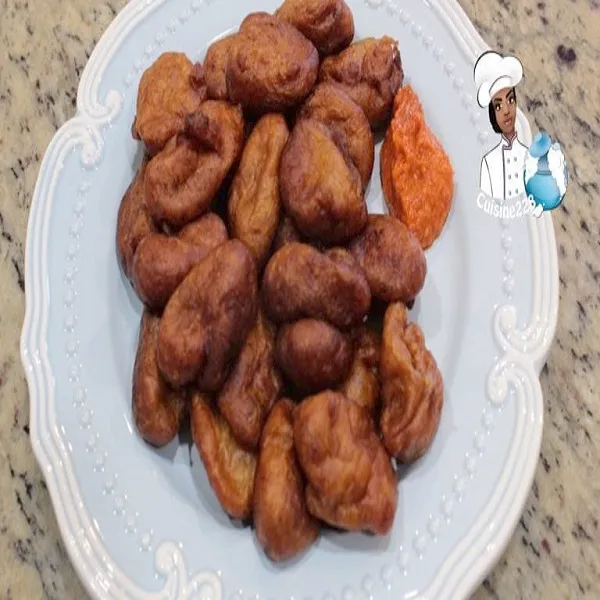
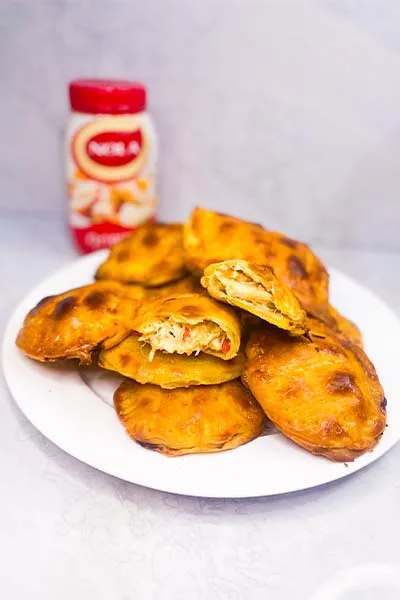
Nigerian buns are fried dough balls with a crunchy outer crust and a soft, cake like interior. They sit alongside puff puff and chin chin in the small group of fried snacks that account for most of what Nigerians eat between meals, and the differences between the three are understood precisely by anyone who grew up with them.
Buns are the rich one. Where puff puff is yeast raised and made from almost nothing, buns use baking powder for lift and include egg, butter and milk, which produces a denser, sweeter, more substantial thing with a genuinely crunchy shell. They also absorb less oil in the frying, which is a real practical advantage and a point people make in their favour.
They are everywhere: sold from roadside trays and by hawkers, made at home for children after school, brought to parties and picnics, and eaten with tea at breakfast. The flavouring is open, with nutmeg the most common and cinnamon and vanilla both standard, and every household has a version that is slightly sweeter or slightly denser than the next. They are best hot and are still good at room temperature, which is most of what a snack needs to be.
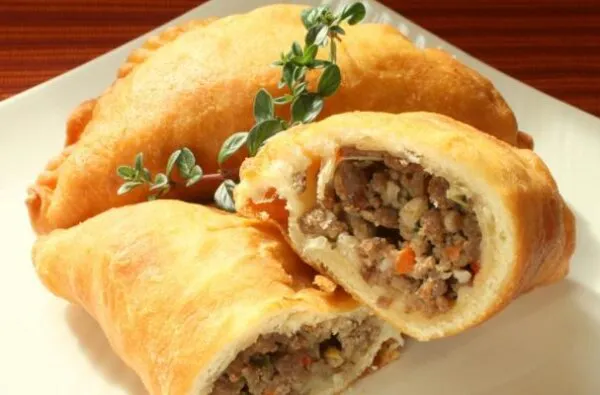
The Nigerian egg roll is a whole hard cooked egg wrapped in a slightly sweet dough and deep fried, and it has nothing to do with the Chinese egg roll beyond the name. The closest comparison is a Scotch egg, with dough in place of sausage meat, and the resemblance ends at the structure.
It is street food and travel food. Egg rolls are sold from glass cases at bus stops, from hawkers' trays in traffic, and from the small kiosks that cluster around Lagos offices, and they exist because they solve a specific problem: something substantial, cheap and self contained that can be eaten with one hand in a stationary car. Anyone who has spent time in Lagos traffic understands the appeal without further explanation.
The dough is what makes it Nigerian rather than generic. Flour, baking powder, sugar, margarine and nutmeg produce something between a bread and a cake, faintly sweet against the plain salted egg inside, and that sweet and savoury combination is a Nigerian snack signature that also runs through buns, puff puff and chin chin. It is eaten with tea, fruit juice or chilled zobo, and it is substantial enough that people eat it as breakfast or lunch rather than as a snack.
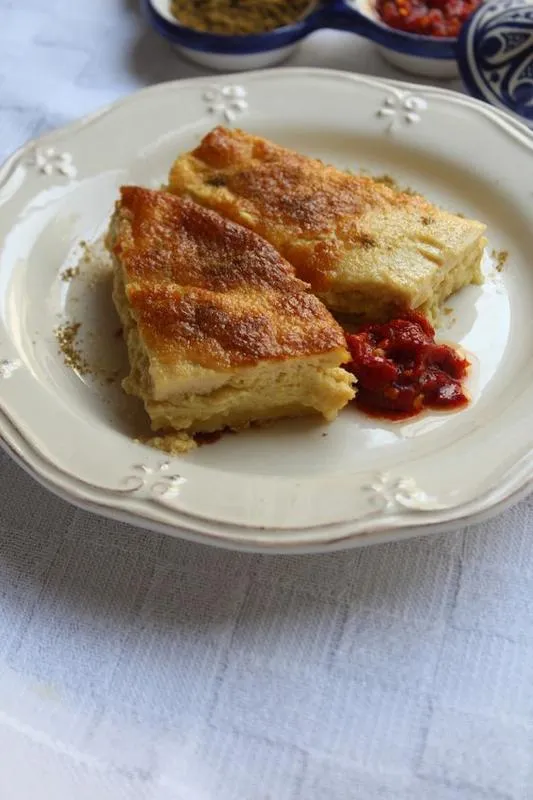
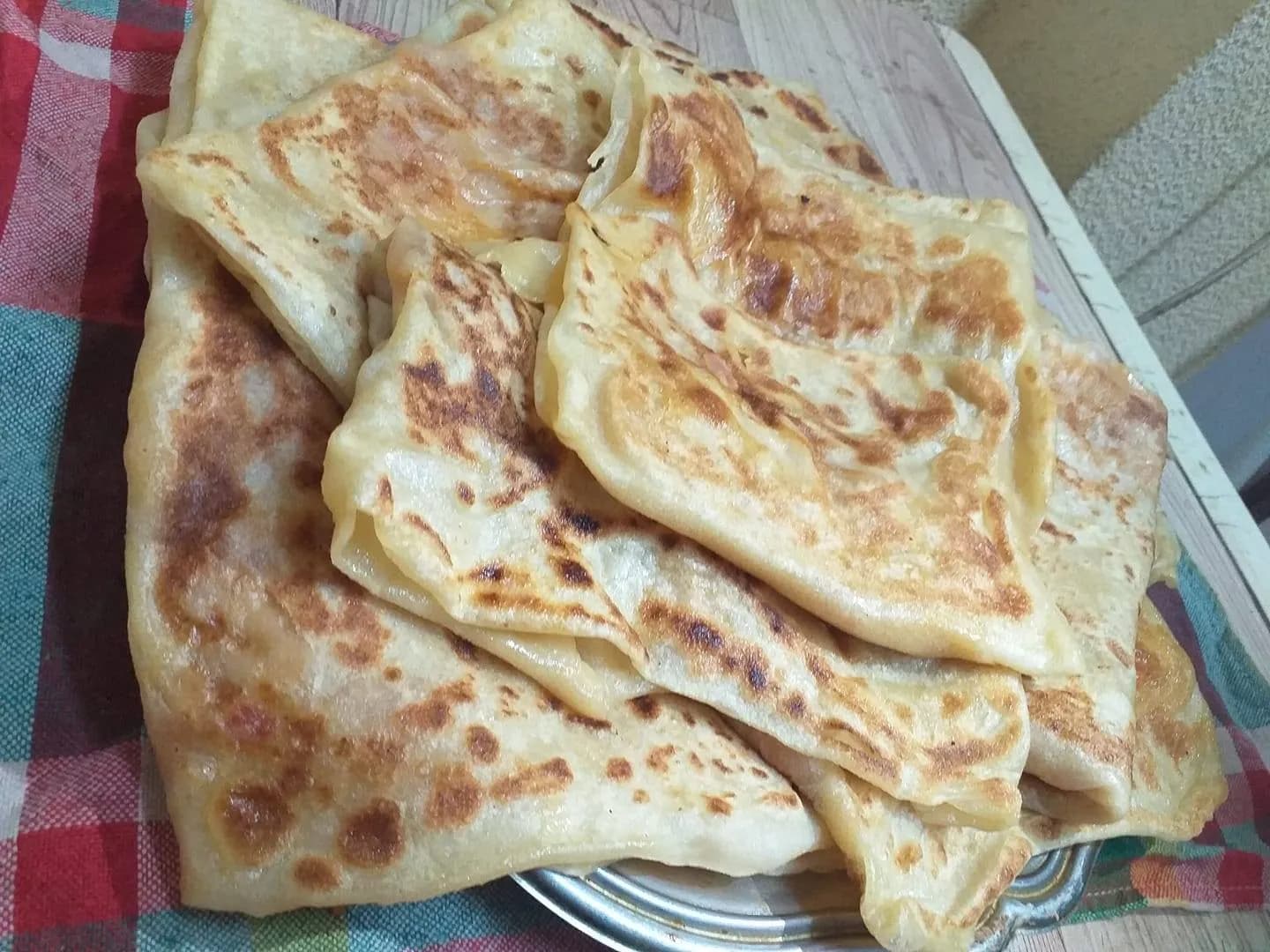
Mhajab is a stuffed North African flatbread, and the technique is what makes it. A soft dough is stretched out until it is thin enough to see through, folded in from the sides and then from the top and bottom into a square parcel around a filling, and cooked flat on a griddle. The folding creates the layers, and the layers are the dish.
It belongs to Algeria and Morocco and is closely related to the Moroccan msemen and rghaif, which use the same stretch and fold method without a filling. Mhajab is street food and it is household food for special occasions, which is a combination that usually indicates something that takes skill but not money.
The filling is conventionally a cooked mixture of onion, tomato and pepper, sometimes with meat, and the version here uses beef with potato and carrot. Vegetable fillings are as common as meat ones. It is eaten on its own, or served alongside couscous, harira and salads with mint tea. Cooked on a griddle it comes out crisp outside and soft within; baked it is softer throughout and takes longer, which is the trade the source lays out honestly.
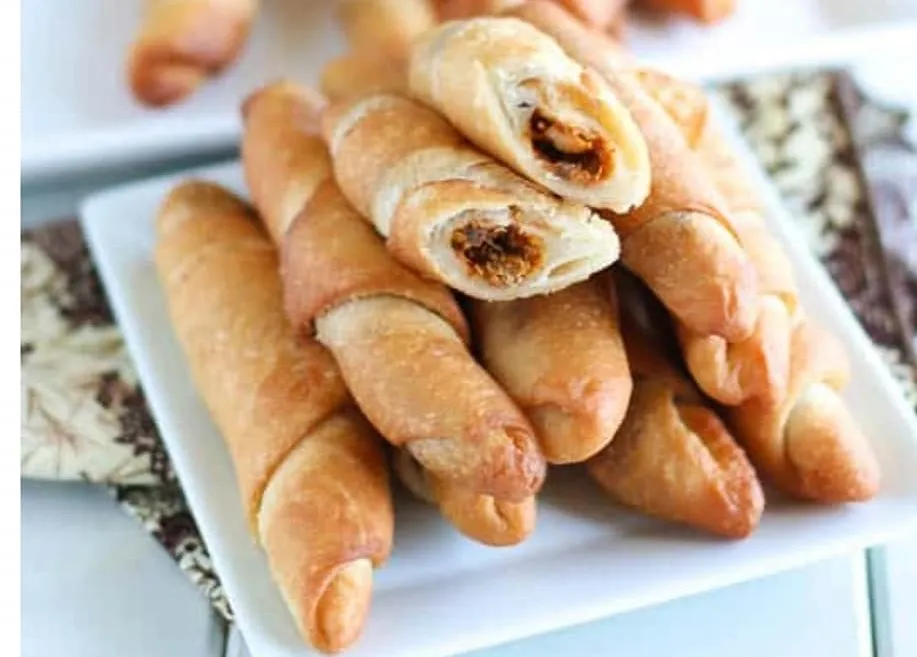
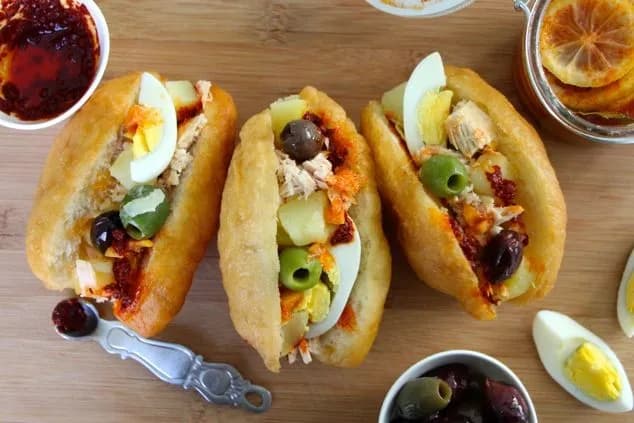
A fricassé is a small oval roll of enriched dough, deep-fried and then split and packed with tuna, potato, olives, egg and harissa. It is Tunisian street food, and it is one of the country's most recognisable things to eat.
The word does not mean what it means elsewhere. In French, a fricassée is a braise of meat in a white sauce; in Tunisia and its diaspora it means this sandwich and nothing else. That divergence is complete enough that searching the French term will not find you the Tunisian food.
The filling is the point and it is fixed by convention rather than by recipe: tuna in olive oil, cooked potato, black olives, egg and harissa, with slata méchouia, the grilled pepper and tomato salad, very often alongside. Capers and preserved lemon appear in some versions. What matters is that the bread is fried rather than baked, which gives a rich, slightly greasy roll that stands up to a wet filling.
**A significant gap in the source.** Its ingredient list contains only the dough, yeast, water, flour, egg, oil, salt. Not one of the filling ingredients it spends its article describing appears in it. The filling below has been reconstructed from that description and flagged.
**It contains eggs and fish.**