Nous utilisons des cookies essentiels au fonctionnement du site. Nous aimerions aussi déposer des cookies de mesure d’audience et des cookies publicitaires, uniquement avec votre accord. Vous pouvez choisir séparément pour chacun. Lire notre politique relative aux cookies
Loading
Recettes
Parcourez les archives par pays, par plat et par temps de cuisson.
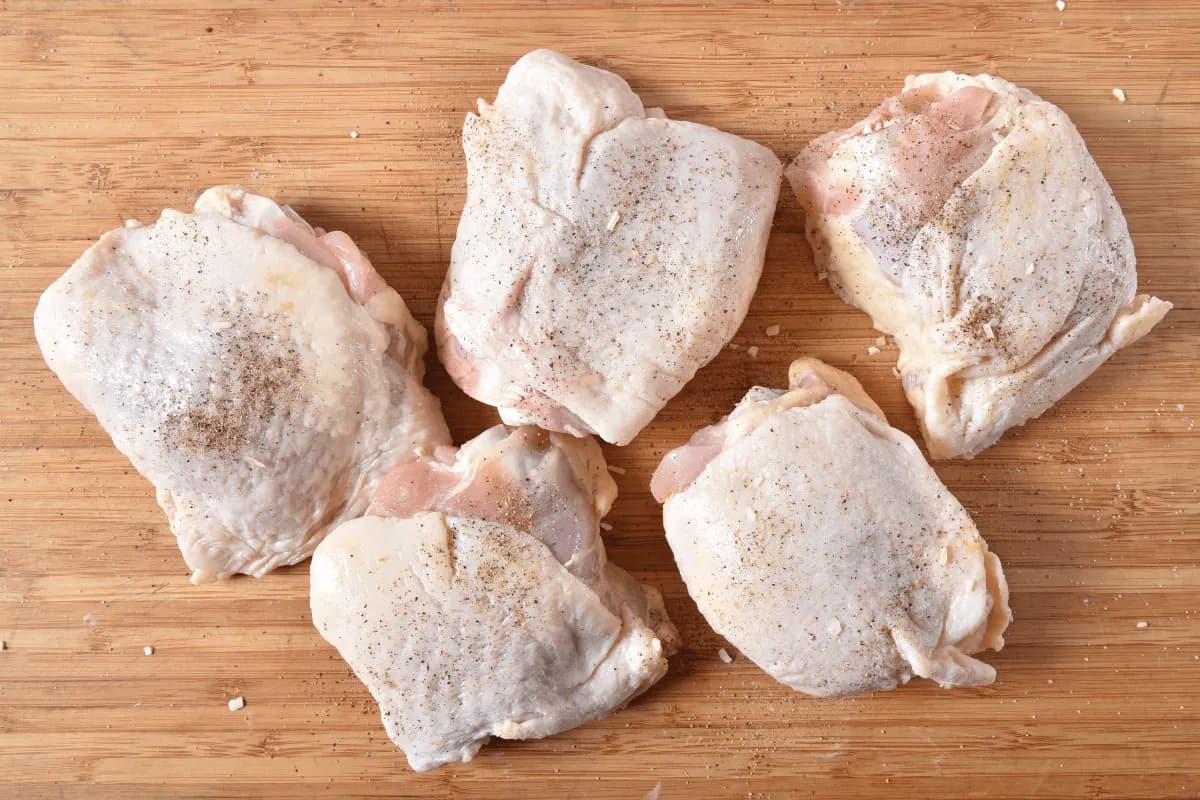
Chicken thighs simmered in seasoned water until cooked through, served with lemon and parsley. The source presents it as a guide to timing rather than as a dish, and its title is phrased as a question, which is why the display title here is a plain one. The slug and URL are unchanged.
The timing is the substance of it. Bone-in thighs take roughly half an hour or a little more over gentle heat; boneless thighs take rather less. What matters more than the clock is the internal temperature, and here the source is inconsistent: its prose gives the standard safe minimum for poultry while its method gives a higher figure. Both are safe, and thighs are often taken above the minimum because the extra heat breaks down more connective tissue and improves the texture.
The technique worth noting is that the water should barely bubble. A hard rolling cook toughens the protein and makes the meat stringy; gentle heat keeps it tender. Aromatics in the water, garlic, onion, herbs, flavour both the chicken and the resulting stock, which is worth keeping. Boiled or poached chicken is used across African cooking as a first stage before frying or stewing rather than as a finished dish, which is a different role from the one here.
Bunny chow is a hollowed loaf of white bread filled with curry, and it comes from the Indian community of Durban in KwaZulu-Natal. The bread is the bowl, the plate and the cutlery, and it is eaten by tearing pieces off the hollowed lid to scoop with.
Its history is tied directly to apartheid. The most widely repeated account holds that it developed as a way to sell food to Black customers who were barred from eating in certain restaurants: the bread served as the container, so nothing had to be handed back. It was cheap, portable, filling enough for a day's work, and needed no crockery, which made it well suited to the indentured Indian labourers brought to work the sugarcane fields of KwaZulu-Natal.
The name is generally traced to banya chow. Banya was an older term for the Indian trading community in Durban and chow is slang for food. Accounts of the origin do differ and none is settled. The filling is a Durban curry, aromatic with curry leaves, cardamom and cinnamon, made with chickpeas and potatoes and with or without meat, and mutton is the version Durban is best known for.
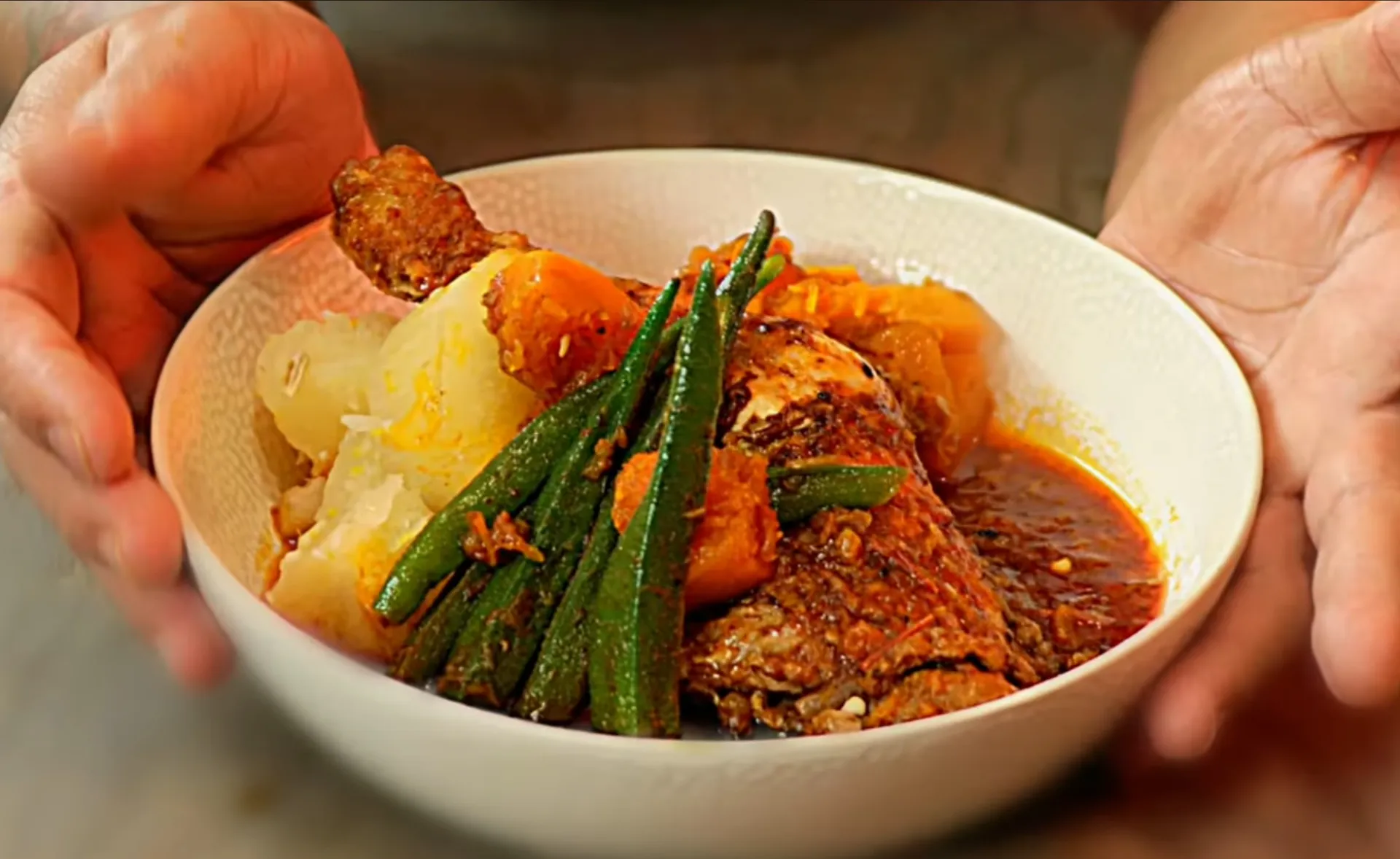
Mtuzi wa samaki is a Zanzibari fish curry, fish cooked in a spiced tomato and coconut sauce, and one of the clearest dishes to point at when explaining what Zanzibar's food actually is.
The island sat at the centre of Indian Ocean trade for centuries, and the spice routes running from India passed directly through it. Zanzibar became a spice producer in its own right, cloves above all, and the Indian influence on its cooking is not a borrowing but a component of it. Mtuzi wa samaki is built on that: cumin, coriander, turmeric and chilli applied to local fish and local coconut.
The name is Swahili, mtuzi is a sauce or stew, samaki is fish.
Firm white fish is what the dish wants, because it needs to hold together in the sauce. Kingfish and snapper are common on the island; anything firm works elsewhere.
It has spread from Zanzibar along the East African coast and is now cooked widely in coastal Kenya and Tanzania.
Served with rice or with chapati, both of which arrived by the same trade routes as the spices.
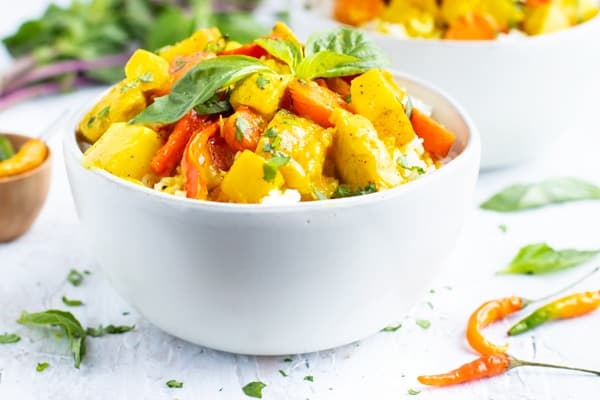
Coconut chicken curry is a one-pan dish of chicken simmered in coconut milk with a curry spice blend and whatever vegetables are to hand, broccoli, cabbage, peppers, potato, carrot.
The word curry is worth being precise about. It is not a single spice or a single dish. It comes from English usage during colonial rule in India, applied broadly to spiced saucy dishes, and it now covers an enormous range of unrelated cooking across South Asia, Southeast Asia, the Caribbean and East Africa. A curry powder sold in a jar is a blend, and the blends differ substantially between manufacturers and regions.
Coconut milk versions belong mainly to the coastal and tropical end of that range, southern India, Thailand, Malaysia, the Caribbean, and the Swahili coast of East Africa, where coconut is grown and used heavily.
This particular recipe is a general one rather than a regional tradition, which is its strength: it tolerates substitution well and is designed to be varied.
**Filed as Worldwide**, the recipe as written makes no specific national claim, so attributing it to any one cuisine would be inventing detail.