Nous utilisons des cookies essentiels au fonctionnement du site. Nous aimerions aussi déposer des cookies de mesure d’audience et des cookies publicitaires, uniquement avec votre accord. Vous pouvez choisir séparément pour chacun. Lire notre politique relative aux cookies

Loading
Recettes
Parcourez les archives par pays, par plat et par temps de cuisson.
Oyster mushrooms grilled and tossed in suya spice. It is a plant-based version of the Nigerian street food, and it works better than most meat substitutions do.
**The traditional suya spice contains ground peanuts, and this recipe includes them.** The source flags it and offers to leave them out, which is honest, but it is worth stating clearly, because a peanut allergy and a suya spice blend are a genuinely dangerous combination and the name gives no warning.
Suya proper is skewered beef, ram or chicken rubbed in yaji, the spice blend of ground roasted peanuts, ginger, cayenne, garlic, onion powder and paprika, and grilled over open coals. It is Hausa in origin, from northern Nigeria, and it is sold across Nigeria, Cameroon, Niger, Ghana and parts of Sudan. Kyinkyinga is the Ghanaian name, agashe the Sudanese.
Oyster mushrooms are the right substitution and not an arbitrary one. Shredded, they have a fibrous, layered structure that genuinely resembles pulled meat, they take on the dry rub readily, and they char well. Most vegetables do neither.
The source's method is very compressed, one step reads "put in a preheated medium", with the word oven missing, and has been filled out below.
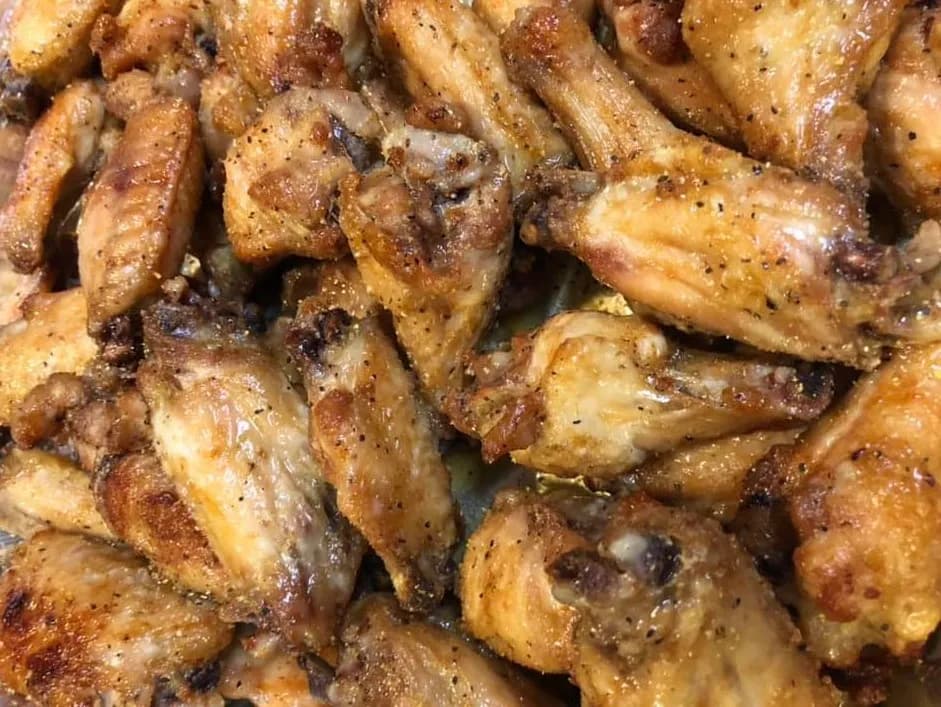
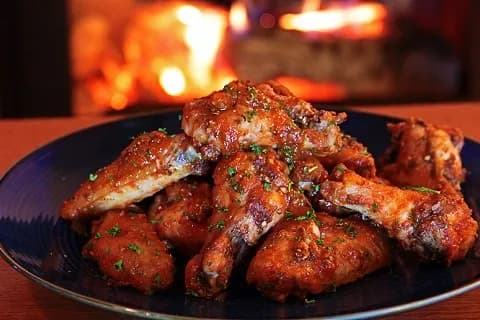
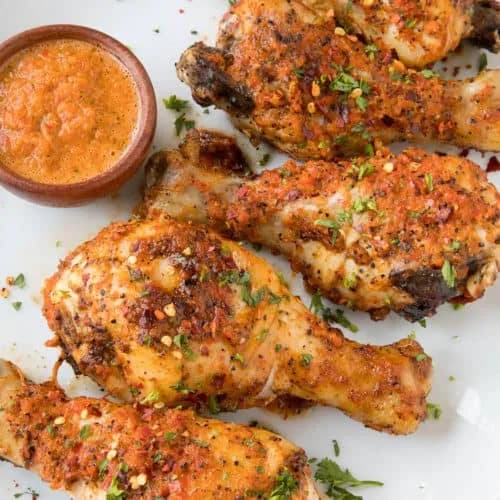
Grilled shito wings are chicken wings grilled and then coated in shito, Ghana's dark chilli sauce, and returned briefly to the heat so the sauce sets onto the skin. It is a modern preparation built on a traditional condiment rather than an inherited dish, and it is none the worse for that.
Shito is the whole point. The word is Ga, the language of Accra, and simply means pepper, though it has come to name the specific dark sauce made from dried fish, ground prawn, chilli, ginger, garlic and tomato cooked down in oil. Its smokiness and depth are what a plain grilled wing lacks, and glazing rather than marinating with it keeps that character intact.
The order matters. The wings are seasoned and marinated plainly first, with salt, oil, pepper, lime and soy, then grilled through, and only then coated in shito and given a short final spell at reduced heat. Shito applied at the start would burn long before the chicken cooked, since it is already a cooked, oily, sugar-free but solids-heavy sauce. Doing it this way gives a wing that is properly cooked underneath and lacquered on the outside.
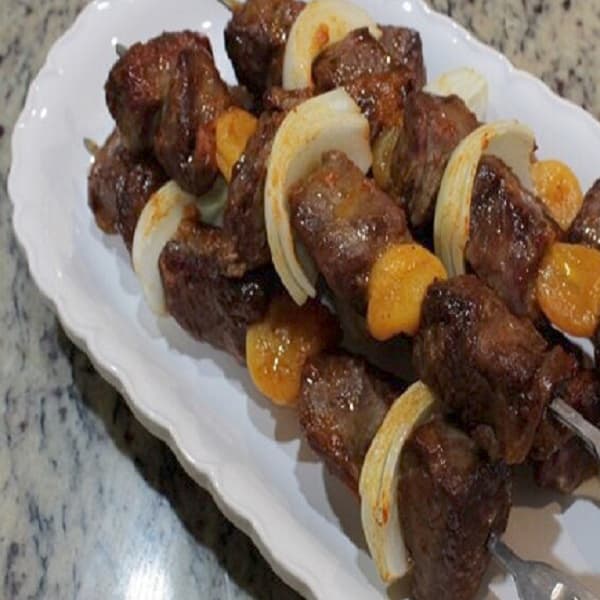
Kebab is a Middle Eastern preparation, and the source says so directly. Cut or ground meat cooked on a skewer over open flame is one of the oldest cooking methods there is, and the word and the technique both come from that region before spreading almost everywhere.
Mutton and lamb are the traditional meats. Regional versions use beef, goat, chicken or fish, and pork rarely, given religious constraints across much of the region where kebab originates. Not every kebab involves a skewer either: tas kebab is baked in a skillet or served as a stew, which shows how loosely the word travels.
Africa has a great deal of skewered grilled meat of its own, and this recipe is not it. Nigerian suya is coated in yaji, a peanut based spice blend. Sudanese agashe works the same way. Moroccan brochettes are marinated in cumin and paprika. Egyptian kofta is ground and shaped rather than cubed. This version is marinated in soy sauce, olive oil, oregano, garlic and lemon, which is a Mediterranean and Levantine profile, so it sits in the Worldwide Recipes collection rather than being presented as African.
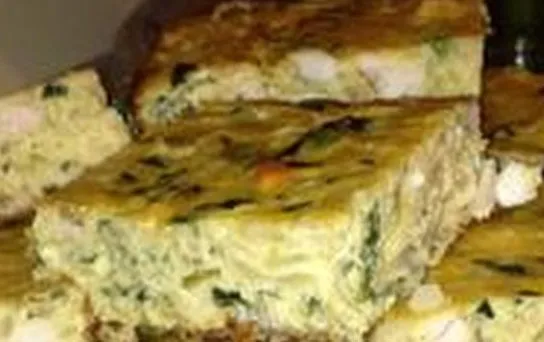
A Tunisian tajine is not a Moroccan tagine, and this dish is the clearest illustration of the difference. Moroccan tagine means a stew cooked slowly in a clay pot under a conical lid. Tunisian tajin, or tajin sibnekh, means a baked egg dish, set firm and cut into squares, much closer to an Italian frittata or a Spanish tortilla.
The confusion is entirely reasonable and entirely common. The same word travelled to two North African countries and attached itself to two different things. In Tunisia the dish is built from eggs beaten with whatever else is going: potatoes, chicken, spinach, peas, cheese, and the North African spices that mark it as Tunisian rather than European.
Harissa and ras el hanout do that marking. Harissa is Tunisia's chilli paste and its most exported product; ras el hanout is the layered spice blend used across the Maghreb. Together they give an egg bake a warmth and heat that a frittata does not have. It is usually served as a starter, though it is substantial enough to be a meal, and it is as good cold the next day as it is hot, which makes it packed lunch and picnic food across the country.