Nous utilisons des cookies essentiels au fonctionnement du site. Nous aimerions aussi déposer des cookies de mesure d’audience et des cookies publicitaires, uniquement avec votre accord. Vous pouvez choisir séparément pour chacun. Lire notre politique relative aux cookies

Loading
Recettes
Parcourez les archives par pays, par plat et par temps de cuisson.
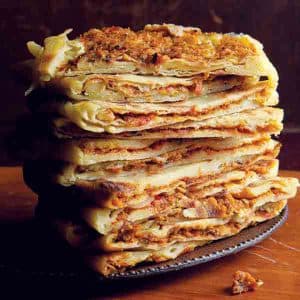
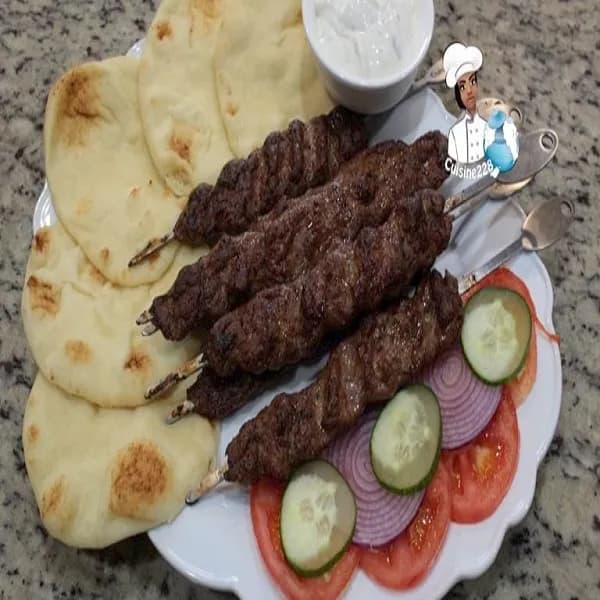
Hawawshi is pita stuffed with heavily spiced minced beef and baked until the meat cooks through and the bread crisps. It is Egyptian street food, sold across Cairo and Alexandria, where it is also known as baladi.
The story attached to it is unusually specific for a street food. It is credited to a butcher named Ahmed Al-Hawash, working in Cairo's Tawfeek Souq in the early 1970s, with the dish taking his name. The source hedges this as legend and that is the right level of confidence, it is widely repeated, plausible given how recent it is, and not documented in a way that settles it.
What makes it work is the raw filling. The meat goes into the bread uncooked, and the fat renders as it bakes, soaking into the pita from the inside while the outside crisps in the oven. Cooking the meat first would lose that entirely and give you a dry sandwich.
The wet-vegetable problem is the one thing to get right, and the source handles it well: the onion, pepper, jalapeño and parsley are processed and then drained in a sieve before they go near the meat. Skipping that step floods the bread.
Related dishes exist across the region, Lebanese arayes is the same idea with different spicing.
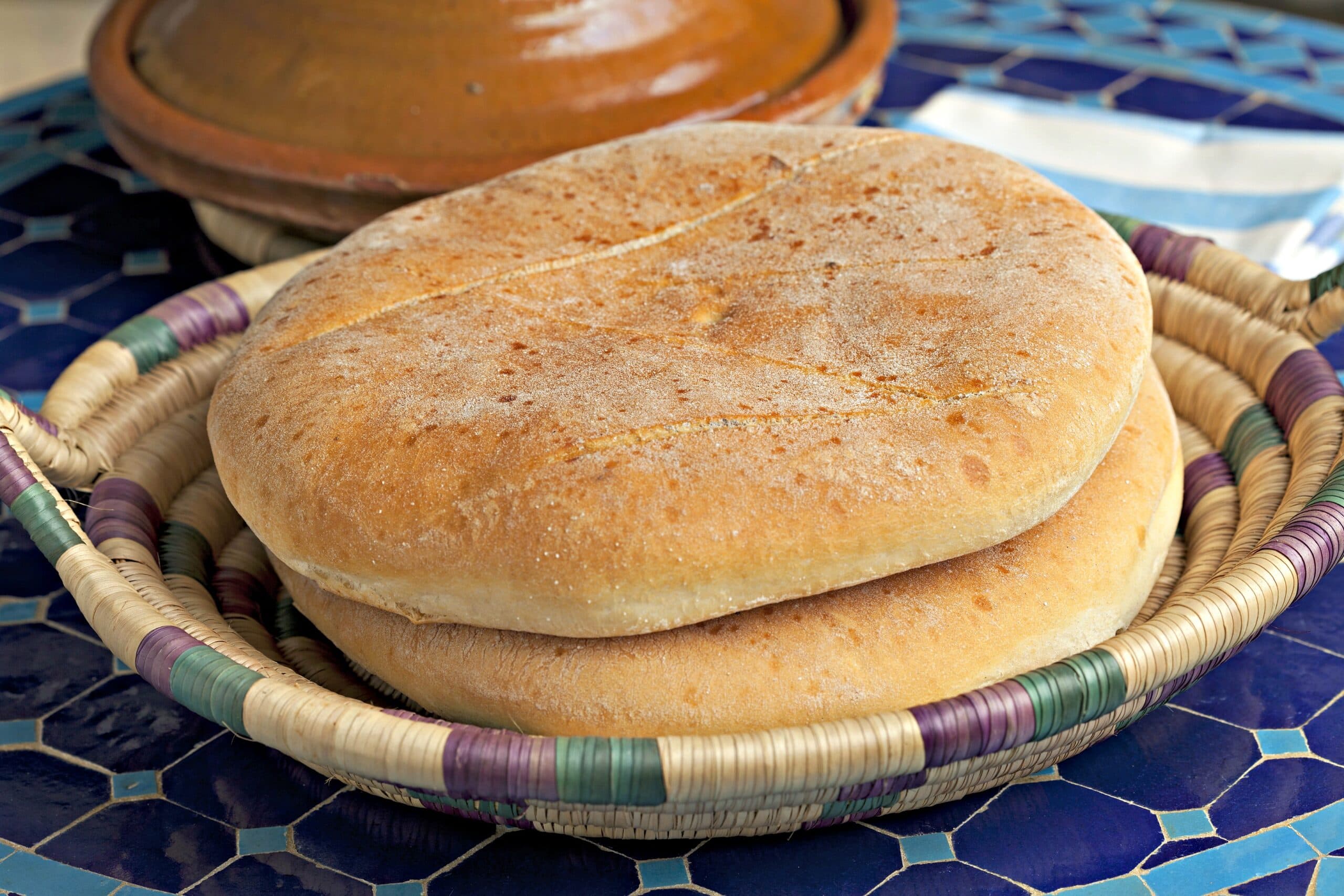
Moroccan Khobz is the daily bread of Morocco, a slightly leavened, round flatbread topped with sesame seeds and sometimes nigella seeds, baked until the crust is firm and golden and the interior is soft and chewy. It is present at every Moroccan meal from breakfast to dinner, used to scoop tagines, dip into olive oil, and accompany cooked vegetable salads. Moroccan families traditionally made their Khobz daily at home and took it to the communal neighbourhood baker (farran) to bake. This tradition persists in many Moroccan cities and villages, and the quality of local farran bread remains a point of neighbourhood pride. The bread's neutral, slightly wheaty flavour and sturdy texture make it the ideal vehicle for Moroccan food.
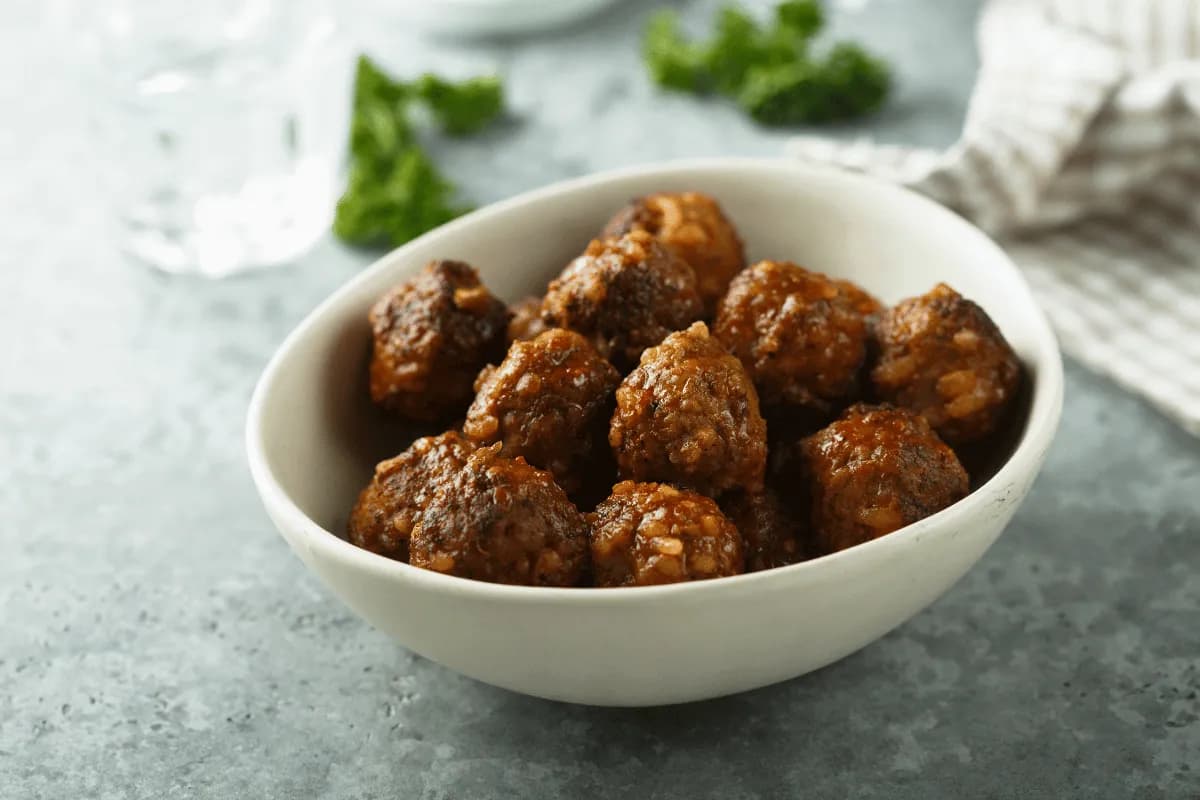
Tinned sardines puréed with egg and breadcrumbs, rolled into balls and cooked in a spiced tomato sauce. It is Moroccan, and the source is right that it is the forerunner of the sardine meatball sandwiches sold widely on the coast.
Sardines matter enormously to Morocco. The country is the world's largest exporter of tinned sardines, the fishery is a major part of the coastal economy, and sardines are cheap and abundant enough to be genuinely everyday food rather than a delicacy. That economic fact is why a sardine kefta exists at all, ground sardine is now sold ready-prepared at Moroccan fish markets, which the source notes and which tells you how ordinary the dish is.
The technique is standard kefta construction applied to fish. Puréeing rather than flaking is what makes the mixture hold together, since sardine flesh is soft and would fall apart otherwise, and the breadcrumbs and egg do the binding a meat kefta would not need.
The spicing, paprika, turmeric, ginger, coriander and cumin, is the Moroccan tagine vocabulary rather than anything specific to fish.
The source's discussion of sardine oil in paint and linoleum manufacture is accurate and not especially appetising; it has not been carried across. Nor have its omega-3 claims.
Ka'ak is a ring-shaped bread, crisp outside and soft within, scattered with sesame seeds. It is Libyan in this version, and made across a wide stretch of the Arabic-speaking world, Egypt, Iraq, Iran, Jordan, Lebanon, Palestine and Syria all have their own.
The shape is what defines it. Ka'ak is formed into a large ring, bigger and thinner than a bagel, which is why street vendors across the region can carry stacks of them on a pole or a cart. In Libya it is eaten at breakfast alongside hummus and falafel, and it comes in savoury and sweet versions.
The name travels further than the shape does. Ka'ak, sometimes kahk or kahqa, covers a whole family of baked goods across the Arabic-speaking world, from this ring bread to the small filled Egyptian cookies eaten at Eid, which are a completely different thing. The word means something closer to "baked good" than to any specific item.
One technique in this recipe is worth borrowing for other breads. A tray of water is placed in the bottom of the oven while it heats, so the loaves bake in a steamy environment. Steam keeps the crust soft for the first minutes, letting the bread rise fully before the surface sets, and then produces a thin, crisp finish.