Nous utilisons des cookies essentiels au fonctionnement du site. Nous aimerions aussi déposer des cookies de mesure d’audience et des cookies publicitaires, uniquement avec votre accord. Vous pouvez choisir séparément pour chacun. Lire notre politique relative aux cookies

Loading
Recettes
Parcourez les archives par pays, par plat et par temps de cuisson.
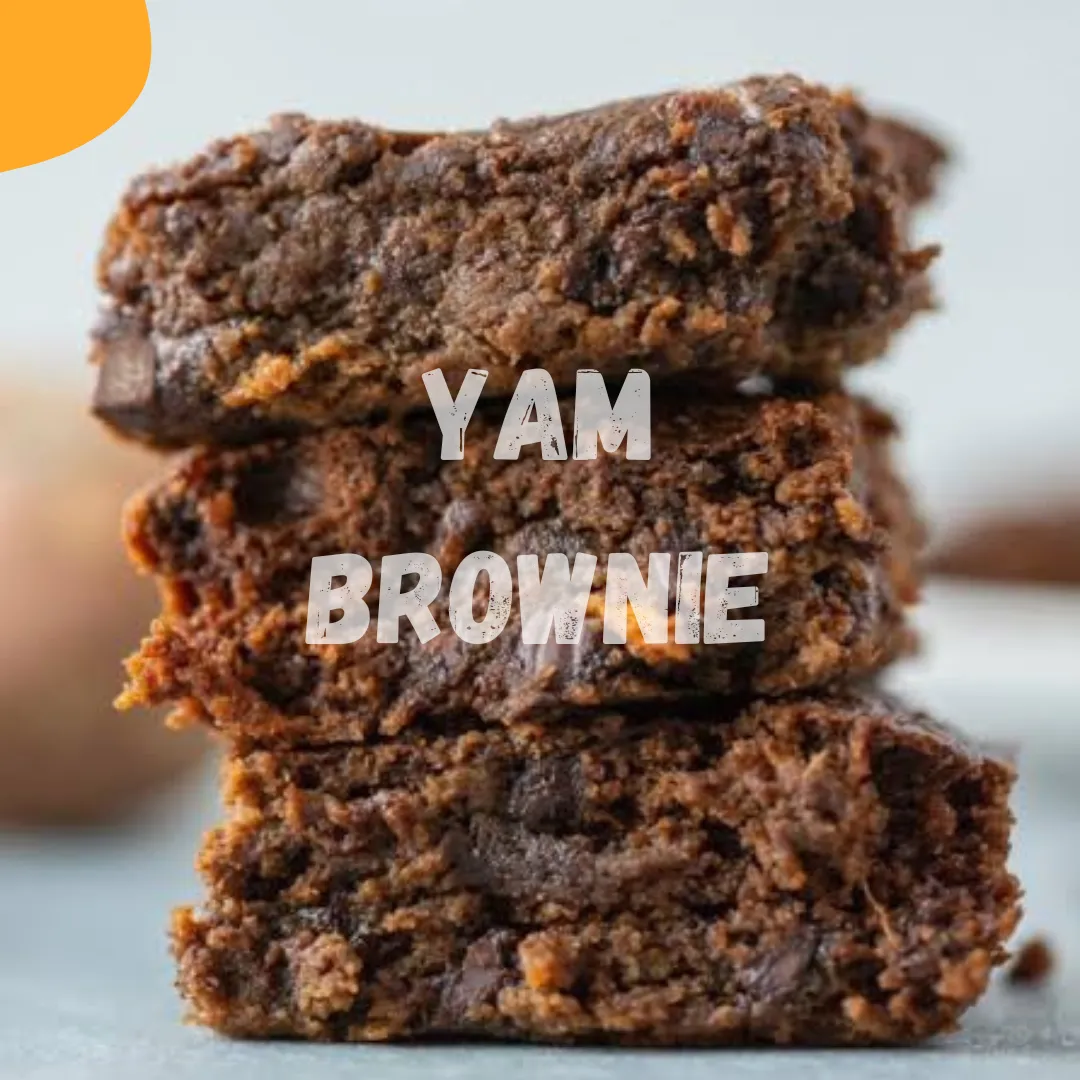
This is a brownie made with mashed yam in place of much of the flour, and it is a deliberate fusion rather than a traditional dish. The contributor presents it as exactly that: a twist on a familiar dessert using a Nigerian staple.
Yam is not a substitute ingredient in Nigeria; it is a central one, eaten pounded, fried, roasted and in porridge, and it carries cultural weight that potatoes do not. Using it in a brownie is a contemporary move, and it works on the same principle as sweet potato or black bean brownies: the starch gives body and moisture while the cocoa carries the flavour.
What results is denser and fudgier than a flour brownie, with an earthy background note from the yam. Two cups of mashed yam against half a cup of flour is a high ratio, so the texture is closer to a baked pudding than a cakey brownie. There is no tradition behind it and this entry does not invent one. It belongs to the growing body of Nigerian home baking that treats local staples as ingredients for Western formats, alongside plantain cakes and yam flour breads.
Whole tilapia scored, marinated in an oil-based spice mixture, oven-grilled, then coated in a fresh green pepper base and returned to the heat. The two-stage seasoning is what makes it, and it is a West African approach rather than a simple marinade.
The first stage is a dry-spice oil: vegetable oil with fish seasoning, white and black pepper, ginger, garlic, onion powder and lemon juice, worked into the cuts. The second is a green pepper base built in a food processor from green and red scotch bonnets, bell peppers, spinach, dill, coriander, ginger, garlic and onion, fried briefly in oil and then smeared over the part-cooked fish.
That green base is the interesting part. Blending leafy greens and fresh herbs into a pepper sauce is characteristic of Ghanaian and wider West African fish cookery, and it gives colour and a fresh, sharp finish that a marinade applied only at the start cannot. The scoring is not decorative either: two or three cuts on each side let both stages of seasoning reach the flesh rather than sitting on the skin. Tilapia is native to African fresh waters and is the fish most associated with Ghanaian grilling, usually eaten with banku.
Suya is skewered meat coated in yaji, a dry peanut based spice blend, and it is the best known street food in Nigeria. It comes from the Hausa people of the north, where it is also called tsire, and it spread from there across West Africa. Sudan has a close relative in agashe.
Yaji is what makes it suya rather than grilled meat. The blend is built on ground peanut, usually in the form of kuli kuli crushed to a powder, with ginger, chilli, onion powder and other seasonings, and the peanut is what gives suya its particular nuttiness and the slightly gritty coating that clings to the meat. Meat without yaji is not suya, whatever else is done to it.
Beef and ram are the traditional cuts, along with kidney, liver and tripe, and chicken is the newer arrival that has become common. It is sold at night from roadside grills, cut on a board and handed over in newspaper with sliced raw onion, tomato and cabbage, and the raw onion alongside the hot spice is not a garnish but part of how it is eaten. The one thing worth knowing before making it is that yaji contains peanut, which matters to anyone with an allergy.
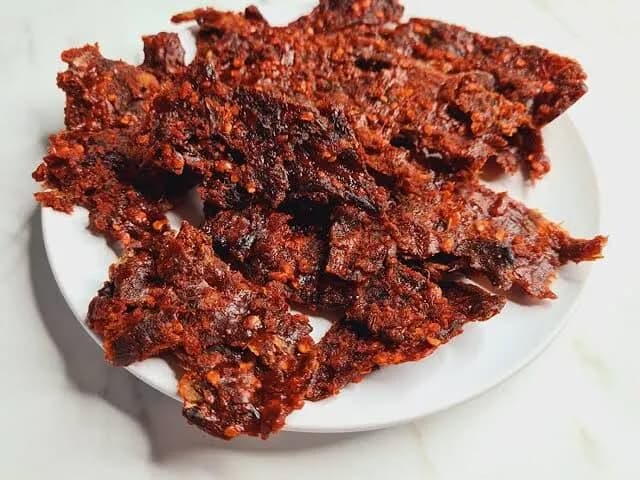
Kilishi is Northern Nigerian dried meat, and it is a considerably more deliberate thing than the jerky it is usually compared to. Beef is sliced thin enough to be translucent, dried, coated in a paste built on ground groundnuts and spices, dried again, and briefly finished over heat. The groundnut coating is what separates kilishi from every other dried meat in the world.
It is a preservation technology first. In the Sahel, where refrigeration was not available and the dry season is long, thin slicing and sun drying kept meat edible for months, and the spice paste added flavour while doing further preservation work. That the result is now sold as a delicacy rather than as survival food does not change what it was built for.
Kilishi is Hausa, sold in markets across the north and increasingly across the whole of Nigeria and among the diaspora, where it travels well precisely because it was designed to. It is eaten as a snack rather than as part of a meal, torn into pieces, often with a cold drink. The heat level varies by maker, and the yaji spice logic that runs through northern Nigerian cooking, the same groundnut and pepper base used on suya, is visible in it.