Nous utilisons des cookies essentiels au fonctionnement du site. Nous aimerions aussi déposer des cookies de mesure d’audience et des cookies publicitaires, uniquement avec votre accord. Vous pouvez choisir séparément pour chacun. Lire notre politique relative aux cookies

Loading
Recettes
Parcourez les archives par pays, par plat et par temps de cuisson.
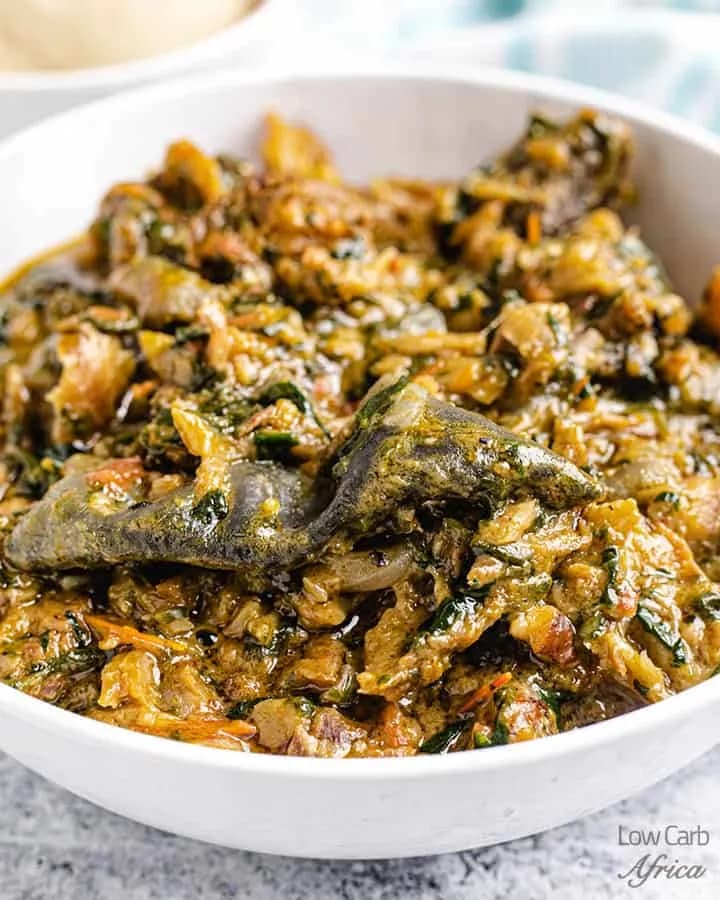
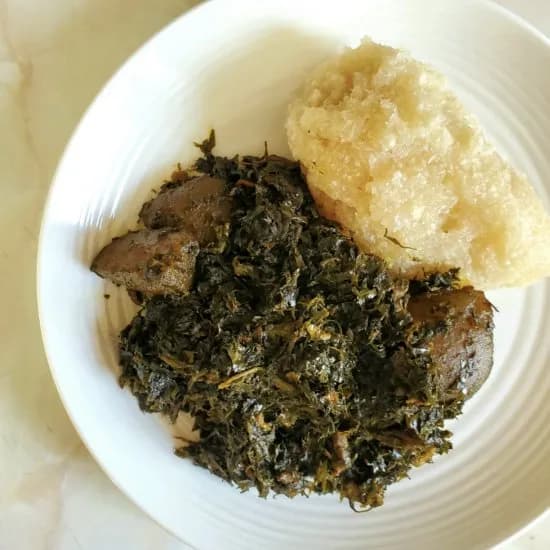
Fumbua is chopped wild greens cooked with smoked fish, peanut butter and palm oil into a thick, savoury stew. It comes from the Democratic Republic of the Congo and is eaten in Angola too.
**It contains peanut butter, which the title gives no indication of.**
The greens the dish is named for are fumbwa, the leaves of *Gnetum africanum*, the same wild forest vine known as eru in Cameroon and afang or okazi in Nigeria. That single plant supports a whole cluster of Central and West African dishes, each with its own name and its own treatment, and fumbua is the Congolese one. Its distinguishing feature within that group is the peanut butter, which thickens the stew and gives it a richness that eru and afang do not have.
Peanuts and palm oil doing the work together is characteristic of Congo basin cooking generally, and it is the same combination that underpins moambe, the Congolese national dish.
The source is realistic about substitution, and rightly so. Genuine fumbwa leaves are hard to find outside the region, and it recommends spinach, kale or collard greens instead. That is a fair compromise, the texture will be softer and the flavour milder, but the dish still works.
The source's low-carbohydrate framing has not been carried across.
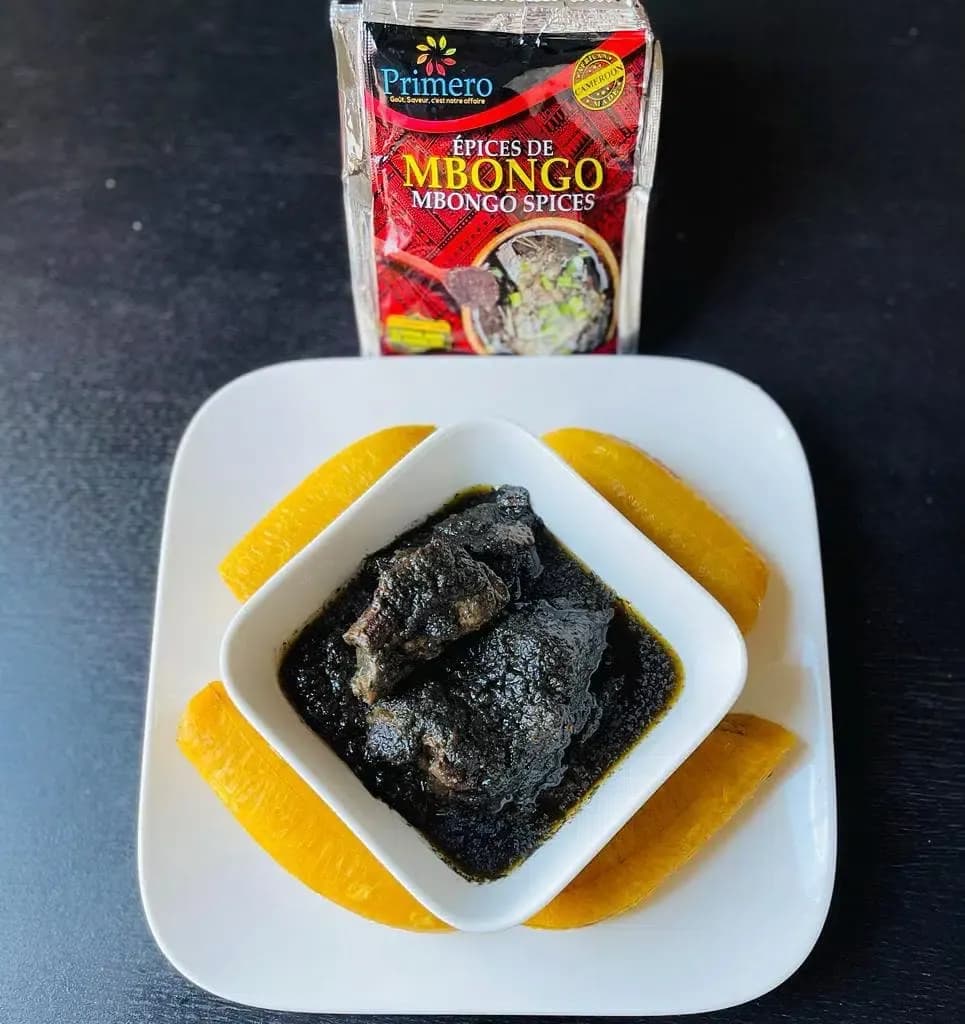
Njama njama is greens blanched, squeezed dry and then cooked through a tomato, onion and chilli base. It is one of the most eaten vegetable dishes in Cameroon, particularly in the North West Region, and it is usually served with corn fufu.
The plant it is named after is African nightshade, *Solanum scabrum*, also called huckleberry, a leafy green grown across Cameroon and to a lesser extent Nigeria and Kenya. It is not the same as the toxic nightshades the name might suggest; the cultivated leaf is a staple vegetable and has been for a very long time.
The source is honest about a substitution that most sources would hide, and it deserves credit for it: this recipe uses turnip greens rather than actual njama njama, because the real thing is hard to find outside Cameroon. Collard greens and watercress are named as alternatives. The result is a good dish but it is not, strictly, njama njama, and that has been flagged.
The technique is worth taking seriously. Blanching, then an ice bath, then squeezing out as much water as possible, is what keeps the greens green and stops them watering down the tomato base. Four bunches of raw greens reduce to about three cups cooked.
Khati khati, grilled chicken in tomato sauce, is the usual partner.
Eru soup is finely shredded eru leaves cooked down with waterleaf or spinach, palm oil, crayfish, smoked fish, beef and cow skin. It is Cameroonian, most closely associated with the Bayangi of the southwest, and it is one of the country's best-known dishes.
Eru is the common name for two closely related climbing vines, *Gnetum africanum* and *Gnetum buchholzianum*, gathered wild from the forest rather than farmed. The leaves are tough and leathery, which is why the method insists on soaking them for hours, or on cooking them with kanwa. That toughness is also why eru is always shredded very finely, much more finely than any cultivated green would be.
The pairing with a soft green is not optional. Waterleaf traditionally, or spinach where waterleaf cannot be found, provides the moisture and bulk that eru alone would not, and the ratio is roughly one to one. Palm oil goes in generously and late.
The Nigerian relative is afang soup, made by the Efik and Ibibio of Cross River with the same leaf under the name afang or okazi. The two are close cousins: afang tends to be soupier and eru is more finely ground. They are kept as separate pages here because they are genuinely separate national dishes, and that is flagged.
The source's health claims about eru's protein and mineral content have not been carried across.
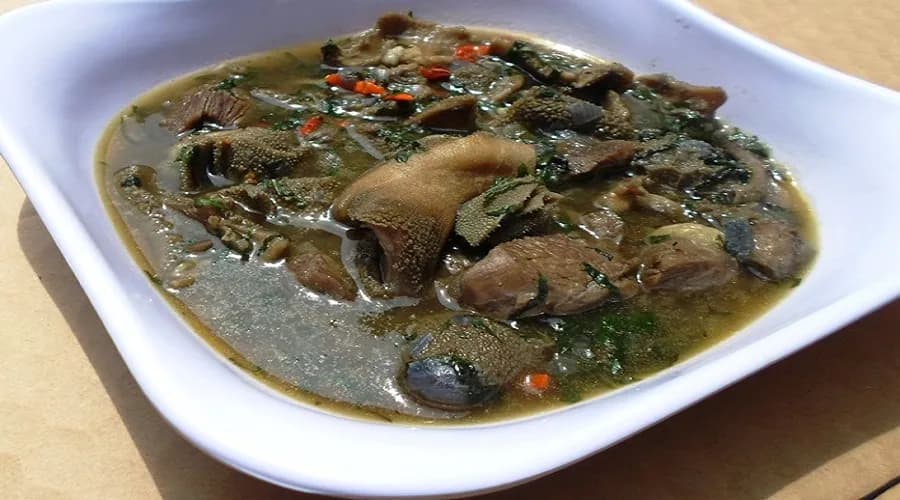
Pepper soup is the thin, fiercely spiced West African broth built on meat or fish, chilli and a set of aromatic seeds that give it a flavour nothing else reproduces. This version comes with cocoyam or plantain cooked in the pot, which turns a light soup into a full meal.
The ingredients place it in Cameroon rather than Nigeria, whatever the general framing suggests. Njansang, the crushed seed used as a thickener and flavouring, and bush pepper are Cameroonian pantry staples, and Cameroon pepper, the dark powder ground from dried scotch bonnets, appears throughout. Nigerian pepper soup leans instead on ehuru, the African nutmeg, and on utazi and uziza leaves. They are cousins rather than the same soup.
Pepper soup is served in restaurants and bars across the region, and it is genuinely a category rather than a single recipe: catfish, goat meat, chicken, cow foot and assorted offal all have their own versions, several of which are on this site.
The source makes extensive medicinal claims for it, that it cures fevers, clears congestion and aids weight loss. None of that has been carried across. It is a hot, restorative bowl of soup, which is a reasonable thing to say about it, and it is not medicine.