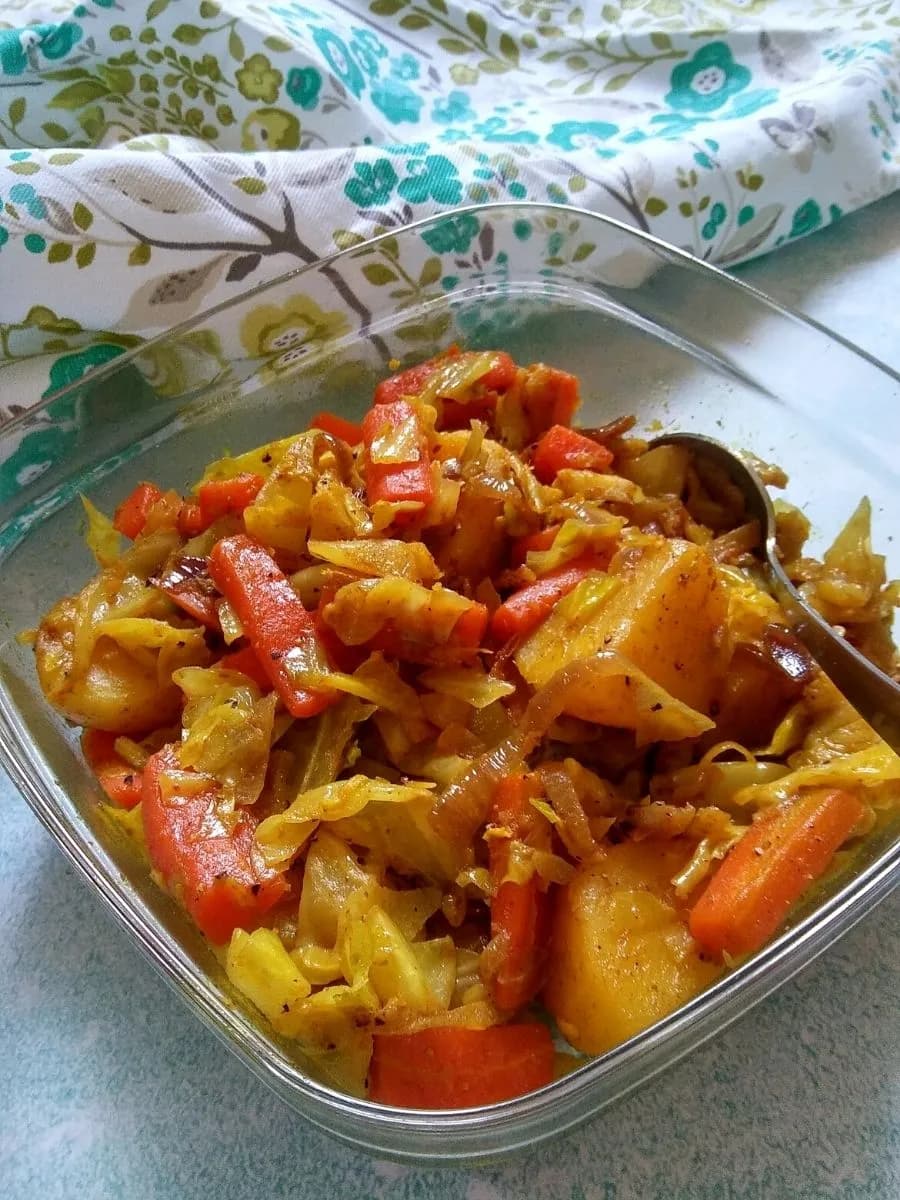
Ethiopian Berbere Cabbage - Atakilt Wat
4.34.33 out of 5, 3 ratings1 hr 5 min


Cookies sur African Food Network
Nous utilisons des cookies essentiels au fonctionnement du site. Nous aimerions aussi déposer des cookies de mesure d’audience et des cookies publicitaires, uniquement avec votre accord. Vous pouvez choisir séparément pour chacun. Lire notre politique relative aux cookies

Parcourez les archives par pays, par plat et par temps de cuisson.
Atakilt wat is the vegetable stew of the Ethiopian table: cabbage, carrot and potato cooked down with onion, garlic and spice until they are tender without collapsing. The name is Amharic, atakilt for vegetable and wat for stew, which describes it exactly. Its place is on the shared injera platter rather than on a plate of its own. An Ethiopian meal is served as several dishes arranged together on a single round of injera, and atakilt wat is almost always among them, providing a mild, sweet counterweight to the sharper and hotter wat alongside it. It is the dish that gives the platter its balance. That role also makes it central to fasting. The Ethiopian Orthodox calendar includes many days on which no animal products are eaten, and the country's vegan cooking is consequently deep and long practised rather than recent. Atakilt wat contains nothing animal at any point, which is why it appears as reliably during fasting periods as outside them. Berbere, the chilli and spice blend built on chilli, garlic, ginger, fenugreek and a long list of aromatics, is what carries it, though this version keeps the quantity modest so the vegetables stay forward.
Les mieux notées
1 hr 5 minEasyEthiopia · East Africa
Recette de Debby · Africook
Rien ici pour le moment
Tout effacer
Les mentions alimentaires sont fournies par les contributeurs à titre indicatif. Elles ne sont pas vérifiées par AFN et dépendent des produits que vous achetez. En cas d’allergie grave, vérifiez vous-même chaque ingrédient. Cuisine, allergies et votre propre jugement