Nous utilisons des cookies essentiels au fonctionnement du site. Nous aimerions aussi déposer des cookies de mesure d’audience et des cookies publicitaires, uniquement avec votre accord. Vous pouvez choisir séparément pour chacun. Lire notre politique relative aux cookies

Loading
Recettes Egypt
Parcourez les archives par pays, par plat et par temps de cuisson.
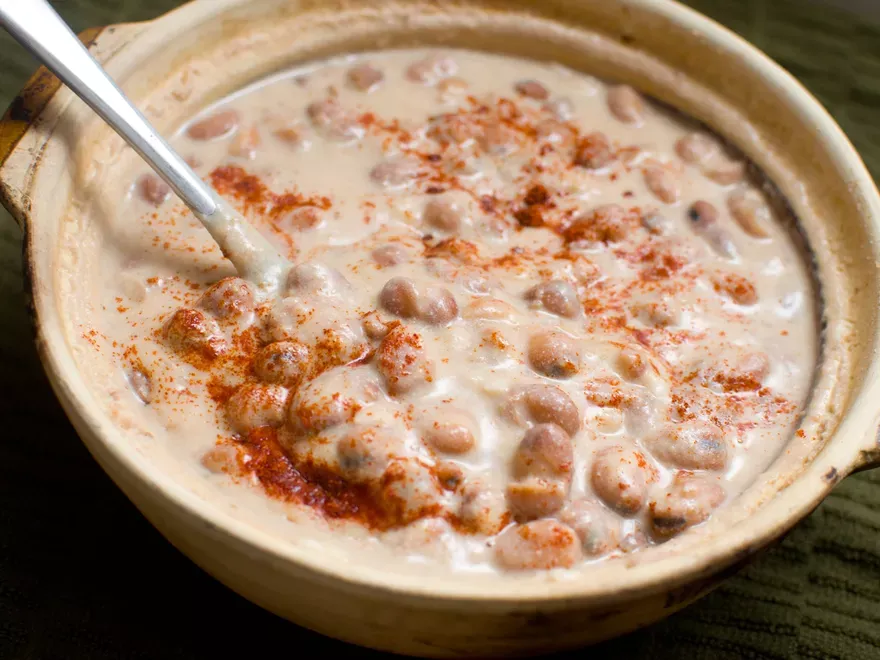
Ful medames is stewed fava beans dressed with olive oil, cumin, garlic and lemon, and it is Egypt's national dish. It is eaten at any hour, though breakfast is when it belongs most, and it is sold from carts across Cairo and Giza in the mornings.
Traditionally it is cooked and served in a large metal jug, the qedra, over a very long slow heat, often overnight, which is why street ful has a depth that a quick home version does not. What the beans are dressed with varies endlessly: parsley, onion, chilli, tomato, hard eggs, tahini.
Its versions across the region are worth knowing. In Somalia, fuul is a breakfast staple served with eggs and laxoox or canjeero flatbread, spiced with xawaash, the blend of cumin, coriander, cardamom, cloves, turmeric and more that makes it noticeably hotter than the Egyptian version. In Morocco it is bissara, made from fava beans and split green peas cooked with garlic, eaten especially in the north during cold weather. This particular recipe includes tahini, which is a Levantine addition rather than a classic Egyptian one, and it uses tinned beans rather than the overnight cook.
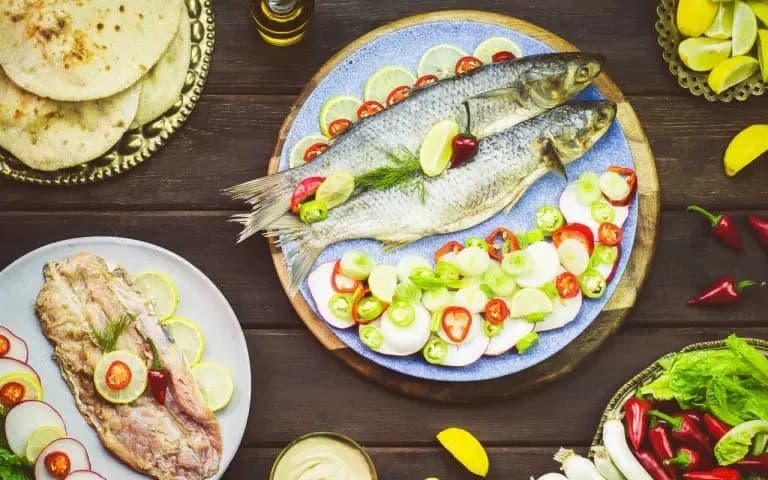
Feseekh is mullet salted heavily and left to ferment for two to three weeks until it turns silvery and develops its notoriously powerful smell. It is eaten at Sham El-Nessim, the Egyptian spring festival whose origins reach back to pharaonic times, and it is one of the oldest continuously eaten preparations anywhere.
**This preparation carries a serious and well-documented food safety risk, and it must be stated plainly.** Improperly prepared feseekh causes botulism poisoning in Egypt every year, sometimes fatally, and the Egyptian health ministry issues public warnings before Sham El-Nessim annually. The conditions the method describes, fish sealed in airtight containers, without refrigeration, for weeks, are precisely those in which *Clostridium botulinum* produces its toxin. In Egypt feseekh is traditionally bought from licensed fassakhani, specialist salters who do this professionally, and the strong advice is to buy it from a reputable source rather than attempting it at home.
The recipe is recorded here because it is a genuine and historically significant part of Egyptian foodways, and because AFN's job is to document rather than to omit. It is not recommended as a home project.
One error worth noting: feseekh is made from mullet, and the source's ingredient list specifies herring, a different fish, and the basis of a different preparation, renga, which is eaten alongside it.
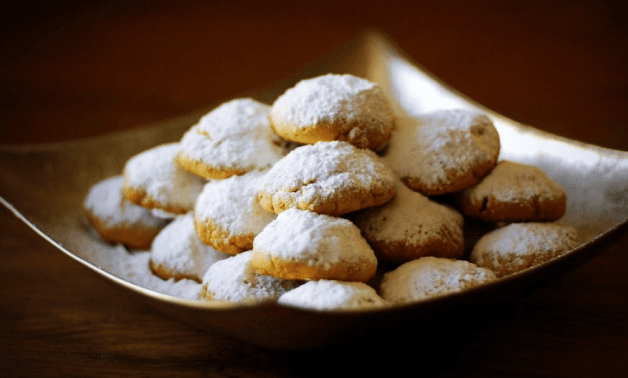
Kahk are round Egyptian shortbread-style cookies, buttery and crumbly, buried under a heavy layer of icing sugar, and made for Eid.
Their history is unusually well documented for a biscuit. Kahk is believed to date to Ancient Egypt: carvings showing people making it have been found in temple ruins at Memphis and Thebes, and a recipe was recorded in the Great Pyramid of Khufu at Giza. Few foods anyone still eats have that kind of paper trail.
They are made in enormous quantity in the weeks before Eid al-Fitr, and the making is social, families and neighbours gathering to shape trays of them together, which is as much the tradition as the eating.
Fillings vary. Plain kahk is common, but so are versions stuffed with agameya, a paste of honey, ghee, flour and nuts; with dates; with pistachio or walnut; or with lokum.
The texture is what people judge them on: a proper kahk should collapse in the mouth rather than snap. That comes from ghee and from not overworking the dough.
The icing sugar is not a garnish, it is applied generously and is part of the thing.

