Nous utilisons des cookies essentiels au fonctionnement du site. Nous aimerions aussi déposer des cookies de mesure d’audience et des cookies publicitaires, uniquement avec votre accord. Vous pouvez choisir séparément pour chacun. Lire notre politique relative aux cookies
Loading
Recettes Côte d'Ivoire
Parcourez les archives par pays, par plat et par temps de cuisson.
Alaskan king crab legs, steamed briefly and served with melted butter and lemon. There is no African connection here and none is claimed: king crab is a cold-water North Pacific species fished off Alaska and the Russian Far East, and this is the standard American way of serving it.
The single most useful thing to know is that king crab legs are sold already cooked. They are steamed aboard the boat or on the pier immediately after they are caught, then frozen, because crab meat spoils very quickly once the animal dies. What you are doing at home is reheating, not cooking, and that is why every instruction here is measured in a few minutes rather than tens of them. Treat them like a raw ingredient and you will get rubbery, stringy meat.
The source is right to steer away from submerging them in water, which waterlogs the meat and washes out the flavour that the initial cooking sealed in. Steaming and a foil-wrapped spell in the oven both work because they warm the meat through without soaking it.
Africa has a long coastline and a serious crab tradition of its own, Ghanaian akotonshi, stuffed crab served in the shell, is on this site, but it is built around warm-water species, and king crab is not one of them.
Cooked rice bound with minced liver, onion and egg, rolled into balls, crumbed and deep-fried. The contributor learned it from their grandmother in Ivory Coast.
The dish belongs to a very widely distributed family, the fried rice croquette. Italian arancini, Middle Eastern kibbeh, Nigerian rice balls and this all work on the same principle: a starch cooked, cooled, bound with something rich and shaped, then fried so the outside crisps around a soft interior. The cooling is not optional in any of them. Warm rice does not hold its shape and the balls collapse in the oil.
Offal is the other thing worth taking seriously. Liver and other variety meats are used across West African cooking as good ingredients rather than as economies, kilishi, dambu, gizdodo and asun all belong to the same attitude. Liver in particular is soft enough to bind rice without any additional fat, which is exactly why it works here.
Two practical notes. The double coating, breadcrumbs then egg wash, is the reverse of the usual order, and the source may have it backwards; the conventional sequence is flour, egg, then crumbs.
The source's nutritional inventory has not been carried across.
Pepper soup runs across West Africa and each country handles it differently. The Ivorian version is distinguished by what happens to the vegetables: whole tomato, onion and aubergine go into the pot with the meat and the spices, cook until soft, are lifted out and crushed, and then go back into the broth. That produces a thicker, more textured soup than the clear Nigerian version.
The aubergine is the marker. It breaks down into the broth and gives it body, which is not something the Nigerian pepper soups do, and it is what makes the Ivorian version recognisable. Goat is the usual meat, though the dish takes fish, shrimp, tripe, oxtail, chicken and beef equally well, and several can go in the same pot.
It occupies the same place in Ivorian life that pepper soup occupies elsewhere in the region: it is what people eat when they are cold, unwell or want something restorative, and it is quick enough for a weeknight at under an hour. It is served with foutou banane, the pounded plantain, or with rice. The heat is adjustable and Ivorians say so openly, though the authentic version is very hot indeed.
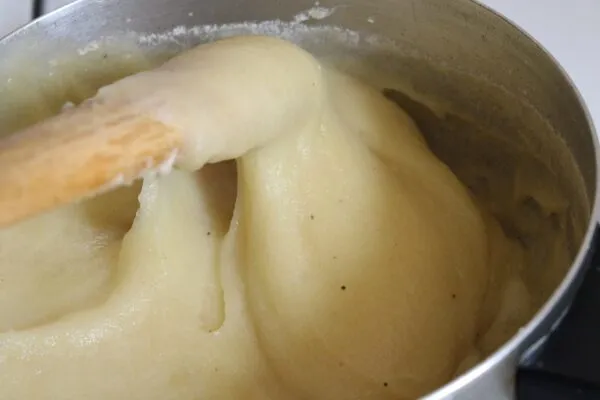
Fufu is starch pounded to a smooth elastic mass, and it is among the most widely eaten things in West and Central Africa. The word comes from Twi, spoken in Ghana and Côte d'Ivoire, where it means to mash or to combine, and the sound of a mortar and pestle working in rhythm is the sound of fufu being made.
What goes into it depends entirely on where you are. West Africa favours white yam, sometimes with plantain. Central Africa favours cassava. Plantain, cocoyam, semolina, rice and combinations of flours all appear, and each gives a different texture and a slightly different name. That variability is why fufu is better understood as a category than a recipe.
It crossed the Atlantic with enslaved West Africans and survived. Foo foo and fou fou in the Caribbean are made with plantain or cornmeal, coocoo in Barbados is the same idea, and Cuban, Jamaican and Puerto Rican versions carry sweet plantain and pork fat. Whatever the base, it is eaten the same way: a piece is pulled off with the fingers, an indentation is pressed in with the thumb, and it is used to scoop soup or stew. It is never eaten alone, and its slightly tangy, near neutral flavour is what lets a heavily seasoned soup do the talking.