Nous utilisons des cookies essentiels au fonctionnement du site. Nous aimerions aussi déposer des cookies de mesure d’audience et des cookies publicitaires, uniquement avec votre accord. Vous pouvez choisir séparément pour chacun. Lire notre politique relative aux cookies

Loading
Recettes
Parcourez les archives par pays, par plat et par temps de cuisson.
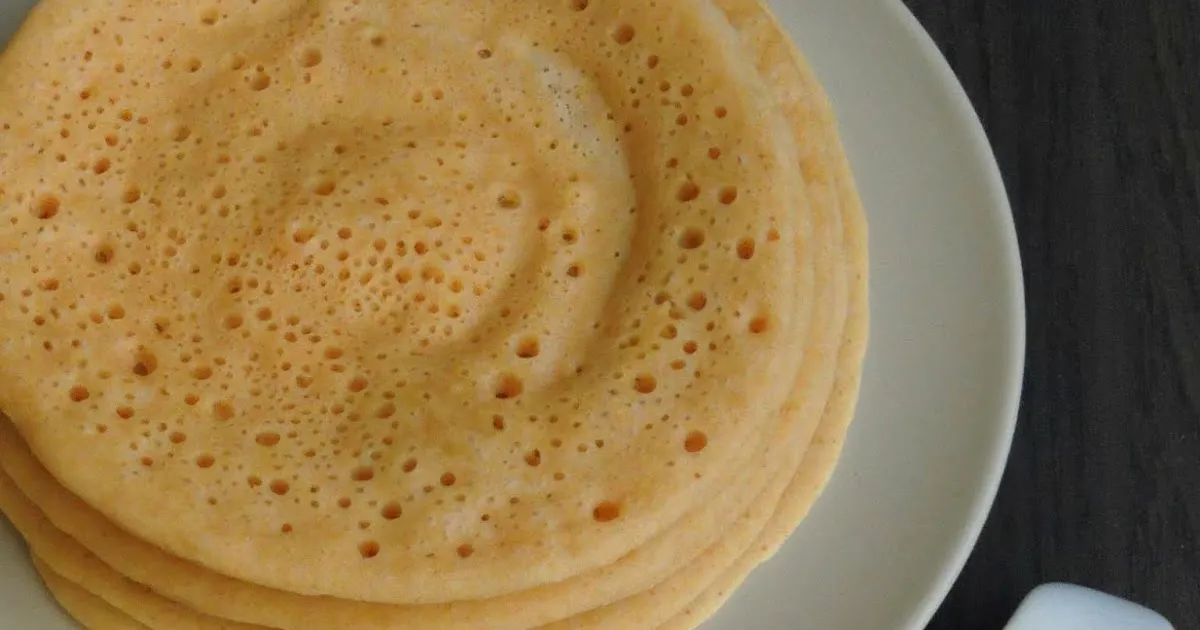
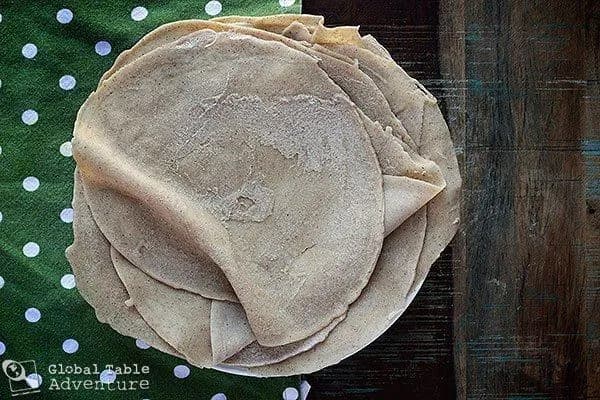
Gorraasa is a thick, spongy Sudanese flatbread cooked in a pan from a pourable batter rather than a kneaded dough. It is one of Sudan's two national breads, alongside kisra, and it is used as a tool as much as a food.
Its purpose shapes its texture. A round of gorraasa goes under stewed meat or a saucy dish, and pieces are torn off to pick food up, so it needs to be soft enough to tear cleanly and springy enough not to disintegrate under sauce. That is why it is thick and slightly elastic rather than crisp or brittle. It is often eaten with damaa, the Sudanese meat and tomato stew, in a combination known as gorraasa be dama.
Two things in the method are worth taking seriously. The batter must be thick, pancake-batter thick, because a thin one will not hold the bubbles that give the bread its sponginess. And it is cooked on one side only, over medium heat, until the top dries out completely. The heat needs watching: too high and the base burns before the top sets.
The source is emphatic about salting the batter properly, and it is right. Gorraasa made without enough salt is bland in a way that no accompaniment fixes, because there is nothing else in it.
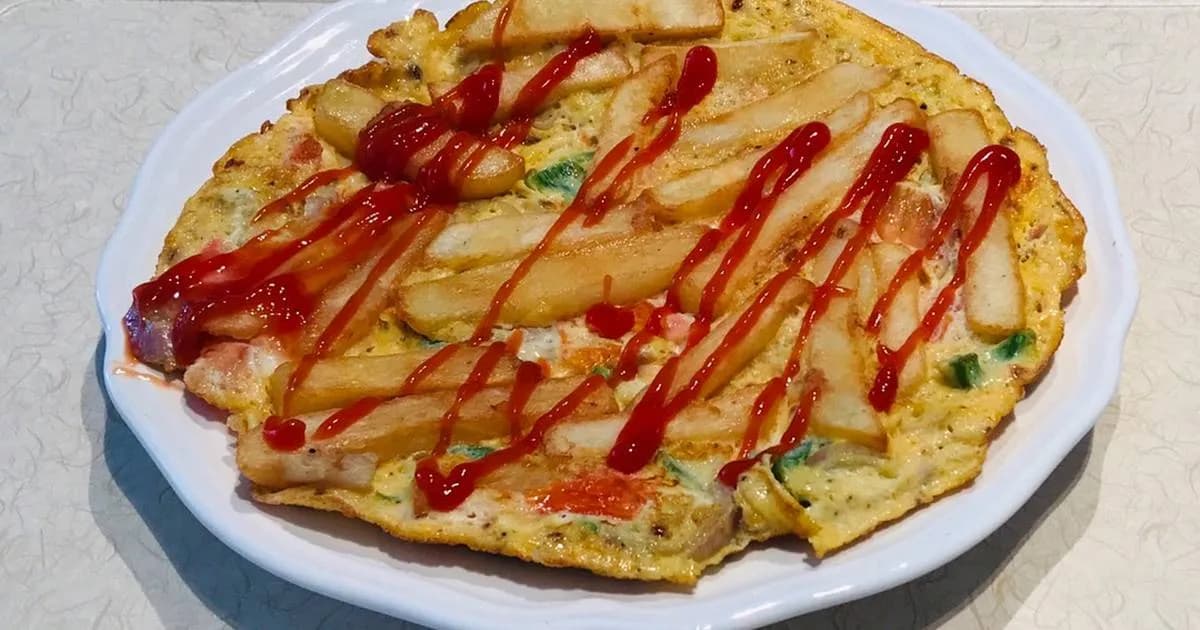
Chips mayai is chips set into an omelette and cooked as a single flat cake. The name is literal, chipsi is chips, mayai is eggs in Swahili, and it is one of the defining Tanzanian street foods, also known as zege.
It is sold from stalls across the country and cooked to order: fries already made, eggs beaten with chopped onion, tomato, green pepper and coriander, the two combined in a hot pan and turned once. Minced meat goes in where a heartier version is wanted. It arrives with kachumbari, the East African tomato and onion salad, and tomato sauce.
The comparison the source draws with Spanish tortilla is apt and worth thinking about, because the difference is instructive. A tortilla española uses potato sliced thin and cooked gently in oil until soft, folded into egg and set slowly into something dense and custardy. Chips mayai uses chips, already fried, already crisp, and cooks fast, so the potato keeps some of its structure and the egg stays lighter. Same two ingredients, entirely different results, and the potato cut is what does it.
It is eaten at any hour: breakfast, a late-night meal after drinking, or a snack in between. Nothing about it is formal.
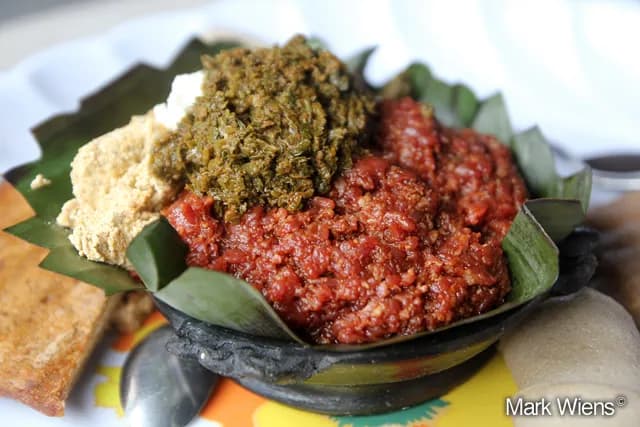
Kitfo is very finely minced raw beef, warmed through with spiced clarified butter and chilli. The name says what it is: kitfo comes from the Amharic for chopping finely. It is Ethiopian and Eritrean, and it is celebration food, a dish for major holidays, weddings and family occasions rather than an ordinary weeknight.
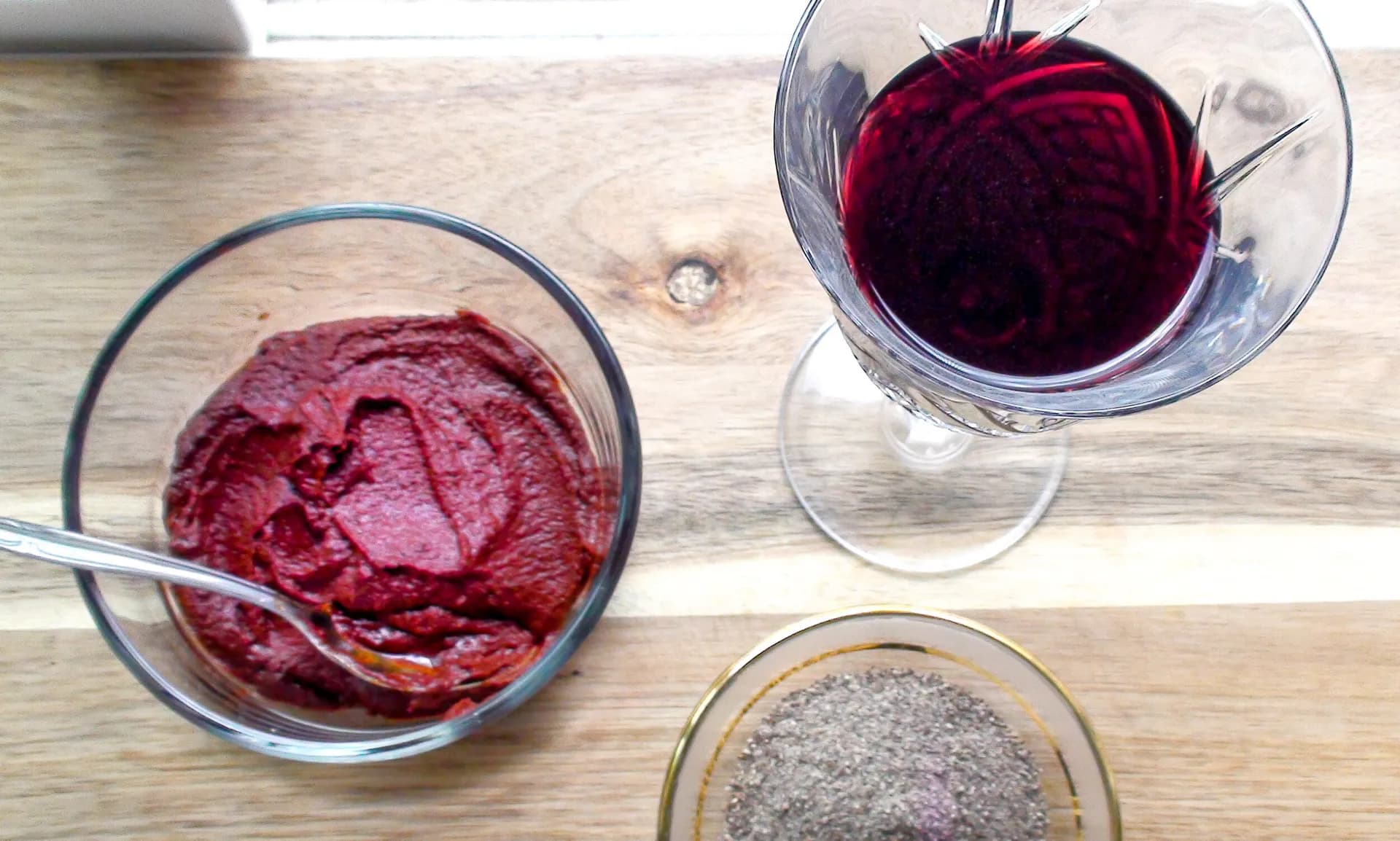
Two things define it. The first is niter kibbeh, the clarified butter infused with garlic, ginger, cardamom, fenugreek and other spices, which is what carries flavour into meat that is never exposed to direct heat. The second is mitmita, the fierce Ethiopian chilli blend built on pili-pili peppers with cardamom, cloves and salt. Both are what separate kitfo from any other steak tartare.
Doneness has its own vocabulary, and the names matter because they are what you order by. Tere kitfo is fully raw. Leb leb is warmed just enough to melt the butter through it. Yebesele is taken further still. Gored gored, which is on this site as its own recipe, is the closely related dish where the beef is cut into cubes rather than minced, same tradition, different knife work, noticeably different in the mouth.
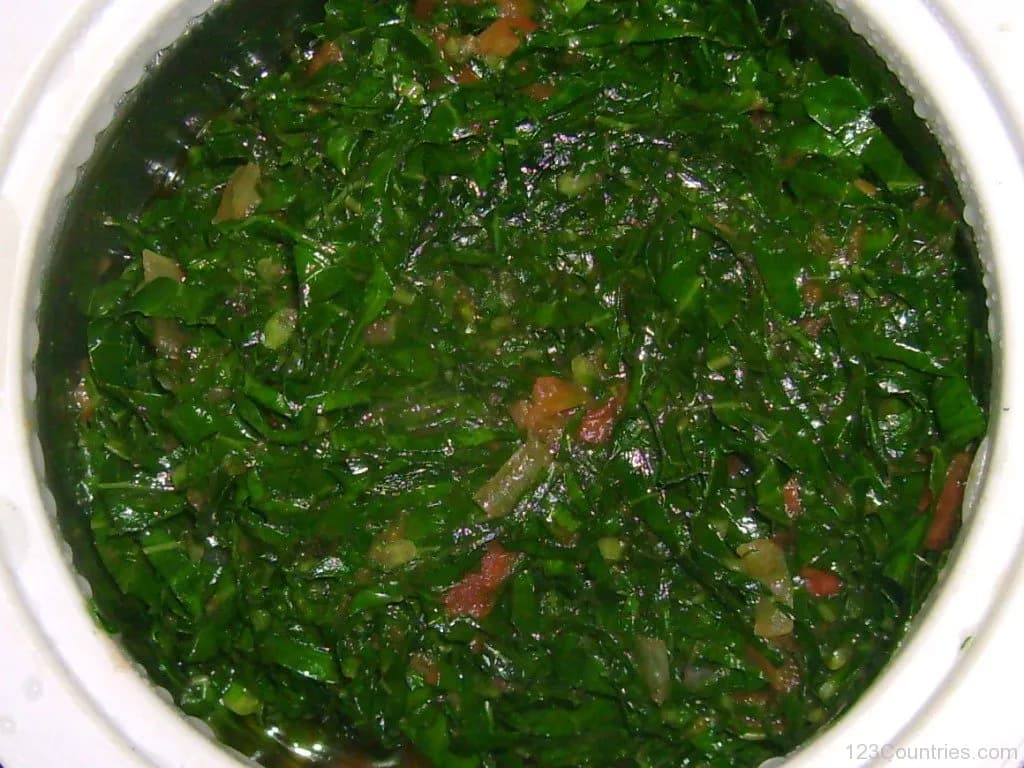
It is served with injera, and usually alongside gomen, the collard greens, and ayib, the fresh Ethiopian cheese, whose mildness is there to answer the heat.
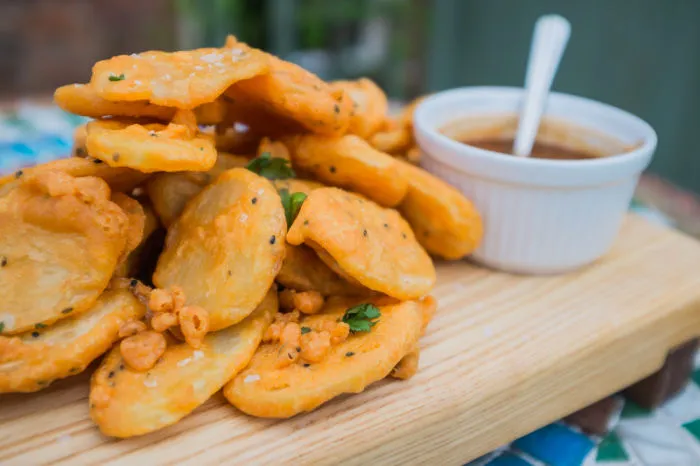
Bhajias are thinly sliced potatoes coated in a spiced gram flour batter and fried until crisp, and they are an East African street snack, popular in Kenya and Tanzania. They arrived from India and have been made locally long enough to be entirely at home.
Gram flour is what makes them work and what makes them naturally gluten free. Milled from chana dal, it fries into a crisp shell in a way wheat flour does not, and it carries an earthy, slightly nutty flavour of its own. Rice or corn flour goes in alongside for extra crispness.
They belong to the same Indian inheritance in East Africa as chapati, samosas and pilau masala, brought by Indian merchants and labourers over the nineteenth and twentieth centuries and absorbed completely into Kenyan and Tanzanian eating. What has changed locally is what goes with them: kachumbari, the tomato and onion salad, is the standard Kenyan accompaniment rather than the chutneys of India, though tamarind chutney and ketchup are both used. The batter should coat the back of a spoon, and it will thin as the potatoes go through it, so more flour is added as you go.