Nous utilisons des cookies essentiels au fonctionnement du site. Nous aimerions aussi déposer des cookies de mesure d’audience et des cookies publicitaires, uniquement avec votre accord. Vous pouvez choisir séparément pour chacun. Lire notre politique relative aux cookies
Loading
Recettes
Parcourez les archives par pays, par plat et par temps de cuisson.
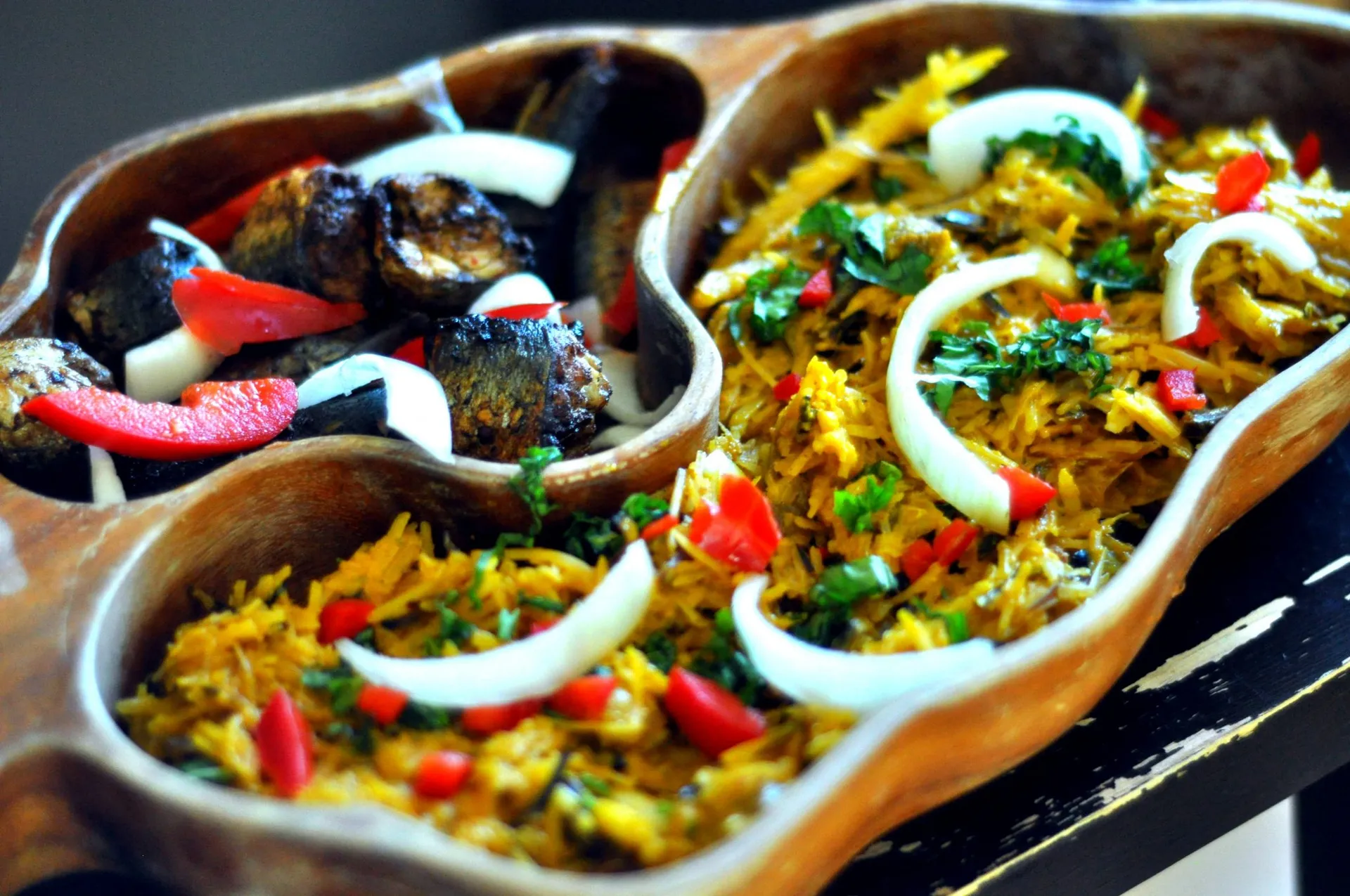
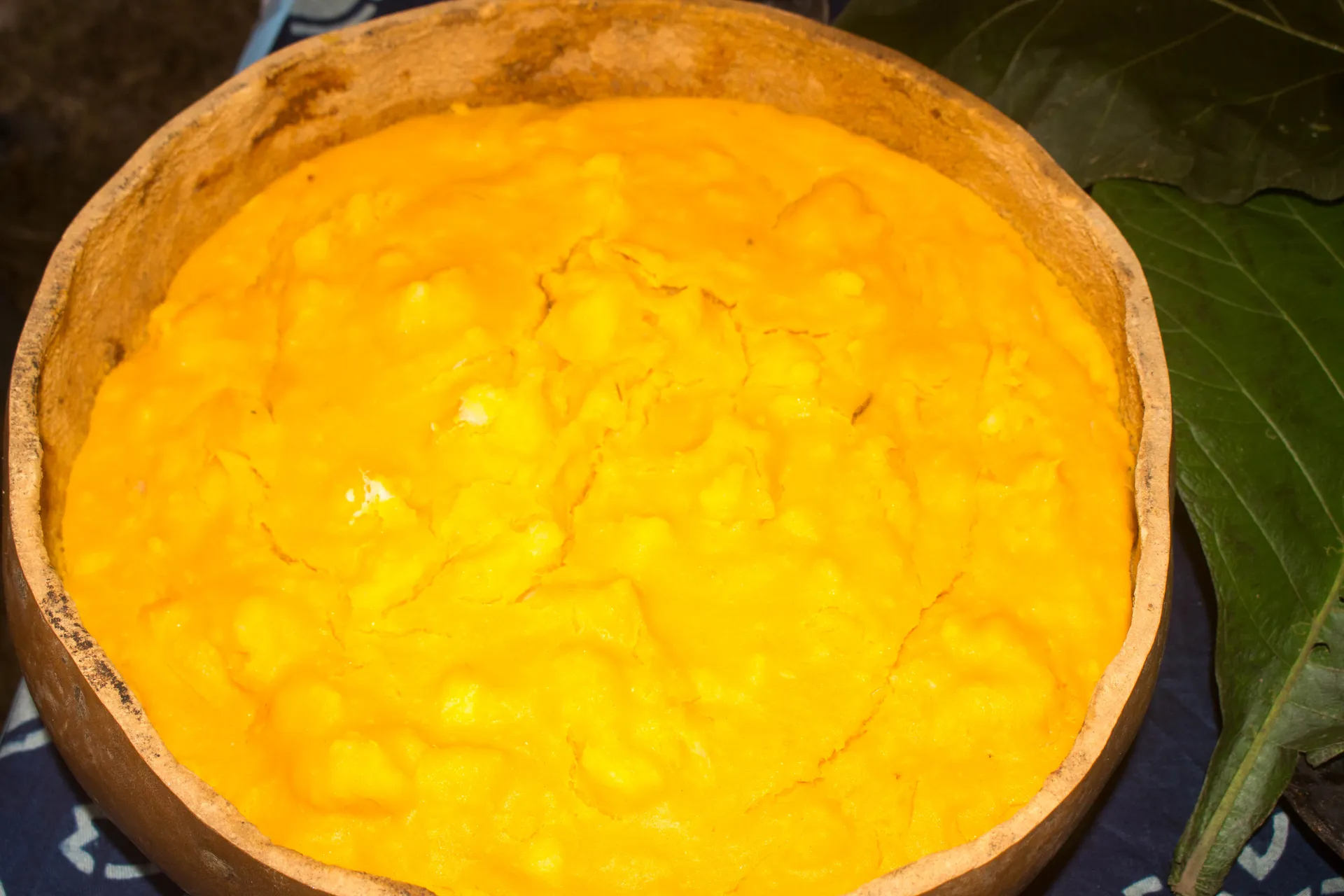
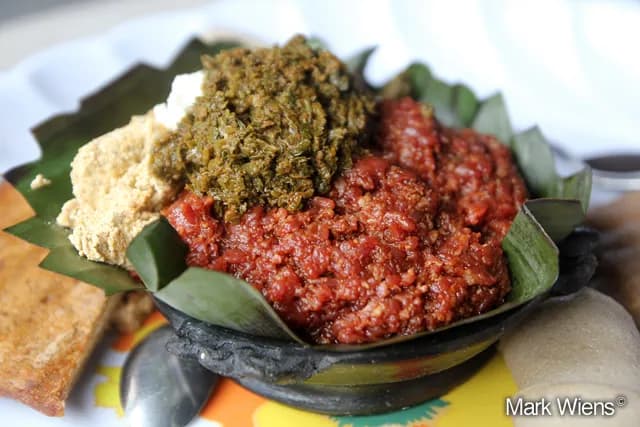
African salad is the Igbo dish of abacha and ugba, and it is a salad only in the loosest sense. Abacha is cassava that has been cooked, shredded on a special grater, soaked overnight, rinsed and dried in the sun. Ugba is fermented oil bean seed, cooked for hours, sliced, rinsed and left to ferment. Neither is cooked when the dish is assembled.
That is the striking thing about it: almost the entire preparation happens off the stove. Palm oil is turned into a thick yellow paste by working it with potash solution, and everything else is folded into that paste in sequence. The order matters, and Igbo cooks are firm about it, because the components will not distribute evenly if they all go in together.
It belongs to ceremony. At an Igbo wedding, abacha is reserved for the important guests, and it is served with chilled palm wine, which is the pairing anyone from the region will name. Despite being filling enough to be a meal, it is treated as a snack rather than a main course. It can be served cold or warmed briefly, and the choice between the two is a matter of household preference rather than correctness.
Sonhos de banana means banana dreams in Portuguese, and they are small fried fritters from São Tomé and Príncipe, the island nation off the coast of Central Africa. Mashed banana is worked into a batter with flour, egg, milk and sugar, dropped into hot oil and dusted with cinnamon sugar while still warm.
The Portuguese connection runs through everything about them. São Tomé and Príncipe was a Portuguese colony from the late fifteenth century until 1975, and sonhos are a Portuguese sweet in their own right, a fried dough eaten particularly at Christmas. What the islands did was put banana into them, which is what the archipelago grows, and the result is closer to a beignet than to a doughnut.
The same sweet, under the same name, is eaten in Brazil, which shares the Portuguese colonial inheritance from the other side of the Atlantic. That triangle of Portugal, São Tomé and Brazil is visible in a great deal of the islands' food, and sonhos de banana is one of the clearest examples. They are eaten as a dessert or simply as something sweet in the afternoon, and they are at their best within minutes of leaving the pan.
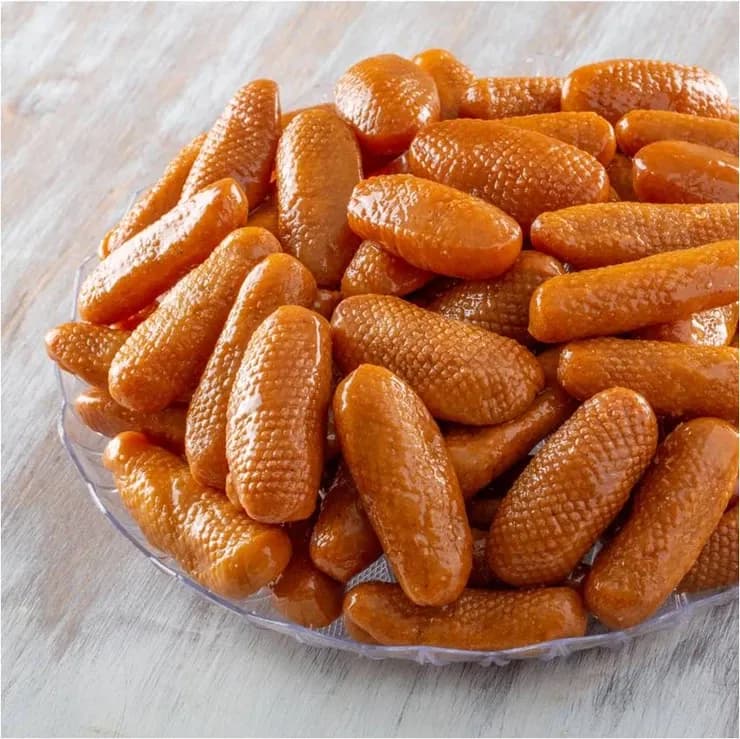
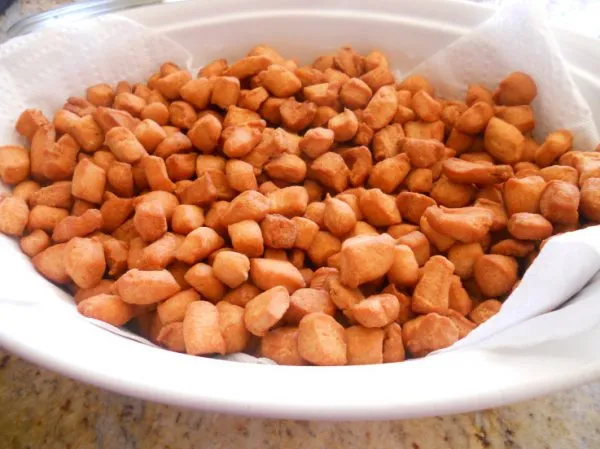
Chin chin is fried dough cut into small pieces, and it is the most widely eaten snack in Nigeria. The texture sits between a cracker and a dry cake, and how hard it should be is the thing people have opinions about, with preferences running from soft and cakey to properly tooth breaking.
It began as occasion food, made for birthdays and for Christmas, and the making of it was a household event that children were put to work on. That has changed: it is now sold at every street corner, in every grocery store and supermarket, and it is as ordinary as a packet of biscuits. It is also made across West Africa, and Ghanaians call it achomo.
Flour, sugar, milk and butter are the base, with eggs, nutmeg and baking powder optional depending on the texture wanted. Nutmeg is the flavouring most associated with the Nigerian version, and the variations run to cinnamon, vanilla, cocoa and ground pepper. The three levers are simple enough to state: more butter and baking powder makes it soft, leaving out the egg and the baking powder makes it hard, and everything else is a matter of where between those you want to land.
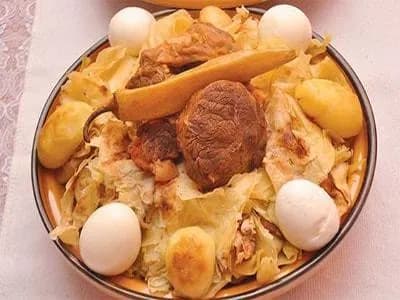
Chekhchoukha, also written chakhchoukha, is torn flatbread under a spiced meat and chickpea sauce, and the name describes the tearing. It comes from tacherchert in the Chaouia language, meaning to crumble or to tear into small pieces, and the bread is broken by hand rather than cut.
It is a Chaoui dish, from the Aurès mountains of eastern Algeria, and it spread from there into Constantine, Biskra and the rest of the country. Its origin is in shepherds' food, the substantial thing eaten on returning home on cold winter nights, and it kept that character even as it became a dish for festive occasions and celebrations rather than everyday eating.
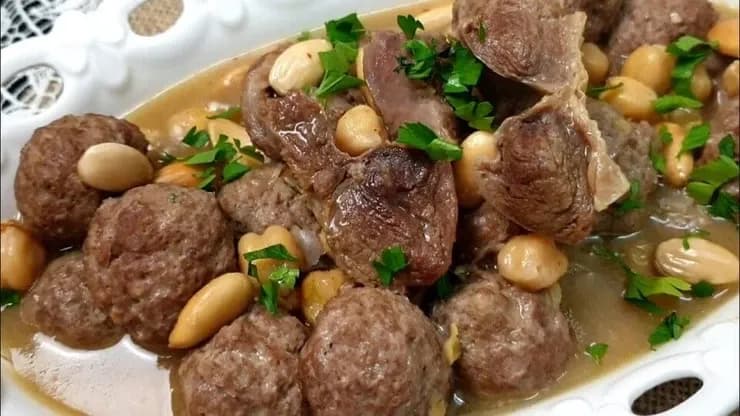
The bread is rougag, also called trid, a very thin round flatbread made from fine semolina. It is torn, steamed briefly to soften, then heaped on a plate and covered with marqa, the sauce of diced lamb, tomato, onion and chickpeas spiced with dried red chilli, caraway, ras el hanout, black pepper and cumin. Two versions are recognised: chakhchoukha of Biskra, which is this one, and chakhchoukha dfar, which uses a different flatbread and differs in taste and thickness. Which pot it is made in also varies, with some cities using clay and others iron.