Nous utilisons des cookies essentiels au fonctionnement du site. Nous aimerions aussi déposer des cookies de mesure d’audience et des cookies publicitaires, uniquement avec votre accord. Vous pouvez choisir séparément pour chacun. Lire notre politique relative aux cookies

Loading
Recettes
Parcourez les archives par pays, par plat et par temps de cuisson.
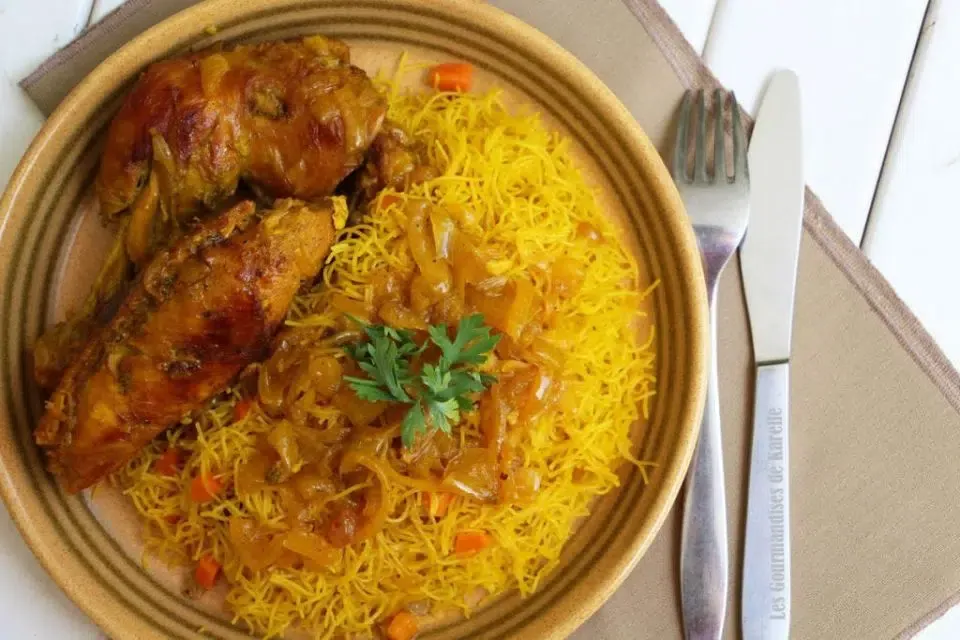
Vermicelle poulet is Senegalese celebration food that happens to be very easy to make, which is an unusual combination. Broken rice vermicelli is toasted in butter and steamed, and braised chicken in a mustard and onion sauce is served over it. That is the whole dish.
It appears at weddings, baptisms and the gatherings that mark occasions, and it is found in the most modest Senegalese households and in the country's best restaurants without much changing between them. Its status comes from the vermicelli rather than the technique, since imported wheat and rice noodles carried a cost and a cachet that plain rice did not.
The sauce is the Senegalese signature. Yellow mustard and onion cooked down together, sharpened with vinegar, is the same base that carries chicken yassa, and it is one of the most recognisable flavour combinations in the country's cooking. The mustard is not a French borrowing so much as a French ingredient absorbed completely into a Senegalese idiom. Thickened lightly with flour and spooned over toasted vermicelli, it makes a dish that looks like far more work than it is.
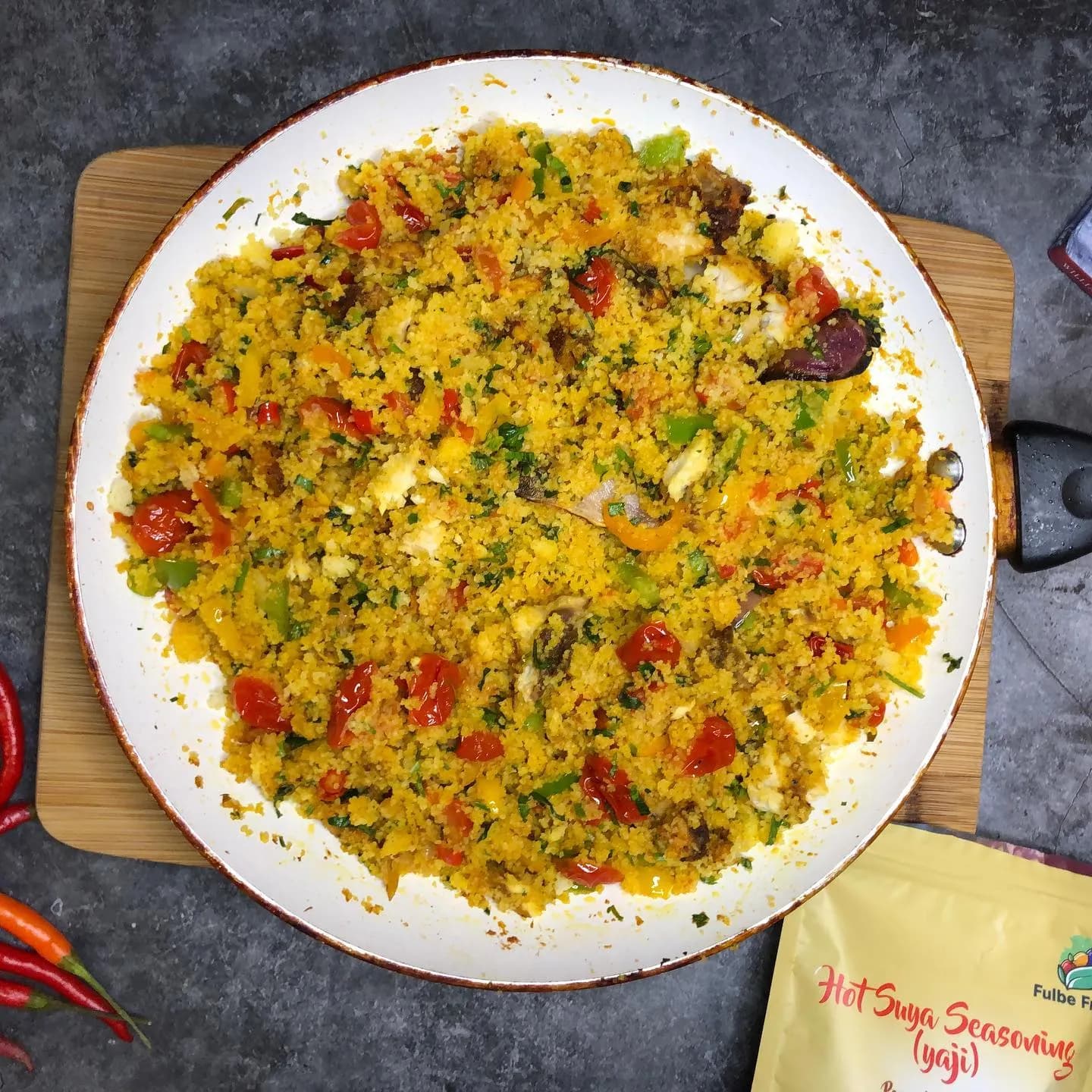
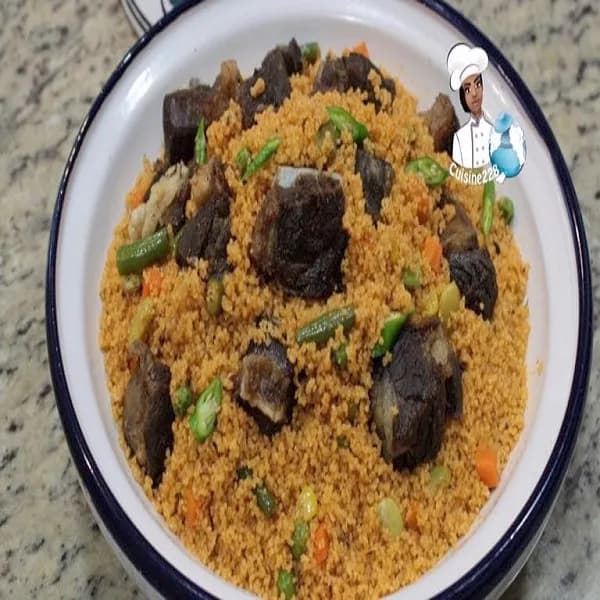
Jollof couscous applies the jollof method to North African couscous, and it sits at the meeting point of two quite separate West and North African traditions. The tomato and pepper base is built as it would be for jollof rice; the grain is steamed couscous rather than long grain rice.
Couscous itself is North African, rolled from semolina and traditionally steamed several times in a couscoussier until it is light and separate rather than gummy. In Morocco, Algeria and Tunisia it is served with a spiced vegetable stew and meat, which is a different proposition entirely from what happens here. Its texture is often compared to attiéké, the fermented cassava of Côte d'Ivoire, though the two share only appearance.
Jollof itself is contested territory between Nigeria, Ghana, Senegal and beyond, and applying it to couscous is a modern move rather than an inherited one. The source attributes this version to Senegal, which is where the jollof tradition originates in the thieboudienne of the Wolof people, though the framing in the original text is Nigerian. It is quick food, twenty minutes from start to finish, and it is honest about being an adaptation.
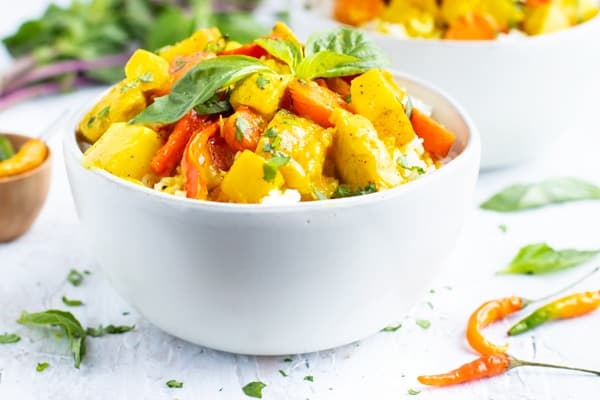
Coconut chicken curry is a one-pan dish of chicken simmered in coconut milk with a curry spice blend and whatever vegetables are to hand, broccoli, cabbage, peppers, potato, carrot.
The word curry is worth being precise about. It is not a single spice or a single dish. It comes from English usage during colonial rule in India, applied broadly to spiced saucy dishes, and it now covers an enormous range of unrelated cooking across South Asia, Southeast Asia, the Caribbean and East Africa. A curry powder sold in a jar is a blend, and the blends differ substantially between manufacturers and regions.
Coconut milk versions belong mainly to the coastal and tropical end of that range, southern India, Thailand, Malaysia, the Caribbean, and the Swahili coast of East Africa, where coconut is grown and used heavily.
This particular recipe is a general one rather than a regional tradition, which is its strength: it tolerates substitution well and is designed to be varied.
**Filed as Worldwide**, the recipe as written makes no specific national claim, so attributing it to any one cuisine would be inventing detail.
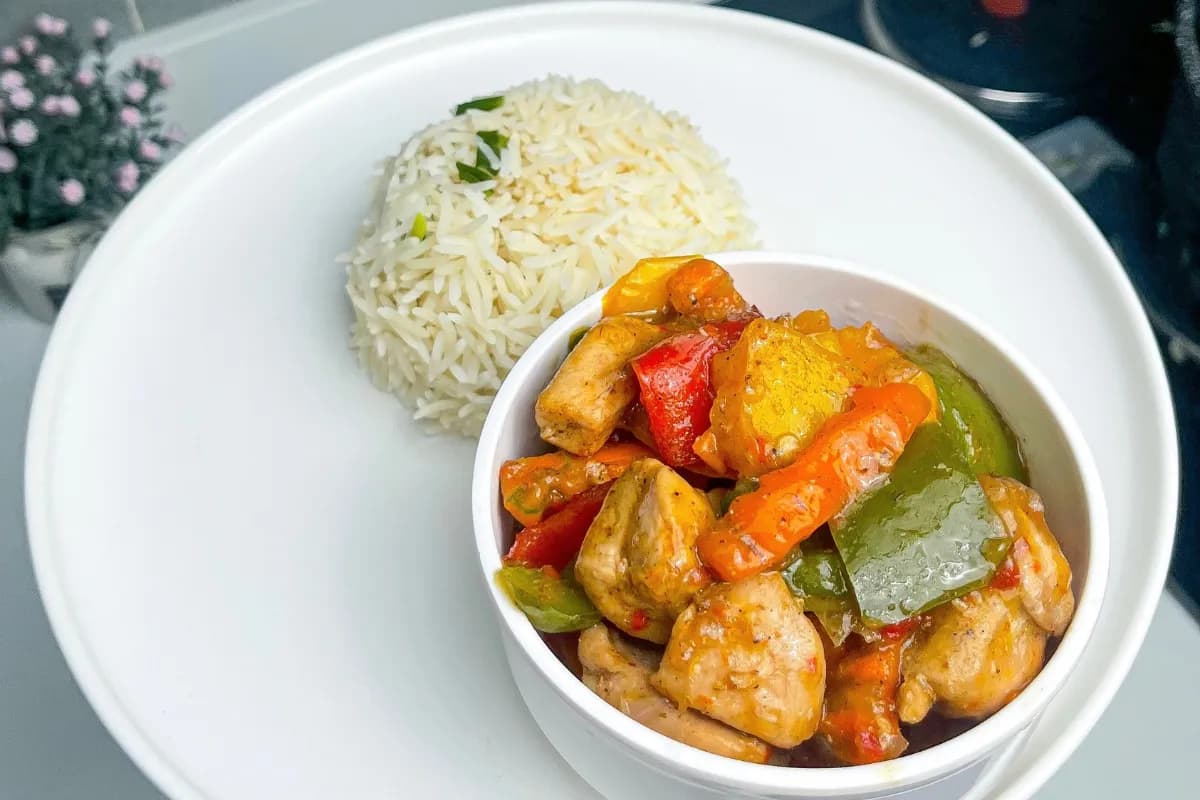
This is a Nigerian take on a curry sauce: chicken breast marinated in ginger, garlic and all purpose seasoning, cooked with carrots and bell peppers, and thickened with a cornstarch slurry rather than reduced or enriched with cream.
Two things mark it as Nigerian rather than South Asian. The first is yaji, the suya spice built on ground peanuts, paprika, cayenne, ginger and garlic, which goes in alongside the curry powder and gives an aromatic depth no Indian curry would have. The second is the cornstarch slurry, which is how a great many Nigerian sauces are thickened, giving a glossy sauce that clings rather than a reduced one.
The vegetables are meant to keep their bite. Carrots and bell peppers go in after the onion and are cooked only until slightly tender, which is characteristic of Nigerian party cooking, where texture and colour matter as much as flavour. The heat is moderate and adjustable through the scotch bonnet. Because yaji contains ground peanuts, this dish carries a peanut allergen despite nothing in its name suggesting one.