Biryani
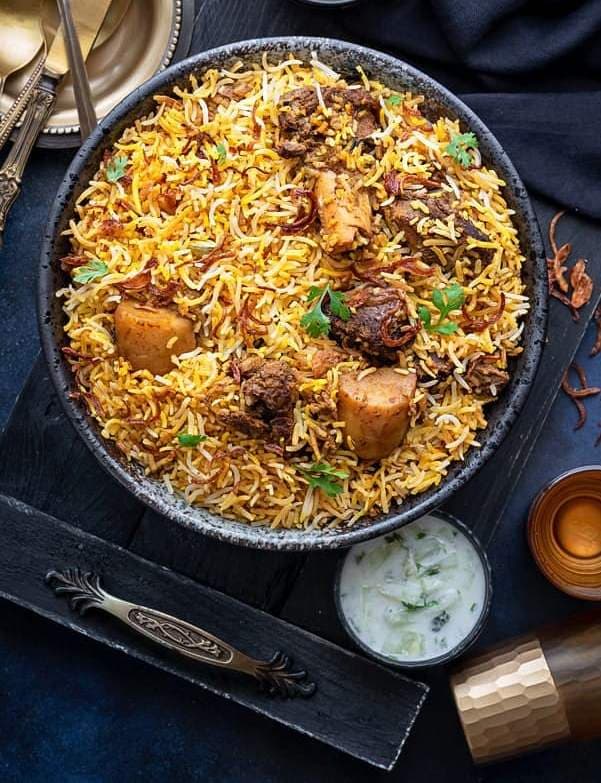
Biryani is a layered rice dish of Persian and South Asian origin that has been part of South African cooking for well over a century, and the South African versions are now traditions in their own right. The name traces to Persian, birinj biriyan, fried rice, and the dish as it is recognised today developed among Muslim communities in the Indian subcontinent. It reached South Africa with indentured labourers brought to Natal from India from the 1860s, and separately through the Cape Malay community, whose roots lie in the people brought from the Indonesian archipelago and South Asia under Dutch colonial rule. What emerged is distinct. Durban biryani, the best known, is typically cooked with lentils and potatoes layered through the rice, and it is spiced with the chilli-forward masalas that also produced bunny chow. Cape Malay versions run sweeter, using cinnamon, cardamom and sometimes raisins, reflecting a different spice tradition entirely. The method is what makes it biryani rather than a spiced rice. Meat and rice are partly cooked separately, then layered and finished together under a sealed lid so the steam carries the spice up through the grains, dum, in the South Asian term. It is celebration food in South Africa as much as in South Asia: Eid, weddings, and large family gatherings.
South AfricaNympha