Nous utilisons des cookies essentiels au fonctionnement du site. Nous aimerions aussi déposer des cookies de mesure d’audience et des cookies publicitaires, uniquement avec votre accord. Vous pouvez choisir séparément pour chacun. Lire notre politique relative aux cookies

Loading
Recettes
Parcourez les archives par pays, par plat et par temps de cuisson.
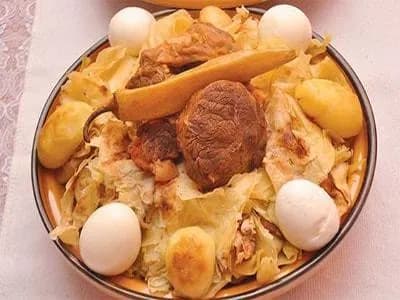
Chekhchoukha, also written chakhchoukha, is torn flatbread under a spiced meat and chickpea sauce, and the name describes the tearing. It comes from tacherchert in the Chaouia language, meaning to crumble or to tear into small pieces, and the bread is broken by hand rather than cut.
It is a Chaoui dish, from the Aurès mountains of eastern Algeria, and it spread from there into Constantine, Biskra and the rest of the country. Its origin is in shepherds' food, the substantial thing eaten on returning home on cold winter nights, and it kept that character even as it became a dish for festive occasions and celebrations rather than everyday eating.
The bread is rougag, also called trid, a very thin round flatbread made from fine semolina. It is torn, steamed briefly to soften, then heaped on a plate and covered with marqa, the sauce of diced lamb, tomato, onion and chickpeas spiced with dried red chilli, caraway, ras el hanout, black pepper and cumin. Two versions are recognised: chakhchoukha of Biskra, which is this one, and chakhchoukha dfar, which uses a different flatbread and differs in taste and thickness. Which pot it is made in also varies, with some cities using clay and others iron.
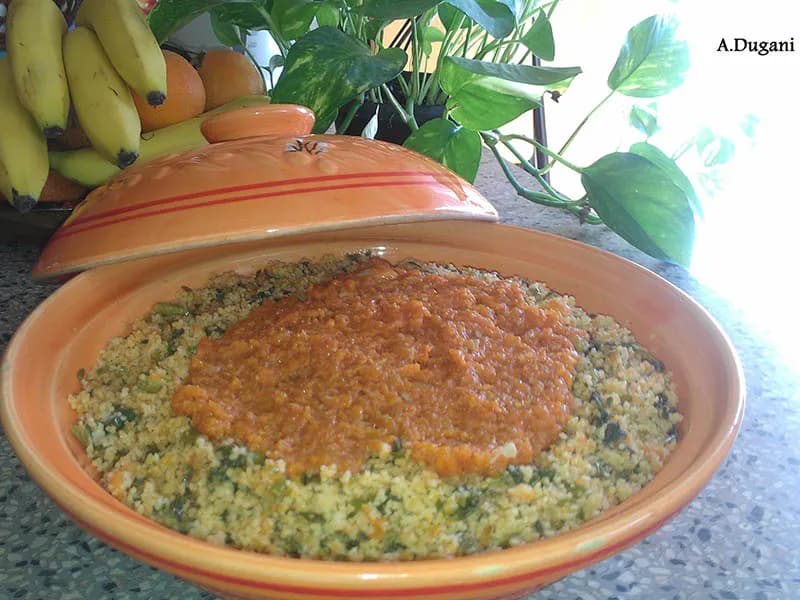
Chicken tagine is Moroccan slow cooking at its most recognisable: chicken with preserved lemon, olives, onion and a warm spice blend, cooked gently until the meat falls apart. The name belongs to the vessel as much as the dish.
A tagine is a shallow ceramic or unglazed clay pot with a tall conical lid. The cone is not decorative: steam rises, condenses against the cone and runs back down into the base, so the dish cooks in its own recirculating moisture with very little added liquid. It works like a slow cooker and gives the same result, meat that is tender and a sauce that has concentrated rather than evaporated.
The spice profile is the Moroccan signature: paprika, cumin, ginger, coriander, cinnamon and cayenne together, with honey for balance and lemon for sharpness. Cracked green olives and preserved lemon go in at the end so they keep their character. It can be made in a tagine, in a Dutch oven, or on the stovetop, and this recipe uses the last. If you cook in an actual tagine on a hob, use the lowest setting you can: raising the heat cracks the clay.
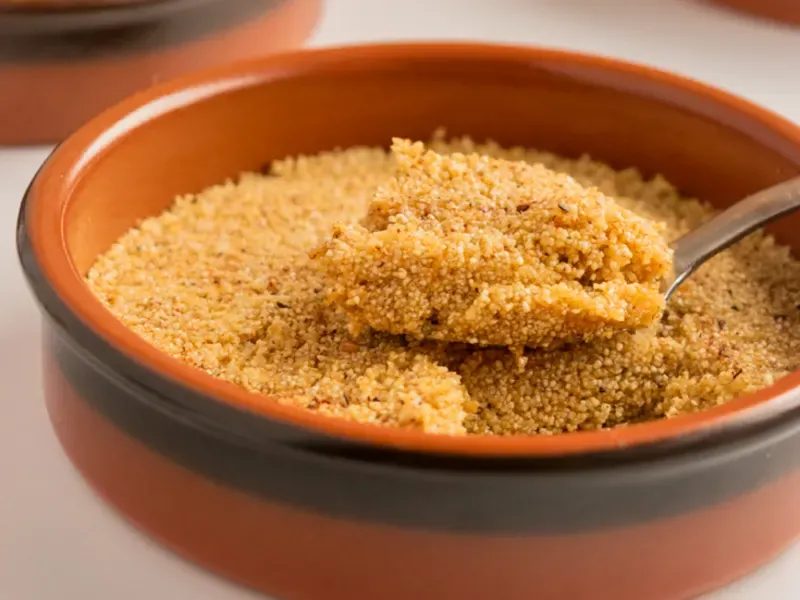
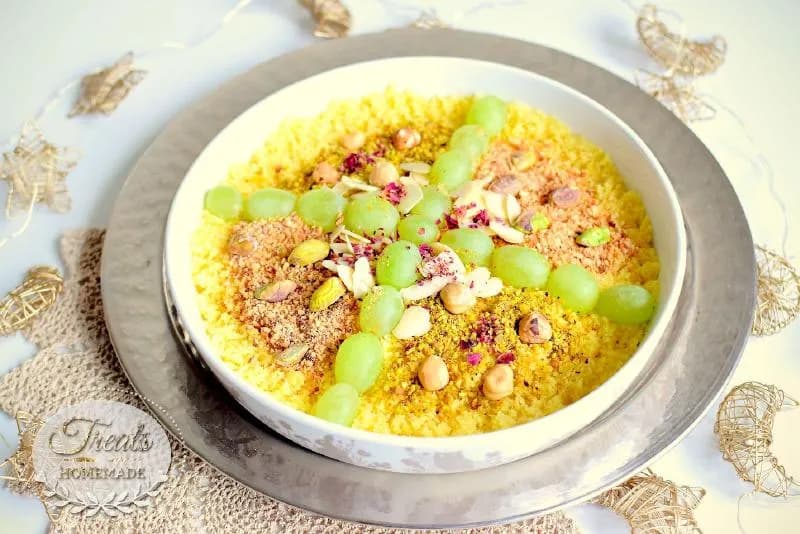
Tamina is semolina steamed, toasted until golden, and worked into warm honey and butter. It is Algerian, and it is made for occasions, engagements, weddings, baby showers and Mawlid, the birthday of the Prophet Muhammad.
The three ingredients carry meaning, and the source explains it well: semolina for sustenance, honey for the sweetness of love, butter for blessings. That symbolism is why tamina appears at the birth of a child in particular, offering it to guests is the Algerian way of announcing a new baby, which makes the dish a message as much as a dessert.
The toasting is the whole technique and it cannot be rushed. Semolina taken to a proper golden colour tastes nutty and complex; under-toasted, it tastes raw and pasty. It also burns from golden to black very quickly, so it needs constant movement over medium-low heat.
The steaming step is unusual and the source explains its own reasoning: it is a safety measure, in case the semolina has not been toasted thoroughly enough. Many recipes skip it and toast alone.
Economics have changed the ingredients. Margarine and sugar syrup now often replace butter and honey, which the source records without judgement.
One caution: it identifies tamina with bsisa, which is a different Tunisian and Libyan preparation.
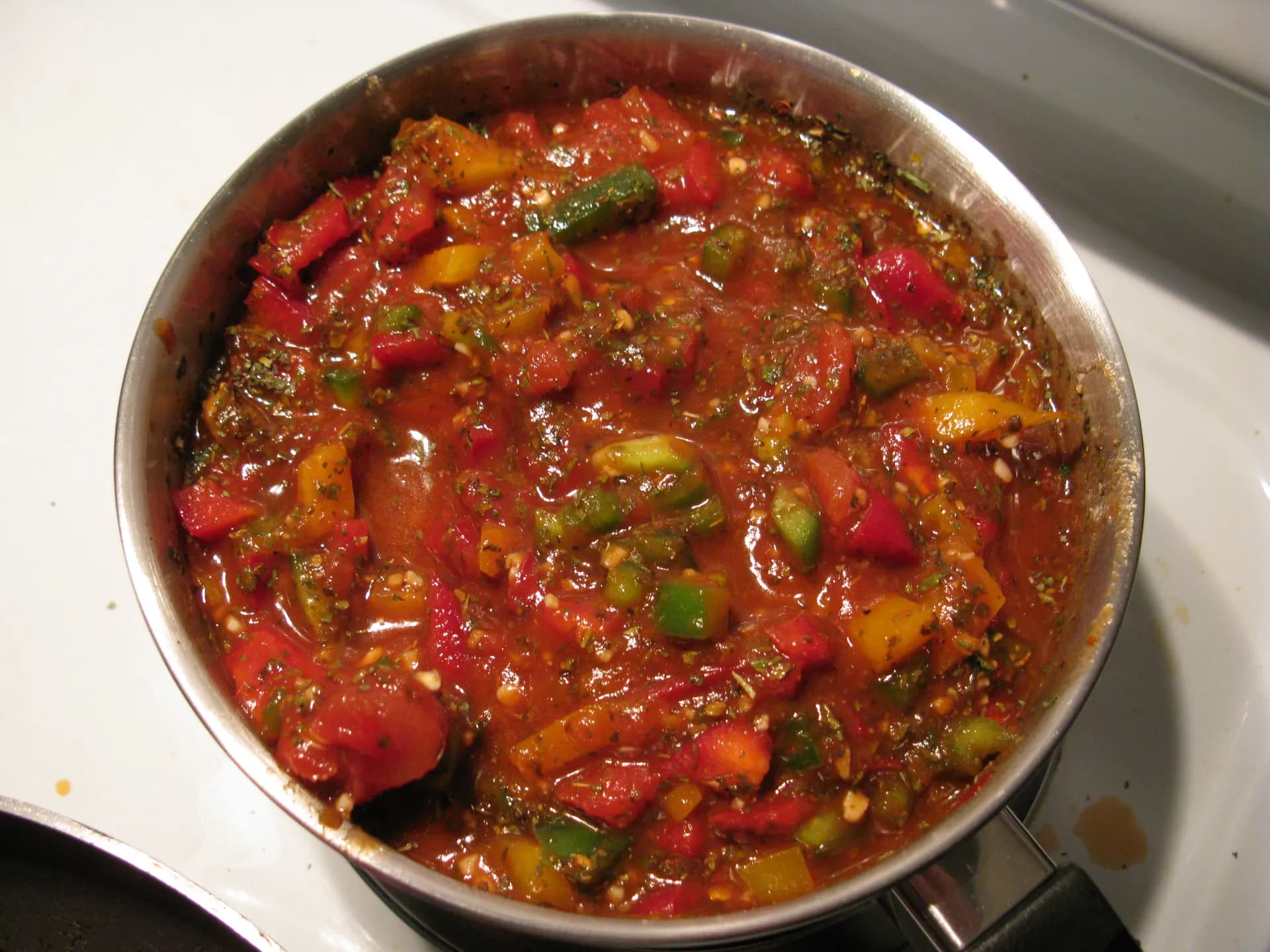
Taktouka is roasted peppers and grated tomato cooked down with onion, garlic, cumin and paprika into a thick warm salad. It is Moroccan, also popular in Algeria, and it is a mezze dish rather than a leaf salad.
The name explains the texture. It comes from the Arabic taktak, meaning to grind or pound, and the vegetables end up soft and broken down rather than crisp. That is why the source opens by pre-empting the obvious question, why a salad needs a recipe, and it is a fair point: taktouka requires cooking, and cooking is most of it.
It has regional names worth knowing. In eastern Morocco it is called flifla; in Algeria, felfla mechouia. Zaalouk, the aubergine version, is its closest sibling and works the same way.
Grating the tomatoes rather than dicing them is the technique the source recommends and it is a good one. Cutting a tomato in half and grating the cut face against a box grater extracts the pulp and leaves the skin behind in your hand, no peeling, no blanching, and a smoother result.
This dish is closely related to matbucha, the Moroccan-Jewish version, which is on this site. Matbucha is cooked longer, without onion or cumin, and the two are genuinely distinguished by community and by seasoning rather than being the same recipe under two names.