Nous utilisons des cookies essentiels au fonctionnement du site. Nous aimerions aussi déposer des cookies de mesure d’audience et des cookies publicitaires, uniquement avec votre accord. Vous pouvez choisir séparément pour chacun. Lire notre politique relative aux cookies
Loading
Recettes
Parcourez les archives par pays, par plat et par temps de cuisson.
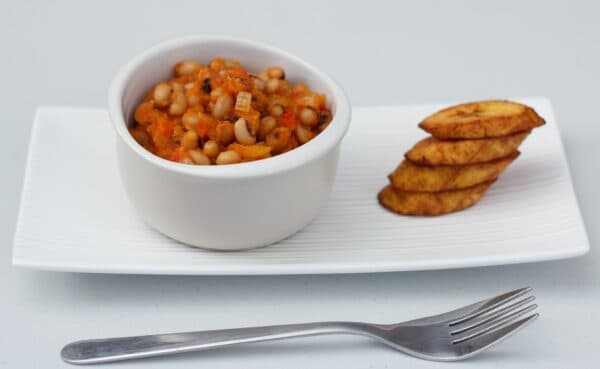
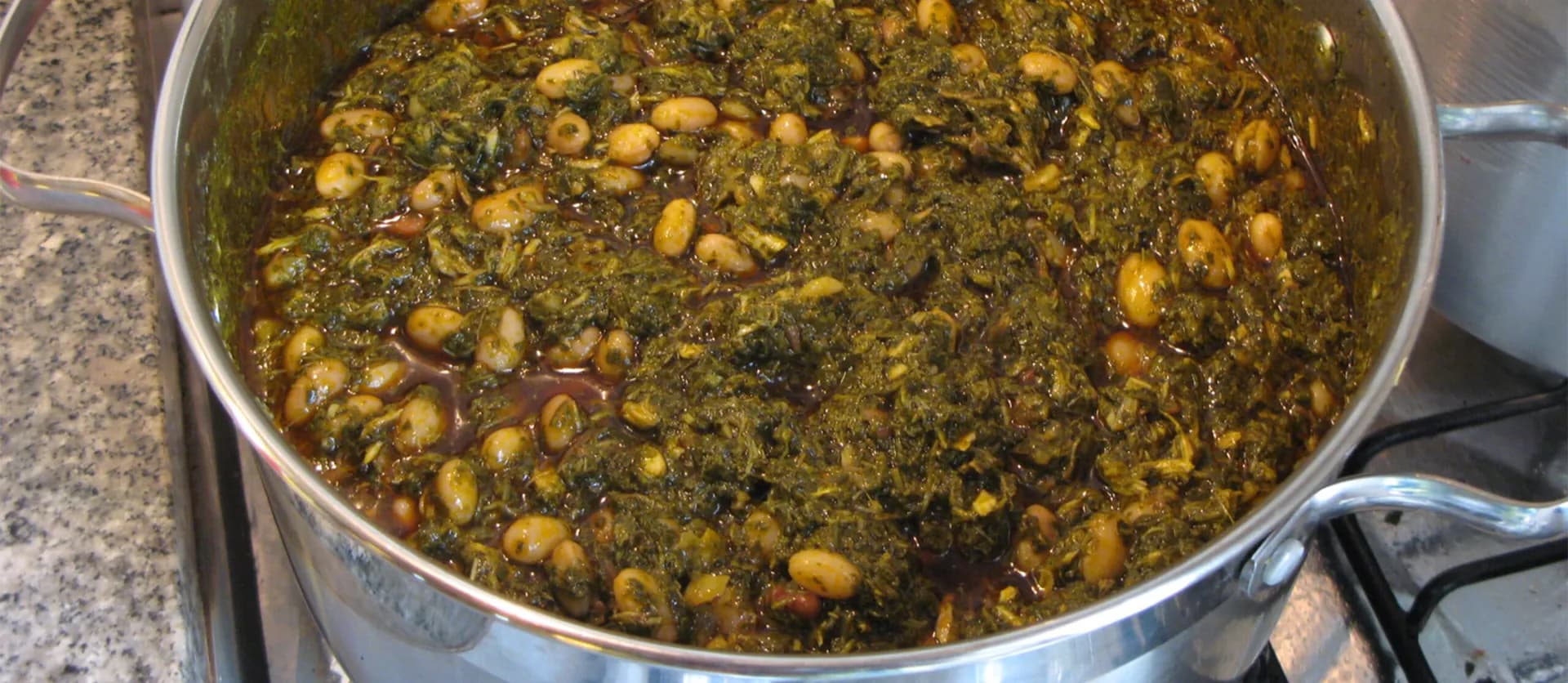
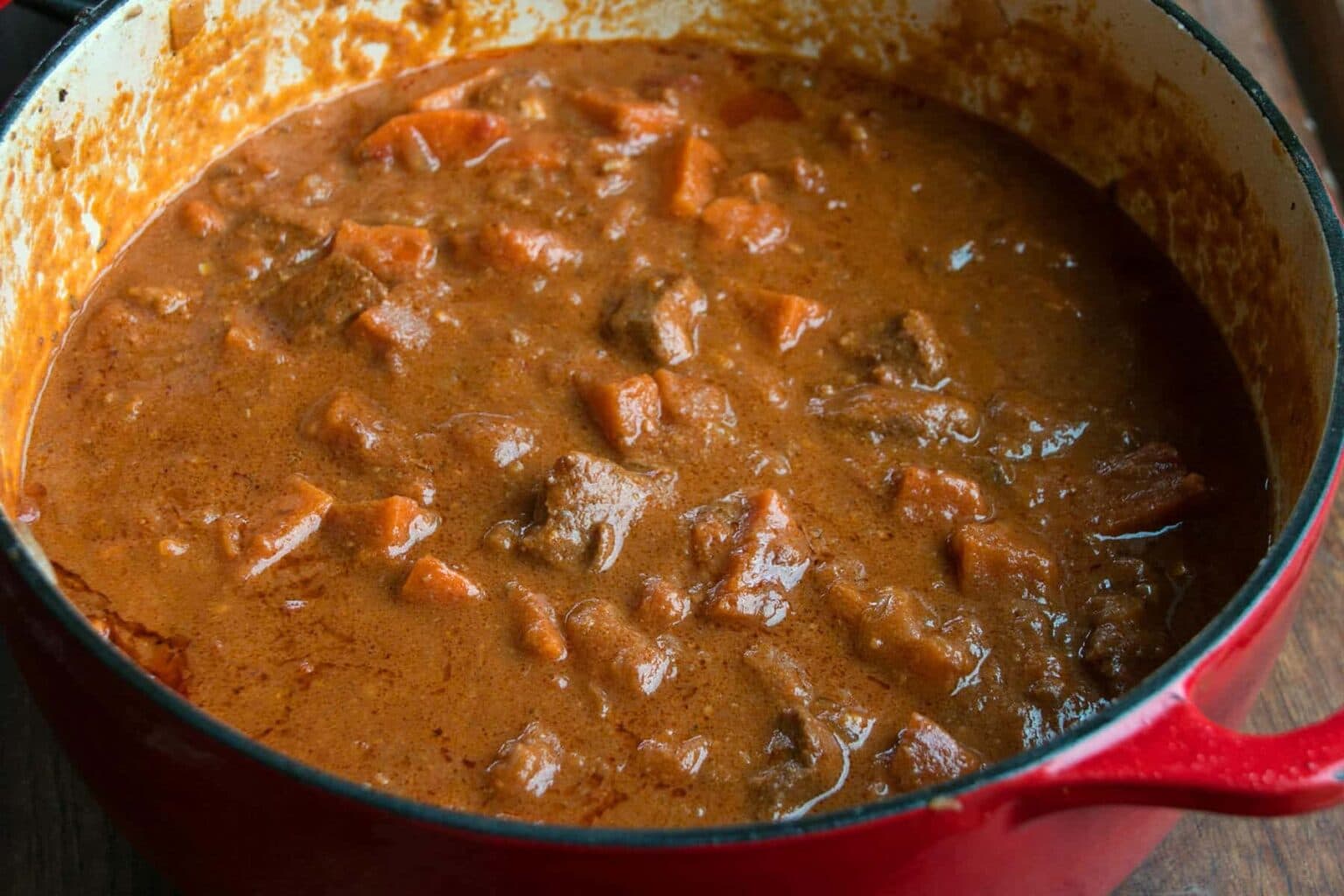
Red red is a Ghanaian black-eyed pea stew, and the name is a plain description of what it looks like. The beans are cooked in red palm oil, zomi, with tomato, and both give the dish the deep rust colour it is named for.
It is usually vegetarian, which is worth noting because it is unusual among West African stews in being so by default rather than by adaptation. The beans carry it, and the palm oil provides the richness that meat would otherwise supply. Some households add fish or meat, but the standard version does not need it.
Zomi is not interchangeable with ordinary red palm oil. It is palm oil that has been heated and infused, and it carries a deeper, slightly smoky flavour that is much of what makes red red taste Ghanaian rather than generically bean-stewed.
The classic accompaniment is fried plantain, and the pairing is close to inseparable, the sweetness of ripe plantain against the savoury, oily beans is the whole balance of the meal. Gari is often served alongside too.
It is cheap, filling and slow-cooked, and it is street food as much as home food across Ghana. Black-eyed peas are the usual bean, but the dish tolerates others without complaint.
Nigerian fish stew is the same red pepper base that underpins beef stew and jollof, cooked with tilapia rather than meat, and the change of protein changes how the dish is handled more than how it tastes.
The base is the constant of West African cooking: blended tomatoes, red bell peppers, onion and chilli, fried down in oil until the water drives off and the oil separates. Everything else in the Nigerian stew repertoire is built on that, and fish stew is simply one branch of it.
What is specific to fish is timing and handling. Fish cooks quickly and breaks apart easily, so it is usually fried or seasoned and set aside, then returned to the finished sauce near the end rather than simmered through it. Cooked the way beef would be, tilapia disintegrates and the stew turns cloudy.
Tilapia is the usual choice, widely farmed, affordable and firm enough to hold together, though catfish, mackerel and croaker are all used.
It is served with white rice, with any of the swallows, or alongside a vegetable soup such as efo riro.
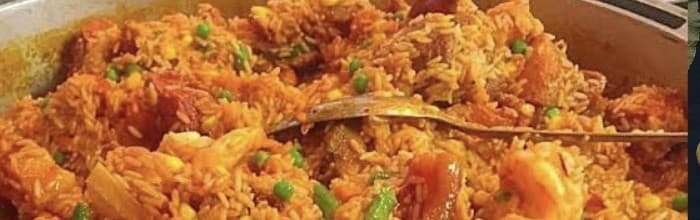
Pilau is the spiced rice of the East African coast: rice cooked with cumin, cardamom, cloves, cinnamon and turmeric until every grain carries the spice. It is celebration food across Kenya, Tanzania, Uganda and Zanzibar, made for weddings, for Eid, and whenever a guest of consequence arrives.
It reached the Swahili coast through centuries of Indian Ocean trade, and the family it belongs to runs from Persian polow through Central Asian plov to South Asian pulao. The East African version is milder than the Indian one and does not use curry, which is the distinction the source draws and it is a fair one. The defining spice mix has its own name, pilau masala, and there is a recipe for it on this site.
An important note about this page. Its written description is of a full pilau: caramelised beef, potatoes, tomatoes and pilau masala simmered in meat stock. The recipe card attached to it is something else entirely, a plain spiced rice with no meat, no potatoes and no stock. The recipe below follows the card, since that is the actual recipe on the page, and the result is a good vegetarian side dish. It is not, however, the celebratory beef pilau the description promises.
Browning the onions properly is the step that matters most in either version.
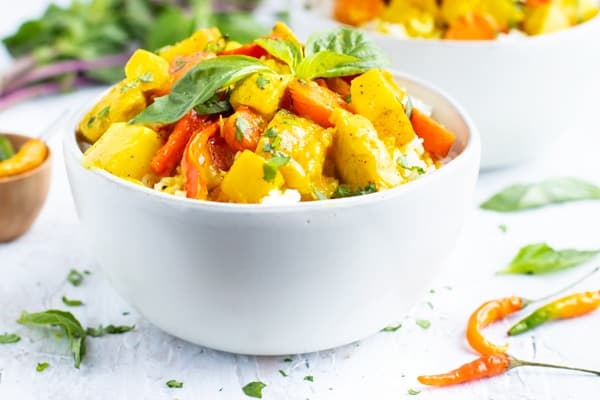
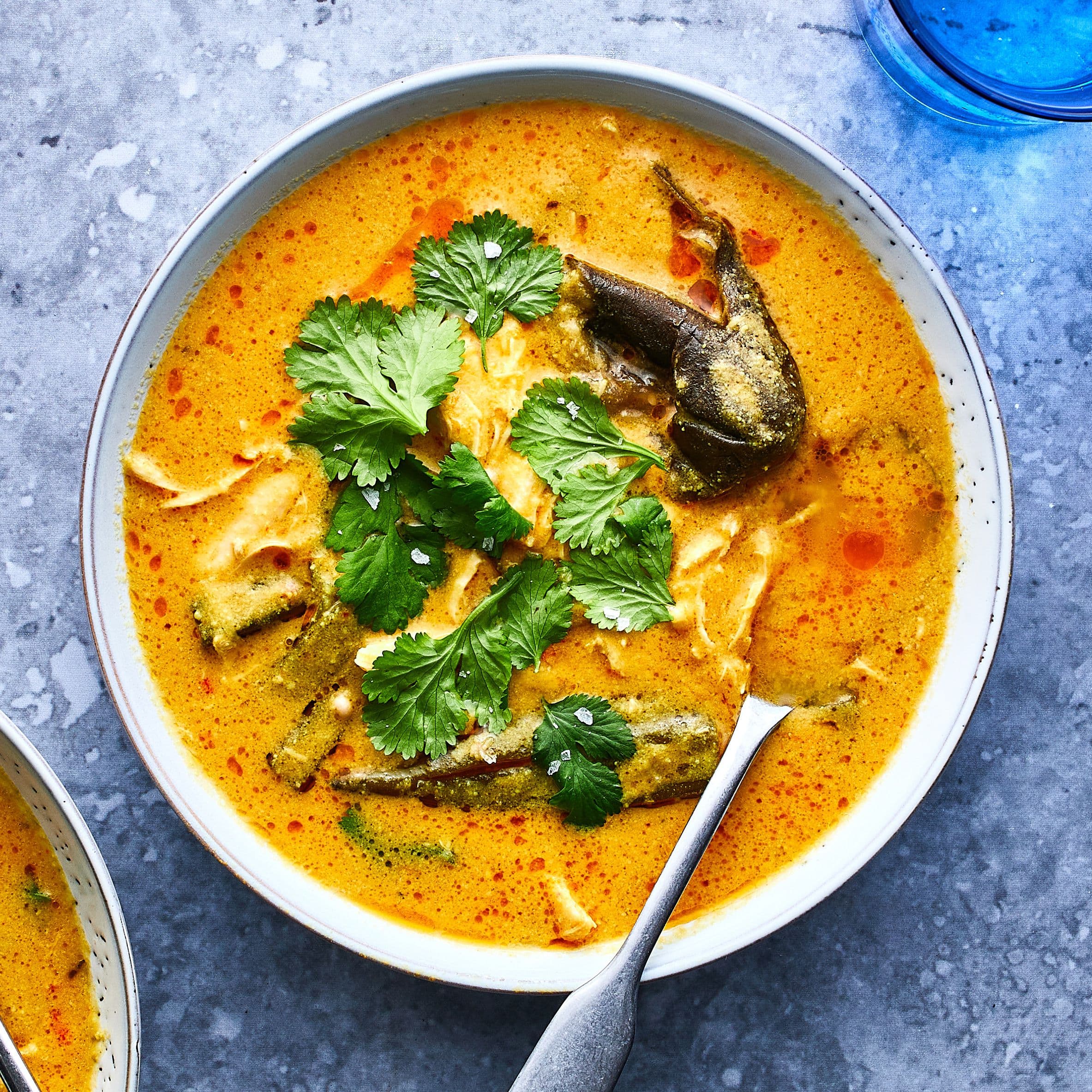
Coconut chicken curry is a one-pan dish of chicken simmered in coconut milk with a curry spice blend and whatever vegetables are to hand, broccoli, cabbage, peppers, potato, carrot.
The word curry is worth being precise about. It is not a single spice or a single dish. It comes from English usage during colonial rule in India, applied broadly to spiced saucy dishes, and it now covers an enormous range of unrelated cooking across South Asia, Southeast Asia, the Caribbean and East Africa. A curry powder sold in a jar is a blend, and the blends differ substantially between manufacturers and regions.
Coconut milk versions belong mainly to the coastal and tropical end of that range, southern India, Thailand, Malaysia, the Caribbean, and the Swahili coast of East Africa, where coconut is grown and used heavily.
This particular recipe is a general one rather than a regional tradition, which is its strength: it tolerates substitution well and is designed to be varied.
**Filed as Worldwide**, the recipe as written makes no specific national claim, so attributing it to any one cuisine would be inventing detail.