Nous utilisons des cookies essentiels au fonctionnement du site. Nous aimerions aussi déposer des cookies de mesure d’audience et des cookies publicitaires, uniquement avec votre accord. Vous pouvez choisir séparément pour chacun. Lire notre politique relative aux cookies

Loading
Recettes
Parcourez les archives par pays, par plat et par temps de cuisson.
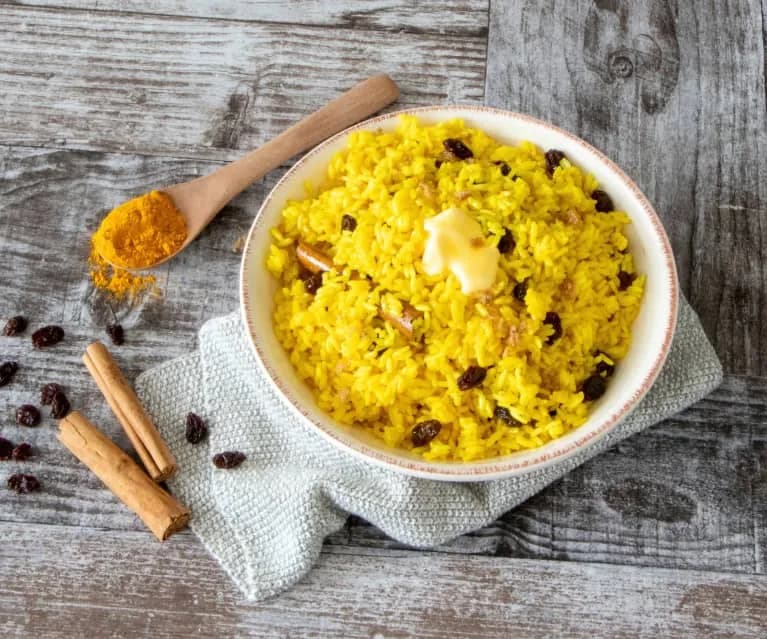
Rice cooked with turmeric, cinnamon, raisins and sugar into a sweet golden side dish. It is South African, from the Cape Malay tradition, and it is served alongside savoury curries and meat.
Sweet rice as a savoury accompaniment is the thing to understand. Cape Malay yellow rice contains sugar, raisins and cinnamon, and it goes with curry, bobotie and roast meat, the sweetness is deliberately set against savoury and spiced food rather than served as a dessert. That contrast runs right through Cape Malay cooking and it is the same instinct behind bobotie's fruit chutney and the apricot jam in pickled fish.
The community it comes from was formed by people brought to the Cape from Southeast Asia as slaves and political exiles by the Dutch from the seventeenth century onwards, and the dish is one of many that carries that history directly. Related yellow rices exist across the world, nasi kuning in Indonesia, kaha buth in Sri Lanka, and the family resemblance is not coincidental.
Turmeric is what colours it. Saffron is used in more expensive versions and annatto elsewhere.
**A significant problem with this page.** Its ingredient list merges two separate recipes, a yellow rice and a marinated roast chicken, into one list, and its method covers both. Only the rice belongs here.
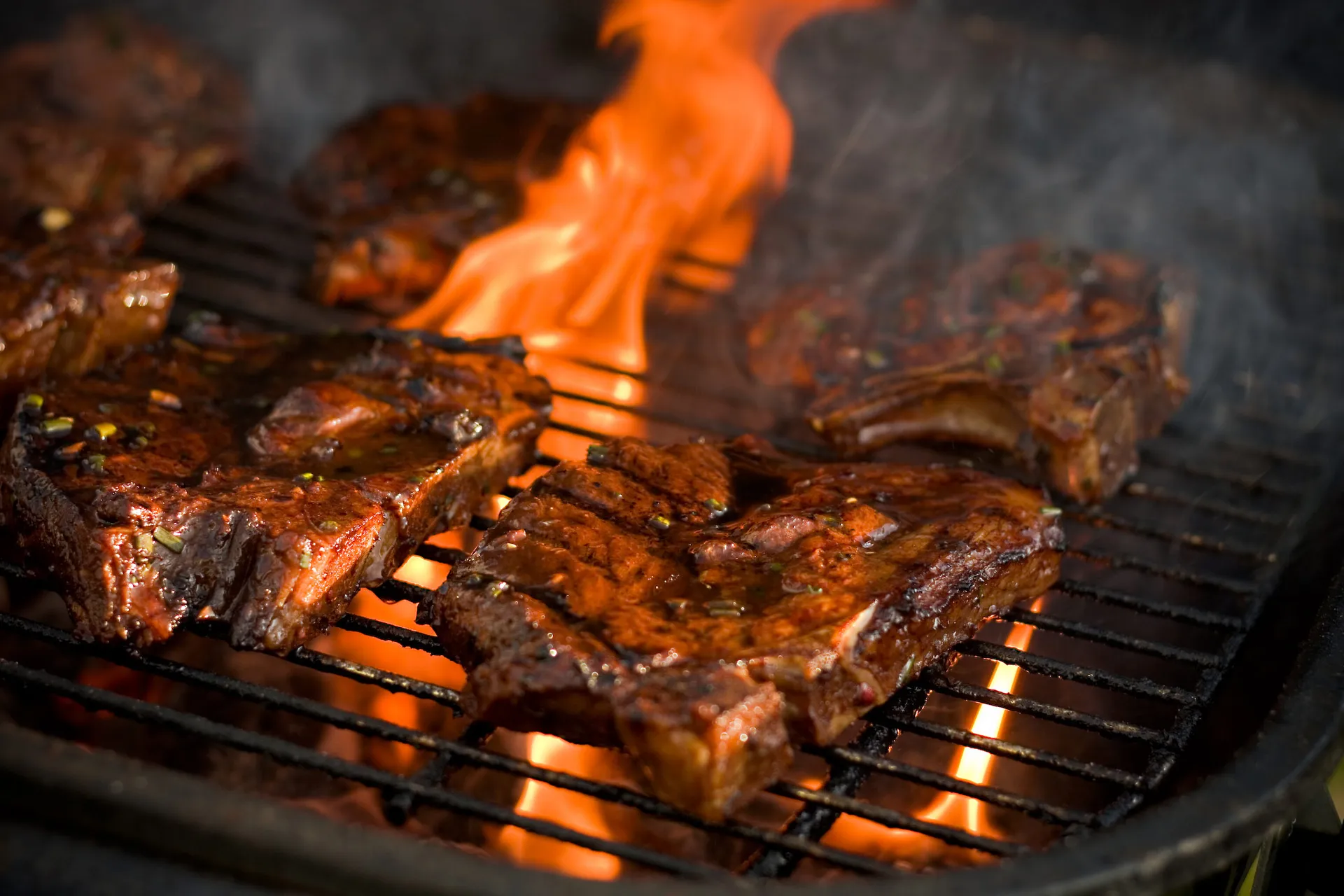
A braai is South African cooking over an open wood or charcoal fire, and it is as much a social occasion as a cooking method. The word comes from braaivleis, Afrikaans for grilled meat, from the Dutch braden, to roast.
The distinction South Africans draw between a braai and a barbecue is about the fire, and it is taken seriously. A braai is cooked over wood or charcoal, with wood preferred because of what it does to the flavour; gas is generally not accepted as a braai at all. The fire is also the point of the gathering rather than a means to an end, people build it, wait for it, cook on it and then stay around it long after the food is finished. And unlike a Northern Hemisphere barbecue, it is not seasonal. South Africans braai in any weather, and 24 September is a national braai day.
What goes on the fire is broad: boerewors, lamb chops, steak, chicken, snoek and other fish, sweetcorn, and braaibroodjies, the grilled cheese, tomato and onion sandwiches that go on once the coals have died down. Potjiekos, cooked in a cast-iron pot over the same fire, is a close relative.
The source for this page contains no recipe card at all. The method below is reconstructed from its description, and that is flagged.
Peri peri, also written piri piri, is a sauce built on the African bird's eye chilli, and both the chilli and the sauce belong to the Portuguese-speaking parts of southern Africa. Piri piri is Swahili for pepper, and the chilli itself grows wild across Mozambique, Angola and the surrounding region.
Its history runs both ways across the Atlantic. Chillies are South American and were carried to Africa by Portuguese traders in the sixteenth century, where the small bird's eye variety naturalised and became a defining ingredient of Mozambican cooking. Portuguese settlers then took the sauce back to Portugal, and from there it spread internationally, which is why most people outside Africa first meet it as a restaurant chain flavour rather than as a Mozambican one.
The sauce is not only heat. Bird's eye chilli brings a genuine fierceness, but the finished sauce carries tangy citrus from lemon, a little sweetness from sugar, and an earthy smokiness from paprika and garlic, and the result is thick, almost paste-like. The technique worth noting is emulsifying the oil into the blended sauce at the end, at reduced speed, which gives the body it needs to cling to chicken. The source is emphatic on one point: do not use extra virgin olive oil, which turns bitter when blended.
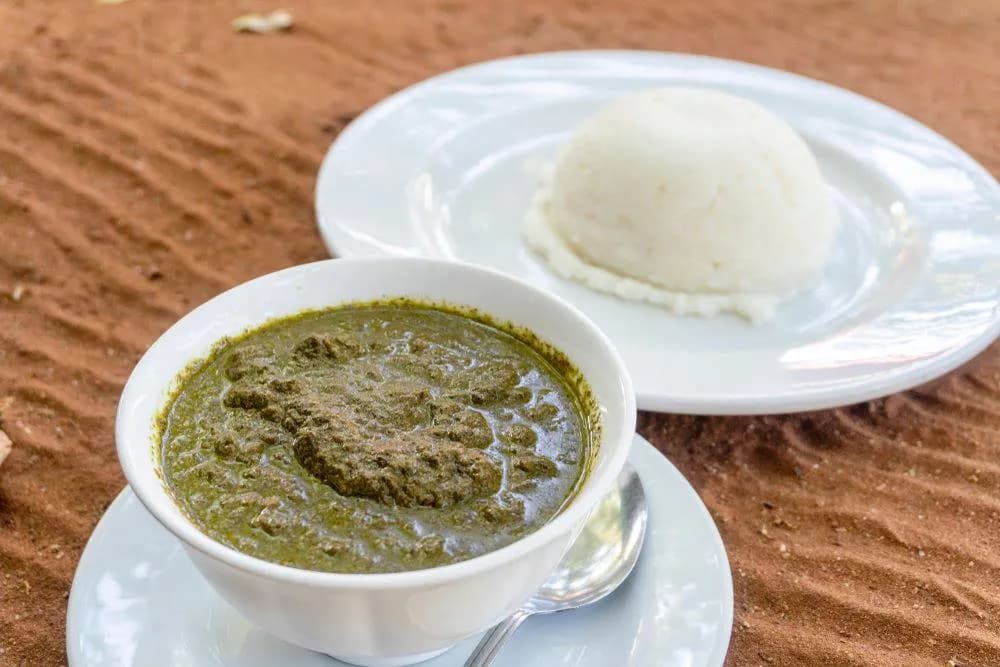
Matapa is Mozambique's cassava leaf dish, and it is where the country's two food geographies meet. Cassava leaves and groundnuts belong to the interior; coconut milk and dried shrimp belong to the Indian Ocean coast. Matapa puts all four in one pot, and the result tastes like nowhere else on the continent.
It is most common in the south of the country, where the ingredients are close at hand and inexpensive, and it is everyday food rather than occasion food. Mozambican households eat it with rice or bread. The dish is also known as matata in some accounts, and the naming shifts across regions in the way that dishes carried by many communities usually do.
The cassava leaves are what make it. They are finely chopped and cooked long enough to lose their fibre and their raw edge, and the groundnuts thicken the coconut milk around them into something dense and savoury. Cooks substitute spinach, kale, collard greens or pumpkin leaves where cassava leaves are hard to come by, and every Mozambican will tell you the substitution is not the same dish.